
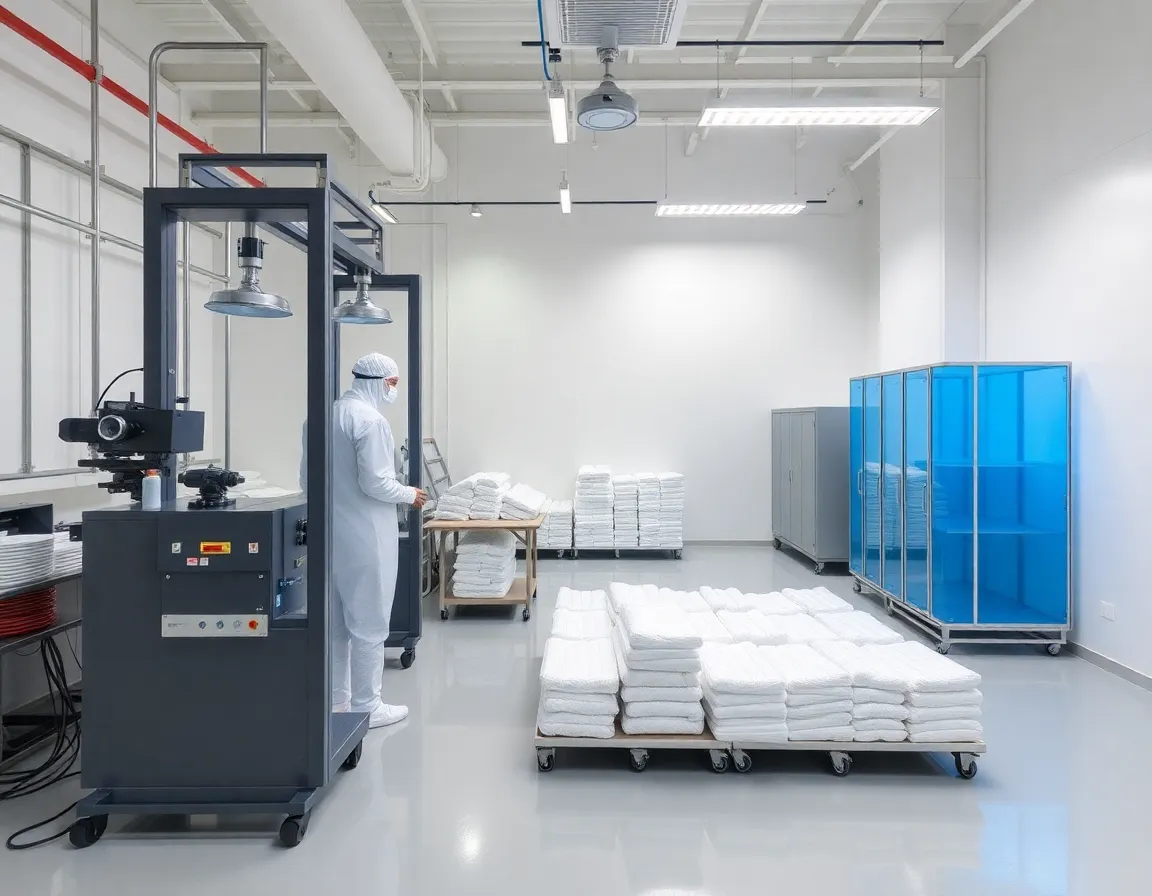
クラス10000クリーンルーム成形の理解
精密製造の世界では、誤差の許容範囲はミクロン単位で測定され、単一の微細な汚染物質の存在が生産バッチ全体を無駄にする可能性があります。これは、医療機器、半導体部品、光学機器を生産する産業にとっての現実です。この厳格な環境の中心には、 クラス10000クリーンルーム成形, があり、これは射出成形の物理と制御された大気条件の厳格な規律を組み合わせた専門的な製造プロセスです。しかし、「クラス10000」とは正確には何を意味し、なぜそれが重要部品生産のゴールドスタンダードとなったのでしょうか?
「クラス10000」という呼称は、空気1立方フィートあたりに許容される浮遊粒子(0.5マイクロメートル以上)の最大数を指します。簡単に言えば、クラス10000のクリーンルームには、各立方フィートの空間に10,000個未満の塵、皮膚のフレーク、その他の汚染物質が含まれています。これを比較すると、一般的なオフィス環境には、1立方フィートあたり50万から100万個のそのような粒子が含まれています。この清浄度を達成し維持するには、高度な空気ろ過システム(HEPAおよびULPAフィルター)、陽圧、専用のガウニングプロトコル、および継続的な環境モニタリングが必要です。射出成形に適用すると、このレベルの純度は標準的な製造プロセスを高度に管理された科学的な手順に変えます。.
純度の科学:なぜ汚染が静かな殺し屋なのか
クリーンルーム成形において純度がなぜそれほど重要であるかを理解するには、まず製造される製品の脆弱性を認識する必要があります。例えば、医療用途では、成形されたカテーテルや埋め込み型センサーは、表面が完全に清浄でなければなりません。成形プロセス中にポリマーに埋め込まれた粒子状物質は、細菌増殖の核形成部位として機能する可能性があります。同様に、半導体製造では、射出成形されたコネクタに閉じ込められた単一の塵粒子が電気的短絡を引き起こし、壊滅的なデバイス故障につながる可能性があります。汚染の結果は単に見た目の問題ではなく、機能的で、安全性に重大であり、経済的に壊滅的です。.
従来の成形における汚染源
標準的な成形施設での汚染は、複数のベクターから発生します。最も明白なのは 浮遊粒子状物質—ほこり、衣類からの繊維、およびオペレーターが落とす皮膚細胞です。ただし、あまり明白でない発生源には、 機械潤滑 (金型表面に移行する可能性のある油圧オイルやグリース)、, 原材料の取り扱い (静電気を帯びてほこりを引き寄せるポリマーペレット)、および 二次加工 (バリ取りや包装で粒子が混入する)が含まれます。クラス10000環境では、これらの各ベクターが体系的に中和されます。空気はHEPAフィルターを通して継続的に再循環され、オペレーターは完全なクリーンルームスーツ(カバーオール、フード、手袋、ブーティ)を着用し、機械は密閉された潤滑システムと滑らかで発塵のない表面で設計されています。.
さらに、 金型自体 は重要な要素です。標準的な環境では、金型表面は時間の経過とともに微小なピッティングや酸化が発生し、汚染物質を閉じ込めて後続の各パーツに転写する可能性があります。クラス10000クリーンルームでは、金型は特殊なステンレス鋼または硬化工具鋼で製造され、鏡面仕上げに研磨され、ラン間では厳格な洗浄プロトコルが実施されます。金型表面の完全性へのこの配慮により、パーツの表面は金型の清浄な状態を再現し、生産で蓄積した汚れではないことを保証します。.
クラス10000クリーンルーム成形の仕組み:ステップバイステップのプロセス
このプロセスは、溶融ポリマーが金型に入るずっと前から始まります。それは 材料準備. から始まります。ポリマー樹脂は、クリーンルーム内の密閉容器または隣接するステージングエリアで、水分を除去する乾燥剤乾燥機とともに保管されます。水分は隠れた汚染物質です。ポリマーペレットが水蒸気を吸収すると、射出中に水が蒸気になり、スプレイやシルバーストリークと呼ばれる表面欠陥を引き起こします。クラス10000環境では、材料の取り扱いは可能な限り自動化され、人的接触とそれに伴う汚染リスクを低減します。.
機械と金型の考慮事項
射出成形機自体は クリーンルーム対応. でなければなりません。これは、機械の型締ユニット、射出ユニット、およびロボットシステムが密閉または遮蔽され、粒子の発生を防ぐことを意味します。油圧システムは、可能な場合は電動サーボ駆動の機械に置き換えられます。電動機械は、空中汚染の一般的な発生源である油圧オイルミストをゼロに生成するためです。機械の外装はステンレス鋼または電解研磨されたアルミニウムで作られ、露出したすべての表面はほこりの蓄積を防ぐために傾斜しています。金型には パージシステム が装備されており、金型が閉じる前に清浄で乾燥した空気または窒素を使用して緩んだ粒子を吹き飛ばします。.
プロセス制御と環境モニタリング
生産が始まると、環境は継続的に監視されます。. パーティクルカウンター は定期的に空気をサンプリングし、粒子数がクラス10000の制限に近づくとアラームがトリガーされます。温度と湿度は厳密に制御されます。通常は華氏68〜72度(摂氏20〜22度)、相対湿度40〜50%で、変動はポリマーの粘度と寸法安定性に影響を与える可能性があるためです。オペレーターは厳格なガウンプロトコルに従い、エアシャワーと粘着マットを通過して衣服から緩んだ粒子を除去します。パーツ取り外しに使用される工具でさえ、帯電防止性で発塵のない材料で作られています。.
The molding parameters themselves—melt temperature, injection pressure, cooling time—are monitored via a Statistical Process Control (SPC) system. This data is used to detect any drift in the process that could correlate with contamination. For example, an unexpected rise in injection pressure might indicate a blocked gate or a build-up of degraded polymer, both of which can introduce contaminants into the part. By catching these anomalies early, the cleanroom molding process ensures that purity is not just an environmental condition but a process outcome.
Critical Applications: Where Class 10000 Molding is Non-Negotiable
The demand for Class 10000 cleanroom molding has surged across several high-stakes industries. Understanding these applications illuminates why the investment in such facilities is justified.
- Medical Devices and Implants: From insulin pump components to orthopedic screws, these parts must be biocompatible and free from pyrogens (fever-inducing substances). A Class 10000 environment minimizes the risk of endotoxin contamination from bacterial debris.
- Pharmaceutical Packaging: Pre-filled syringes, vial stoppers, and inhaler mouthpieces require a sterile or high-purity surface to prevent drug-product interaction. Molding these in a cleanroom prevents particulate-induced degradation of the medication.
- Semiconductor and Electronics: Connectors, chip carriers, and sensor housings must be free of ionic contaminants that can corrode delicate circuitry. Even a single human hair (which is about 70 microns wide) can bridge circuit traces and cause a short.
- Aerospace and Defense: Optical components, valve bodies, and guide tubes for precision instruments must withstand extreme conditions without failing due to embedded impurities.
- Food and Beverage Processing: While not sterile, components like pump impellers and valve seals for food processing must be molded in a controlled environment to prevent bacterial harborage points.
Benefits Beyond Basic Cleanliness
The advantages of Class 10000 cleanroom molding extend beyond just meeting regulatory standards. First, it offers consistency. Because the environment is stable, the molding process itself is more repeatable. Manufacturers see fewer defects, lower scrap rates, and reduced downtime for re-cleaning. Second, it provides a competitive advantage. Companies that can certify their molding process to Class 10000 standards can bid on premium contracts that are inaccessible to standard molders. Third, it enables design innovation. Engineers can design more complex, tighter-tolerance parts knowing that the manufacturing environment will not introduce unpredictable variables.
Best Practices for Operating a Class 10000 Cleanroom Molding Facility
Achieving Class 10000 certification is not a one-time event; it is a continuous operational discipline. Adherence to best practices is essential for maintaining the integrity of the cleanroom and the quality of the molded parts.
Personnel Training and Gowning Protocol
People are the largest source of contamination, generating up to 10 million particles per minute while moving. Therefore, rigorous training is paramount. Operators must understand not just how to wear a cleanroom suit, but why. The gowning sequence must be followed precisely: hairnet, beard cover, jumpsuit, booties, and gloves. The suit must be made of a low-shedding material like polyester or a static-dissipative fabric. Movement inside the cleanroom should be slow and deliberate; rapid movements create air currents that can stir up settled particles. Eating, drinking, and wearing cosmetics are strictly prohibited.
Routine Cleaning and Validation
The cleanroom must be cleaned on a strict schedule using non-shedding, low-particulate wipes and sterile or filtered cleaning solutions. Floors are mopped daily, and surfaces are wiped down after each shift. However, cleaning itself can be a source of contamination if not done correctly. Therefore, cleaning is performed in a specific direction (from the cleanest area to the dirtiest) and with tools that are dedicated to the cleanroom. Additionally, the facility must undergo periodic certification—typically every 6 to 12 months—by an independent third-party that tests airborne particle counts, airflow velocity, and filter integrity. This certification is not just a formality; it is a legal requirement for many regulated industries, such as medical devices under ISO 13485 or pharmaceuticals under GMP guidelines.
Material and Tooling Management
Raw materials should be inspected upon arrival for packaging integrity. Incoming polymer pellets should be passed through a de-dusting or de-ionizing system before entering the cleanroom. The molds themselves should have a dedicated storage area within the cleanroom environment, protected by covers. When a mold is not in use, it should be stored under a nitrogen purge or in a sealed bag to prevent oxidation. The mold maintenance schedule must be strictly adhered to, with more frequent inspections for pitting, wear, or residue build-up than in a standard facility.
The Future of Cleanroom Molding: Trends and Innovations
As technology advances, the standards for cleanroom molding are becoming even more stringent. The industry is seeing a shift toward Class 1000 and even Class 100 cleanrooms for the most critical applications, particularly in next-generation semiconductor packaging and implantable drug-delivery devices. This is driven by the miniaturization of electronics and the growing complexity of combination products (drug-device hybrids).
Another trend is the integration of Industry 4.0 technologies. Smart sensors embedded in the molding machine now provide real-time data on particle counts, temperature gradients, and humidity levels, feeding into a central AI system that can predictively adjust the molding parameters to maintain purity. Furthermore, the development of bio-based and biodegradable polymers that are inherently more sensitive to contamination is pushing cleanroom facilities to adopt even more advanced air purification technologies, such as photocatalytic oxidation (PCO), which destroys organic contaminants at a molecular level.
In conclusion, Class 10000 cleanroom molding is far more than a manufacturing niche; it is a critical enabler of modern technology and medicine. The purity it provides is not a luxury but a fundamental requirement for safety, functionality, and reliability. For manufacturers willing to invest in this discipline, the rewards are substantial: higher yields, premium market positioning, and the assurance that their products can be trusted in the most demanding environments. As the global demand for precision components continues to rise, the importance of cleanroom molding—and the purity it guarantees—will only grow.