
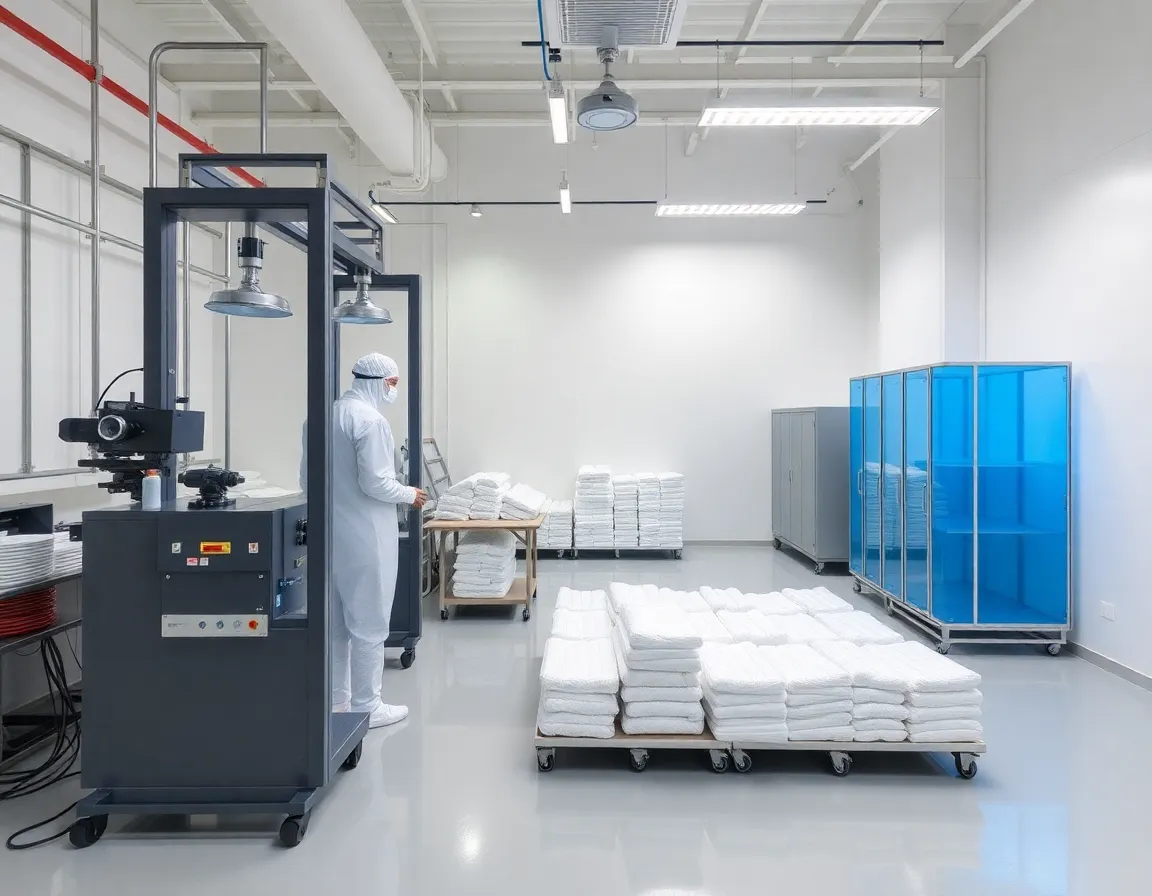
Понимание литья в чистых помещениях класса 10000
В мире точного производства допустимая погрешность измеряется в микронах, и наличие одного микроскопического загрязнения может сделать всю производственную партию непригодной. Такова реальность для отраслей, производящих медицинские устройства, полупроводниковые компоненты и оптическое оборудование. В основе этой строгой среды лежит литье в чистых помещениях класса 10000, специализированный производственный процесс, сочетающий физику литья под давлением со строгой дисциплиной контролируемых атмосферных условий. Но что именно означает "класс 10000" и почему он стал золотым стандартом для производства критически важных компонентов?
Обозначение "Класс 10000" относится к максимально допустимому количеству взвешенных в воздухе частиц (размером 0,5 микрометра или более) на кубический фут воздуха. Проще говоря, чистое помещение класса 10000 содержит менее 10 000 частиц пыли, частиц кожи или других загрязнителей в каждом кубическом футе пространства. Для сравнения: в типичном офисном помещении содержится от 500 000 до 1 миллиона таких частиц на кубический фут. Достижение и поддержание такого уровня чистоты требует сложных систем фильтрации воздуха (фильтры HEPA и ULPA), положительного давления воздуха, специальных протоколов надевания спецодежды и непрерывного мониторинга окружающей среды. Применительно к литью под давлением такой уровень чистоты превращает стандартный производственный процесс в высококонтролируемую научную процедуру.
Наука чистоты: почему загрязнение — это тихий убийца
Чтобы понять, почему чистота так важна при литье в чистых помещениях, необходимо осознать уязвимость производимых изделий. Например, в медицинских применениях формованный катетер или имплантируемый датчик должны иметь безупречную поверхность. Любые частицы, попавшие в полимер в процессе литья, могут стать центром кристаллизации для роста бактерий. Аналогично, в производстве полупроводников одна частица пыли, попавшая в формованный под давлением разъем, может вызвать короткое замыкание, что приведет к катастрофическому отказу устройства. Последствия загрязнения не просто косметические; они функциональные, критически важные для безопасности и финансово разрушительные.
Источники загрязнения при традиционном литье
Загрязнение на стандартных литейных предприятиях возникает из множества источников. Наиболее очевидным является взвешенные в воздухе частицы— пыль, волокна одежды и клетки кожи, выделяемые операторами. Однако менее очевидные источники включают смазку оборудования (гидравлические масла и смазки, которые могут мигрировать на поверхность формы), обработку сырья (полимерные гранулы, накапливающие статический заряд и притягивающие пыль), и вторичные операции (зачистка заусенцев или упаковка, которые вносят частицы). В среде класса 10000 каждый из этих источников систематически нейтрализуется. Воздух непрерывно рециркулируется через фильтры HEPA, операторы носят полные костюмы для чистых помещений (комбинезоны, капюшоны, перчатки и бахилы), а машины оснащены герметичными системами смазки и гладкими, не выделяющими частиц поверхностями.
Кроме того, сама форма является критическим фактором. В стандартной среде поверхности форм могут со временем покрываться микроточечной коррозией или окисляться, что задерживает загрязнения и переносит их на каждую последующую деталь. В чистом помещении класса 10000 формы изготавливаются из специализированных нержавеющих сталей или закаленных инструментальных сталей, полируются до зеркального блеска и подвергаются строгим протоколам очистки между циклами. Такое внимание к целостности поверхности формы гарантирует, что поверхность детали воспроизводит безупречное состояние формы, а не накопленную за время производства грязь.
Как работает литье в чистом помещении класса 10000: пошаговый процесс
Процесс начинается задолго до того, как расплавленный полимер попадает в форму. Он начинается с подготовки материала. Полимерные гранулы хранятся в герметичных контейнерах внутри чистого помещения или в соседних зонах подготовки с осушителями, которые удаляют влагу. Влага является скрытым загрязнителем — когда полимерные гранулы поглощают водяной пар, вода превращается в пар во время впрыска, создавая дефекты поверхности, называемые разбрызгиванием или серебристыми полосами. В среде класса 10000 обработка материалов автоматизирована, где это возможно, что снижает контакт с человеком и связанный с этим риск загрязнения.
Особенности машины и оснастки
Сама машина для литья под давлением должна быть совместимой с чистым помещением. Это означает, что узел смыкания, узел впрыска и роботизированные системы машины закрыты или экранированы для предотвращения образования частиц. Гидравлические системы заменяются электрическими сервоприводными машинами, где это возможно, поскольку электрические машины не производят масляный туман от гидравлики, который является распространенным источником загрязнения воздуха. Внешняя поверхность машины изготовлена из нержавеющей стали или электрополированного алюминия, а все открытые поверхности наклонены для предотвращения накопления пыли. Форма оснащена системой продувки , которая использует чистый сухой воздух или азот для удаления любых свободных частиц перед закрытием формы.
Контроль процесса и мониторинг окружающей среды
Как только начинается производство, окружающая среда постоянно контролируется. Счетчики частиц отбирают пробы воздуха через регулярные промежутки времени, и срабатывают сигналы тревоги, если количество частиц приближается к пределу класса 10000. Температура и влажность строго контролируются — обычно 68-72°F (20-22°C) и 40-50% относительной влажности — поскольку колебания могут влиять на вязкость полимера и размерную стабильность. Операторы соблюдают строгие процедуры надевания спецодежды, проходя через воздушные души и липкие коврики для удаления свободных частиц с одежды. Даже инструменты, используемые для извлечения деталей, изготовлены из антистатических, не выделяющих частицы материалов.
The molding parameters themselves—melt temperature, injection pressure, cooling time—are monitored via a статистическим управлением процессами (SPC) system. This data is used to detect any drift in the process that could correlate with contamination. For example, an unexpected rise in injection pressure might indicate a blocked gate or a build-up of degraded polymer, both of which can introduce contaminants into the part. By catching these anomalies early, the cleanroom molding process ensures that purity is not just an environmental condition but a process outcome.
Critical Applications: Where Class 10000 Molding is Non-Negotiable
The demand for Class 10000 cleanroom molding has surged across several high-stakes industries. Understanding these applications illuminates why the investment in such facilities is justified.
- Medical Devices and Implants: From insulin pump components to orthopedic screws, these parts must be biocompatible and free from pyrogens (fever-inducing substances). A Class 10000 environment minimizes the risk of endotoxin contamination from bacterial debris.
- Фармацевтическая упаковка: Pre-filled syringes, vial stoppers, and inhaler mouthpieces require a sterile or high-purity surface to prevent drug-product interaction. Molding these in a cleanroom prevents particulate-induced degradation of the medication.
- Semiconductor and Electronics: Connectors, chip carriers, and sensor housings must be free of ionic contaminants that can corrode delicate circuitry. Even a single human hair (which is about 70 microns wide) can bridge circuit traces and cause a short.
- Аэрокосмическая и оборонная промышленность: Optical components, valve bodies, and guide tubes for precision instruments must withstand extreme conditions without failing due to embedded impurities.
- Food and Beverage Processing: While not sterile, components like pump impellers and valve seals for food processing must be molded in a controlled environment to prevent bacterial harborage points.
Benefits Beyond Basic Cleanliness
The advantages of Class 10000 cleanroom molding extend beyond just meeting regulatory standards. First, it offers consistency. Because the environment is stable, the molding process itself is more repeatable. Manufacturers see fewer defects, lower scrap rates, and reduced downtime for re-cleaning. Second, it provides a competitive advantage. Companies that can certify their molding process to Class 10000 standards can bid on premium contracts that are inaccessible to standard molders. Third, it enables design innovation. Engineers can design more complex, tighter-tolerance parts knowing that the manufacturing environment will not introduce unpredictable variables.
Best Practices for Operating a Class 10000 Cleanroom Molding Facility
Achieving Class 10000 certification is not a one-time event; it is a continuous operational discipline. Adherence to best practices is essential for maintaining the integrity of the cleanroom and the quality of the molded parts.
Personnel Training and Gowning Protocol
People are the largest source of contamination, generating up to 10 million particles per minute while moving. Therefore, rigorous training is paramount. Operators must understand not just how to wear a cleanroom suit, but why. The gowning sequence must be followed precisely: hairnet, beard cover, jumpsuit, booties, and gloves. The suit must be made of a low-shedding material like polyester or a static-dissipative fabric. Movement inside the cleanroom should be slow and deliberate; rapid movements create air currents that can stir up settled particles. Eating, drinking, and wearing cosmetics are strictly prohibited.
Routine Cleaning and Validation
The cleanroom must be cleaned on a strict schedule using non-shedding, low-particulate wipes and sterile or filtered cleaning solutions. Floors are mopped daily, and surfaces are wiped down after each shift. However, cleaning itself can be a source of contamination if not done correctly. Therefore, cleaning is performed in a specific direction (from the cleanest area to the dirtiest) and with tools that are dedicated to the cleanroom. Additionally, the facility must undergo periodic certification—typically every 6 to 12 months—by an independent third-party that tests airborne particle counts, airflow velocity, and filter integrity. This certification is not just a formality; it is a legal requirement for many regulated industries, such as medical devices under ISO 13485 or pharmaceuticals under GMP guidelines.
Material and Tooling Management
Raw materials should be inspected upon arrival for packaging integrity. Incoming polymer pellets should be passed through a de-dusting or de-ionizing system before entering the cleanroom. The molds themselves should have a dedicated storage area within the cleanroom environment, protected by covers. When a mold is not in use, it should be stored under a nitrogen purge or in a sealed bag to prevent oxidation. The mold maintenance schedule must be strictly adhered to, with more frequent inspections for pitting, wear, or residue build-up than in a standard facility.
The Future of Cleanroom Molding: Trends and Innovations
As technology advances, the standards for cleanroom molding are becoming even more stringent. The industry is seeing a shift toward Class 1000 and even Class 100 cleanrooms for the most critical applications, particularly in next-generation semiconductor packaging and implantable drug-delivery devices. This is driven by the miniaturization of electronics and the growing complexity of combination products (drug-device hybrids).
Another trend is the integration of Industry 4.0 technologies. Smart sensors embedded in the molding machine now provide real-time data on particle counts, temperature gradients, and humidity levels, feeding into a central AI system that can predictively adjust the molding parameters to maintain purity. Furthermore, the development of bio-based and biodegradable polymers that are inherently more sensitive to contamination is pushing cleanroom facilities to adopt even more advanced air purification technologies, such as photocatalytic oxidation (PCO), which destroys organic contaminants at a molecular level.
In conclusion, Class 10000 cleanroom molding is far more than a manufacturing niche; it is a critical enabler of modern technology and medicine. The purity it provides is not a luxury but a fundamental requirement for safety, functionality, and reliability. For manufacturers willing to invest in this discipline, the rewards are substantial: higher yields, premium market positioning, and the assurance that their products can be trusted in the most demanding environments. As the global demand for precision components continues to rise, the importance of cleanroom molding—and the purity it guarantees—will only grow.