
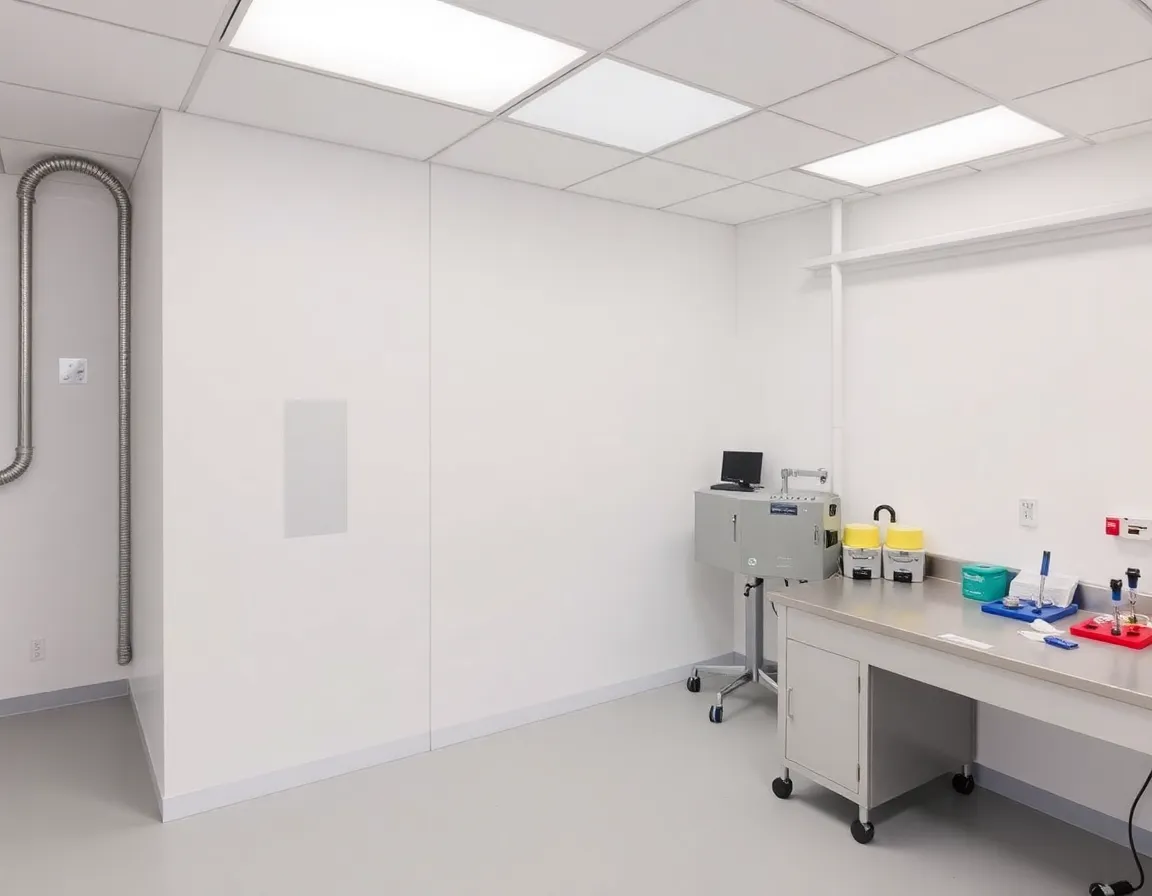
The Hidden Cost of Contamination in Modern Manufacturing
In the high-stakes world of precision manufacturing, the difference between a profitable production run and a costly recall often comes down to a particle you cannot see with the naked eye. For industries producing medical devices, automotive electronics, optical components, and consumer goods, dust is not merely a housekeeping nuisance—it is a primary driver of scrap rates, rework costs, and field failures. Traditional plastic molding processes, while highly efficient, operate in an environment where ambient air, raw material handling, and even the molding machine itself introduce microscopic contaminants. These particles become embedded in the molten polymer, creating surface blemishes, weak points, and functional defects that compromise part integrity. The solution lies in a paradigm shift toward dust-free plastic molding, a systematic approach that transforms the entire production ecosystem—from resin silo to finished part—into a controlled, contamination-free zone. This article explores the principles, technologies, and economic rationale behind this critical evolution, demonstrating why cleaner parts directly translate to higher yields and bottom-line profitability.
Defining Dust-Free Plastic Molding: More Than Just a Clean Room
Dust-free plastic molding is a comprehensive manufacturing methodology that integrates environmental controls, material handling protocols, and process engineering to minimize or eliminate particulate contamination on molded components. It is important to distinguish this from simply operating inside a cleanroom. While a cleanroom provides a controlled atmosphere, dust-free molding extends beyond the room itself. It encompasses the entire material lifecycle: the purity of the incoming resin, the cleanliness of the conveying system, the condition of the mold surface, and the extraction of gases and particles during the injection or blow molding cycle. The goal is to achieve a part surface that is free from embedded foreign matter, visual blemishes, and micro-defects that can compromise performance in demanding applications.
For example, a lens for a vehicle’s advanced driver-assistance system (ADAS) cannot tolerate a single dust particle of 50 microns, as this would scatter light and disable the camera’s functionality. Similarly, a medical syringe barrel must be free of any particulate that could leach into medication. Dust-free molding is not a single technology but a layered defense system. It requires a holistic understanding of where dust originates—from polymer degradation, external air intake, static charge attraction, and human handling—and then deploying countermeasures at each point of entry.
The Three Pillars of a Dust-Free Environment
To achieve true dust-free operation, manufacturers must focus on three interdependent pillars: airborne contamination control, material purity management, и process-induced particle suppression. Airborne control involves high-efficiency particulate air (HEPA) filtration, positive pressure differentials, and air showers for personnel. Material purity management demands sealed conveying systems, anti-static devices, and dedicated drying hoppers that prevent ambient dust from mixing with pellets. Process-induced suppression involves optimizing screw design and injection speeds to reduce shear heating, which can cause polymer degradation and the generation of carbonized micro-particles. Each pillar is critical; failure in one can compromise the entire system.
How Dust-Free Molding Works: Technologies and Mechanisms
Implementing a dust-free protocol requires a strategic combination of hardware, software, and procedural discipline. The following sections detail the core mechanisms that make this approach effective.
Advanced Air Filtration and Cleanroom Classification
The first line of defense is the physical environment. Modern dust-free molding facilities typically operate at ISO Class 7 or Class 8 cleanroom standards (equivalent to Class 10,000 or 100,000 under the old Federal Standard). This is achieved using laminar flow hoods и fan filter units (FFUs) that continuously circulate air through HEPA filters, removing 99.97% of particles at 0.3 microns. The air pressure inside the molding area is kept higher than adjacent corridors, preventing unfiltered air from entering. Additionally, sticky mats at entry points and full-body cleanroom suits with hoods, masks, and gloves prevent human-shed skin cells and clothing fibers from becoming contaminants. For ultra-critical applications, such as optical lenses or implantable medical components, manufacturers use mini-environments—small, localized clean zones directly over the mold opening, ensuring that the critical moment of part ejection occurs in the purest possible air.
Closed-Loop Material Conveying and Drying
Raw plastic pellets are a major source of dust. They accumulate static charge, attract ambient dust, and can degrade into fines (small broken particles) during transport. Dust-free molding uses closed-loop vacuum conveying systems with smooth interior surfaces and no sharp bends where pellets can fracture. These systems are equipped with de-dusting units that use cyclonic separation or electrostatic separation to remove fines and micro-dust from the pellet stream before they reach the machine hopper. Furthermore, the drying process itself must be dust-free. Standard desiccant dryers can introduce particles from the desiccant bed. Therefore, dust-free operations use dry-air generators with downstream filtration to ensure that the air used for drying is as clean as the air in the cleanroom. The hopper itself is sealed with a positive pressure purge, preventing any external contamination.
Mold Surface Engineering and In-Mold Cleaning
The mold is the final frontier. Even microscopic dust on the cavity surface can be transferred to the part. Dust-free molding employs self-cleaning molds with specialized venting systems that allow trapped air and gas to escape without drawing in dust. Some advanced systems use датчики внутри формы that detect pressure variations caused by particle accumulation and trigger an automatic purging cycle. Additionally, the application of anti-static coatings on the mold surface reduces the tendency of the part to attract airborne particles upon ejection. For high-volume production, robotic arms remove parts and immediately place them in sealed packaging, eliminating the risk of post-molding contamination from human hands or open conveyor belts.
Strategic Benefits: From Quality to Cost Efficiency
The adoption of dust-free plastic molding yields tangible, measurable benefits that extend far beyond aesthetics. The following are the primary advantages that justify the investment.
- Dramatically Reduced Scrap and Rework Rates: By eliminating the primary cause of surface defects, manufacturers can achieve yield rates of 98% or higher, even for parts with demanding optical or cosmetic requirements. This directly reduces material waste, energy consumption, and labor costs associated with inspection and rework.
- Enhanced Functional Performance: For electrical connectors, dust particles can cause intermittent contact failures. For fluid-handling components, they can clog micro-channels. Dust-free parts exhibit superior dimensional consistency, better mechanical strength (no weak points from embedded particles), and reliable performance in critical applications.
- Compliance with Stringent Industry Regulations: The medical device industry (ISO 13485) and automotive industry (IATF 16949) have strict cleanliness standards. Dust-free molding provides the documented evidence required for regulatory audits, facilitating faster product approvals and market access.
- Improved Aesthetic Quality and Brand Value: In consumer electronics and automotive interiors, a flawless surface finish is a key selling point. Dust-free parts have a consistent gloss, color, and texture, enhancing the perceived quality of the final product.
- Extended Mold Life and Reduced Maintenance: Dust and fines are abrasive. They accelerate wear on mold surfaces, ejector pins, and hot runner systems. By keeping the material and environment clean, manufacturers reduce mold wear, extend tooling life, and minimize downtime for maintenance.
Economic Impact: A Cost-Benefit Analysis
While the initial capital investment in cleanroom infrastructure, specialized conveying systems, and air handling can be significant (often 20-30% higher than a conventional facility), the return on investment is compelling. Consider a typical scenario: a manufacturer producing 10 million parts annually with a 5% scrap rate due to dust. At a cost of $0.50 per part in material and labor, this represents a $250,000 annual loss. Transitioning to dust-free molding reduces scrap to 0.5%, saving $225,000 per year. Additionally, the reduction in warranty claims and field failures—which can cost thousands of dollars per incident—often pays for the cleanroom investment within 18 to 24 months. Furthermore, dust-free capabilities allow manufacturers to bid on higher-margin, high-precision contracts that competitors cannot handle, opening new revenue streams.
Applications Across High-Stakes Industries
The necessity for dust-free molding is most acute in sectors where failure is not an option. The following applications highlight the critical role of this technology.
Medical Devices and Diagnostics
Injection-molded components such as insulin pens, syringes, surgical instrument handles, and diagnostic cassettes must be free from particulate that could cause infection, allergic reactions, or inaccurate test results. Dust-free molding ensures that these parts meet USP Class VI biocompatibility standards and are safe for direct patient contact. The process also prevents contamination of sterile packaging.
Optics and Photonics
Lenses for VR headsets, automotive LiDAR, and smartphone cameras require surfaces with zero visible defects. A single dust particle can cause light diffraction, resulting in image blur or sensor malfunction. Dust-free molding is the only viable method for producing these high-volume, high-precision optical components at scale.
Automotive Electronics and Sensors
Under the hood, components like engine control unit (ECU) housings, ABS sensors, and fuel injector bodies are exposed to harsh conditions. However, during manufacturing, they must be pristine. Dust particles can cause electrical short circuits or interfere with the sealing surfaces, leading to fluid leaks. Dust-free molding ensures the reliability of these safety-critical parts.
Consumer Electronics and Wearables
Smartwatch casings, earbud shells, and smartphone frames are visible to the user and subject to intense scrutiny. Dust-free molding provides the flawless, high-gloss finish that consumers expect from premium products, reducing returns and customer complaints.
Best Practices for Implementing a Dust-Free Molding Program
Transitioning to dust-free molding is a strategic initiative that requires careful planning and execution. The following best practices are essential for success.
1. Conduct a Comprehensive Contamination Audit
Before making changes, identify all potential sources of dust in the current process. This includes analyzing the raw material, the conveying system, the molding machine, the mold, the operator’s actions, and the ambient air. Use particle counters to measure baseline levels and identify the highest-contributing sources.
2. Invest in Personnel Training and Discipline
Technology is only effective if people follow protocols. Comprehensive training on cleanroom behavior—proper gowning, restricted movements, and correct material handling—is crucial. Regular audits and retraining sessions help maintain a culture of cleanliness. Operators must understand that a single unlocked door or a hurried gesture can compromise an entire batch.
3. Implement Predictive Maintenance for Filtration Systems
HEPA filters and de-dusting units have a finite lifespan. Implement a rigorous maintenance schedule based on filter pressure differentials and particle count monitoring. Replace filters proactively, not reactively. Keep spare parts on hand to minimize downtime.
4. Optimize Process Parameters to Minimize Degradation
High shear rates and excessive melt temperatures can degrade the polymer, creating carbonized particles. Use lower injection speeds, optimized screw profiles, and appropriate backpressure to reduce thermal and mechanical stress on the material. Regularly purge the barrel with a cleaning compound to remove any degraded resin.
5. Use Robotics and Automation to Minimize Human Contact
Humans are the largest source of contamination in any cleanroom. Use six-axis robots for part removal, degating, and packaging. This not only reduces dust but also improves consistency and cycle times. If manual handling is unavoidable, use cleanroom-grade gloves and tools.
6. Validate and Monitor Continuously
Establish clear acceptance criteria for part cleanliness (e.g., particle count per square centimeter). Use automated vision inspection systems to detect defects in real-time. Track yield data and correlate it with environmental particle counts to identify correlations and proactively adjust processes.
Conclusion: A Competitive Imperative for the Future
In an era of increasing technical complexity and consumer expectations, dust-free plastic molding is no longer a niche specialty—it is a competitive imperative. The initial costs are outweighed by the substantial savings in scrap, the opening of new high-value markets, and the enhanced reputation for quality. As industries push toward miniaturization, higher functionality, and stricter regulatory oversight, the margin for error shrinks. The manufacturers who embrace a holistic approach to contamination control—integrating cleanroom technology, advanced material handling, and rigorous process discipline—will not only achieve higher yields but will also position themselves as leaders in the next generation of precision manufacturing. The path to cleaner parts is clear, and it leads directly to a more profitable and sustainable future.