
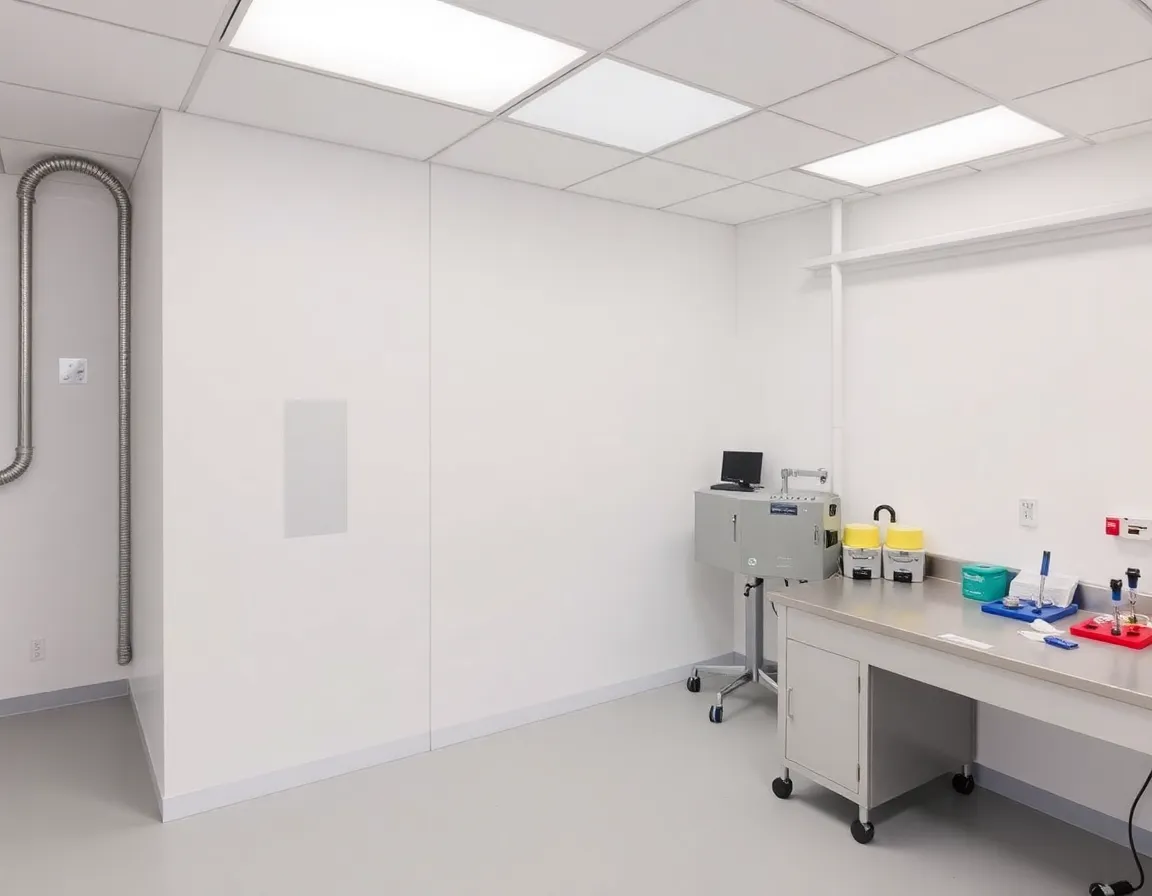
The Hidden Cost of Contamination in Modern Manufacturing
In the high-stakes world of precision manufacturing, the difference between a profitable production run and a costly recall often comes down to a particle you cannot see with the naked eye. For industries producing medical devices, automotive electronics, optical components, and consumer goods, dust is not merely a housekeeping nuisance—it is a primary driver of scrap rates, rework costs, and field failures. Traditional plastic molding processes, while highly efficient, operate in an environment where ambient air, raw material handling, and even the molding machine itself introduce microscopic contaminants. These particles become embedded in the molten polymer, creating surface blemishes, weak points, and functional defects that compromise part integrity. The solution lies in a paradigm shift toward dust-free plastic molding, une approche systématique qui transforme tout l'écosystème de production—du silo de résine à la pièce finie—en une zone contrôlée et sans contamination. Cet article explore les principes, les technologies et la justification économique derrière cette évolution critique, démontrant pourquoi des pièces plus propres se traduisent directement par des rendements plus élevés et une rentabilité accrue.
Définir le moulage plastique sans poussière : plus qu'une simple salle blanche
Le moulage plastique sans poussière est une méthodologie de fabrication complète qui intègre des contrôles environnementaux, des protocoles de manipulation des matériaux et une ingénierie de processus pour minimiser ou éliminer la contamination particulaire sur les composants moulés. Il est important de distinguer cela du simple fonctionnement dans une salle blanche. Bien qu'une salle blanche fournisse une atmosphère contrôlée, le moulage sans poussière va au-delà de la pièce elle-même. Il englobe tout le cycle de vie du matériau : la pureté de la résine entrante, la propreté du système de convoyage, l'état de la surface du moule et l'extraction des gaz et des particules pendant le cycle de moulage par injection ou par soufflage. L'objectif est d'obtenir une surface de pièce exempte de matières étrangères incrustées, de défauts visuels et de micro-défauts qui pourraient compromettre les performances dans des applications exigeantes.
Par exemple, une lentille pour le système avancé d'aide à la conduite (ADAS) d'un véhicule ne peut pas tolérer une seule particule de poussière de 50 microns, car cela disperserait la lumière et désactiverait la fonctionnalité de la caméra. De même, un corps de seringue médicale doit être exempt de toute particule qui pourrait s'infiltrer dans le médicament. Le moulage sans poussière n'est pas une technologie unique mais un système de défense en couches. Il nécessite une compréhension holistique de l'origine de la poussière—de la dégradation du polymère, de l'admission d'air externe, de l'attraction par charge statique et de la manipulation humaine—puis le déploiement de contre-mesures à chaque point d'entrée.
Les trois piliers d'un environnement sans poussière
Pour atteindre une véritable opération sans poussière, les fabricants doivent se concentrer sur trois piliers interdépendants : le contrôle de la contamination aéroportée, la gestion de la pureté des matériaux, et la suppression des particules induites par le processus. Le contrôle aéroporté implique une filtration à haute efficacité pour les particules aériennes (HEPA), des différentiels de pression positifs et des douches à air pour le personnel. La gestion de la pureté des matériaux exige des systèmes de convoyage scellés, des dispositifs antistatiques et des trémies de séchage dédiées qui empêchent la poussière ambiante de se mélanger aux granulés. La suppression induite par le processus implique l'optimisation de la conception de la vis et des vitesses d'injection pour réduire le cisaillement thermique, ce qui peut provoquer la dégradation du polymère et la génération de micro-particules carbonisées. Chaque pilier est critique ; la défaillance de l'un peut compromettre l'ensemble du système.
Comment fonctionne le moulage sans poussière : technologies et mécanismes
La mise en œuvre d'un protocole sans poussière nécessite une combinaison stratégique de matériel, de logiciels et de discipline procédurale. Les sections suivantes détaillent les mécanismes de base qui rendent cette approche efficace.
Filtration d'air avancée et classification des salles blanches
La première ligne de défense est l'environnement physique. Les installations modernes de moulage sans poussière fonctionnent généralement selon les normes de salle blanche ISO Classe 7 ou Classe 8 (équivalent à Classe 10 000 ou 100 000 selon l'ancienne norme fédérale). Ceci est réalisé en utilisant des hottes à flux laminaire et des unités de filtration à ventilateur (FFU) qui font circuler en continu l'air à travers des filtres HEPA, éliminant 99,971 TP3T de particules à 0,3 microns. La pression d'air à l'intérieur de la zone de moulage est maintenue plus élevée que celle des couloirs adjacents, empêchant l'air non filtré d'entrer. De plus, des tapis collants aux points d'entrée et des combinaisons de salle blanche intégrales avec cagoules, masques et gants empêchent les cellules de peau et les fibres de vêtements humains de devenir des contaminants. Pour les applications ultra-critiques, telles que les lentilles optiques ou les composants médicaux implantables, les fabricants utilisent des mini-environnements—de petites zones propres localisées directement au-dessus de l'ouverture du moule, garantissant que le moment critique de l'éjection de la pièce se produit dans l'air le plus pur possible.
Transport et séchage des matériaux en boucle fermée
Les granulés de plastique brut sont une source majeure de poussière. Ils accumulent une charge statique, attirent la poussière ambiante et peuvent se dégrader en fines (petites particules cassées) pendant le transport. Le moulage sans poussière utilise des systèmes de convoyage sous vide en boucle fermée avec des surfaces intérieures lisses et sans coudes prononcés où les granulés peuvent se fracturer. Ces systèmes sont équipés d' unités de dépoussiérage qui utilisent la séparation cyclonique ou électrostatique pour éliminer les fines et la micro-poussière du flux de granulés avant qu'ils n'atteignent la trémie de la machine. De plus, le processus de séchage lui-même doit être sans poussière. Les sécheurs à dessiccant standard peuvent introduire des particules provenant du lit de dessiccant. Par conséquent, les opérations sans poussière utilisent des générateurs d'air sec avec filtration en aval pour garantir que l'air utilisé pour le séchage est aussi propre que l'air de la salle blanche. La trémie elle-même est scellée avec une purge à pression positive, empêchant toute contamination externe.
Ingénierie de surface du moule et nettoyage dans le moule
Le moule est la dernière frontière. Même une poussière microscopique sur la surface de la cavité peut être transférée à la pièce. Le moulage sans poussière utilise des moules auto-nettoyants with specialized venting systems that allow trapped air and gas to escape without drawing in dust. Some advanced systems use capteurs dans le moule that detect pressure variations caused by particle accumulation and trigger an automatic purging cycle. Additionally, the application of anti-static coatings on the mold surface reduces the tendency of the part to attract airborne particles upon ejection. For high-volume production, robotic arms remove parts and immediately place them in sealed packaging, eliminating the risk of post-molding contamination from human hands or open conveyor belts.
Strategic Benefits: From Quality to Cost Efficiency
The adoption of dust-free plastic molding yields tangible, measurable benefits that extend far beyond aesthetics. The following are the primary advantages that justify the investment.
- Dramatically Reduced Scrap and Rework Rates: By eliminating the primary cause of surface defects, manufacturers can achieve yield rates of 98% or higher, even for parts with demanding optical or cosmetic requirements. This directly reduces material waste, energy consumption, and labor costs associated with inspection and rework.
- Enhanced Functional Performance: For electrical connectors, dust particles can cause intermittent contact failures. For fluid-handling components, they can clog micro-channels. Dust-free parts exhibit superior dimensional consistency, better mechanical strength (no weak points from embedded particles), and reliable performance in critical applications.
- Compliance with Stringent Industry Regulations: The medical device industry (ISO 13485) and automotive industry (IATF 16949) have strict cleanliness standards. Dust-free molding provides the documented evidence required for regulatory audits, facilitating faster product approvals and market access.
- Improved Aesthetic Quality and Brand Value: In consumer electronics and automotive interiors, a flawless surface finish is a key selling point. Dust-free parts have a consistent gloss, color, and texture, enhancing the perceived quality of the final product.
- Extended Mold Life and Reduced Maintenance: Dust and fines are abrasive. They accelerate wear on mold surfaces, ejector pins, and hot runner systems. By keeping the material and environment clean, manufacturers reduce mold wear, extend tooling life, and minimize downtime for maintenance.
Economic Impact: A Cost-Benefit Analysis
While the initial capital investment in cleanroom infrastructure, specialized conveying systems, and air handling can be significant (often 20-30% higher than a conventional facility), the return on investment is compelling. Consider a typical scenario: a manufacturer producing 10 million parts annually with a 5% scrap rate due to dust. At a cost of $0.50 per part in material and labor, this represents a $250,000 annual loss. Transitioning to dust-free molding reduces scrap to 0.5%, saving $225,000 per year. Additionally, the reduction in warranty claims and field failures—which can cost thousands of dollars per incident—often pays for the cleanroom investment within 18 to 24 months. Furthermore, dust-free capabilities allow manufacturers to bid on higher-margin, high-precision contracts that competitors cannot handle, opening new revenue streams.
Applications Across High-Stakes Industries
The necessity for dust-free molding is most acute in sectors where failure is not an option. The following applications highlight the critical role of this technology.
Medical Devices and Diagnostics
Injection-molded components such as insulin pens, syringes, surgical instrument handles, and diagnostic cassettes must be free from particulate that could cause infection, allergic reactions, or inaccurate test results. Dust-free molding ensures that these parts meet USP Class VI biocompatibility standards and are safe for direct patient contact. The process also prevents contamination of sterile packaging.
Optics and Photonics
Lenses for VR headsets, automotive LiDAR, and smartphone cameras require surfaces with zero visible defects. A single dust particle can cause light diffraction, resulting in image blur or sensor malfunction. Dust-free molding is the only viable method for producing these high-volume, high-precision optical components at scale.
Automotive Electronics and Sensors
Under the hood, components like engine control unit (ECU) housings, ABS sensors, and fuel injector bodies are exposed to harsh conditions. However, during manufacturing, they must be pristine. Dust particles can cause electrical short circuits or interfere with the sealing surfaces, leading to fluid leaks. Dust-free molding ensures the reliability of these safety-critical parts.
Consumer Electronics and Wearables
Smartwatch casings, earbud shells, and smartphone frames are visible to the user and subject to intense scrutiny. Dust-free molding provides the flawless, high-gloss finish that consumers expect from premium products, reducing returns and customer complaints.
Best Practices for Implementing a Dust-Free Molding Program
Transitioning to dust-free molding is a strategic initiative that requires careful planning and execution. The following best practices are essential for success.
1. Conduct a Comprehensive Contamination Audit
Before making changes, identify all potential sources of dust in the current process. This includes analyzing the raw material, the conveying system, the molding machine, the mold, the operator’s actions, and the ambient air. Use particle counters to measure baseline levels and identify the highest-contributing sources.
2. Invest in Personnel Training and Discipline
Technology is only effective if people follow protocols. Comprehensive training on cleanroom behavior—proper gowning, restricted movements, and correct material handling—is crucial. Regular audits and retraining sessions help maintain a culture of cleanliness. Operators must understand that a single unlocked door or a hurried gesture can compromise an entire batch.
3. Implement Predictive Maintenance for Filtration Systems
HEPA filters and de-dusting units have a finite lifespan. Implement a rigorous maintenance schedule based on filter pressure differentials and particle count monitoring. Replace filters proactively, not reactively. Keep spare parts on hand to minimize downtime.
4. Optimize Process Parameters to Minimize Degradation
High shear rates and excessive melt temperatures can degrade the polymer, creating carbonized particles. Use lower injection speeds, optimized screw profiles, and appropriate backpressure to reduce thermal and mechanical stress on the material. Regularly purge the barrel with a cleaning compound to remove any degraded resin.
5. Use Robotics and Automation to Minimize Human Contact
Humans are the largest source of contamination in any cleanroom. Use six-axis robots for part removal, degating, and packaging. This not only reduces dust but also improves consistency and cycle times. If manual handling is unavoidable, use cleanroom-grade gloves and tools.
6. Validate and Monitor Continuously
Establish clear acceptance criteria for part cleanliness (e.g., particle count per square centimeter). Use automated vision inspection systems to detect defects in real-time. Track yield data and correlate it with environmental particle counts to identify correlations and proactively adjust processes.
Conclusion: A Competitive Imperative for the Future
In an era of increasing technical complexity and consumer expectations, dust-free plastic molding is no longer a niche specialty—it is a competitive imperative. The initial costs are outweighed by the substantial savings in scrap, the opening of new high-value markets, and the enhanced reputation for quality. As industries push toward miniaturization, higher functionality, and stricter regulatory oversight, the margin for error shrinks. The manufacturers who embrace a holistic approach to contamination control—integrating cleanroom technology, advanced material handling, and rigorous process discipline—will not only achieve higher yields but will also position themselves as leaders in the next generation of precision manufacturing. The path to cleaner parts is clear, and it leads directly to a more profitable and sustainable future.