
Introduction : L'intersection critique de la précision et de la pureté
Dans le monde à enjeux élevés de la fabrication de dispositifs médicaux, la marge d'erreur se mesure en microns, et le coût de la contamination peut se mesurer en vies de patients. À mesure que la technologie médicale progresse vers des dispositifs plus petits, plus complexes et plus implantables, les exigences imposées aux composants qui les constituent sont devenues extraordinairement strictes. C'est là que services de moulage par injection en salle blanche ont évolué d'une spécialité de niche à une exigence fondamentale. Le moulage en salle blanche n'est pas simplement un moulage par injection standard effectué dans une pièce sans poussière ; c'est un écosystème de fabrication contrôlé et holistique conçu pour garantir que chaque pièce en polymère émerge avec une sécurité biologique absolue, une intégrité dimensionnelle et une fiabilité fonctionnelle. Pour les fabricants d'équipements médicaux, comprendre les avantages profonds de ce processus ne concerne pas seulement la conformité—il s'agit d'obtenir un avantage concurrentiel sur un marché où la qualité est le différenciateur ultime.
Comprendre le moulage par injection en salle blanche : Plus qu'une simple pièce blanche
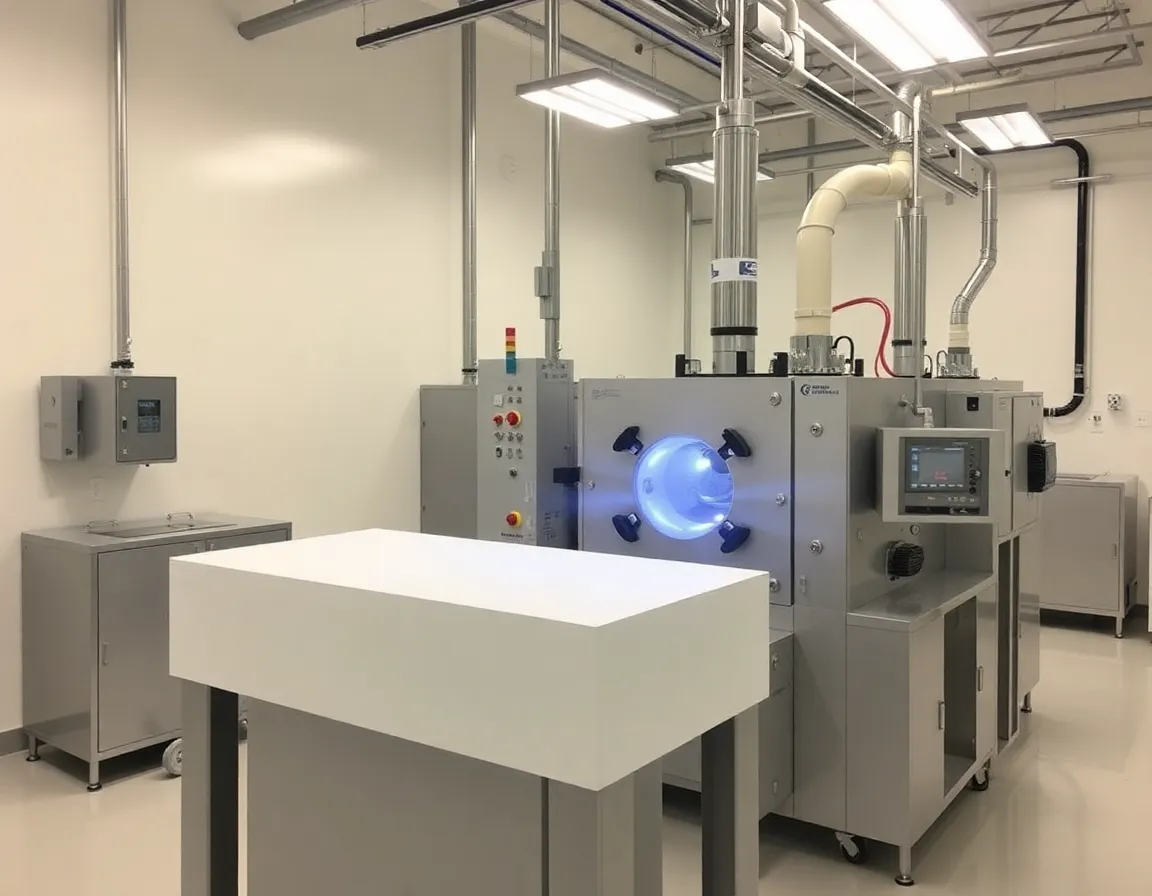
Pour apprécier les avantages, il faut d'abord comprendre le processus. Le moulage par injection en salle blanche combine la mécanique du moulage par injection thermoplastique traditionnel avec un environnement rigoureusement contrôlé, généralement classé selon les normes ISO 14644-1 (allant de la classe 7 à la classe 5, la classe 5 étant la plus stricte). Ces salles maintiennent des limites spécifiques sur la concentration de particules en suspension dans l'air, la température, l'humidité et la pression d'air positive. Cependant, la véritable sophistication réside dans les systèmes auxiliaires. Services de moulage par injection en salle blanche intègrent des équipements spécialisés tels que des systèmes de filtration HEPA/ULPA, des robots automatisés de manipulation de pièces et des lignes d'assemblage en aval en salle blanche pour empêcher tout contact humain avec les pièces moulées.
De plus, le processus s'étend au-delà de l'environnement physique pour inclure la manutention des matériaux. Les résines brutes sont souvent séchées sous vide et transportées dans des systèmes scellés pour empêcher l'absorption d'humidité et la contamination. Les moules eux-mêmes sont conçus pour un fonctionnement rapide et sans bavure, utilisant souvent des systèmes avancés d'évent et de contrôle de température pour minimiser les temps de cycle tout en maximisant la constance des pièces. L'objectif est de créer un flux continu depuis la pastille de polymère brut jusqu'au composant médical stérile et prêt à emballer, sans jamais exposer la pièce à des conditions atmosphériques non contrôlées.
Le socle réglementaire : pourquoi le moulage standard échoue
Les ateliers de moulage par injection standard sont mal équipés pour faire face à la surveillance réglementaire du secteur médical. Les normes FDA et ISO 13485 imposent une traçabilité, une validation et une surveillance environnementale que les installations traditionnelles ne peuvent pas fournir. Les services de moulage en salle blanche offrent une documentation complète de chaque lot, y compris les comptages de particules environnementales, les numéros de lot de matériaux et les journaux de paramètres de processus. Cette piste de données n'est pas seulement de la paperasse bureaucratique ; c'est la preuve scientifique requise pour démontrer qu'un dispositif est sûr pour l'usage humain. Sans cet environnement contrôlé, même une pièce visuellement parfaite pourrait héberger des contaminants biologiques ou particulaires microscopiques qui déclenchent une réponse immunitaire ou une défaillance du dispositif.
Avantage 1 : Sécurité biologique supérieure et risque de contamination réduit
L'avantage le plus évident et le plus critique du moulage en salle blanche est la réduction drastique de la contamination. Dans les applications médicales—en particulier celles impliquant des implants, des systèmes d'administration de médicaments ou des instruments chirurgicaux—toute particule étrangère (poussière, cellules de peau ou spores microbiennes) peut provoquer de graves réactions indésirables. Services de moulage par injection en salle blanche Atténuent ce risque grâce à des mécanismes de défense multicouches.
- Contrôle des particules en suspension : La filtration HEPA nettoie en continu l'air, éliminant 99,97% des particules de plus de 0,3 microns.
- Zones à pression positive : Les salles blanches maintiennent une pression d'air plus élevée que les zones adjacentes, empêchant l'air non filtré de s'infiltrer lorsque les portes s'ouvrent.
- Intervention humaine minimale : Des bras robotisés extraient les pièces du moule et les transfèrent directement dans un emballage scellé, éliminant la plus grande source de contamination : les opérateurs humains.
Cet environnement contrôlé garantit que la pièce finie respecte des limites strictes d'endotoxines et des seuils de bioburden, la rendant sûre pour un contact direct ou indirect avec les tissus corporels. Pour les fabricants, cela se traduit par moins de lots rejetés, un risque réduit de rappels coûteux et, surtout, une sécurité accrue des patients.
Avantage 2 : Constance dimensionnelle et précision inégalées
Les dispositifs médicaux présentent souvent des caractéristiques à micro-échelle—telles que les pointes de cathéter, les boîtiers de valve ou les lentilles optiques—où les tolérances sont mesurées en millièmes de millimètre. Les fluctuations de la température ambiante et de l'humidité peuvent provoquer une expansion ou une contraction imprévisible des résines plastiques, entraînant un gauchissement ou des bavures. Les environnements de salle blanche sont thermiquement stables, souvent maintenus à ±1°C d'un point de consigne, ce qui permet repeatable molecular crystallization of the polymer during the cooling phase.
Process Control in Real-Time
Modern cleanroom molding machines are equipped with closed-loop control systems that monitor cavity pressure, melt temperature, and injection speed in real-time. When combined with the stable environment, these systems produce parts that are virtually identical across millions of cycles. This precision is critical for components that must interface with other parts, such as a syringe barrel and plunger, where a variance of even 0.01mm could cause leakage or breakage. The result is a product that functions exactly as designed, every time, reducing the need for secondary inspection and sorting.
Benefit 3: Enhanced Material Integrity and Performance
Many medical-grade polymers—such as PEEK, polycarbonate, and liquid silicone rubber (LSR)—are highly sensitive to environmental contaminants. Moisture absorption alone can degrade the polymer chain, leading to brittle parts or surface defects like splay. Cleanroom facilities use desiccant dryers and sealed material hoppers to ensure that the resin is processed with a moisture content below 0.02%. Furthermore, the cleanroom atmosphere prevents the deposition of airborne oils or chemicals that could react with the polymer during the high-heat molding process.
This preservation of material integrity results in parts with superior mechanical strength, chemical resistance, and optical clarity. For example, an implantable PEEK spinal cage molded in a cleanroom will exhibit the exact tensile modulus and fatigue resistance required for load-bearing applications, without the microscopic voids that can form due to moisture-induced hydrolysis. In essence, cleanroom molding unlocks the full performance potential of advanced biomaterials.
Benefit 4: Streamlined Post-Processing and Faster Time-to-Market
Traditionally, parts molded in a non-cleanroom environment require extensive secondary operations: washing, ultrasonic cleaning, flash removal, and manual inspection. These steps are not only time-consuming but also introduce additional risk of handling damage. Services de moulage par injection en salle blanche are designed to eliminate or drastically reduce these downstream steps.
- In-Mold Assembly: Advanced cleanroom processes can overmold multiple materials (e.g., a rigid core with a soft-touch silicone coating) in a single cycle, eliminating separate assembly steps.
- Cleanroom-Compatible Packaging: Parts can be transferred directly into medical-grade Tyvek pouches or blister packs within the cleanroom, preserving their sterile state.
- Integrated Inspection: Vision systems inside the cleanroom can perform 100% automated inspection for flash, discoloration, or missing features, immediately rejecting defective parts without manual handling.
By collapsing the timeline between molding and final packaging, manufacturers can significantly compress their production lead times. This agility is paramount in the medical field, where speed-to-market for a novel therapeutic device can mean capturing a significant share of a lucrative market before competitors. Furthermore, eliminating secondary processes reduces labor costs and the total cost of ownership for the device.
Benefit 5: Scalability and Long-Term Cost Efficiency
While the initial setup cost for a cleanroom molding line is higher than a standard line, the long-term economic benefits are substantial. The high level of process automation and environmental stability leads to lower scrap rates and rework costs. In standard molding, scrap rates can range from 2% to 5%; in a well-managed cleanroom, this can be reduced to below 0.5%.
Total Cost of Quality
Consider the hidden costs of a contamination failure: a recalled implantable device can cost millions in legal fees, regulatory fines, and brand damage. Cleanroom molding acts as an insurance policy against these catastrophic risks. Moreover, the scalability of cleanroom operations allows manufacturers to smoothly transition from pilot runs (for clinical trials) to high-volume production (for commercial launch) without changing the core manufacturing process. The process validation remains consistent, meaning that the FDA-approved design is identical to the mass-produced version, eliminating the need for costly re-validation.
Additionally, many cleanroom molding providers offer design for manufacturability (DFM) consulting. They can suggest material substitutions or geometry changes that reduce cycle times and material waste, further driving down unit costs. When amortized over the lifecycle of a successful medical device, the investment in cleanroom molding yields a significant return on investment.
Applications Across the Medical Spectrum
The benefits of cleanroom molding are leveraged across a diverse range of medical devices. Here are just a few key application areas:
- Implantable Devices: Orthopedic anchors, pacemaker housings, and cochlear implant components that require biocompatibility and zero microbial presence.
- Drug Delivery Systems: Auto-injectors, insulin pens, and inhalers where precise dosing and contamination-free pathways are essential for drug efficacy.
- Instruments chirurgicaux : Disposable forceps, trocars, and retractors that must be sterile and sharp for single-use procedures.
- Diagnostic Components: Microfluidic chips and cuvettes used in blood analysis, where optical clarity and chemical inertness are critical for accurate test results.
Best Practices for Selecting a Cleanroom Molding Partner
To fully realize these benefits, medical device companies must choose their manufacturing partner wisely. The following best practices are essential:
1. Verify Certifications, Not Just Claims
Ensure the facility holds current ISO 13485 certification and is in compliance with FDA 21 CFR Part 820 Quality System Regulations. Ask for recent environmental monitoring reports to verify the actual particle counts, not just the nominal class rating.
2. Assess Material Handling Capabilities
Inquire about how they handle sensitive resins. Do they use vacuum conveying? Are material lots quarantined until verified? A partner who treats raw materials with the same rigor as finished parts is a good sign.
3. Evaluate Automation and Data Acquisition
Look for facilities that employ robotic part extraction and have a robust Manufacturing Execution System (MES). The ability to provide batch-level traceability data electronically is a hallmark of a modern, reliable partner.
4. Engage Early in the Design Phase
The highest cost savings occur when the molder is consulted before the mold is cut. Their engineers can provide input on draft angles, gate locations, and material selection that will optimize performance within the cleanroom environment.
Conclusion: The Strategic Imperative of Cleanroom Molding
Cleanroom injection molding is not a luxury; it is a strategic imperative for any company serious about competing in the medical device industry. The five critical benefits—biological safety, precision, material integrity, streamlined processing, and cost efficiency—combine to create a manufacturing framework that prioritizes patient outcomes without sacrificing profitability. As regulatory bodies tighten their scrutiny and as medical technology pushes further into the realm of personalized and minimally invasive treatments, the reliance on services de moulage par injection en salle blanche will only intensify. By partnering with a certified and technologically advanced cleanroom molder, medical device manufacturers can ensure that their products are not only manufactured to specification but are also imbued with the highest level of trust and reliability that the healthcare sector demands. In the final analysis, cleanroom molding is the bridge between innovative design and life-saving clinical application.