
Einleitung: Der kritische Schnittpunkt von Präzision und Reinheit
In der risikoreichen Welt der Medizingeräteherstellung wird die Fehlertoleranz in Mikrometern gemessen, und die Kosten einer Kontamination können in Patientenleben gemessen werden. Da die Medizintechnik zu kleineren, komplexeren und stärker implantierbaren Geräten fortschreitet, sind die Anforderungen an die Komponenten, aus denen sie bestehen, außerordentlich streng geworden. Hier haben sich Reinraum-Spritzgussdienstleistungen von einer Nischenspezialität zu einer grundlegenden Anforderung entwickelt. Reinraumspritzguss ist nicht nur Standard-Spritzguss in einem staubfreien Raum; es ist ein ganzheitliches, kontrolliertes Fertigungsökosystem, das darauf ausgelegt ist, sicherzustellen, dass jedes Polymerteil mit absoluter biologischer Sicherheit, dimensionaler Integrität und funktionaler Zuverlässigkeit entsteht. Für Medizingeräte-OEMs geht es beim Verständnis der tiefgreifenden Vorteile dieses Prozesses nicht nur um Compliance – es geht darum, einen Wettbewerbsvorteil in einem Markt zu erzielen, in dem Qualität das ultimative Unterscheidungsmerkmal ist.
Reinraum-Spritzguss verstehen: Mehr als nur ein weißer Raum
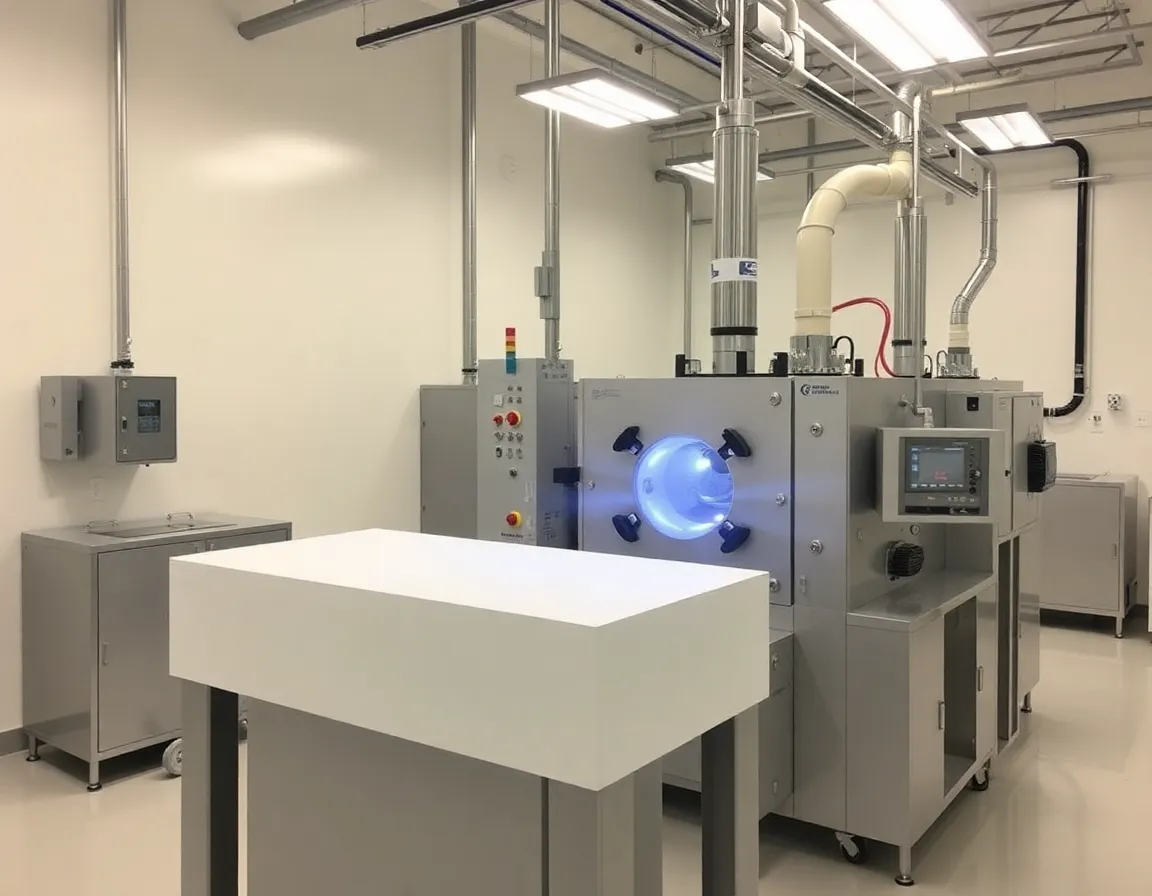
Um die Vorteile zu verstehen, muss man zunächst den Prozess verstehen. Reinraum-Spritzguss kombiniert die Mechanik des traditionellen Thermoplast-Spritzgusses mit einer streng kontrollierten Umgebung, die typischerweise nach ISO-14644-1-Standards klassifiziert ist (von Klasse 7 bis Klasse 5, wobei Klasse 5 die strengste ist). Diese Räume halten spezifische Grenzwerte für die Konzentration luftgetragener Partikel, Temperatur, Luftfeuchtigkeit und positiven Luftdruck ein. Die wahre Raffinesse liegt jedoch in den Hilfssystemen. Reinraum-Spritzgussdienstleistungen integrieren spezielle Ausrüstung wie HEPA/ULPA-Filtrationssysteme, automatisierte Teilehandhabungsroboter und nachgelagerte Reinraum-Montagelinien, um menschlichen Kontakt mit den geformten Teilen zu verhindern.
Darüber hinaus geht der Prozess über die physische Umgebung hinaus und umfasst auch die Materialhandhabung. Rohe Harze werden oft vakuumgetrocknet und in geschlossenen Systemen transportiert, um Feuchtigkeitsaufnahme und Kontamination zu verhindern. Die Formen selbst sind für einen schnellen, gratfreien Betrieb ausgelegt und nutzen oft fortschrittliche Entlüftungs- und Temperaturkontrollsysteme, um die Zykluszeiten zu minimieren und gleichzeitig die Teilekonsistenz zu maximieren. Das Ziel ist es, einen nahtlosen Fluss vom rohen Polymergranulat bis zum sterilen, verpackungsfertigen medizinischen Bauteil zu schaffen, ohne das Teil jemals unkontrollierten atmosphärischen Bedingungen auszusetzen.
Das regulatorische Rückgrat: Warum Standard-Spritzguss versagt
Standard-Spritzgussbetriebe sind schlecht gerüstet, um die regulatorische Kontrolle des medizinischen Sektors zu bewältigen. Die FDA- und ISO-13485-Normen schreiben Rückverfolgbarkeit, Validierung und Umweltüberwachung vor, die herkömmliche Einrichtungen nicht bieten können. Reinraum-Spritzgussservices bieten eine vollständige Dokumentation jeder Charge, einschließlich Partikelzahlen in der Umgebung, Materialchargennummern und Prozessparameterprotokollen. Diese Datenaufzeichnung ist nicht nur bürokratischer Papierkram; sie ist der wissenschaftliche Nachweis, der erforderlich ist, um zu beweisen, dass ein Gerät für den menschlichen Gebrauch sicher ist. Ohne diese kontrollierte Umgebung könnte selbst ein optisch perfektes Teil mikroskopische biologische oder partikuläre Verunreinigungen beherbergen, die eine Immunreaktion oder ein Geräteversagen auslösen.
Vorteil 1: Überlegene biologische Sicherheit und reduziertes Kontaminationsrisiko
Der offensichtlichste und kritischste Vorteil des Reinraum-Spritzgusses ist die drastische Reduzierung von Kontamination. In medizinischen Anwendungen – insbesondere solchen mit Implantaten, Medikamentenabgabesystemen oder chirurgischen Instrumenten – kann jedes Fremdpartikel (Staub, Hautzellen oder mikrobielle Sporen) schwere unerwünschte Reaktionen verursachen. Reinraum-Spritzgussdienstleistungen Dieses Risiko wird durch mehrschichtige Verteidigungsmechanismen gemindert.
- Kontrolle luftgetragener Partikel: HEPA-Filtration reinigt die Luft kontinuierlich und entfernt 99,97% der Partikel, die größer als 0,3 Mikrometer sind.
- Überdruckzonen: Reinräume halten einen höheren Luftdruck als angrenzende Bereiche aufrecht und verhindern so, dass ungefilterte Luft beim Öffnen von Türen eindringt.
- Minimale menschliche Intervention: Roboterarme entnehmen Teile aus der Form und transportieren sie direkt in versiegelte Verpackungen, wodurch die größte Kontaminationsquelle eliminiert wird: menschliche Bediener.
Diese kontrollierte Umgebung stellt sicher, dass das fertige Teil strengen Endotoxin-Grenzwerten und Bioburden-Schwellenwerten entspricht und es sicher für direkten oder indirekten Kontakt mit Körpergewebe macht. Für Hersteller bedeutet dies weniger verworfene Chargen, ein reduziertes Risiko kostspieliger Rückrufe und, am wichtigsten, eine erhöhte Patientensicherheit.
Vorteil 2: Unübertroffene Dimensionskonsistenz und Präzision
Medizinische Geräte weisen oft Merkmale im Mikromaßstab auf – wie Katheterspitzen, Ventilgehäuse oder optische Linsen – bei denen Toleranzen in Tausendstel Millimetern gemessen werden. Schwankungen der Umgebungstemperatur und -feuchtigkeit können dazu führen, dass sich Kunststoffharze unvorhersehbar ausdehnen oder zusammenziehen, was zu Verzug oder Gratbildung führt. Reinraumumgebungen sind thermisch stabil, oft innerhalb von ±1°C um einen Sollwert gehalten, was ermöglicht repeatable molecular crystallization of the polymer during the cooling phase.
Process Control in Real-Time
Modern cleanroom molding machines are equipped with closed-loop control systems that monitor cavity pressure, melt temperature, and injection speed in real-time. When combined with the stable environment, these systems produce parts that are virtually identical across millions of cycles. This precision is critical for components that must interface with other parts, such as a syringe barrel and plunger, where a variance of even 0.01mm could cause leakage or breakage. The result is a product that functions exactly as designed, every time, reducing the need for secondary inspection and sorting.
Benefit 3: Enhanced Material Integrity and Performance
Many medical-grade polymers—such as PEEK, polycarbonate, and liquid silicone rubber (LSR)—are highly sensitive to environmental contaminants. Moisture absorption alone can degrade the polymer chain, leading to brittle parts or surface defects like splay. Cleanroom facilities use desiccant dryers and sealed material hoppers to ensure that the resin is processed with a moisture content below 0.02%. Furthermore, the cleanroom atmosphere prevents the deposition of airborne oils or chemicals that could react with the polymer during the high-heat molding process.
This preservation of material integrity results in parts with superior mechanical strength, chemical resistance, and optical clarity. For example, an implantable PEEK spinal cage molded in a cleanroom will exhibit the exact tensile modulus and fatigue resistance required for load-bearing applications, without the microscopic voids that can form due to moisture-induced hydrolysis. In essence, cleanroom molding unlocks the full performance potential of advanced biomaterials.
Benefit 4: Streamlined Post-Processing and Faster Time-to-Market
Traditionally, parts molded in a non-cleanroom environment require extensive secondary operations: washing, ultrasonic cleaning, flash removal, and manual inspection. These steps are not only time-consuming but also introduce additional risk of handling damage. Reinraum-Spritzgussdienstleistungen are designed to eliminate or drastically reduce these downstream steps.
- In-Mold Assembly: Advanced cleanroom processes can overmold multiple materials (e.g., a rigid core with a soft-touch silicone coating) in a single cycle, eliminating separate assembly steps.
- Cleanroom-Compatible Packaging: Parts can be transferred directly into medical-grade Tyvek pouches or blister packs within the cleanroom, preserving their sterile state.
- Integrated Inspection: Vision systems inside the cleanroom can perform 100% automated inspection for flash, discoloration, or missing features, immediately rejecting defective parts without manual handling.
By collapsing the timeline between molding and final packaging, manufacturers can significantly compress their production lead times. This agility is paramount in the medical field, where speed-to-market for a novel therapeutic device can mean capturing a significant share of a lucrative market before competitors. Furthermore, eliminating secondary processes reduces labor costs and the total cost of ownership for the device.
Benefit 5: Scalability and Long-Term Cost Efficiency
While the initial setup cost for a cleanroom molding line is higher than a standard line, the long-term economic benefits are substantial. The high level of process automation and environmental stability leads to lower scrap rates and rework costs. In standard molding, scrap rates can range from 2% to 5%; in a well-managed cleanroom, this can be reduced to below 0.5%.
Total Cost of Quality
Consider the hidden costs of a contamination failure: a recalled implantable device can cost millions in legal fees, regulatory fines, and brand damage. Cleanroom molding acts as an insurance policy against these catastrophic risks. Moreover, the scalability of cleanroom operations allows manufacturers to smoothly transition from pilot runs (for clinical trials) to high-volume production (for commercial launch) without changing the core manufacturing process. The process validation remains consistent, meaning that the FDA-approved design is identical to the mass-produced version, eliminating the need for costly re-validation.
Additionally, many cleanroom molding providers offer design for manufacturability (DFM) consulting. They can suggest material substitutions or geometry changes that reduce cycle times and material waste, further driving down unit costs. When amortized over the lifecycle of a successful medical device, the investment in cleanroom molding yields a significant return on investment.
Applications Across the Medical Spectrum
The benefits of cleanroom molding are leveraged across a diverse range of medical devices. Here are just a few key application areas:
- Implantable Devices: Orthopedic anchors, pacemaker housings, and cochlear implant components that require biocompatibility and zero microbial presence.
- Drug Delivery Systems: Auto-injectors, insulin pens, and inhalers where precise dosing and contamination-free pathways are essential for drug efficacy.
- Chirurgische Instrumente: Disposable forceps, trocars, and retractors that must be sterile and sharp for single-use procedures.
- Diagnostic Components: Microfluidic chips and cuvettes used in blood analysis, where optical clarity and chemical inertness are critical for accurate test results.
Best Practices for Selecting a Cleanroom Molding Partner
To fully realize these benefits, medical device companies must choose their manufacturing partner wisely. The following best practices are essential:
1. Verify Certifications, Not Just Claims
Ensure the facility holds current ISO 13485 certification and is in compliance with FDA 21 CFR Part 820 Quality System Regulations. Ask for recent environmental monitoring reports to verify the actual particle counts, not just the nominal class rating.
2. Assess Material Handling Capabilities
Inquire about how they handle sensitive resins. Do they use vacuum conveying? Are material lots quarantined until verified? A partner who treats raw materials with the same rigor as finished parts is a good sign.
3. Evaluate Automation and Data Acquisition
Look for facilities that employ robotic part extraction and have a robust Manufacturing Execution System (MES). The ability to provide batch-level traceability data electronically is a hallmark of a modern, reliable partner.
4. Engage Early in the Design Phase
The highest cost savings occur when the molder is consulted before the mold is cut. Their engineers can provide input on draft angles, gate locations, and material selection that will optimize performance within the cleanroom environment.
Conclusion: The Strategic Imperative of Cleanroom Molding
Cleanroom injection molding is not a luxury; it is a strategic imperative for any company serious about competing in the medical device industry. The five critical benefits—biological safety, precision, material integrity, streamlined processing, and cost efficiency—combine to create a manufacturing framework that prioritizes patient outcomes without sacrificing profitability. As regulatory bodies tighten their scrutiny and as medical technology pushes further into the realm of personalized and minimally invasive treatments, the reliance on Reinraum-Spritzgussdienstleistungen will only intensify. By partnering with a certified and technologically advanced cleanroom molder, medical device manufacturers can ensure that their products are not only manufactured to specification but are also imbued with the highest level of trust and reliability that the healthcare sector demands. In the final analysis, cleanroom molding is the bridge between innovative design and life-saving clinical application.