
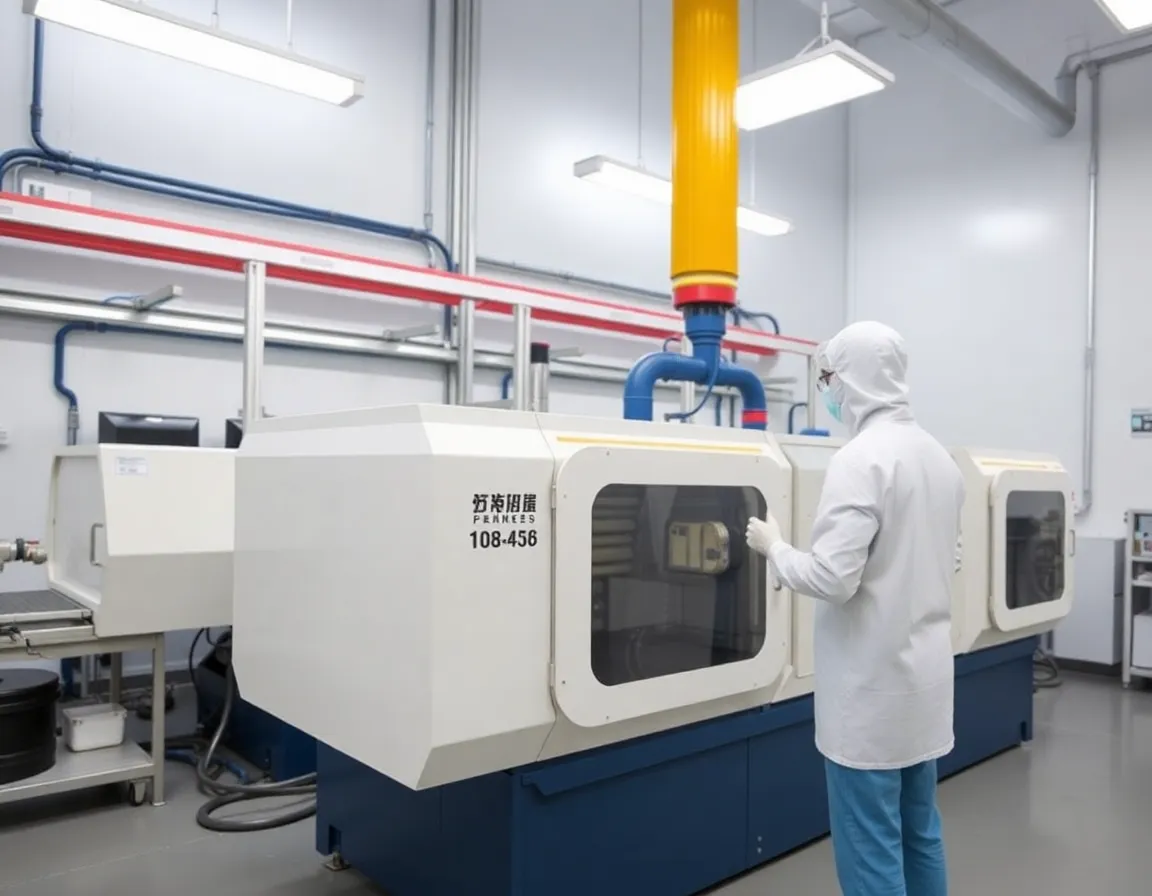
Einleitung: Die Schnittstelle von Präzision und Reinheit
In der Welt der fortschrittlichen Fertigung gibt es nur wenige Umgebungen, die so viel Strenge erfordern wie der Reinraum. Wenn Sie die strengen Partikelkontrollen eines Reinraums mit dem Hochvolumen- und Hochtoleranzprozess des Spritzgießens kombinieren, gelangen Sie zu einer spezialisierten Disziplin: Spritzguss im Reinraum der ISO-Klasse 8. Dieser Prozess dient nicht nur dazu, eine Werkstatt sauber zu halten; es ist eine wissenschaftlich regulierte Methode zur Herstellung von Kunststoffkomponenten, die frei von mikroskopischen Verunreinigungen sind, um ihre Sicherheit und Leistung in kritischen Anwendungen zu gewährleisten. Für Branchen von medizinischen Geräten bis hin zur Elektronik ist die Fähigkeit, ein Teil in einer kontrollierten Umgebung zu formen, kein Luxus – es ist eine absolute Notwendigkeit.
Eine Umgebung der ISO-Klasse 8, wie sie von der Internationalen Organisation für Normung (ISO) in der Norm 14644-1 definiert wird, erlaubt maximal 3.520.000 Partikel pro Kubikmeter bei einer Größe von 0,5 Mikrometern oder größer. Auch wenn dies wie eine erstaunliche Zahl klingen mag, stellt sie eine kontrollierte Atmosphäre dar, die deutlich sauberer ist als normale Fabrikluft. In diesem Zusammenhang, Spritzguss im Reinraum der ISO-Klasse 8 überbrückt die Lücke zwischen konventioneller Kunststoffproduktion und den ultrareinen Anforderungen moderner Technologie. Dieser Artikel untersucht die Feinheiten dieses Prozesses, seine betrieblichen Mechanismen, seine unbestreitbaren Vorteile und seine entscheidende Rolle in der modernen Fertigung.
Verständnis der ISO-Klasse-8-Standards und der Reinraumdynamik
Um den Wert des Spritzgießens in Reinräumen der ISO-Klasse 8 wirklich zu schätzen, muss man zunächst das Klassifizierungssystem verstehen, das diese Räume regelt. Die Norm ISO 14644-1 ist der globale Maßstab für die Reinraumklassifizierung und ersetzt den älteren Federal Standard 209E. Die Bezeichnung "Klasse 8" wird oft als Einstiegsstufe der Reinraumfertigung angesehen, ist aber weit davon entfernt, nachsichtig zu sein. Sie konzentriert sich auf die Kontrolle der luftgetragenen Partikelkontamination, die die Hauptbedrohung für empfindliche Produkte darstellt.
Partikelzahl und Luftstromkontrolle
Die Kernmetrik für ISO-Klasse 8 ist die zulässige Partikelkonzentration. Im Gegensatz zu strengeren Klassen (wie ISO 5 oder ISO 7) erlaubt ISO-Klasse 8 eine höhere Partikelkonzentration, erfordert aber dennoch eine hocheffiziente Partikelluftfilterung (HEPA). Typischerweise erreichen diese Reinräume Sauberkeit durch:
- HEPA-Filtration: Die Luft wird durch HEPA-Filter geleitet, die mindestens 99,97% der Partikel bei 0,3 Mikrometern entfernen, wodurch sichergestellt wird, dass die einströmende Luft praktisch steril ist.
- Positiver Luftdruck: Der Reinraum wird auf einem höheren Druck als die angrenzenden Bereiche gehalten, um zu verhindern, dass ungefilterte Luft durch Türen oder Lücken eindringt.
- Laminare Luftströmung (oder nicht-unidirektional): Während ISO-Klasse 8 oft eine nicht-unidirektionale Luftströmung verwendet (bei der gefilterte Luft über Deckendüsen gemischt wird), können einige kritische Zonen laminare Strömungshauben verwenden, um einen unidirektionalen Luftstrom über die Spritzgießmaschine zu erzeugen.
Das Ziel ist nicht, ein Vakuum der Sterilität zu schaffen, sondern eine vorhersehbare und kontrollierte Umgebung zu etablieren, in der das Kontaminationsrisiko auf ein statistisch akzeptables Maß minimiert wird.
Warum nicht eine sauberere Klasse?
Eine häufige Frage ist, warum Hersteller nicht einfach einen saubereren Standard wie ISO-Klasse 5 verwenden. Die Antwort liegt in Wirtschaftlichkeit und Praktikabilität. Die Kosten für die Erreichung und Aufrechterhaltung eines Reinraums der ISO-Klasse 5 sind exponentiell höher als bei ISO-Klasse 8, da mehr Luftwechsel pro Stunde, anspruchsvollere Bekleidungsprotokolle und häufigere Tests erforderlich sind. Für viele Anwendungen – insbesondere solche, bei denen das Produkt nicht in direktem Kontakt mit sterilem Körpergewebe steht oder bei denen eine nachgelagerte Wäsche durchgeführt wird – bietet eine Umgebung der ISO-Klasse 8 das optimale Gleichgewicht zwischen Kontaminationskontrolle und Betriebskosten.
Die Mechanik des Spritzgießens im Reinraum
Spritzguss im Reinraum der ISO-Klasse 8 besteht nicht nur darin, eine Standard-Spritzgießmaschine in einem Reinraum zu platzieren. Es erfordert einen ganzheitlichen Ansatz, der Ausrüstung, Materialhandhabung und Betriebsabläufe modifiziert, um zu verhindern, dass die Maschine selbst zu einer Kontaminationsquelle wird.
Maschinendesign und Modifikationen
Standard-Spritzgießmaschinen erzeugen Kontamination durch Hydraulikflüssigkeiten, Schmiermittel und mechanischen Verschleiß. In einer Reinraumumgebung werden diese Maschinen stark modifiziert oder durch spezielle Alternativen ersetzt. Zu den wichtigsten Anpassungen gehören:
- Elektrische vs. hydraulische Antriebe: Vollelektrische Spritzgießmaschinen werden bevorzugt, da sie Hydrauliköllecks eliminieren, die eine Hauptquelle für Partikel- und chemische Kontamination darstellen.
- Edelstahlgehäuse: Die Außenseite der Maschine ist oft mit Edelstahl oder glatten Polymerplatten verkleidet, um Abblättern von Farbe zu verhindern und das einfache Abwischen mit Reinigungsmitteln zu erleichtern.
- Geschlossene Kühlsysteme: Wasserkühlungsleitungen sind abgedichtet und so verlegt, dass Kondensation und mikrobiellem Wachstum vorgebeugt wird, die Partikel in die Luft abgeben können.
- Lokale Absaugung: Über dem Zylinder und der Düsenzone werden Entlüftungen angebracht, um Dämpfe oder Ausgasungen aus dem geschmolzenen Kunststoff aufzufangen und deren Rückführung in den Kreislauf zu verhindern.
Materialhandhabung und -trocknung
Contamination can also originate from the raw plastic resin itself. Pellets often carry static charges that attract dust and can be contaminated with paper fibers or other debris. In a cleanroom molding operation:
- Vacuum Conveying: Resin is transferred from sealed drums to the machine hopper using closed vacuum systems, eliminating manual pouring.
- Central Drying: Desiccant dryers are used to remove moisture, but they must have exhaust filters to prevent the release of fines (microscopic plastic dust) into the cleanroom.
- Ionized Air Knives: Before the resin enters the barrel, it may pass through an ionizing blower to neutralize static charge, allowing particles to be easily filtered away.
The Molding Cycle and In-Mold Monitoring
The actual molding cycle in an ISO Class 8 environment demands precision. The mold itself is typically made of polished, hardened steel to resist wear and prevent the generation of metallic particles. Moreover, the molding process often employs In-Mold-Sensoren to monitor cavity pressure and temperature. This data is crucial because it allows for real-time adjustments to the process, reducing the likelihood of flash (excess plastic) or short shots, which are defects that require secondary operations and increase the risk of contamination.
Critical Benefits and Applications Across Industries
The adoption of Spritzguss im Reinraum der ISO-Klasse 8 is driven by the undeniable advantages it offers in product quality and regulatory compliance. The benefits extend beyond simple cleanliness, impacting the structural integrity and performance of the final part.
Primary Benefits
- Reduced Bioburden: For medical devices, the process minimizes the initial microbial load, making downstream sterilization (like ethylene oxide or gamma radiation) more effective and reliable.
- Enhanced Surface Quality: By preventing dust particles from becoming embedded in the plastic surface, the final product has a smoother, more consistent finish, which is critical for optical components or sealing surfaces.
- Improved Mechanical Properties: Contaminants can act as stress concentrators, leading to premature cracking or failure. Cleanroom molding ensures that the polymer's molecular structure is uniform, yielding stronger parts.
- Regulatorische Konformität: Products manufactured in a controlled environment are easier to validate and document for FDA (Food and Drug Administration) or ISO 13485 (medical devices) audits.
Key Application Sectors
While any industry can benefit from cleaner parts, certain sectors rely on ISO Class 8 molding as a baseline requirement:
- Medical Devices: This is the largest market. Components like syringes, IV luer locks, surgical instrument handles, and implantable drug-delivery housings are molded here. The cleanroom environment prevents endotoxins and particulates from entering the patient's body.
- Pharmaceutical Packaging: Inhaler valves, diagnostic test cassettes, and pill bottles require a clean environment to prevent contamination of the medication.
- Electronics and Optics: Connectors, camera lens housings, and LED diffusers must be free of dust to prevent electrical short circuits or optical aberrations.
- Aerospace and Defense: Fittings and housings used in hydraulic systems require extreme purity to prevent valve blockage in sensitive flight control systems.
Best Practices for Operating an ISO Class 8 Molding Facility
Operating a successful ISO Class 8 cleanroom molding line requires more than just hardware; it demands a culture of discipline and a rigorous adherence to standard operating procedures (SOPs). Here are the critical best practices for maintaining purity and efficiency.
Personnel Gowning and Behavior
Humans are the largest source of contamination in any cleanroom. Even with an ISO Class 8 designation, which is more forgiving than Class 7, personnel must follow strict protocols:
- Full Gowning: Workers must wear cleanroom suits, hoods, booties, and face masks. Gloves must be powder-free and changed frequently.
- Minimal Movement: Rapid movements generate turbulence and shed particles. Personnel are trained to move slowly and deliberately.
- No Paper or Cardboard: Only cleanroom-grade paper and plastic packaging are allowed inside the controlled area.
Cleaning and Maintenance Schedules
Preventive maintenance is the lifeblood of cleanroom molding. A machine breakdown inside the cleanroom can cause a catastrophic contamination event.
- Daily Wipe-Down: All surfaces must be wiped with low-lint wipes and appropriate solvents (usually isopropyl alcohol) to remove any residue.
- HEPA Filter Certification: Filters must be tested and certified every 6-12 months to ensure they are functioning at the required efficiency.
- Lubrication Control: Only food-grade or cleanroom-approved lubricants can be used on moving parts, and they must be applied in minimal quantities to prevent overspray.
Process Validation and Monitoring
To ensure the cleanroom is performing as designed, continuous monitoring is essential. This involves both environmental monitoring (EM) and process monitoring.
- Particle Counters: Portable particle counters should be used to verify that airborne particle counts are within the ISO Class 8 limits during production.
- Microbial Monitoring: Settle plates (petri dishes) are placed in strategic locations to capture viable microorganisms that fall onto surfaces. These are incubated to check for colony-forming units (CFUs).
- First Article Inspection: The first part produced after a mold change is thoroughly inspected not only for dimensions but also for surface contamination using a microscope.
Conclusion: The Future of Pure Manufacturing
Spritzguss im Reinraum der ISO-Klasse 8 represents a sophisticated balance between the demands of precision engineering and the realities of economic manufacturing. It is not the strictest classification available, but it is the most versatile, offering a pragmatic solution for products that require a high degree of cleanliness without the astronomical costs associated with sterile environments. As technology advances, with the miniaturization of medical implants and the increasing sensitivity of electronics, the role of this molding process is set to expand.
Manufacturers who master the discipline of ISO Class 8 molding gain a significant competitive advantage. They are not merely producing plastic parts; they are producing guarantees of purity. By investing in specialized equipment, rigorous training, and a culture of cleanliness, they ensure that the components leaving their facility are safe, reliable, and ready for the most demanding applications. In an era where product failure can have life-altering consequences, the quiet precision of the ISO Class 8 cleanroom is a powerful testament to the fact that in manufacturing, purity is the ultimate form of precision.