
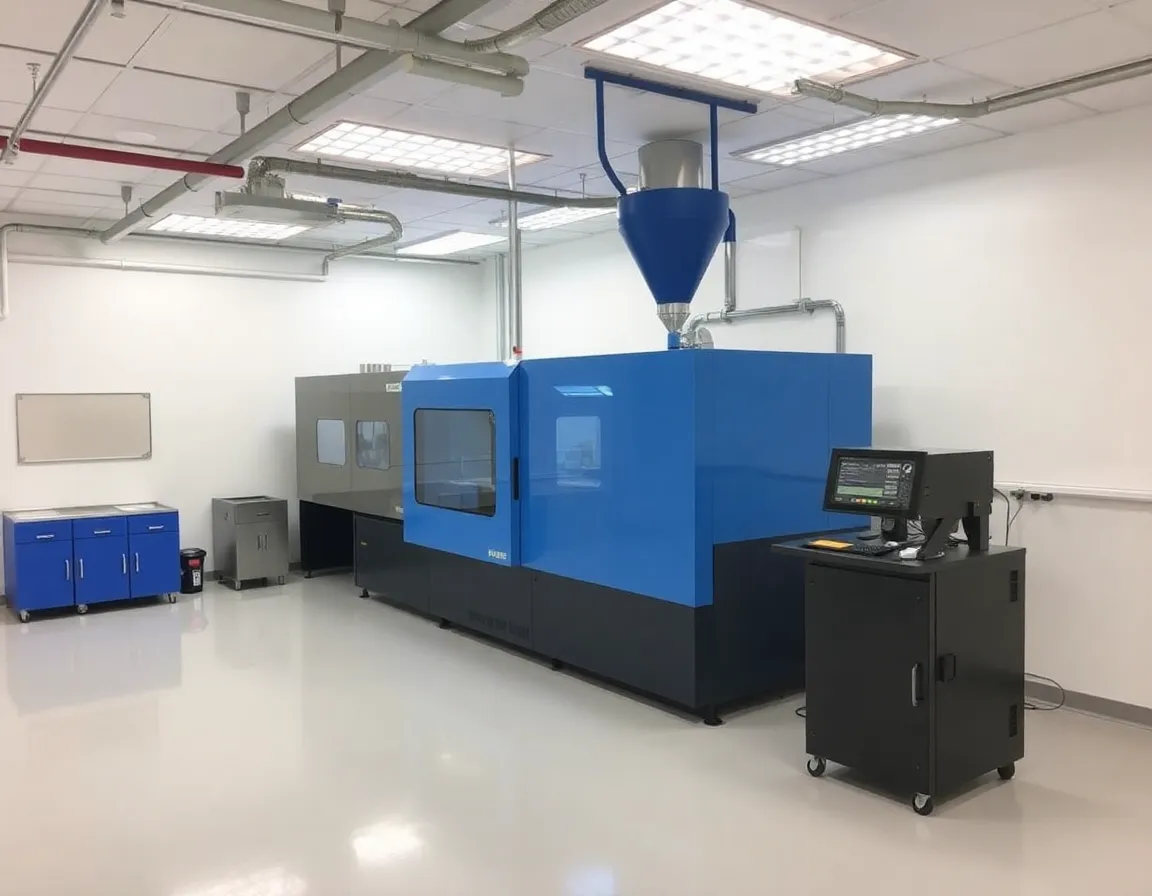
Der entscheidende Schnittpunkt von Präzision und Reinheit
In der modernen Medizin ist die Umgebung, in der ein Gerät montiert wird, ebenso kritisch wie das Gerät selbst. Ein einziges mikroskopisch kleines Staubpartikel, eine verirrte biologische Spore oder eine elektrostatische Entladung kann ein Implantat beeinträchtigen, eine sterile Charge ungültig machen oder ein Diagnosewerkzeug ungenau werden lassen. Medizinische Reinraum-Montage ist nicht nur ein Fertigungsschritt; sie ist eine anspruchsvolle Disziplin, die Ingenieurwesen, Mikrobiologie und Verhaltenswissenschaft vereint, um ein kontrolliertes Refugium für medizinische Innovationen zu schaffen. Dieser Artikel enthüllt sieben professionelle Geheimnisse, die erstklassige Reinraumbetriebe von mittelmäßigen unterscheiden und sicherstellen, dass Produkte, die Leben retten, unter den strengstmöglichen Bedingungen hergestellt werden.
Im Gegensatz zur standardmäßigen industriellen Montage unterliegt die medizinische Reinraum-Montage einem strengen regulatorischen Rahmen, der hauptsächlich durch die Normen ISO 14644 und die Guten Herstellungspraktiken (GMP) bestimmt wird. Ziel ist es, die Konzentration luftgetragener Partikel und in vielen Fällen auch biologischer Kontaminanten zu kontrollieren. Die wahre Meisterschaft liegt jedoch nicht nur in der Hardware – den HEPA-Filtern und Schleusen – sondern in den nuancierten Protokollen, die jede Handlung in der weißwandigen Umgebung regeln. Hier entschlüsseln wir die sieben unverhandelbaren Geheimnisse, die eine erfolgreiche Montage medizinischer Geräte vorantreiben.
Geheimnis Nr. 1: Beherrschung der Luftströmungsdynamik (Die unsichtbare Architektur)
Das häufigste Missverständnis über einen Reinraum ist, dass "sauber" "steril" bedeutet. In Wirklichkeit bedeutet es kontrollierte Kontamination. Das erste Geheimnis für eine erfolgreiche Montage ist zu verstehen, dass Luft das primäre Vehikel für Kontamination ist. Profis verlassen sich nicht nur auf Luftfilter; sie gestalten den Luftstrom so, dass Partikel vom Produkt weggetrieben werden.
Gleichgerichtete Strömung vs. turbulente Strömung
Für die kritische medizinische Montage ist, gleichgerichtete (laminare) Luftströmung von größter Bedeutung. Luft bewegt sich in parallelen Linien mit konstanter Geschwindigkeit, typischerweise 0,45 m/s ± 20%, und fegt Verunreinigungen aus dem Arbeitsbereich. Das Geheimnis liegt in der Positionierung: Die Montagearbeit muss "stromaufwärts" vom Bediener erfolgen, was bedeutet, dass Atem und Körperpartikel des Bedieners weggetragen werden, nicht über das Produkt. Im Gegensatz dazu basieren Räume mit turbulenter Strömung (ISO 7 und darunter) auf Verdünnung, was für weniger empfindliche Komponenten akzeptabel ist, aber für implantierbare Geräte riskant.
Fachleute wissen auch, dass der Luftstrom durch physische Hindernisse gestört wird. Ein einzelner Monitor, ein falsch platzierter Hocker oder ein Stapel Dokumente können Wirbel erzeugen, die Partikel einfangen. Daher wird das Montagelayout um den Luftströmungspfad herum gestaltet, nicht um die Bequemlichkeit des Arbeiters. Jeder Tisch ist perforiert, jede Leuchte ist bündig eingelassen, und jede Versorgungsleitung ist abgedichtet, um zu verhindern, dass Luft das Filtersystem umgeht.
Geheimnis #2: Der menschliche Faktor – Einkleiden als Ritual, nicht als Routine
Der Mensch ist bei weitem die größte Kontaminationsquelle in einem Reinraum. Eine sitzende Person gibt etwa 100.000 Partikel pro Minute ab. Das zweite Geheimnis ist, das Einkleideverfahren als heiliges, choreografiertes Ritual zu behandeln. Es geht nicht darum, einen "Hasenanzug" zu tragen; es geht darum, eine physische Barriere zu schaffen, die die menschliche Mikroumgebung einschließt.
Sequenzielles Einkleideprotokoll
Meister-Monteure befolgen eine strenge Reihenfolge, die die Partikelerzeugung minimiert. Der Prozess umfasst in der Regel:
- Vorreinigung: Entfernen aller Kosmetika, Schmuckstücke und persönlicher elektronischer Geräte vor dem Betreten des Umkleideraums.
- Luftdusche: Ein Hochgeschwindigkeitsstrahl, der lose Partikel von der Unterbekleidung entfernt.
- Ankleiden von unten nach oben: Anlegen des Overalls, dann der Stiefel, dann der Kapuze und schließlich der Handschuhe und Schutzbrille. Die entscheidende Regel ist, die Außenseite des Anzugs nicht mit bloßen Händen zu berühren.
- Endspülung: Eine zweite Luftdusche und eine Sichtprüfung mit einem Spiegel, um sicherzustellen, dass keine Haut freiliegt.
Das Geheimnis hier ist Handschuhhygiene. Handschuhe werden unmittelbar vor der Handhabung eines Produkts mit 70% IPA (Isopropylalkohol) sterilisiert. Dies dient nicht nur der chemischen Reinheit; die Reibung beim Abwischen erzeugt eine statische Ladung, die Partikel tatsächlich an die Handschuhoberfläche anzieht und verhindert, dass sie auf das Gerät fallen.
Geheimnis #3: Materialwissenschaft und Ausgasungskontrolle
Nicht alle Materialien sind in einem Reinraum gleich geschaffen. Das dritte Geheimnis beinhaltet ein tiefes Verständnis von Ausgasung und Partikelabgabe. Viele Kunststoffe, Klebstoffe und Schmiermittel geben flüchtige organische Verbindungen (VOCs) ab, die sich auf empfindlichen optischen Oberflächen niederschlagen oder die chemische Zusammensetzung einer medikamentenfreisetzenden Beschichtung verändern können.
Auswahl partikelarmer Materialien
Spezialisten für medizinische Montage spezifizieren ausschließlich Materialien, die von Natur aus wenig Partikel abgeben. Zum Beispiel:
- Silikonfreie Schmiermittel werden verwendet, um Oberflächenkontamination zu verhindern, die Delamination verursachen kann.
- Wischtücher bestehen aus gestricktem Polyester oder Vliesstoff aus Zellulose, niemals aus Baumwolle, da Baumwollfasern lang und abrasiv sind.
- Stift und Papier sind verboten; stattdessen werden lasergeätzte Metallanhänger und lösungsmittelbeständige Etiketten verwendet.
Das wahre Geheimnis ist die Vorkonditionierung. In High-End-Einrichtungen werden Komponenten vor der Montage in einem Vakuumofen "ausgebacken", um absorbierte Feuchtigkeit und flüchtige organische Verbindungen zu entfernen. Diese Vorbehandlung stellt sicher, dass das Endprodukt während seiner Lebensdauer keine Verunreinigungen freisetzt, was für hermetisch versiegelte Implantate entscheidend ist.
Geheimnis #4: Elektrostatische Entladung (ESD) – Der stille Killer
Während Partikel unter einem Mikroskop sichtbar sind, ist elektrostatische Entladung unsichtbar, bis sie einen Mikrochip zerstört. In medizinischen Geräten, die zunehmend komplexe Elektronik enthalten (z. B. Insulinpumpen, Neurostimulatoren), kann ESD latente Ausfälle verursachen, die Monate nach der Implantation auftreten. Das vierte Geheimnis ist die vollständige ESD-Kontrolle, die über das Tragen eines Handgelenkbands hinausgeht.
Leitfähige Arbeitsflächen und Ionisation
Alle Arbeitsflächen in einer medizinischen Reinraum-Montagestation müssen leitfähig sein (typischerweise dissipatives Laminat) und an einem gemeinsamen Punkt geerdet werden. Das Meistergeheimnis ist jedoch die Verwendung von ionizers. Because cleanrooms have low humidity (often below 40% RH) to reduce bacterial growth, static charges build up rapidly. Ionizers flood the air with positive and negative ions that neutralize the charge on insulators (like the plastic housing of a device).
Professionals also know that ESD safety is about speed and contact. Assemblers are trained to handle components by their edges, never touching conductive pins. They use vacuum pick-up tools with conductive tips, and all packaging materials must be static-shielding bags, not just anti-static bags. This level of discipline prevents the "sudden death" of electronics that would otherwise pass initial testing but fail in the field.
Secret #5: Real-Time Environmental Monitoring (Data over Guesswork)
The fifth secret is a shift from reactive to predictive contamination control. Traditional methods involved taking settle plates and swabbing surfaces at the end of a shift. Master facilities use continuous, real-time particle counters (both airborne and in liquids) that feed data into a central SCADA system. This provides immediate feedback—if a particle spike occurs at 10:32 AM, the system alerts the supervisor instantly, allowing for a root-cause analysis before the batch is ruined.
Trending and Alert Limits
The secret is not just having sensors but knowing how to interpret the data. Professionals establish three levels of limits:
- Action Limit: If particle count exceeds this, the assembly must stop immediately, and the product is quarantined.
- Alert Limit: A warning that the environment is trending toward the action limit, prompting a check of HEPA filters or a review of operator behavior.
- Baseline Trend: Analyzing weekly data to identify slow degradation in air handling units before they fail.
This data-driven approach allows for proactive maintenance, such as pre-filter replacement, rather than waiting for a regulatory audit to fail. It also provides the documentation required for regulatory submissions, proving that the environment was consistently within specification throughout the entire production run.
Secret #6: Process Isolation and Single-Piece Flow
Batch production is the enemy of cleanliness. The sixth secret is to design the assembly line for single-piece flow with physical barriers between process steps. Instead of moving a tray of 100 devices from station to station (which allows contamination to accumulate on the tray), each device is assembled in a dedicated, isolated module.
The Use of Isolators and RABS
For high-risk products (e.g., prefilled syringes or ophthalmic solutions), master assembly uses Restricted Access Barrier Systems (RABS) or full isolators. These are glove-box-like enclosures that provide a physical barrier between the operator and the product. The interior is continuously flushed with sterile air or nitrogen, and the operator interacts via long-sleeved gloves sealed to the wall. This reduces the human contamination factor by 99%.
Even for less critical devices, the secret is minimizing product travel. The assembly line is organized in a U-shape or a straight line where the product never touches a non-clean surface. Conveyor belts are avoided because they grind and create particles; instead, gravity-fed slides or manual hand-off using sterile tweezers are preferred.
Secret #7: Validation and Human Training (The Psychological Edge)
The final secret is arguably the most overlooked: the human mind. A cleanroom is a stressful environment—restrictive, cold, and monotonous. The seventh secret is investing heavily in behavioral training and psychological conditioning. It is not enough to tell a technician what to do; they must understand why they do it.
Simulation and Error-Proofing (Poka-Yoke)
Master facilities use virtual reality (VR) simulators to train assemblers on the exact motions required before they ever step inside the real cleanroom. This reduces the "learning curve" contamination events. Additionally, they implement Poka-Yoke (mistake-proofing) mechanisms:
- Smart tools: Torque wrenches that log data and lock out if the correct torque is not achieved.
- Vision systems: Cameras that automatically inspect for missing components or flipped O-rings.
- Color-coded zoning: Floors and walls are painted in different shades to signal transition zones, preventing accidental cross-contamination.
Furthermore, the secret is in ergonomic design. If a technician has to stretch or bend uncomfortably, they will sweat, shed more particles, and make mistakes. Adjustable workstations, anti-fatigue mats, and scheduled micro-breaks (outside the cleanroom) are essential to maintaining the high level of focus required for precision assembly.
Applications and Benefits of Master-Level Assembly
Implementing these seven secrets yields tangible benefits across the medical field. The most obvious application is in the production of implantable devices (orthopedics, pacemakers), where a single particle can cause inflammation or rejection. It is also critical for combination products (drug-device hybrids) like auto-injectors, where the drug must remain free of leachables from the device materials. Finally, it is vital for diagnostic consumables, such as microfluidic chips, where a dust particle can clog a channel and produce a false negative result.
The benefits are clear: higher yield (fewer rejected batches), lower liability (reduced risk of patient harm), and faster regulatory approval (because the data proves consistent quality). Moreover, a well-designed cleanroom assembly process reduces operator fatigue, leading to lower turnover rates and a more experienced workforce.
Conclusion: The Pursuit of Invisible Perfection
Mastering medical cleanroom assembly is not about buying the most expensive filters or the largest room. It is about a holistic philosophy that respects the invisible threats—air movement, human shedding, static charge, and material chemistry. By implementing the seven secrets outlined above—airflow mastery, ritualized gowning, material selection, ESD control, real-time monitoring, process isolation, and human psychological training—manufacturers can achieve a level of precision that borders on art.
In an industry where the margin for error is zero, these secrets are not optional enhancements; they are the baseline for survival. The devices that emerge from these controlled environments carry the silent promise of safety, born from the relentless pursuit of invisible perfection. As technology advances towards nano-scale medicine, the importance of these cleanroom disciplines will only grow, solidifying their role as the unsung heroes of modern healthcare.