
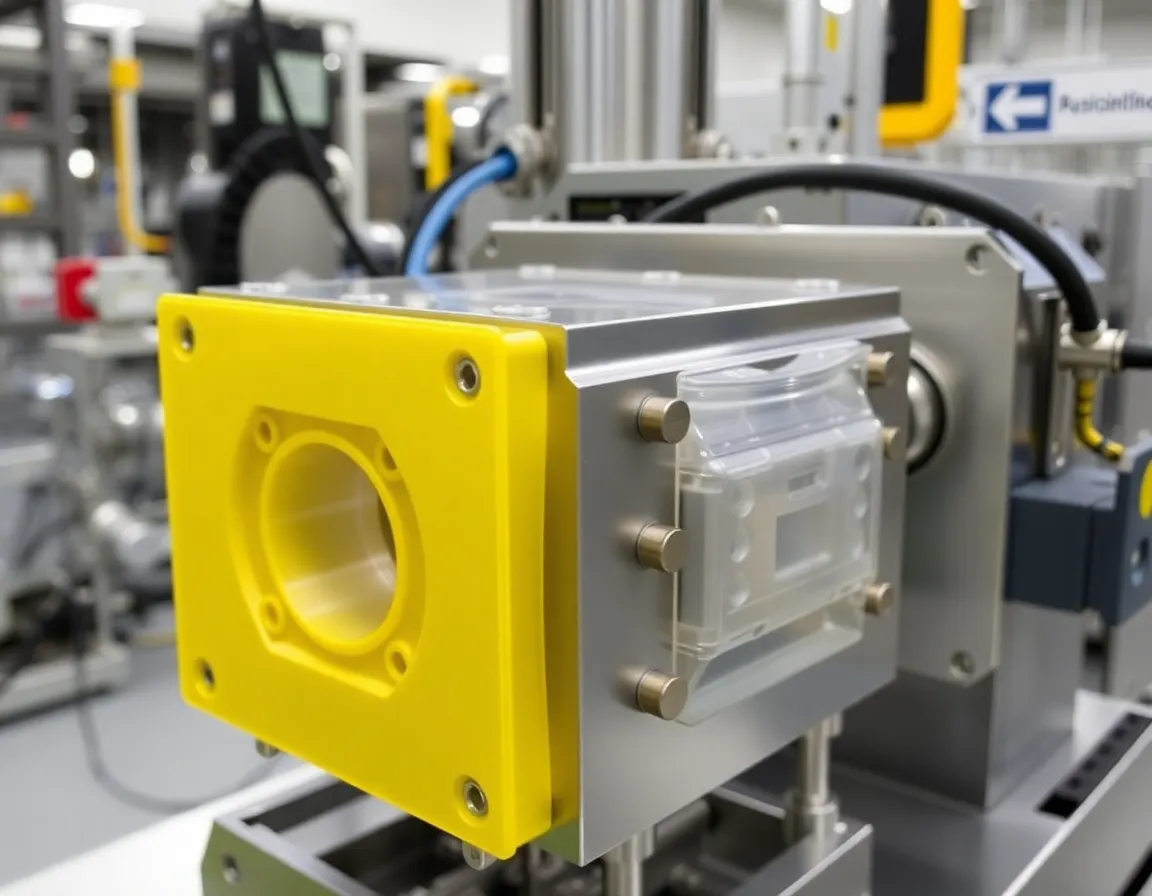
Einführung in das Spritzgießen steriler Medizinverpackungen
In der streng regulierten Welt des Gesundheitswesens ist die Integrität steriler Medizinverpackungen nicht nur ein logistisches Anliegen – sie ist ein kritischer Bestandteil der Patientensicherheit. Spritzgießen steriler Medizinverpackungen bezeichnet das spezialisierte Fertigungsverfahren zur Herstellung von Behältern, Trays, Deckeln und Folien aus Kunststoff und Polymeren, die die Sterilität von Medizinprodukten, chirurgischen Instrumenten und pharmazeutischen Erzeugnissen bis zum Verwendungszeitpunkt aufrechterhalten. Dieser Leitfaden bietet einen umfassenden Überblick über die Präzisions-Spritzgießtechniken, Materialaspekte, Qualitätsstandards und Best Practices, die diese essenzielle Branche definieren.
Die Nachfrage nach sterilen Verpackungen ist mit dem Aufstieg minimalinvasiver Operationen, vorbefüllter Spritzen und Einweg-Medizinprodukten exponentiell gewachsen. Anders als konventionelle Verpackungen müssen sterile Medizinverpackungen unter extremen Bedingungen bestehen – von der Ethylenoxid-(EtO)-Gassterilisation bis zur Hochtemperatur-Autoklavierung –, ohne ihre Barriereeigenschaften oder Maßgenauigkeit zu beeinträchtigen. Präzisions-Spritzgießen ist der Eckpfeiler zur Erreichung dieser Leistung und erfordert eine akribische Kontrolle über jede Produktionsstufe.
Grundprinzipien des Präzisionsformens für sterile Anwendungen
Materialauswahl und regulatorische Konformität
Die Grundlage jeder sterilen medizinischen Verpackung beginnt mit dem Polymer. Nicht alle Kunststoffe sind für medizinische Anwendungen geeignet. Die am häufigsten verwendeten Materialien umfassen Polypropylen (PP), Polyethylenterephthalat-Glykol (PETG), Polycarbonat (PC), und cyclisches Olefin-Copolymer (COC). Jedes Material bietet unterschiedliche Vorteile:
- Polypropylen: Ausgezeichnete Chemikalienbeständigkeit und Hochtemperaturbeständigkeit, ideal für die Autoklav-Sterilisation.
- PETG: Überlegene Klarheit und Schlagfestigkeit, häufig für tiefgezogene Trays verwendet.
- Polycarbonat: Hohe Maßhaltigkeit und Transparenz, geeignet für starre Behälter.
- COC: Außergewöhnliche Feuchtigkeitsbarriere und geringe extrahierbare Stoffe, entscheidend für pharmazeutische Verpackungen.
Alle Materialien müssen Folgendes erfüllen ISO 10993 (biologische Bewertung von Medizinprodukten) und USP Class VI Normen für Biokompatibilität. Darüber hinaus muss der Formgebungsprozess selbst gemäß ISO 13485 Qualitätsmanagementsystemen validiert werden, um sicherzustellen, dass jede Charge strenge Spezifikationen für Partikelkontamination, Gratbildung und Verzug erfüllt.
Spritzgießen vs. Thermoformen
Zwei primäre Formgebungstechniken dominieren die Landschaft der Sterilverpackungen: Spritzguss und Thermoformen. Das Spritzgießen wird für große Stückzahlen und komplexe Geometrien wie Klappbehälter, Schnappdeckel und Mehrfachkammer-Schalen bevorzugt. Es bietet eine unvergleichliche Präzision mit Toleranzen von bis zu ±0,01 mm. Das Thermoformen hingegen ist kosteneffizient für dünnwandige Schalen und Blisterverpackungen und verwendet erhitzte Kunststofffolien, die unter Vakuum oder Druck über einer Form geformt werden.
Für sterile Anwendungen bietet das Spritzgießen einen deutlichen Vorteil, da es Teile mit Null-Entformungsschrägen und komplexen Hinterschneidungen herstellen kann, die eine sichere Platzierung des Produkts ermöglichen. Beide Verfahren erfordern jedoch reinraumtaugliche Formgebungsumgebungen um mikrobielle Kontamination während der Produktion zu verhindern.
Wichtige Designüberlegungen für sterile Medizinverpackungen
Maßtoleranzen und Entformungsschrägen
Die Präzisionsformgebung für Sterilverpackungen erfordert eine exakte Maßkontrolle. Eine Schale, die für die Aufnahme einer empfindlichen chirurgischen Schraube ausgelegt ist, muss Aufnahmen haben, die weder zu eng (was Einführspannungen verursacht) noch zu locker (was Bewegung ermöglicht, die die sterile Barriere durchbrechen könnte) sind. Entformungsschrägen—typischerweise zwischen 1° und 3°—sind unerlässlich, um Teile ohne Verformung aus der Form auszuwerfen. In der sterilen Verpackung müssen Entformungsschrägen jedoch minimiert werden, um dichte Dichtflächen für Siegelfolien wie Tyvek® oder Papier in medizinischer Qualität zu erhalten.
Fortschrittliche Formdesign-Software wie Moldflow® Simulation wird eingesetzt, um Schwindung, Kühlraten und Verzug vorherzusagen, bevor der Stahl geschnitten wird. Dies ermöglicht es Ingenieuren, Angusspositionen und Kühlkanäle zu optimieren, wodurch Zykluszeiten reduziert werden, während die Teilequalität erhalten bleibt. Für sterile Anwendungen ist auch die Formoberflächenbeschaffenheit entscheidend; eine SPI A-1 Spiegeloberfläche ist oft erforderlich, um Bakterienanhaftung zu verhindern und die Reinigung zu erleichtern.
Sterilisationskompatibilität und Barriereintegrität
Jede sterile medizinische Verpackung muss einem oder mehreren Sterilisationsverfahren standhalten, ohne zu degradieren. Die drei häufigsten Verfahren sind:
- Ethylenoxid (EtO)-Gas: Erfordert Materialien, die Gas ohne Rückstände aufnehmen und abgeben können. Polypropylen und PETG sind gängige Wahlmöglichkeiten.
- Gammastrahlung: Kann bei einigen Polymeren Versprödung verursachen. Polycarbonat und COC werden aufgrund ihrer Strahlungsstabilität bevorzugt.
- Autoklavieren (Dampf): Erfordert hohe Hitzebeständigkeit (121 °C bis 134 °C). Nur spezielle PP- und PEI-Typen können wiederholte Zyklen überstehen.
Die sterile barrier system—typically a combination of a rigid tray and a porous lid—must maintain a hermetic seal. Precision molding ensures that the flange area of the tray is perfectly flat and free of sink marks, allowing the lidding material to form a consistent, peelable seal. Seal strength testing per ASTM F88 is a mandatory quality control step, ensuring that the package opens cleanly without delamination or fiber tear.
Advanced Manufacturing Techniques and Quality Control
Cleanroom Molding and Automation
To achieve sterility assurance levels (SAL) of 10⁻⁶, molding must occur in a controlled environment. ISO Class 7 or Class 8 cleanrooms are standard for sterile packaging production. These facilities maintain strict limits on airborne particles, humidity, and temperature. Robots and automated guided vehicles (AGVs) handle parts from the molding machine to the sealing station, minimizing human contact and the risk of contamination.
In-mold sensors and real-time process monitoring are increasingly used to ensure consistency. Cavity pressure sensors detect variations in melt flow, while infrared thermography monitors mold temperature distribution. Any deviation triggers an automatic rejection of the part, preventing defective packaging from reaching the sterilization phase.
Validation Protocols: IQ, OQ, and PQ
No discussion of sterile medical packaging molding is complete without addressing validation. The FDA and ISO 13485 require a three-stage validation process:
- Installationsqualifizierung (IQ): Verifying that the molding machine, mold, and auxiliary equipment are installed correctly and calibrated.
- Betriebsqualifizierung (OQ): Testing the process parameters (temperature, pressure, cycle time) across their operating ranges to ensure consistent part quality.
- Leistungsqualifizierung (PQ): Running multiple production batches under normal conditions, then testing the sterile barrier integrity and dimensional conformance.
Documentation is paramount. Every mold cavity must be traceable, and each batch must include records of melt flow index (MFI), ash content, und visual inspection results. Non-conforming parts are quarantined and analyzed using tools like Scanning Electron Microscopy (SEM) to identify root causes of defects such as flash, voids, or contamination.
Anwendungen über das gesamte Gesundheitsspektrum hinweg
Surgical Instrument Trays and Kits
One of the most common applications of sterile medical packaging molding is the production of custom surgical trays. These trays are designed to hold multiple instruments—scalpels, forceps, clamps—in fixed positions during sterilization and transport. Precision molding ensures that each instrument slot has the correct depth and retention force, preventing movement that could damage the sterile barrier or the instrument itself.
Many modern trays incorporate living hinges und snap-fit closures molded directly into the part, eliminating the need for separate fasteners. These features require advanced mold design with slide actions and lifters, but they significantly reduce assembly time and material waste.
Pre-Filled Syringe and Vial Packaging
Pharmaceutical companies increasingly rely on molded nest and tub systems for pre-filled syringes and vials. These systems consist of a rigid plastic nest that holds multiple containers in a precise array, enclosed in a sealed tub. The molding tolerances must be exceptionally tight—often within ±0.05 mm—to ensure that syringes do not tilt or contact each other during filling and sterilization.
For this application, cyclic olefin polymer (COP) is often the material of choice due to its low extractables and high clarity, which allows visual inspection of the drug product. The molding process must also avoid any surface defects that could trap air or moisture, as these could compromise the sterility of the drug.
Diagnostic Device and Point-of-Care Packaging
Point-of-care diagnostic devices, such as glucose test strips and pregnancy tests, require sterile packaging that is both compact and easy to open. Precision molding enables the creation of multi-cavity blister packs with thin walls (0.2–0.5 mm) that provide adequate barrier protection while minimizing material usage. The lidding seal must be strong enough to prevent accidental opening but weak enough for elderly patients to peel without tearing the device.
In these applications, antistatic additives are often compounded into the polymer to prevent dust attraction, which could interfere with the diagnostic reaction. Mold surface treatments, such as plasma coating, further reduce friction and improve release properties.
Best Practices for Optimizing the Molding Process
Process Parameter Optimization
To achieve consistent, high-quality sterile packaging, molders must systematically optimize key parameters:
- Schmelztemperatur: Must be high enough to ensure complete filling of thin-wall sections but low enough to prevent polymer degradation. For polypropylene, this is typically 200–230°C.
- Injection Speed: A fast fill rate reduces shear stress and minimizes orientation, which can cause warpage. However, excessive speed can cause jetting and flow marks.
- Packing Pressure: Sufficient packing pressure (60–80% of injection pressure) is critical to prevent sink marks on sealing flanges.
- Cooling Time: Must be long enough to achieve uniform crystallization, especially for semi-crystalline polymers like PP. Uneven cooling leads to dimensional instability.
Using Design of Experiments (DOE) methodologies, engineers can identify the optimal parameter window and establish control limits. Real-time monitoring systems then ensure that every cycle stays within these limits.
Tooling Maintenance and Mold Design
The mold itself is the most critical asset in sterile packaging molding. Hardened tool steel (e.g., P20 or H13) is standard for high-volume production, while beryllium copper inserts are used in areas requiring rapid heat transfer. Regular maintenance schedules—including cleaning, polishing, and inspection for wear—are essential to prevent defects like flash or parting line mismatch.
Advanced mold designs incorporate Heißkanalsysteme with valve gates to eliminate cold slugs and reduce cycle times. For sterile applications, the hot runner must be designed to avoid dead spots where molten polymer could degrade and form carbon deposits, which could contaminate the package.
Supply Chain and Regulatory Alignment
Finally, successful sterile medical packaging molding requires close collaboration with material suppliers, sterilization facilities, and regulatory bodies. Early supplier involvement (ESI) during the design phase can help select materials that are both moldable and compatible with the intended sterilization method. Additionally, maintaining a sterile barrier dossier—a comprehensive document that includes material certifications, process validation reports, and stability data—is essential for regulatory submissions to the FDA, EMA, or other health authorities.
In an era of increasing scrutiny on medical device safety, investing in precision molding capabilities is not optional—it is a competitive necessity. Companies that master the interplay of material science, mold engineering, and cleanroom manufacturing will be best positioned to meet the growing demand for safe, reliable sterile packaging.
Conclusion
Sterile medical packaging molding is a discipline that blends the art of precision engineering with the science of polymer chemistry and the rigor of regulatory compliance. From the initial material selection to the final validation of the sterile barrier, every step demands meticulous attention to detail. By following the guidelines outlined in this comprehensive guide—focusing on dimensional accuracy, sterilization compatibility, cleanroom manufacturing, and robust quality control—manufacturers can produce packaging that not only protects medical devices but also safeguards patient lives. As technology advances, the integration of real-time process monitoring, automation, and advanced materials will continue to push the boundaries of what is possible in this vital field.