
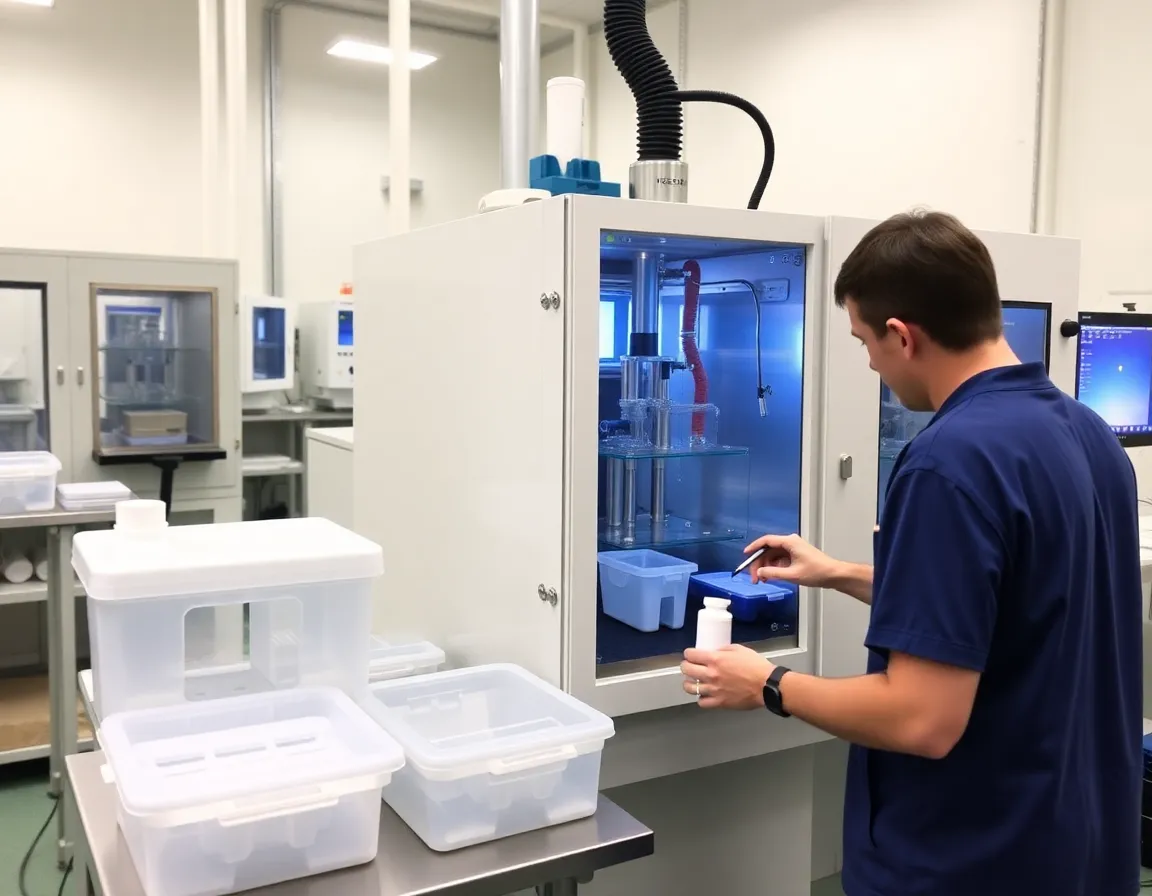
Die kritische Rolle präziser Kunststoffteile in modernen klinischen Studien
Klinische Studien stellen die strengste und am stärksten regulierte Phase der Entwicklung von Medizinprodukten und Arzneimitteln dar. Im Zentrum jeder erfolgreichen Studie steht ein komplexes Ökosystem aus Komponenten, Verbrauchsmaterialien und Geräten, die mit absoluter Zuverlässigkeit funktionieren müssen. Unter diesen haben sich, präzise Kunststoffteile als unbesungene Helden erwiesen und ermöglichen alles von der Probenentnahme und Arzneimittelabgabe bis hin zur Patientenüberwachung und Datenintegrität. Die Produktion dieser Komponenten – oft als "Produktion von Kunststoffteilen für klinische Studien" bezeichnet – ist eine spezialisierte Disziplin, die fortschrittliche Fertigungstechniken mit strenger regulatorischer Konformität verbindet. Ohne diese sorgfältig konstruierten Teile wären die Validität, Sicherheit und Effizienz der klinischen Forschung stark beeinträchtigt.
Dieser Artikel bietet eine umfassende Untersuchung der Herstellung von Kunststoffteilen für klinische Studien und beleuchtet, was damit verbunden ist, die beteiligten Fertigungsprozesse, die entscheidenden Vorteile, die sie bieten, ihre vielfältigen Anwendungen und die bewährten Verfahren, die den Erfolg sicherstellen. Ob Sie Hersteller von Medizinprodukten, Auftragsforschungsinstitut (CRO) oder Sponsor einer klinischen Studie sind – das Verständnis dieses Nischenbereichs ist unerlässlich, um zuverlässige Ergebnisse im hochriskanten Umfeld von Tests am Menschen zu liefern.
Verständnis der Herstellung von Kunststoffteilen für klinische Studien
Was es ist und warum es wichtig ist
Die Herstellung von Kunststoffteilen für klinische Studien bezieht sich auf die Konstruktion, Entwicklung und Fertigung von Kunststoffkomponenten, die speziell für die Verwendung während klinischer Untersuchungen vorgesehen sind. Diese Teile sind keine gewöhnlichen Verbraucherkunststoffe; sie sind hochpräzise, oft Einwegkomponenten die strengste Anforderungen an Maßgenauigkeit, Materialreinheit, Biokompatibilität und Sterilität erfüllen müssen. Beispiele hierfür sind Pipettenspitzen, Mikrofluidik-Chips, Infusionsleitungskonnektoren, Diagnosekassetten, Arzneimittelabgabestifte und Prototypen implantierbarer Geräte.
Die Bedeutung dieser Teile kann nicht genug betont werden. Der Erfolg einer Studie hängt von der Fähigkeit ab, unkontaminierte Proben zu sammeln, präzise Dosierungen zu verabreichen und reproduzierbare Daten zu generieren. Eine einzige defekte Kunststoffkomponente – eine undichte Dichtung, ein mikroskopischer Grat oder eine chemisch reaktive Oberfläche – kann Variabilität einführen, die Patientensicherheit gefährden oder monatelange Forschung ungültig machen. Daher muss die Produktion als kritisches Qualitätsmerkmal und nicht als einfache Beschaffungsaufgabe behandelt werden.
Wesentliche Herausforderungen in der Produktion
Die Herstellung von Kunststoffteilen für klinische Studien birgt einzigartige Herausforderungen, die sie von der Massenproduktion kommerzieller Geräte unterscheiden:
- Geringes Volumen, hohe Komplexität: Klinische Studien erfordern oft Tausende oder Zehntausende von Teilen – nicht Millionen. Dieses geringe Volumen erfordert flexible Fertigungseinrichtungen, die häufige Umrüstungen ohne Qualitätseinbußen bewältigen können.
- Regulatorische Prüfung: Teile müssen ISO 13485 (Medizinprodukte), ISO 10993 (Biokompatibilität) und 21 CFR Part 820 (FDA-Qualitätssystemverordnung) entsprechen. Jeder Prozess muss validiert und rückverfolgbar sein.
- Materialbeschränkungen: Nur Materialien mit dokumentierter Biokompatibilität, geringer Extraktions-/Auslaugbarkeit und Beständigkeit gegenüber Sterilisationsverfahren (z. B. Gamma, EtO, Autoklavieren) sind akzeptabel.
- Enge Toleranzen: Viele Teile für klinische Studien erfordern Toleranzen im Mikrometerbereich, um korrekten Sitz, Funktion und Fluidkontrolle zu gewährleisten.
So funktioniert die Produktion von Kunststoffteilen für klinische Studien
Materialauswahl und Validierung
Die Grundlage jedes erfolgreichen Produktionslaufs beginnt mit der Materialauswahl. Häufig verwendete Materialien sind medizinisches Polycarbonat (PC), Polypropylen (PP), cyclisches Olefin-Copolymer (COC), Polytetrafluorethylen (PTFE) und thermoplastische Elastomere (TPE). Jedes Material wird basierend auf seinem Verwendungszweck ausgewählt –optische Klarheit für Diagnosefenster, chemische Beständigkeit für den Kontakt mit Reagenzien oder Flexibilität für Dichtungskomponenten.
Vor der Produktion werden Materialien strengen Tests auf Zytotoxizität, Sensibilisierung und Reizung unterzogen. Eine Materialstammdatei wird angelegt, die Lieferantenzertifizierungen, Chargennummern und Testergebnisse dokumentiert. Diese Dokumentation wird Teil des Device Master Record (DMR) und ist wesentlich für regulatorische Einreichungen.
Spritzguss und Präzisionsbearbeitung
Die beiden primären Fertigungsmethoden für Kunststoffteile in klinischen Studien sind Spritzguss und Präzisions-CNC-Bearbeitung.
Spritzgießen ist die bevorzugte Methode für mittlere bis hohe Stückzahlen (typischerweise 5.000 bis 100.000 Teile). Dabei werden Kunststoffpellets geschmolzen und unter hohem Druck in eine Stahl- oder Aluminiumform gespritzt. Für klinische Studien werden Formen oft mit austauschbaren Einsätzen konstruiert, um schnelles Prototyping und Kleinserienproduktion zu ermöglichen. Mehrfachformen erhöhen die Effizienz, aber jeder Formnest muss validiert werden, um identische Teile zu produzieren.
Präzisions-CNC-Bearbeitung wird für sehr kleine Stückzahlen (Prototypen oder Pilotserien von 10–500 Teilen) oder für Teile mit Geometrien verwendet, die zu komplex für den Spritzguss sind. Computergesteuerte Fräs- und Drehmaschinen erreichen Toleranzen von ±0,005 mm. Obwohl langsamer und teurer pro Teil, eliminiert die Bearbeitung die Notwendigkeit kostspieliger Formwerkzeuge und ermöglicht schnelle Designiterationen.
Cleanroom Manufacturing and Sterilization
Most clinical trial plastic parts must be manufactured in ISO Class 7 or Class 8 cleanrooms (Class 10,000 or 100,000 per FED STD 209E). These controlled environments minimize particulate contamination, which could interfere with assays or cause adverse reactions in patients. Operators wear gowns, gloves, and face masks; air is HEPA-filtered; and surfaces are regularly monitored.
After production, parts undergo sterilization. Common methods include:
- Gamma irradiation: Penetrates deep into parts without heat, suitable for most plastics.
- Ethylene oxide (EtO): Used for heat-sensitive materials; requires aeration to remove residues.
- Autoclaving: Steam sterilization at 121°C, limited to high-temperature plastics like PEEK.
Sterilization validation ensures a Sterility Assurance Level (SAL) of 10⁻⁶, meaning less than one in a million parts carries a viable microorganism.
Benefits of Precision Plastic Parts for Clinical Trials
Enhanced Data Integrity and Reproducibility
Perhaps the most significant benefit is the reduction of variability. When every pipette tip, well plate, or catheter connector is identical to within microns, the data generated from different sites, operators, and days becomes directly comparable. This reproducibility is essential for regulatory acceptance of trial results. Precision parts eliminate the "noise" that can obscure true biological signals, allowing researchers to draw accurate conclusions about safety and efficacy.
Improved Patient Safety
Clinical trial participants are often vulnerable patients with serious conditions. Precision plastic parts minimize risks such as:
- Biocompatibility reactions: Proper material selection prevents allergic or toxic responses.
- Device failure: Robust parts reduce the chance of breakage, leakage, or malfunction during use.
- Infection: Sterile, single-use parts prevent cross-contamination between subjects.
Cost and Time Efficiency
While precision production may have higher upfront costs than generic alternatives, it saves money over the trial lifecycle. Reduced failure rates mean fewer repeat experiments, less wasted material, and lower patient dropout rates. Furthermore, rapid prototyping capabilities allow sponsors to iterate designs in days rather than weeks, accelerating the path from concept to first-in-human studies.
Regulatory Compliance and Audit Readiness
Regulatory bodies such as the FDA and EMA demand complete traceability for all components used in clinical trials. Precision plastic part production inherently supports this through:
- Detailed batch records
- In-process inspection data
- Certificates of conformance and sterility
- Material lot traceability
This documentation streamlines audits and inspections, reducing the risk of clinical holds or rejection of trial data.
Applications Across Clinical Trial Phases
Preclinical and Phase I: Prototyping and Safety Testing
In early-phase trials, precision plastic parts are used for animal studies, dose-escalation protocols, and first-in-human safety assessments. Examples include custom microfluidic chips for pharmacokinetic analysis, implantable drug delivery prototypes, and specialized catheters. At this stage, production often involves CNC machining or 3D printing to allow rapid design changes based on early safety data.
Phase II and III: Scalable Production for Efficacy Studies
As trials progress to larger populations, the demand for parts scales dramatically. Here, injection molding becomes the dominant method. Applications include:
- Diagnostic test cartridges: For point-of-care devices that detect biomarkers or pathogens.
- Arzneimittelabgabesysteme: Autoinjectors, insulin pens, and inhalers with precise dose metering.
- Sample collection kits: Swabs, tubes, and vials with secure closures and bar-coded labels for tracking.
Consistency across thousands of units is paramount, as any variation could mask or exaggerate treatment effects.
Post-Market Clinical Studies and Real-World Evidence
After a device or drug is approved, post-market studies continue to monitor long-term safety and effectiveness. Precision plastic parts are used in wearable sensors, smart packaging, and home-use diagnostic kits. Production must now balance cost-effectiveness with the same high standards of quality, often requiring lean manufacturing techniques to maintain margins.
Best Practices for Clinical Trial Plastic Part Production
Partner with a Specialized Manufacturer
Not all plastic manufacturers are equipped for clinical trial work. Choose a partner with ISO 13485 certification, cleanroom facilities, and experience in regulatory submissions. Ask for case studies demonstrating successful delivery of parts for FDA-cleared or CE-marked devices. A strong partnership from the design phase onward prevents costly redesigns later.
Implement Design for Manufacturability (DFM)
Work with engineers early to optimize part geometry for the chosen production method. For injection molding, this means avoiding sharp corners, uniform wall thickness, and adequate draft angles. For machining, consider tool access and material stability. DFM reduces cycle times, lowers scrap rates, and ensures dimensional stability.
Maintain Rigorous Quality Control
Quality control should be woven into every step of production, not just final inspection. Implement:
- First article inspection (FAI): Full dimensional and functional verification of the first production run.
- Statistical process control (SPC): Monitor critical dimensions in real-time during molding.
- Vision inspection systems: Automated cameras check for flash, sinks, and contamination.
- Functional testing: Leak tests, tensile tests, and flow rate verification as applicable.
Plan for Scalability and Contingency
Clinical trial timelines are notoriously unpredictable. A successful production strategy includes:
- Secondary tooling: Having backup molds or machining fixtures ready in case of wear or damage.
- Material buffer stock: Securing multiple lots of critical resins to avoid supply chain disruptions.
- Flexible capacity: Working with manufacturers who can scale from prototype volumes to tens of thousands without requalification.
Document Everything for Audit Trails
Finally, maintain a complete and accessible documentation system. This includes:
- Device History Records (DHR) for each batch
- Non-conformance reports and corrective actions
- Calibration records for all measurement equipment
- Change control documentation for any process modifications
When an FDA inspector or ethics committee requests proof of quality, your documentation should tell a clear, unimpeachable story from raw material to finished part.
Conclusion: The Foundation of Reliable Clinical Research
Precision plastic parts are far more than simple consumables; they are the structural backbone of clinical trials. From the first prototype to the final post-market study, these components enable accurate data collection, ensure patient safety, and support regulatory compliance. The specialized field of clinical trial plastic part production demands a unique fusion of engineering precision, regulatory knowledge, and manufacturing discipline.
As clinical trials become increasingly complex—incorporating real-time data monitoring, personalized dosing, and decentralized models—the demands on plastic part producers will only intensify. Sponsors and CROs that invest in high-quality, precision-manufactured components will be better positioned to achieve trial success, accelerate approvals, and ultimately bring life-changing therapies to patients faster. In the high-stakes world of clinical research, there is no room for compromise. Precision plastic parts deliver the reliability that success demands.