
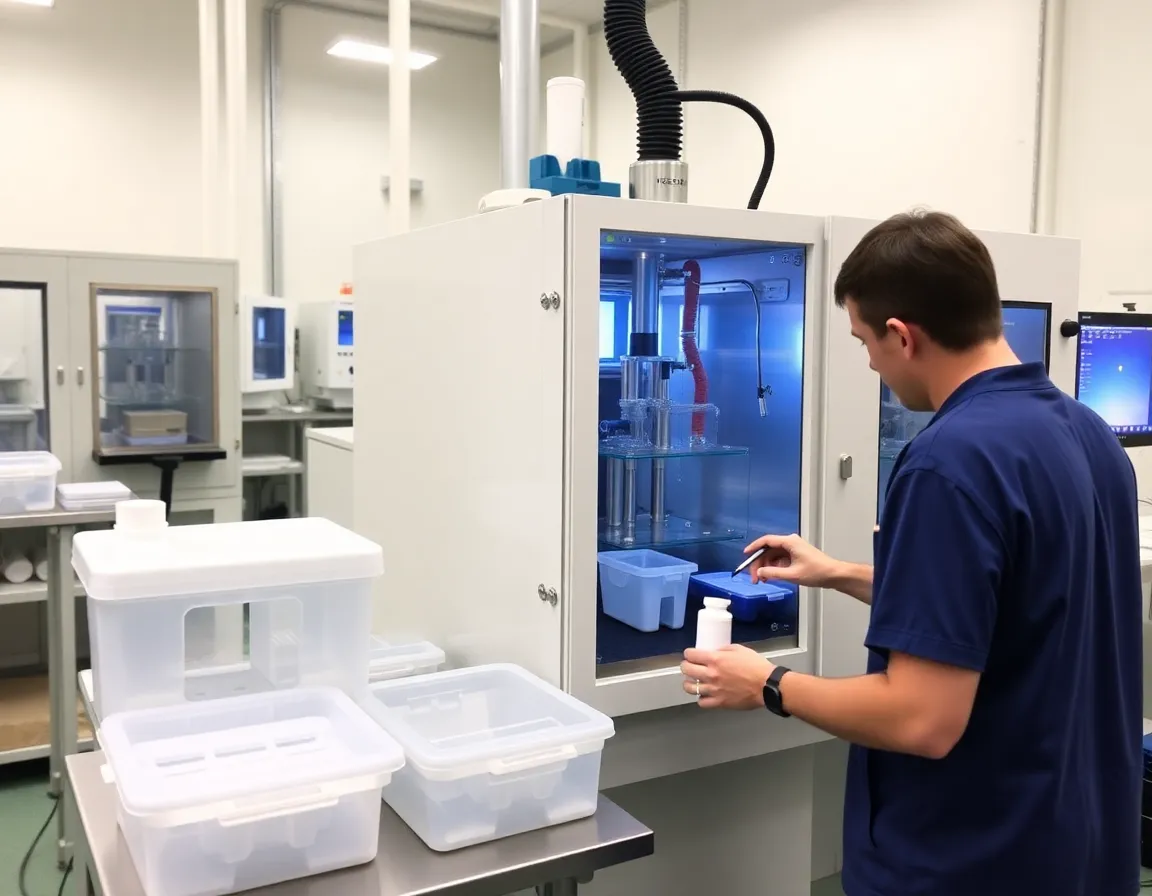
Критическая роль точных пластиковых деталей в современных клинических испытаниях
Клинические испытания представляют собой наиболее строгую и жестко регулируемую фазу разработки медицинских изделий и фармацевтических препаратов. В основе каждого успешного испытания лежит сложная экосистема компонентов, расходных материалов и устройств, которые должны работать с абсолютной надежностью. Среди них, точные пластиковые детали стали незаметными героями, обеспечивая все — от сбора образцов и доставки лекарств до мониторинга пациентов и целостности данных. Производство этих компонентов — часто называемое "производством пластиковых деталей для клинических испытаний" — это специализированная дисциплина, сочетающая передовые методы производства со строгим соблюдением нормативных требований. Без этих тщательно спроектированных деталей достоверность, безопасность и эффективность клинических исследований были бы серьезно подорваны.
В этой статье представлен всесторонний анализ производства пластиковых деталей для клинических испытаний: рассматривается, что оно собой представляет, какие производственные процессы задействованы, какие критически важные преимущества оно предлагает, его разнообразные области применения и лучшие практики, обеспечивающие успех. Независимо от того, являетесь ли вы производителем медицинских изделий, контрактной исследовательской организацией (CRO) или спонсором клинического испытания, понимание этой узкой области необходимо для получения надёжных результатов в условиях высоких ставок при испытаниях на людях.
Понимание производства пластиковых деталей для клинических испытаний
Что это такое и почему это важно
Производство пластиковых деталей для клинических испытаний относится к проектированию, инжинирингу и изготовлению пластиковых компонентов, специально предназначенных для использования в ходе клинических исследований. Эти детали не являются обычными потребительскими пластиками; это высокоточные, часто одноразовые компоненты которые должны соответствовать строгим стандартам по размерной точности, чистоте материала, биосовместимости и стерильности. Примеры включают наконечники для пипеток, микрофлюидные чипы, коннекторы для инфузионных линий, диагностические картриджи, ручки для доставки лекарств и прототипы имплантируемых устройств.
Важность этих деталей невозможно переоценить. Успех испытания зависит от способности собирать незагрязнённые образцы, доставлять точные дозы и получать воспроизводимые данные. Один дефектный пластиковый компонент — протекающее уплотнение, микроскопический заусенец или химически реактивная поверхность — может внести изменчивость, поставить под угрозу безопасность пациента или свести на нет месяцы исследований. Поэтому производство должно рассматриваться как критически важный показатель качества а не как простая задача закупки.
Ключевые проблемы в производстве
Производство пластиковых деталей для клинических испытаний создаёт уникальные проблемы, которые отличают его от массового производства коммерческих изделий:
- Малый объём, высокая сложность: Клинические испытания часто требуют тысяч или десятков тысяч деталей — не миллионов. Такой малый объём требует гибких производственных настроек, способных выдерживать частые переналадки без ущерба для качества.
- Регуляторный контроль: Детали должны соответствовать ISO 13485 (медицинские изделия), ISO 10993 (биосовместимость) и 21 CFR Part 820 (Правила системы качества FDA). Каждый процесс должен быть валидирован и прослеживаем.
- Ограничения по материалам: Приемлемы только материалы с документально подтверждённой биосовместимостью, низким уровнем экстрагируемых/выщелачиваемых веществ и устойчивостью к методам стерилизации (например, гамма-излучением, EtO, автоклавированием).
- Жёсткие допуски: Многие детали для клинических испытаний требуют допусков в микронном диапазоне для обеспечения надлежащей посадки, функционирования и контроля потоков жидкости.
Как работает производство пластиковых деталей для клинических испытаний
Выбор и валидация материалов
Основа любого успешного производственного цикла начинается с выбора материала. К распространённым материалам относятся поликарбонат медицинского класса (PC), полипропилен (PP), циклический олефиновый сополимер (COC), политетрафторэтилен (PTFE) и термопластичные эластомеры (TPE). Каждый материал выбирается исходя из его предполагаемого применения —оптическая прозрачность для диагностических окон, химическая стойкость для контакта с реагентами или гибкость для уплотнительных компонентов.
Перед производством материалы проходят строгие испытания на цитотоксичность, сенсибилизацию и раздражение. Создаётся мастер-файл материала, документирующий сертификаты поставщиков, номера партий и результаты испытаний. Эта документация становится частью главной записи об изделии (DMR) и необходима для регуляторных заявок.
Литьё под давлением и прецизионная механическая обработка
Двумя основными методами производства пластиковых деталей для клинических испытаний являются литье под давлением и прецизионная обработка на станках с ЧПУ.
Литьё под давлением является предпочтительным методом для средне- и крупносерийного производства (обычно от 5 000 до 100 000 деталей). Он включает плавление пластиковых гранул и их впрыск под высоким давлением в стальную или алюминиевую форму. Для клинических испытаний формы часто проектируются со сменными вставками, что позволяет быстрое прототипирование и мелкосерийное производство. Многогнёздные формы повышают эффективность, но каждое гнездо должно быть валидировано для производства идентичных деталей.
Прецизионная обработка на станках с ЧПУ используется для очень малых объёмов (прототипы или пилотные партии от 10 до 500 деталей) или для деталей со слишком сложной геометрией для литья. Фрезерные и токарные станки с ЧПУ обеспечивают допуски ±0,005 мм. Хотя обработка медленнее и дороже в расчёте на деталь, она устраняет необходимость в дорогостоящей литьевой оснастке и позволяет быстро вносить изменения в конструкцию.
Производство в чистых помещениях и стерилизация
Большинство пластиковых деталей для клинических испытаний должны изготавливаться в чистых помещениях класса ISO 7 или ISO 8 (класс 10 000 или 100 000 по FED STD 209E). Эти контролируемые среды сводят к минимуму загрязнение частицами, которое может помешать анализам или вызвать нежелательные реакции у пациентов. Операторы носят халаты, перчатки и маски; воздух фильтруется через HEPA-фильтры; поверхности регулярно контролируются.
После производства детали проходят стерилизацию. Распространённые методы включают:
- Гамма-облучение: Проникает глубоко в детали без нагрева, подходит для большинства пластиков.
- Этиленоксид (EtO): Используется для термочувствительных материалов; требует аэрации для удаления остатков.
- Автоклавирование: Паровая стерилизация при 121 °C, ограничена термостойкими пластиками, такими как PEEK.
Валидация стерилизации обеспечивает уровень стерильности (SAL) 10⁻⁶, что означает, что менее чем одна из миллиона деталей несёт жизнеспособный микроорганизм.
Преимущества прецизионных пластиковых деталей для клинических испытаний
Повышенная целостность данных и воспроизводимость
Perhaps the most significant benefit is the reduction of variability. When every pipette tip, well plate, or catheter connector is identical to within microns, the data generated from different sites, operators, and days becomes directly comparable. This reproducibility is essential for regulatory acceptance of trial results. Precision parts eliminate the "noise" that can obscure true biological signals, allowing researchers to draw accurate conclusions about safety and efficacy.
Improved Patient Safety
Clinical trial participants are often vulnerable patients with serious conditions. Precision plastic parts minimize risks such as:
- Biocompatibility reactions: Proper material selection prevents allergic or toxic responses.
- Device failure: Robust parts reduce the chance of breakage, leakage, or malfunction during use.
- Infection: Sterile, single-use parts prevent cross-contamination between subjects.
Cost and Time Efficiency
While precision production may have higher upfront costs than generic alternatives, it saves money over the trial lifecycle. Reduced failure rates mean fewer repeat experiments, less wasted material, and lower patient dropout rates. Furthermore, rapid prototyping capabilities allow sponsors to iterate designs in days rather than weeks, accelerating the path from concept to first-in-human studies.
Regulatory Compliance and Audit Readiness
Regulatory bodies such as the FDA and EMA demand complete traceability for all components used in clinical trials. Precision plastic part production inherently supports this through:
- Detailed batch records
- In-process inspection data
- Certificates of conformance and sterility
- Material lot traceability
This documentation streamlines audits and inspections, reducing the risk of clinical holds or rejection of trial data.
Applications Across Clinical Trial Phases
Preclinical and Phase I: Prototyping and Safety Testing
In early-phase trials, precision plastic parts are used for animal studies, dose-escalation protocols, and first-in-human safety assessments. Examples include custom microfluidic chips for pharmacokinetic analysis, implantable drug delivery prototypes, and specialized catheters. At this stage, production often involves CNC machining or 3D printing to allow rapid design changes based on early safety data.
Phase II and III: Scalable Production for Efficacy Studies
As trials progress to larger populations, the demand for parts scales dramatically. Here, injection molding becomes the dominant method. Applications include:
- Diagnostic test cartridges: For point-of-care devices that detect biomarkers or pathogens.
- Drug delivery systems: Autoinjectors, insulin pens, and inhalers with precise dose metering.
- Sample collection kits: Swabs, tubes, and vials with secure closures and bar-coded labels for tracking.
Consistency across thousands of units is paramount, as any variation could mask or exaggerate treatment effects.
Post-Market Clinical Studies and Real-World Evidence
After a device or drug is approved, post-market studies continue to monitor long-term safety and effectiveness. Precision plastic parts are used in wearable sensors, smart packaging, and home-use diagnostic kits. Production must now balance cost-effectiveness with the same high standards of quality, often requiring lean manufacturing techniques to maintain margins.
Best Practices for Clinical Trial Plastic Part Production
Partner with a Specialized Manufacturer
Not all plastic manufacturers are equipped for clinical trial work. Choose a partner with ISO 13485 certification, cleanroom facilities, and experience in regulatory submissions. Ask for case studies demonstrating successful delivery of parts for FDA-cleared or CE-marked devices. A strong partnership from the design phase onward prevents costly redesigns later.
Implement Design for Manufacturability (DFM)
Work with engineers early to optimize part geometry for the chosen production method. For injection molding, this means avoiding sharp corners, uniform wall thickness, and adequate draft angles. For machining, consider tool access and material stability. DFM reduces cycle times, lowers scrap rates, and ensures dimensional stability.
Maintain Rigorous Quality Control
Quality control should be woven into every step of production, not just final inspection. Implement:
- First article inspection (FAI): Full dimensional and functional verification of the first production run.
- Statistical process control (SPC): Monitor critical dimensions in real-time during molding.
- Vision inspection systems: Automated cameras check for flash, sinks, and contamination.
- Functional testing: Leak tests, tensile tests, and flow rate verification as applicable.
Plan for Scalability and Contingency
Clinical trial timelines are notoriously unpredictable. A successful production strategy includes:
- Secondary tooling: Having backup molds or machining fixtures ready in case of wear or damage.
- Material buffer stock: Securing multiple lots of critical resins to avoid supply chain disruptions.
- Flexible capacity: Working with manufacturers who can scale from prototype volumes to tens of thousands without requalification.
Document Everything for Audit Trails
Finally, maintain a complete and accessible documentation system. This includes:
- Device History Records (DHR) for each batch
- Non-conformance reports and corrective actions
- Calibration records for all measurement equipment
- Change control documentation for any process modifications
When an FDA inspector or ethics committee requests proof of quality, your documentation should tell a clear, unimpeachable story from raw material to finished part.
Conclusion: The Foundation of Reliable Clinical Research
Precision plastic parts are far more than simple consumables; they are the structural backbone of clinical trials. From the first prototype to the final post-market study, these components enable accurate data collection, ensure patient safety, and support regulatory compliance. The specialized field of clinical trial plastic part production demands a unique fusion of engineering precision, regulatory knowledge, and manufacturing discipline.
As clinical trials become increasingly complex—incorporating real-time data monitoring, personalized dosing, and decentralized models—the demands on plastic part producers will only intensify. Sponsors and CROs that invest in high-quality, precision-manufactured components will be better positioned to achieve trial success, accelerate approvals, and ultimately bring life-changing therapies to patients faster. In the high-stakes world of clinical research, there is no room for compromise. Precision plastic parts deliver the reliability that success demands.