
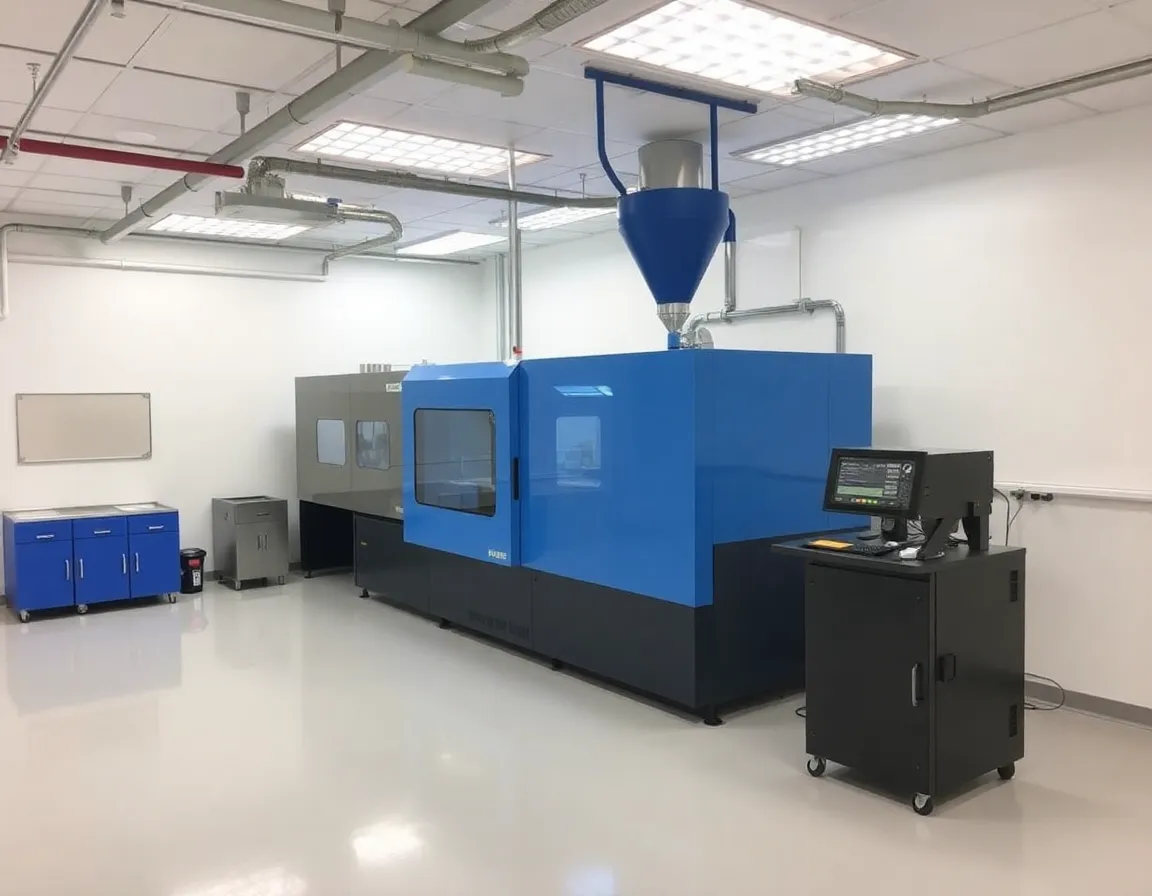
L'intersection critique de la précision et de la pureté
Dans le domaine de la médecine moderne, l'environnement où un dispositif est assemblé est tout aussi critique que le dispositif lui-même. Une seule particule microscopique de poussière, une spore biologique errante ou une décharge électrostatique peut compromettre un implant, invalider un lot stérile ou rendre un outil de diagnostic inexact. L'assemblage en salle blanche médicale n'est pas simplement une étape de fabrication ; c'est une discipline sophistiquée qui combine l'ingénierie, la microbiologie et la science du comportement humain pour créer un sanctuaire contrôlé pour l'innovation en soins de santé. Cet article dévoile sept secrets professionnels qui séparent les opérations de salle blanche de classe mondiale de celles médiocres, garantissant que les produits qui sauvent des vies sont fabriqués dans les conditions les plus strictes possibles.
Contrairement à l'assemblage industriel standard, l'assemblage en salle blanche médicale fonctionne sous un cadre réglementaire strict, principalement régi par les normes ISO 14644 et les bonnes pratiques de fabrication (BPF). L'objectif est de contrôler la concentration de particules en suspension dans l'air et, dans de nombreux cas, les contaminants biologiques. Cependant, la véritable maîtrise ne réside pas seulement dans le matériel—les filtres HEPA et les sas—mais dans les protocoles nuancés qui régissent chaque action à l'intérieur de l'environnement aux murs blancs. Ici, nous décodons les sept secrets non négociables qui conduisent à un assemblage réussi de dispositifs médicaux.
Secret n°1 : Maîtriser la dynamique de l'air (L'architecture invisible)
L'idée fausse la plus répandue à propos d'une salle blanche est que " propre " signifie " stérile ". En réalité, cela signifie contamination maîtrisée. Le premier secret d'un assemblage réussi est de comprendre que l'air est le principal vecteur de contamination. Les professionnels ne se contentent pas de filtres à air ; ils conçoivent le flux d'air pour éloigner les particules du produit.
Flux unidirectionnel vs. Flux turbulent
Pour un assemblage médical critique, le, flux d'air unidirectionnel (laminaire) est primordial. L'air se déplace en lignes parallèles à une vitesse constante, généralement de 0,45 m/s ± 20%, balayant les contaminants loin de la zone de travail. Le secret réside dans le positionnement : le travail d'assemblage doit se faire " en amont " de l'opérateur, ce qui signifie que les particules de son souffle et de son corps sont emportées, et non pas au-dessus du produit. En revanche, les salles à flux turbulent (ISO 7 et moins) reposent sur la dilution, ce qui est acceptable pour des composants moins sensibles mais risqué pour les dispositifs implantables.
Les professionnels savent également que le flux d'air est perturbé par les obstructions physiques. Un simple moniteur, un tabouret mal placé ou une pile de documents peuvent créer des tourbillons qui piègent les particules. Par conséquent, la disposition de l'assemblage est conçue autour du trajet du flux d'air, et non pour le confort du travailleur. Chaque table est perforée, chaque luminaire est encastré, et chaque ligne de service est scellée pour empêcher l'air de contourner le système de filtration.
Secret #2 : Le facteur humain – L'habillage comme un rituel, pas une routine
Les humains sont, de loin, la plus grande source de contamination dans une salle blanche. Une personne sédentaire émet environ 100 000 particules par minute. Le deuxième secret est de traiter la procédure d'habillage comme un rituel sacré et chorégraphié. Il ne s'agit pas de porter une " combinaison de lapin " ; il s'agit de créer une barrière physique qui contient le micro-environnement humain.
Protocole d'habillage séquentiel
Les assembleurs experts suivent une séquence stricte qui minimise la génération de particules. Le processus implique généralement :
- Pré-nettoyage : Retirer tous les cosmétiques, bijoux et appareils électroniques personnels avant d'entrer dans le vestiaire.
- Douche à air : Un jet à haute vélocité qui élimine les particules libres des sous-vêtements.
- Habillage de bas en haut : Enfiler la combinaison, puis les bottes, puis la cagoule, et enfin les gants et les lunettes de protection. La règle cruciale est d'éviter de toucher l'extérieur de la combinaison avec les mains nues.
- Rinçage final : Une deuxième douche à air et une vérification visuelle à l'aide d'un miroir pour s'assurer qu'aucune peau n'est exposée.
Le secret ici est l'hygiène des gants. Les gants sont stérilisés avec de l'IPA à 70 % (alcool isopropylique) immédiatement avant de manipuler tout produit. Ce n'est pas seulement pour la propreté chimique ; la friction de l'essuyage crée une charge statique qui attire en fait les particules vers la surface du gant, les empêchant de tomber sur le dispositif.
Secret #3 : Science des matériaux et contrôle du dégazage
Tous les matériaux ne sont pas égaux dans une salle blanche. Le troisième secret implique une compréhension approfondie du dégazage et de la libération de particules. De nombreux plastiques, adhésifs et lubrifiants libèrent des composés organiques volatils (COV) qui peuvent se condenser sur des surfaces optiques sensibles ou modifier la composition chimique d'un revêtement à élution de médicament.
Choix de matériaux à faible émission de particules
Les professionnels de l'assemblage médical spécifient exclusivement des matériaux intrinsèquement à faible libération de particules. Par exemple :
- Silicone-free lubricants are used to prevent surface contamination that can cause delamination.
- Wipe materials are made of knitted polyester or non-woven cellulose, never cotton, as cotton fibers are long and abrasive.
- Pen and paper are forbidden; instead, laser-etched metal tags and solvent-resistant labels are used.
The true secret is pre-conditioning. In high-end facilities, components are "baked out" in a vacuum oven prior to assembly to drive off absorbed moisture and VOCs. This pre-treatment ensures that the final product does not release contaminants over its lifetime, which is critical for hermetically sealed implants.
Secret #4: Electrostatic Discharge (ESD) – The Silent Killer
While particles are visible under a microscope, electrostatic discharge is invisible until it destroys a microchip. In medical devices, which increasingly contain complex electronics (e.g., insulin pumps, neurostimulators), ESD can cause latent failures that manifest months after implantation. The fourth secret is total ESD control, which goes beyond just wearing a wrist strap.
Conductive Work Surfaces and Ionization
All work surfaces in a medical cleanroom assembly station must be conductive (typically dissipative laminate) and grounded to a common point. However, the master secret is the use of ionizers. Because cleanrooms have low humidity (often below 40% RH) to reduce bacterial growth, static charges build up rapidly. Ionizers flood the air with positive and negative ions that neutralize the charge on insulators (like the plastic housing of a device).
Professionals also know that ESD safety is about speed and contact. Assemblers are trained to handle components by their edges, never touching conductive pins. They use vacuum pick-up tools with conductive tips, and all packaging materials must be static-shielding bags, not just anti-static bags. This level of discipline prevents the "sudden death" of electronics that would otherwise pass initial testing but fail in the field.
Secret #5: Real-Time Environmental Monitoring (Data over Guesswork)
The fifth secret is a shift from reactive to predictive contamination control. Traditional methods involved taking settle plates and swabbing surfaces at the end of a shift. Master facilities use continuous, real-time particle counters (both airborne and in liquids) that feed data into a central SCADA system. This provides immediate feedback—if a particle spike occurs at 10:32 AM, the system alerts the supervisor instantly, allowing for a root-cause analysis before the batch is ruined.
Trending and Alert Limits
The secret is not just having sensors but knowing how to interpret the data. Professionals establish three levels of limits:
- Action Limit: If particle count exceeds this, the assembly must stop immediately, and the product is quarantined.
- Alert Limit: A warning that the environment is trending toward the action limit, prompting a check of HEPA filters or a review of operator behavior.
- Baseline Trend: Analyzing weekly data to identify slow degradation in air handling units before they fail.
This data-driven approach allows for proactive maintenance, such as pre-filter replacement, rather than waiting for a regulatory audit to fail. It also provides the documentation required for regulatory submissions, proving that the environment was consistently within specification throughout the entire production run.
Secret #6: Process Isolation and Single-Piece Flow
Batch production is the enemy of cleanliness. The sixth secret is to design the assembly line for single-piece flow with physical barriers between process steps. Instead of moving a tray of 100 devices from station to station (which allows contamination to accumulate on the tray), each device is assembled in a dedicated, isolated module.
The Use of Isolators and RABS
For high-risk products (e.g., prefilled syringes or ophthalmic solutions), master assembly uses Restricted Access Barrier Systems (RABS) or full isolators. These are glove-box-like enclosures that provide a physical barrier between the operator and the product. The interior is continuously flushed with sterile air or nitrogen, and the operator interacts via long-sleeved gloves sealed to the wall. This reduces the human contamination factor by 99%.
Even for less critical devices, the secret is minimizing product travel. The assembly line is organized in a U-shape or a straight line where the product never touches a non-clean surface. Conveyor belts are avoided because they grind and create particles; instead, gravity-fed slides or manual hand-off using sterile tweezers are preferred.
Secret #7: Validation and Human Training (The Psychological Edge)
The final secret is arguably the most overlooked: the human mind. A cleanroom is a stressful environment—restrictive, cold, and monotonous. The seventh secret is investing heavily in behavioral training and psychological conditioning. It is not enough to tell a technician what to do; they must understand why they do it.
Simulation and Error-Proofing (Poka-Yoke)
Master facilities use virtual reality (VR) simulators to train assemblers on the exact motions required before they ever step inside the real cleanroom. This reduces the "learning curve" contamination events. Additionally, they implement Poka-Yoke (mistake-proofing) mechanisms:
- Smart tools: Torque wrenches that log data and lock out if the correct torque is not achieved.
- Vision systems: Cameras that automatically inspect for missing components or flipped O-rings.
- Color-coded zoning: Floors and walls are painted in different shades to signal transition zones, preventing accidental cross-contamination.
Furthermore, the secret is in ergonomic design. If a technician has to stretch or bend uncomfortably, they will sweat, shed more particles, and make mistakes. Adjustable workstations, anti-fatigue mats, and scheduled micro-breaks (outside the cleanroom) are essential to maintaining the high level of focus required for precision assembly.
Applications and Benefits of Master-Level Assembly
Implementing these seven secrets yields tangible benefits across the medical field. The most obvious application is in the production of implantable devices (orthopedics, pacemakers), where a single particle can cause inflammation or rejection. It is also critical for combination products (drug-device hybrids) like auto-injectors, where the drug must remain free of leachables from the device materials. Finally, it is vital for diagnostic consumables, such as microfluidic chips, where a dust particle can clog a channel and produce a false negative result.
The benefits are clear: higher yield (fewer rejected batches), lower liability (reduced risk of patient harm), and faster regulatory approval (because the data proves consistent quality). Moreover, a well-designed cleanroom assembly process reduces operator fatigue, leading to lower turnover rates and a more experienced workforce.
Conclusion: The Pursuit of Invisible Perfection
Mastering medical cleanroom assembly is not about buying the most expensive filters or the largest room. It is about a holistic philosophy that respects the invisible threats—air movement, human shedding, static charge, and material chemistry. By implementing the seven secrets outlined above—airflow mastery, ritualized gowning, material selection, ESD control, real-time monitoring, process isolation, and human psychological training—manufacturers can achieve a level of precision that borders on art.
In an industry where the margin for error is zero, these secrets are not optional enhancements; they are the baseline for survival. The devices that emerge from these controlled environments carry the silent promise of safety, born from the relentless pursuit of invisible perfection. As technology advances towards nano-scale medicine, the importance of these cleanroom disciplines will only grow, solidifying their role as the unsung heroes of modern healthcare.