
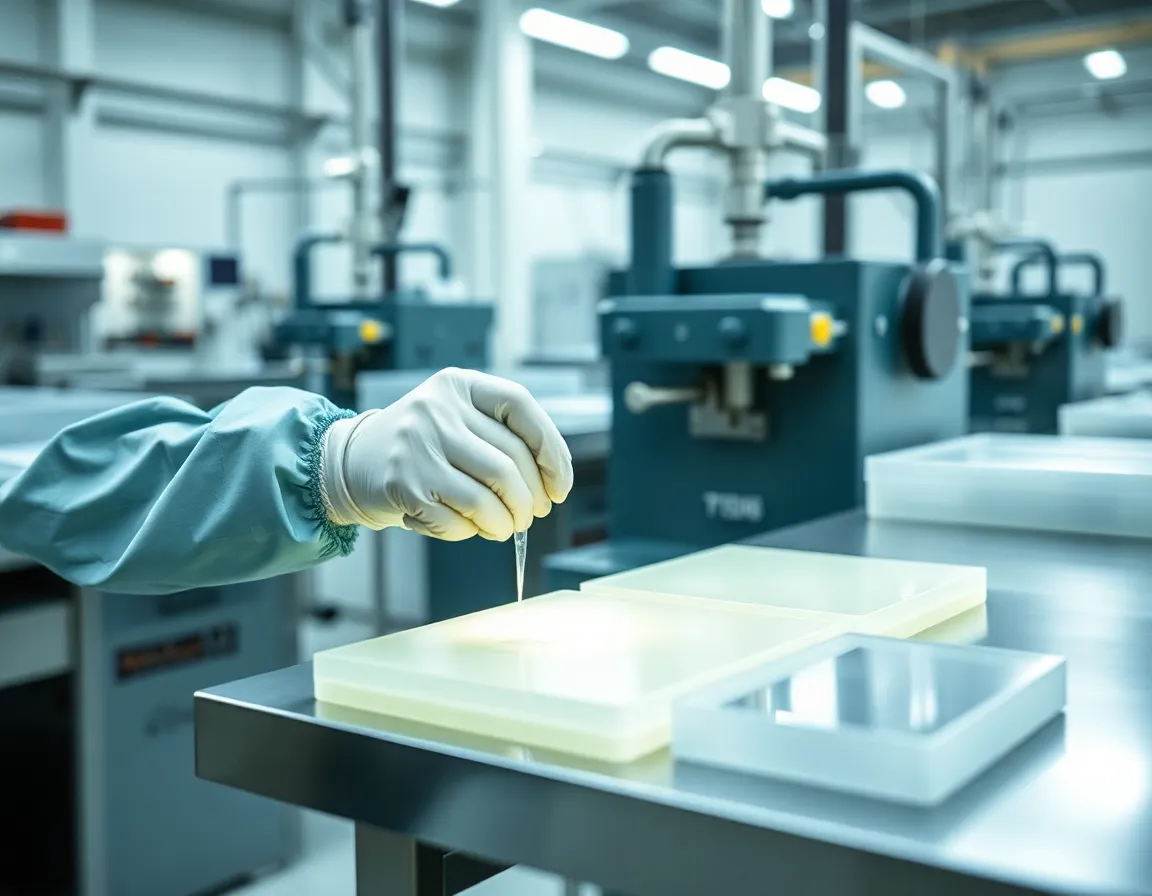
Introduction: The Critical Role of Precision in Healthcare Manufacturing
The healthcare industry demands an unparalleled level of precision, reliability, and sterility in every component used in medical devices, diagnostic equipment, and pharmaceutical delivery systems. At the heart of this manufacturing ecosystem lies healthcare plastic injection molding, a process that has evolved far beyond simple part production. Today, it is a sophisticated discipline combining advanced polymer science, micro-engineering, and stringent regulatory compliance. This article explores the key innovations reshaping precision plastic molding in healthcare, examining how these advancements are improving patient outcomes, reducing costs, and enabling next-generation medical technologies.
Understanding Healthcare Plastic Injection Molding
Ce que c'est et comment cela fonctionne
Healthcare plastic injection molding is a manufacturing process specifically tailored for medical and pharmaceutical applications. It involves injecting molten thermoplastic polymers into precisely engineered steel or aluminum molds under high pressure. Once cooled and solidified, the mold opens to eject the finished component. Unlike general-purpose injection molding, healthcare molding operates under strict Bonnes pratiques de fabrication (BPF) et des ISO 13485 normes de gestion de la qualité. Le processus doit garantir une répétabilité absolue, une précision dimensionnelle souvent à quelques microns près, et une compatibilité avec les méthodes de stérilisation telles que les rayons gamma, l'oxyde d'éthylène (EtO) ou l'autoclavage.
La distinction clé réside dans les matériaux utilisés. Les polymères de qualité médicale—tels que le polycarbonate, la polysulfone, le polyétheréthercétone (PEEK) et le caoutchouc de silicone liquide (LSR)—sont sélectionnés pour leur biocompatibilité, leur résistance chimique et leur résistance mécanique. Ces matériaux doivent passer des tests rigoureux de cytotoxicité, de sensibilisation et d'hémocompatibilité tels que définis par ISO 10993 normes.
L'impératif de précision
Dans le domaine de la santé, un seul micron d'écart peut rendre un composant inutilisable. Un embout de cathéter qui ne scelle pas parfaitement, un corps de seringue avec un diamètre intérieur incohérent, ou un instrument chirurgical avec un bord bavuré peuvent entraîner une défaillance du dispositif, une infection ou une blessure pour le patient. Le moulage de précision des plastiques répond à ce défi par :
- Conception de moules à haute tolérance : Utilisation de l'usinage CNC, de l'électroérosion (EDM) et de la gravure laser pour atteindre des tolérances aussi serrées que ±0,001 pouce.
- Systèmes de surveillance des processus : Capteurs en temps réel pour la température, la pression et la viscosité qui ajustent automatiquement les paramètres pour maintenir la cohérence.
- Fabrication en salle blanche : Les salles blanches de classe ISO 7 ou 8 minimisent la contamination particulaire pendant le moulage et l'assemblage.
Innovations clés propulsant le moulage des plastiques médicaux vers l'avant
1. Micro-moulage pour dispositifs miniaturisés
Alors que les dispositifs médicaux rétrécissent—sous l'impulsion de la chirurgie mini-invasive, des diagnostics portables et des capteurs implantables—la demande pour micro-moulage a explosé. Cette innovation permet aux fabricants de produire des composants pesant moins d'un gramme avec des tailles de caractéristiques dans la plage submillimétrique. Les applications incluent les puces microfluidiques pour les tests au point de service, les minuscules engrenages pour les outils chirurgicaux robotisés et les structures de stents à élution de médicament.
Les progrès dans la métallurgie de l'acier pour moules et les unités d'injection à haute vitesse permettent le remplissage précis de cavités microscopiques sans bavures ni vides. Le micro-moulage à deux injections permet en outre la combinaison de polymères rigides et flexibles dans une seule pièce, créant des joints ou des charnières complexes sans assemblage secondaire.
2. Moulage de silicone liquide (LSR)
Le silicone liquide est devenu un matériau de choix pour de nombreuses applications de soins de santé en raison de sa biocompatibilité exceptionnelle, de sa stabilité thermique et de sa flexibilité. Les innovations dans le moulage par injection de LSR incluent des systèmes de canaux froids qui réduisent le gaspillage de matériau et des robots de démoulage automatisés qui manipulent les pièces délicates sans déformation. Le LSR est maintenant utilisé pour les sondes d'alimentation néonatales, les masques respiratoires, les implants de délivrance de médicaments et les composants de drainage chirurgical. La capacité de surmouler le LSR sur des substrats thermoplastiques crée des poignées à toucher doux et des joints étanches qui améliorent l'ergonomie et les performances des dispositifs.
3. Techniques de moulage multi-matériaux et de surmoulage
Les dispositifs de soins de santé modernes nécessitent souvent différentes propriétés de matériau dans un seul composant, par exemple un boîtier rigide avec une lèvre d'étanchéité souple. Le moulage par injection multi-matériaux (également appelé moulage à deux injections ou co-injection) atteint cet objectif en injectant séquentiellement deux polymères différents dans la même cavité de moule. Cela élimine le besoin de collage adhésif ou de soudure ultrasonique, réduisant les étapes d'assemblage et les points de défaillance potentiels. Les innovations dans la technologie de plateau rotatif et le moulage à noyau reculé permettent des géométries complexes qui étaient auparavant impossibles. Les applications incluent les corps de stylos à insuline, les connecteurs IV et les poignées d'agrafes chirurgicales.
4. Contrôle de processus en temps réel et intégration de l'Industrie 4.0
L'intégration de Industry 4.0 principles into healthcare injection molding has revolutionized quality assurance. Smart sensors embedded in molds and injection barrels collect data on every cycle—temperature gradients, injection speed, holding pressure, and cooling rates. Machine learning algorithms analyze this data to predict wear, optimize cycle times, and flag deviations before they produce non-conforming parts. This predictive manufacturing approach reduces scrap rates, shortens validation timelines, and provides full traceability for regulatory audits. Some facilities now use digital twin simulations to test mold designs virtually, cutting development costs by up to 40%.
5. Advanced Surface Engineering for Sterilization Compatibility
One of the greatest challenges in healthcare plastic molding is ensuring that parts survive repeated sterilization cycles without degrading. Innovations in mold surface texturing—such as laser etching and micro-EDM—create surfaces that resist bacterial adhesion and withstand autoclave temperatures. Additionally, new polymer blends incorporate antimicrobial additives like silver ions or copper oxide, which are homogeneously distributed during the molding process to provide lifelong protection against microbial growth. These advancements are critical for reusable surgical instruments, hospital bed components, and diagnostic equipment housings.
Benefits of Precision Plastic Molding in Healthcare
Qualité et sécurité sans compromis
The primary benefit of precision healthcare plastic injection molding is the consistent production of parts that meet stringent regulatory requirements. Each component is manufactured under validated processes with documented traceability from raw material lot to final inspection. This reduces the risk of recalls, which in the medical device industry can cost millions and endanger lives. Statistical process control (SPC) ensures that every batch meets dimensional and functional specifications.
Cost-Effectiveness at Scale
While the initial tooling investment for precision molds is significant (often $50,000 to $200,000 per cavity), the per-unit cost drops dramatically at high volumes. Multi-cavity molds can produce hundreds of thousands of identical parts per month with minimal labor. Innovations like hot runner systems reduce material waste, and automated part handling eliminates manual inspection bottlenecks. For high-demand consumables—such as syringes, test tubes, and IV sets—this makes injection molding the most economical manufacturing method available.
Design Flexibility and Complexity
Precision injection molding allows designers to incorporate complex features—undercuts, threads, living hinges, snap-fits, and textured surfaces—directly into the mold. This eliminates costly secondary operations like drilling, tapping, or gluing. Recent innovations in des canaux de refroidissement conformes (created via 3D-printed mold inserts) enable uniform cooling of complex geometries, reducing cycle times and warpage. This design freedom is particularly valuable for single-use surgical devices where every gram of material and every assembly step must be optimized.
Enhanced Patient Outcomes
Ultimately, the innovations in healthcare plastic molding translate directly to better patient care. Miniaturized implants cause less trauma during insertion. Drug delivery devices with precise metering ensure accurate dosing. Diagnostic cartridges with microfluidic channels provide faster lab results. The reliability of molded components reduces the likelihood of device failure during critical procedures.
Applications Across the Healthcare Spectrum
Precision plastic injection molding serves virtually every sector of healthcare:
- Surgical instruments: Handles, clamps, trocars, and retractors made from sterilizable polymers.
- Drug delivery systems: Pre-filled syringes, auto-injectors, inhalers, and insulin pumps with exacting dimensional tolerances.
- Diagnostic devices: Microfluidic cartridges, test strip housings, and blood collection tubes.
- Implantables: Orthopedic anchors, spinal cages, and dental implants using bioabsorbable or biocompatible polymers.
- Hospital equipment: Housings for ventilators, infusion pumps, and monitoring systems that require impact resistance and chemical resistance.
- Wearable health tech: Sensor enclosures, watch-style monitors, and patch pumps that demand lightweight, skin-friendly materials.
Best Practices for Successful Healthcare Molding Projects
Sélection et validation des matériaux
Begin with a thorough understanding of the device's intended use, sterilization method, and regulatory class. Work closely with polymer suppliers who provide medical-grade resins with documented biocompatibility testing. Always request Material Safety Data Sheets (MSDS) et des FDA Master File references to streamline regulatory submissions.
Conception pour la fabricabilité (DFM)
Engage the mold maker early in the design phase. Use DFM principles to ensure uniform wall thickness, adequate draft angles for ejection, and gate placement that minimizes flow lines. Avoid sharp internal corners that create stress concentrations. For micro-molded parts, consider the limitations of mold steel strength and ejection pin placement.
Cleanroom Compliance and Documentation
Select a molding partner with certified cleanroom facilities (ISO Class 7 or better) and a robust quality management system. Ensure that all production runs are accompanied by Device History Records (DHR) et des Process Validation documentation per FDA 21 CFR Part 820. Regular internal audits and supplier audits are essential to maintain compliance.
Prototyping and Iterative Testing
Before committing to production tooling, use rapid prototyping techniques (such as 3D printing or soft tooling) to validate fit, function, and aesthetics. Conduct accelerated aging studies, sterilization validation, and biocompatibility testing on prototype parts. This iterative approach identifies design flaws early, saving time and money in the long run.
Partnering with Specialized Molders
Not all injection molders are equipped for healthcare work. Look for partners with ISO 13485 certification, experience with FDA submissions, and a track record of producing Class II and Class III medical devices. They should offer in-house mold design, tooling maintenance, and secondary operations like ultrasonic welding or pad printing.
Conclusion: The Future of Precision Molding in Healthcare
The innovations in healthcare plastic injection molding are far from static. Emerging trends such as bio-based polymers, 4D-printed molds that change shape over time, and closed-loop AI-driven manufacturing promise to push the boundaries even further. As the global population ages and healthcare demands increase, the need for reliable, cost-effective, and high-precision plastic components will only grow. By embracing these key innovations—micro-molding, LSR technology, smart process control, and advanced materials—manufacturers can deliver the next generation of medical devices that save lives, reduce costs, and improve quality of care. Precision is not just a manufacturing goal; it is a clinical imperative.