
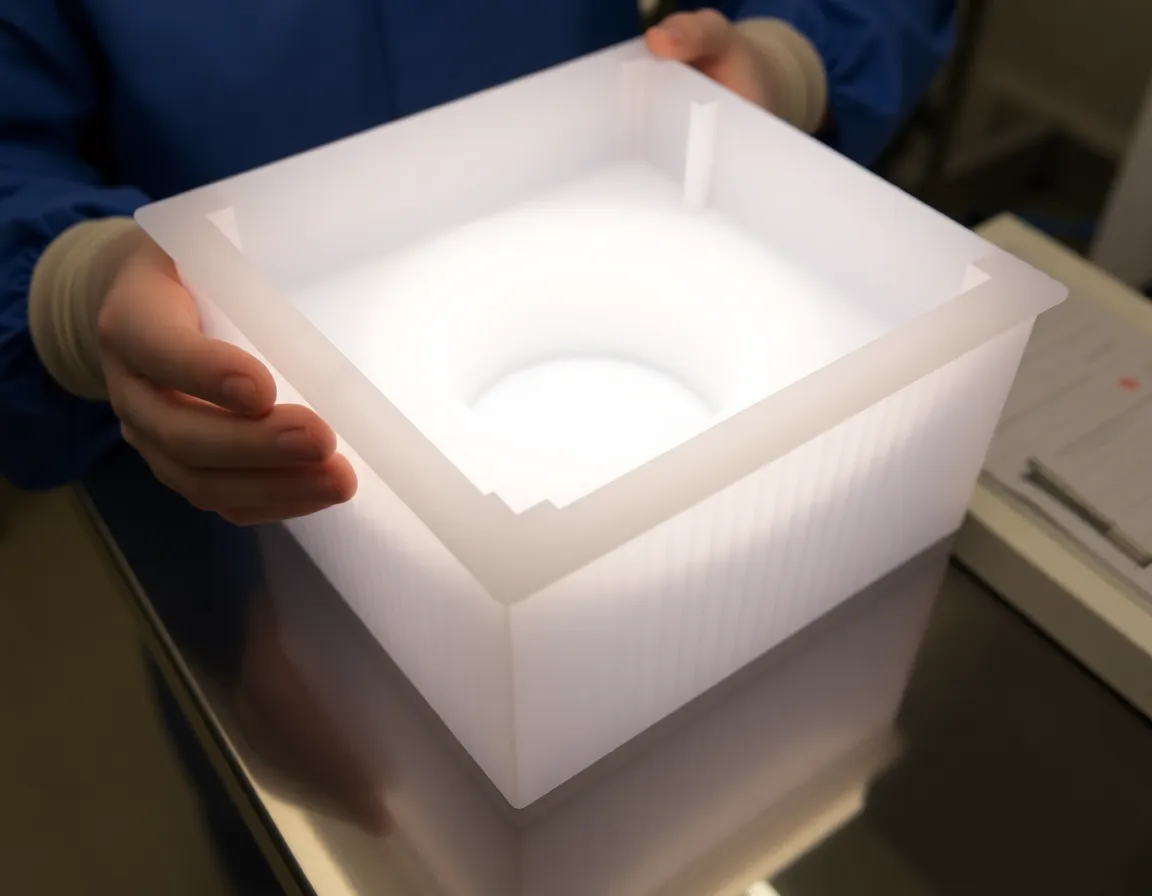
Introduction : Le rôle critique de l'emballage plastique dans les produits pharmaceutiques
Dans l'industrie pharmaceutique, l'emballage est bien plus qu'un conteneur. C'est un composant critique de la sécurité, de l'efficacité des médicaments et de l'observance des patients. Le moulage d'emballages plastiques pharmaceutiques représente une intersection spécialisée de la science des matériaux, de l'ingénierie de précision et de la conformité réglementaire stricte. Alors que la demande mondiale pour des produits biologiques complexes, la médecine personnalisée et des systèmes d'administration centrés sur le patient augmente, les innovations dans le moulage d'emballages plastiques sont devenues un axe central pour les fabricants. Cet article explore les technologies, matériaux et processus de pointe qui redéfinissent la manière dont les produits pharmaceutiques sont protégés, livrés et administrés.
Comprendre le moulage d'emballages plastiques pharmaceutiques
Le moulage d'emballages plastiques pharmaceutiques fait référence aux processus de fabrication utilisés pour créer des conteneurs, des fermetures, des dispositifs d'administration et des composants de protection à partir de matériaux polymères. Ces composants doivent répondre à des normes exceptionnellement élevées de pureté, de précision dimensionnelle, de propriétés de barrière et de compatibilité avec une large gamme de formulations de médicaments. Les principales technologies de moulage employées comprennent moulage par injection, moulage par soufflage, et moulage par compression, chacun adapté à différentes géométries de produits et exigences de performance.
Critères clés de sélection des matériaux
Le choix de la résine plastique est fondamental pour la performance de l'emballage. Les matériaux courants comprennent :
- Polypropylène (PP) : Offre une excellente résistance chimique et une stérilisabilité à la vapeur, ce qui le rend idéal pour les flacons, les seringues et les fermetures de bouteilles.
- Polyéthylène (PE) : Offre une résistance élevée aux chocs et une flexibilité, couramment utilisé pour les bouteilles, les compte-gouttes et les poches IV.
- Copolymère oléfine cyclique (COC) et polymère oléfine cyclique (COP) : Ces matériaux à haute clarté et à faible extractibilité sont de plus en plus privilégiés pour les seringues préremplies et les flacons pour produits biologiques sensibles.
- Polytéréphtalate d'éthylène (PET) : Utilisé pour ses propriétés supérieures de barrière aux gaz et sa transparence dans les bouteilles et les plaquettes thermoformées.
- Polycarbonate (PC) : Choisi pour sa haute résistance et sa résistance à la chaleur dans les dispositifs et connecteurs spécialisés.
Chaque matériau doit subir des tests rigoureux d'extractibles et de relargables (E&L) pour garantir qu'aucune substance nocive ne migre dans le produit pharmaceutique pendant sa durée de conservation.
Le flux de travail du processus de moulage
Les étapes clés du moulage des emballages plastiques pharmaceutiques sont hautement contrôlées :
- Séchage de la résine : Les polymères hygroscopiques comme le PET et le PC doivent être séchés à des niveaux d'humidité précis pour éviter des défauts tels que l'hydrolyse ou les bulles.
- Moulage par injection ou par soufflage : Le plastique fondu est injecté dans une cavité de moule en acier usinée avec précision (moulage par injection) ou extrudé en une paraison qui est gonflée contre un moule (moulage par soufflage).
- Refroidissement et éjection : La pièce est refroidie dans des conditions contrôlées pour minimiser le retrait et le gauchissement, puis éjectée par des systèmes robotiques.
- Inspection dans le moule : Des caméras et capteurs avancés vérifient les dimensions critiques, l'état de surface et l'absence de bavures ou de contamination avant que la pièce ne quitte le moule.
- Traitement post-moulage : Cela peut inclure le recuit, le traitement de surface, le soudage par ultrasons ou l'assemblage avec des composants élastomères tels que les bouchons en caoutchouc.
Innovation #1 : Technologies de barrière avancées et moulage multicouche
L'un des défis les plus importants dans le conditionnement pharmaceutique est la protection des médicaments sensibles à l'oxygène et à l'humidité. Les plastiques monocouches traditionnels ne parviennent souvent pas à offrir des performances de barrière adéquates. Les innovations en moulage par co-injection multicouche et des moulage par extrusion-soufflage de coextrusion permettent désormais aux fabricants de créer des emballages comportant jusqu'à sept couches distinctes. Ces couches combinent différents polymères pour obtenir des propriétés qu'aucun matériau unique ne peut offrir.
Par exemple, une bouteille multicouche typique pour formulations liquides pourrait inclure :
- Une couche externe en polypropylène pour l'intégrité structurelle et l'impression.
- Une couche barrière intermédiaire en éthylène-alcool vinylique (EVOH) ou en polyamide pour bloquer l'oxygène.
- Une couche interne en polyéthylène ou en copolymère cyclique d'oléfine for drug contact compatibility and low extractables.
This technology is particularly vital for biologics et des gene therapies, which are often highly sensitive to degradation. The ability to tailor barrier properties through precise layer thickness control, achieved via advanced servo-driven injection units, represents a major leap forward in extending drug shelf life without the need for secondary packaging like foil pouches.
Innovation #2: Precision Micro-Molding for Delivery Devices
The rise of self-administered injectable drugs, including insulin, GLP-1 agonists, and monoclonal antibodies, has driven demand for micro-moulage of complex device components. These parts—such as needle hubs, plunger rods, dose buttons, and flow restrictors—require tolerances measured in microns. Innovations in this space include:
- Multi-component injection molding: Machines with multiple injection units can produce a single part from two or more different materials in one cycle. For example, a syringe barrel can be molded with a rigid polypropylene body and an integrated soft-touch thermoplastic elastomer (TPE) grip, eliminating secondary assembly steps.
- In-mold sensors and closed-loop control: Real-time monitoring of cavity pressure, temperature, and melt flow allows the molding machine to adjust parameters dynamically, ensuring consistent part quality even with high-speed cycles.
- Liquid silicone rubber (LSR) molding: LSR is increasingly used for seals, valves, and gaskets in drug delivery devices due to its biocompatibility and flexibility. Dedicated LSR injection molding systems with cold-runner technology minimize material waste and cure times.
These innovations enable the production of wearable injectors et des auto-injectors that are smaller, more reliable, and easier for patients to use, directly improving therapeutic adherence.
Innovation #3: Sustainable and Eco-Friendly Molding Practices
Sustainability is no longer optional in pharmaceutical packaging. While the industry must prioritize patient safety, significant progress is being made in reducing environmental impact through molding innovations:
Use of Recycled and Bio-Based Resins
Pharmaceutical-grade post-consumer recycled (PCR) polyethylene et des polypropylène are now available that meet strict extractables and purity standards. These materials are being used in secondary packaging (e.g., bottle caps, outer containers) and, in some cases, primary packaging for less sensitive oral solid dosage forms. Similarly, bio-based polymers derived from sugarcane or corn starch, such as bio-PET et des bio-PP, offer a lower carbon footprint without compromising performance.
Lightweighting Through Mold Design
Advanced computational fluid dynamics (CFD) and mold flow simulation software enable engineers to design thinner, lighter parts while maintaining structural integrity. This l'allègement reduces material consumption by 15-30% per part. Combined with hot-runner systems that eliminate sprues and runners, material utilization rates can exceed 95%.
Energy-Efficient Molding Machines
All-electric and hybrid injection molding machines now dominate pharmaceutical production due to their precision and energy efficiency. These machines use servo motors instead of hydraulic pumps, reducing energy consumption by up to 70% compared to older models. Furthermore, inductive heating of mold surfaces and adiabatic cooling techniques shorten cycle times and lower overall energy demand.
Innovation #4: Smart Packaging and Serialization Integration
The pharmaceutical supply chain demands robust traceability to combat counterfeiting and ensure patient safety. Innovations in molding now enable the integration of smart features directly into the packaging during the molding process:
- In-mold labeling (IML): RFID tags or QR code labels are placed inside the mold cavity before injection. The plastic fuses with the label during molding, creating a tamper-evident, permanent identification system that cannot be removed or altered.
- Micro-texturing and laser marking: Mold surfaces can be engineered with micro-scale textures that create unique, machine-readable patterns (similar to fingerprints) on the plastic surface. This allows for anti-counterfeiting without additional labels or inks.
- Molded-in sensors: Emerging technologies allow for the embedding of thin-film sensors or conductive polymer traces during molding. These can monitor temperature, humidity, or even drug degradation and communicate data via NFC to a smartphone.
These innovations support compliance with global serialization regulations (e.g., EU Falsified Medicines Directive, US DSCSA) while adding value through enhanced patient engagement and supply chain visibility.
Best Practices for Pharmaceutical Plastic Packaging Molding
To consistently achieve the highest quality and regulatory compliance, manufacturers must adhere to several best practices:
Design for Manufacturing (DFM) and Regulatory Alignment
Early collaboration between packaging engineers, mold designers, and regulatory affairs teams is essential. Mold designs must account for draft angles, une épaisseur de paroi uniforme, et gate placement to minimize stress and defects. Simultaneously, the design must comply with USP <660> (containers for injection), USP <671> (container performance), and ISO 15378 (GMP for primary packaging materials).
Cleanroom Manufacturing and Contamination Control
Pharmaceutical molding typically occurs in ISO Class 7 or 8 cleanrooms (Class 10,000 or 100,000). Key practices include:
- Use of stainless steel mold frames and ceramic ou en coated cavities to prevent metallic contamination.
- Automated robotic part removal and packaging to minimize human contact.
- Continuous particulate monitoring et des HEPA filtration of the molding environment.
Validation and Process Control
Every molding process must undergo rigorous IQ/OQ/PQ (Installation, Operational, Performance Qualification). Critical process parameters (CPP) such as melt temperature, injection pressure, cooling time, and mold temperature must be monitored and documented. Statistical process control (SPC) using real-time data from cavity sensors helps detect drift before non-conforming parts are produced.
Material Traceability and Lot Control
Every resin lot used must be fully traceable from supplier to finished product. This includes documenting Certificate of Analysis (CoA) data, storage conditions, and drying parameters. For multi-layer or multi-component parts, each material source must be tracked independently.
Conclusion: The Future of Pharmaceutical Molding
The innovations in pharmaceutical plastic packaging molding are reshaping the industry’s ability to deliver safe, effective, and patient-friendly therapies. From advanced multilayer barriers that protect biologics to sustainable materials and smart packaging with embedded traceability, the pace of change is accelerating. As drug development moves toward more potent and sensitive molecules, the role of precision molding will only grow in importance. Manufacturers who invest in state-of-the-art equipment, robust quality systems, and cross-functional collaboration will be best positioned to meet the dual demands of regulatory rigor and environmental responsibility. Ultimately, these innovations are not just about molding plastic—they are about molding trust in the pharmaceutical supply chain.