
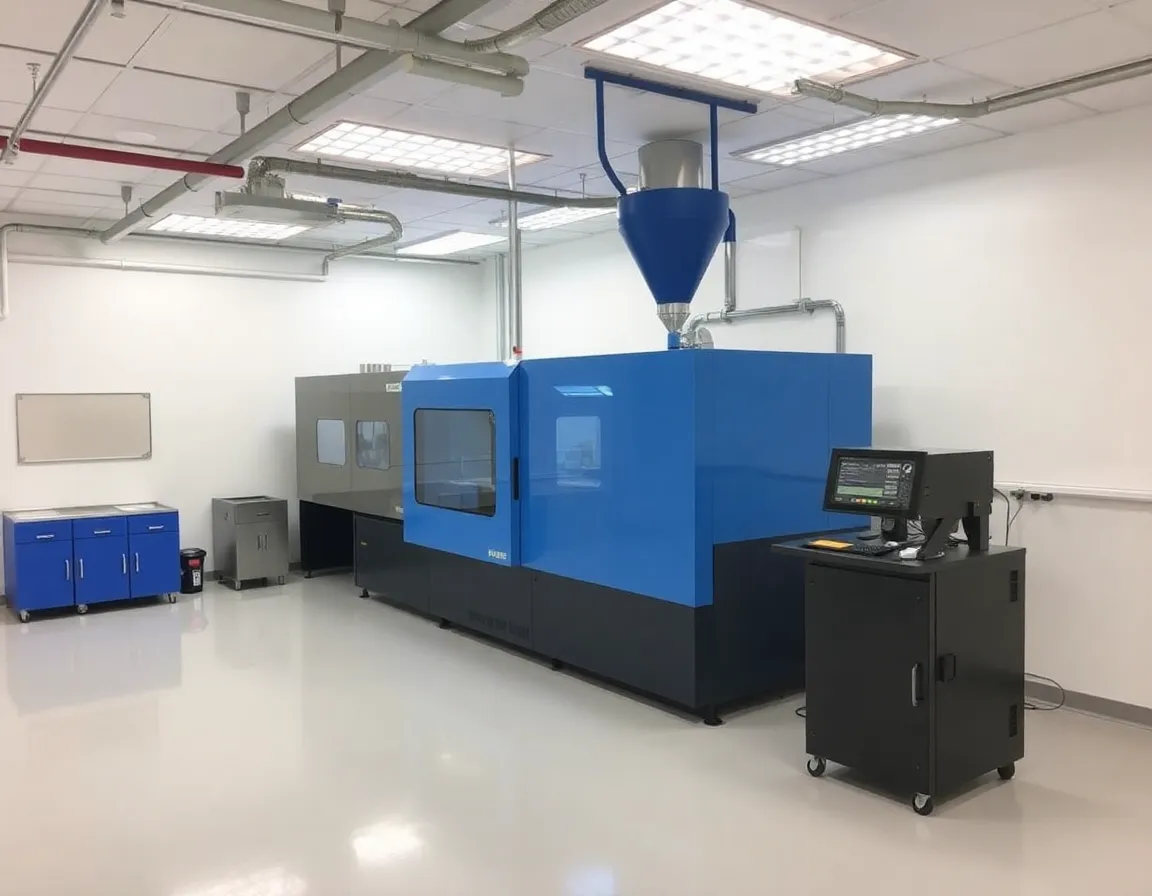
La Intersección Crítica entre Precisión y Pureza
En el ámbito de la medicina moderna, el entorno donde se ensambla un dispositivo es tan crítico como el propio dispositivo. Una sola partícula microscópica de polvo, una espora biológica errante o una descarga electrostática pueden comprometer un implante, invalidar un lote estéril o hacer que una herramienta de diagnóstico sea inexacta. El ensamblaje médico en sala limpia no es meramente un paso de fabricación; es una disciplina sofisticada que combina ingeniería, microbiología y ciencia del comportamiento humano para crear un santuario controlado para la innovación en salud. Este artículo revela siete secretos profesionales que separan las operaciones de sala limpia de clase mundial de las mediocres, asegurando que los productos que salvan vidas se construyan bajo las condiciones más estrictas posibles.
A diferencia del ensamblaje industrial estándar, el ensamblaje médico en sala limpia opera bajo un marco regulatorio estricto, gobernado principalmente por los estándares ISO 14644 y las Buenas Prácticas de Manufactura (GMP). El objetivo es controlar la concentración de partículas en el aire y, en muchos casos, los contaminantes biológicos. Sin embargo, el verdadero dominio no reside solo en el hardware—los filtros HEPA y las esclusas de aire—sino en los protocolos matizados que gobiernan cada acción dentro del entorno de paredes blancas. Aquí, desciframos los siete secretos innegociables que impulsan el ensamblaje exitoso de dispositivos médicos.
Secreto #1: Dominando la Dinámica del Flujo de Aire (La Arquitectura Invisible)
El concepto erróneo más común sobre una sala limpia es que "limpio" significa "estéril". En realidad, significa contaminación controlada. El primer secreto para un ensamblaje exitoso es entender que el aire es el principal vehículo de contaminación. Los profesionales no solo confían en los filtros de aire; ellos diseñan el flujo de aire para alejar las partículas del producto.
Flujo Unidireccional vs. Flujo Turbulento
Para ensamblaje médico crítico, el, flujo de aire unidireccional (laminar) es primordial. El aire se mueve en líneas paralelas a una velocidad constante, típicamente 0.45 m/s ± 20%, barriendo los contaminantes fuera de la zona de trabajo. El secreto está en el posicionamiento: el trabajo de ensamblaje debe ocurrir "aguas arriba" del operador, lo que significa que la respiración y las partículas del cuerpo del operador se llevan lejos, no sobre el producto. En contraste, las salas de flujo turbulento (ISO 7 e inferiores) dependen de la dilución, lo cual es aceptable para componentes menos sensibles pero riesgoso para dispositivos implantables.
Los profesionales también saben que el flujo de aire se ve interrumpido por obstrucciones físicas. Un solo monitor, un taburete mal colocado o una pila de documentos pueden crear remolinos que atrapan partículas. Por lo tanto, el diseño del ensamblaje se planifica alrededor de la trayectoria del flujo de aire, no de la conveniencia del trabajador. Cada mesa es perforada, cada luminaria está al ras, y cada línea de servicios está sellada para evitar que el aire evite el sistema de filtración.
Secreto #2: El Factor Humano – El Vestido como un Ritual, No una Rutina
Los humanos son, con mucho, la mayor fuente de contaminación en una sala limpia. Una persona sedentaria desprende aproximadamente 100,000 partículas por minuto. El segundo secreto es tratar el procedimiento de vestido como un ritual sagrado y coreografiado. No se trata de usar un "traje de conejo"; se trata de crear una barrera física que contenga el microambiente humano.
Protocolo de Vestido Secuencial
Los maestros ensambladores siguen una secuencia estricta que minimiza la generación de partículas. El proceso generalmente implica:
- Pre-limpieza: Retirar todos los cosméticos, joyas y dispositivos electrónicos personales antes de entrar al vestuario.
- Ducha de aire: Un chorro de alta velocidad que elimina partículas sueltas de la ropa interior.
- Vestimenta de abajo hacia arriba: Ponerse el overol, luego las botas, luego la capucha y finalmente los guantes y las gafas. La regla crítica es evitar tocar la parte exterior del traje con las manos desnudas.
- Enjuague final: Una segunda ducha de aire y una verificación visual con un espejo para asegurarse de que no haya piel expuesta.
El secreto aquí es la higiene de los guantes. Los guantes se esterilizan con alcohol isopropílico al 70% inmediatamente antes de manipular cualquier producto. Esto no es solo por limpieza química; la fricción del paño crea una carga estática que en realidad atrae partículas a la superficie del guante, evitando que caigan sobre el dispositivo.
Secreto #3: Ciencia de materiales y control de desgasificación
No todos los materiales son iguales dentro de una sala limpia. El tercer secreto implica un profundo entendimiento de la desgasificación y el desprendimiento de partículas. Muchos plásticos, adhesivos y lubricantes liberan compuestos orgánicos volátiles (COV) que pueden condensarse en superficies ópticas sensibles o alterar la composición química de un recubrimiento farmacéutico.
Selección de materiales de baja emisión de partículas
Los profesionales de ensamblaje médico especifican exclusivamente materiales inherentemente de baja generación de partículas. Por ejemplo:
- Lubricantes sin silicona se utilizan para prevenir la contaminación de la superficie que puede causar delaminación.
- Materiales de limpieza están hechos de poliéster tejido o celulosa no tejida, nunca algodón, ya que las fibras de algodón son largas y abrasivas.
- Bolígrafo y papel están prohibidos; en su lugar, se utilizan etiquetas metálicas grabadas con láser y etiquetas resistentes a solventes.
El verdadero secreto es el preacondicionamiento. En instalaciones de alta gama, los componentes se "hornean" en un horno de vacío antes del ensamblaje para eliminar la humedad absorbida y los COV. Este pretratamiento asegura que el producto final no libere contaminantes durante su vida útil, lo cual es crítico para implantes sellados herméticamente.
Secreto #4: Descarga Electroestática (ESD) – El Asesino Silencioso
Mientras que las partículas son visibles bajo un microscopio, la descarga electroestática es invisible hasta que destruye un microchip. En los dispositivos médicos, que cada vez contienen electrónica compleja (por ejemplo, bombas de insulina, neuroestimuladores), la ESD puede causar fallas latentes que se manifiestan meses después de la implantación. El cuarto secreto es el control total de ESD, que va más allá de solo usar una pulsera de tierra.
Superficies de Trabajo Conductoras e Ionización
All work surfaces in a medical cleanroom assembly station must be conductive (typically dissipative laminate) and grounded to a common point. However, the master secret is the use of ionizers. Because cleanrooms have low humidity (often below 40% RH) to reduce bacterial growth, static charges build up rapidly. Ionizers flood the air with positive and negative ions that neutralize the charge on insulators (like the plastic housing of a device).
Professionals also know that ESD safety is about speed and contact. Assemblers are trained to handle components by their edges, never touching conductive pins. They use vacuum pick-up tools with conductive tips, and all packaging materials must be static-shielding bags, not just anti-static bags. This level of discipline prevents the "sudden death" of electronics that would otherwise pass initial testing but fail in the field.
Secret #5: Real-Time Environmental Monitoring (Data over Guesswork)
The fifth secret is a shift from reactive to predictive contamination control. Traditional methods involved taking settle plates and swabbing surfaces at the end of a shift. Master facilities use continuous, real-time particle counters (both airborne and in liquids) that feed data into a central SCADA system. This provides immediate feedback—if a particle spike occurs at 10:32 AM, the system alerts the supervisor instantly, allowing for a root-cause analysis before the batch is ruined.
Trending and Alert Limits
The secret is not just having sensors but knowing how to interpret the data. Professionals establish three levels of limits:
- Action Limit: If particle count exceeds this, the assembly must stop immediately, and the product is quarantined.
- Alert Limit: A warning that the environment is trending toward the action limit, prompting a check of HEPA filters or a review of operator behavior.
- Baseline Trend: Analyzing weekly data to identify slow degradation in air handling units before they fail.
This data-driven approach allows for proactive maintenance, such as pre-filter replacement, rather than waiting for a regulatory audit to fail. It also provides the documentation required for regulatory submissions, proving that the environment was consistently within specification throughout the entire production run.
Secret #6: Process Isolation and Single-Piece Flow
Batch production is the enemy of cleanliness. The sixth secret is to design the assembly line for single-piece flow with physical barriers between process steps. Instead of moving a tray of 100 devices from station to station (which allows contamination to accumulate on the tray), each device is assembled in a dedicated, isolated module.
The Use of Isolators and RABS
For high-risk products (e.g., prefilled syringes or ophthalmic solutions), master assembly uses Restricted Access Barrier Systems (RABS) or full isolators. These are glove-box-like enclosures that provide a physical barrier between the operator and the product. The interior is continuously flushed with sterile air or nitrogen, and the operator interacts via long-sleeved gloves sealed to the wall. This reduces the human contamination factor by 99%.
Even for less critical devices, the secret is minimizing product travel. The assembly line is organized in a U-shape or a straight line where the product never touches a non-clean surface. Conveyor belts are avoided because they grind and create particles; instead, gravity-fed slides or manual hand-off using sterile tweezers are preferred.
Secret #7: Validation and Human Training (The Psychological Edge)
The final secret is arguably the most overlooked: the human mind. A cleanroom is a stressful environment—restrictive, cold, and monotonous. The seventh secret is investing heavily in behavioral training and psychological conditioning. It is not enough to tell a technician what to do; they must understand why they do it.
Simulation and Error-Proofing (Poka-Yoke)
Master facilities use virtual reality (VR) simulators to train assemblers on the exact motions required before they ever step inside the real cleanroom. This reduces the "learning curve" contamination events. Additionally, they implement Poka-Yoke (mistake-proofing) mechanisms:
- Smart tools: Torque wrenches that log data and lock out if the correct torque is not achieved.
- Vision systems: Cameras that automatically inspect for missing components or flipped O-rings.
- Color-coded zoning: Floors and walls are painted in different shades to signal transition zones, preventing accidental cross-contamination.
Furthermore, the secret is in ergonomic design. If a technician has to stretch or bend uncomfortably, they will sweat, shed more particles, and make mistakes. Adjustable workstations, anti-fatigue mats, and scheduled micro-breaks (outside the cleanroom) are essential to maintaining the high level of focus required for precision assembly.
Applications and Benefits of Master-Level Assembly
Implementing these seven secrets yields tangible benefits across the medical field. The most obvious application is in the production of implantable devices (orthopedics, pacemakers), where a single particle can cause inflammation or rejection. It is also critical for combination products (drug-device hybrids) like auto-injectors, where the drug must remain free of leachables from the device materials. Finally, it is vital for diagnostic consumables, such as microfluidic chips, where a dust particle can clog a channel and produce a false negative result.
The benefits are clear: higher yield (fewer rejected batches), lower liability (reduced risk of patient harm), and faster regulatory approval (because the data proves consistent quality). Moreover, a well-designed cleanroom assembly process reduces operator fatigue, leading to lower turnover rates and a more experienced workforce.
Conclusion: The Pursuit of Invisible Perfection
Mastering medical cleanroom assembly is not about buying the most expensive filters or the largest room. It is about a holistic philosophy that respects the invisible threats—air movement, human shedding, static charge, and material chemistry. By implementing the seven secrets outlined above—airflow mastery, ritualized gowning, material selection, ESD control, real-time monitoring, process isolation, and human psychological training—manufacturers can achieve a level of precision that borders on art.
In an industry where the margin for error is zero, these secrets are not optional enhancements; they are the baseline for survival. The devices that emerge from these controlled environments carry the silent promise of safety, born from the relentless pursuit of invisible perfection. As technology advances towards nano-scale medicine, the importance of these cleanroom disciplines will only grow, solidifying their role as the unsung heroes of modern healthcare.