
Introducción: La intersección crítica de precisión y pureza
En el mundo de alto riesgo de la fabricación de dispositivos médicos, el margen de error se mide en micras, y el costo de la contaminación puede medirse en vidas de pacientes. A medida que la tecnología médica avanza hacia dispositivos más pequeños, complejos e implantables, las demandas sobre los componentes que los conforman se han vuelto extraordinariamente estrictas. Aquí es donde servicios de moldeo por inyección en sala limpia han evolucionado de una especialidad de nicho a un requisito fundamental. El moldeo en sala limpia no es simplemente moldeo por inyección estándar realizado en una sala sin polvo; es un ecosistema de fabricación controlado y holístico diseñado para asegurar que cada pieza de polímero emerge con seguridad biológica absoluta, integridad dimensional y confiabilidad funcional. Para los OEM de dispositivos médicos, comprender los profundos beneficios de este proceso no se trata solo de cumplimiento—se trata de lograr una ventaja competitiva en un mercado donde la calidad es el diferenciador definitivo.
Entendiendo el moldeo por inyección en sala limpia: Más que solo una sala blanca
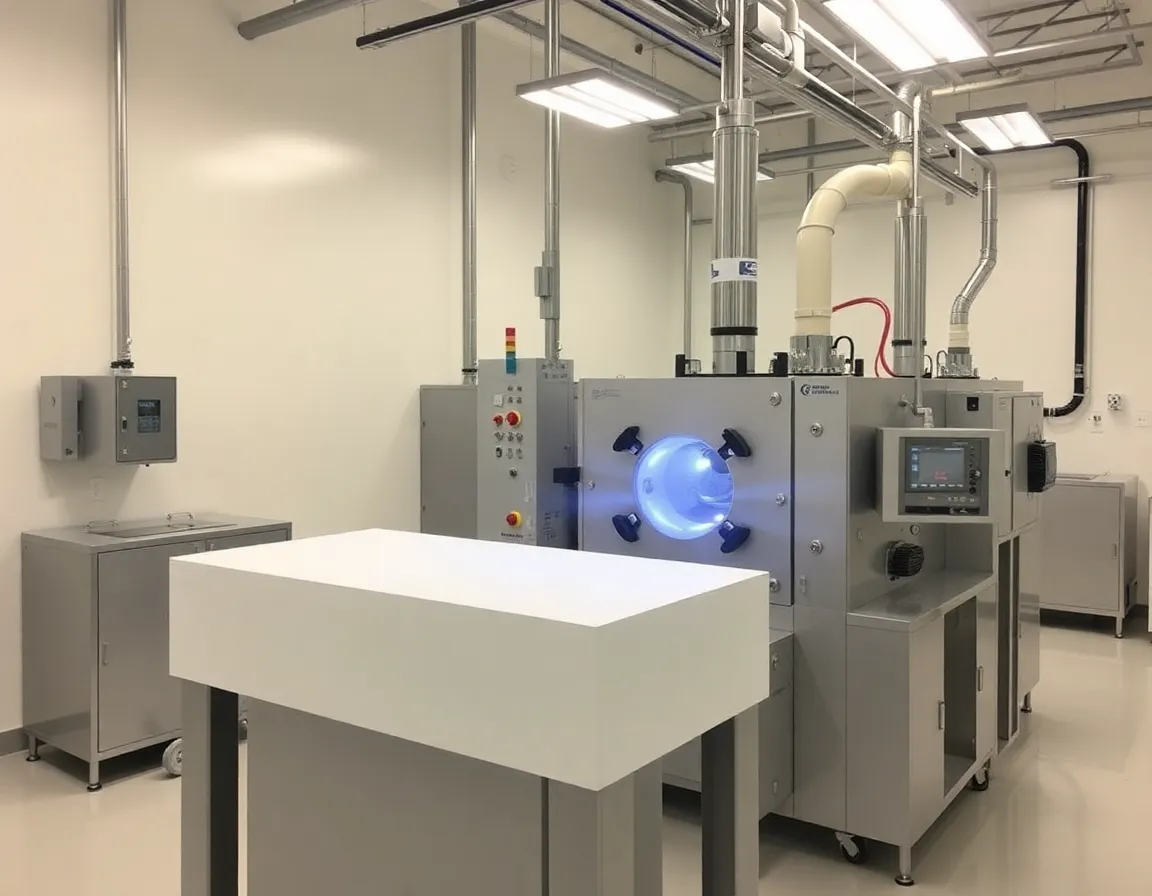
Para apreciar los beneficios, primero debe entenderse el proceso. El moldeo por inyección en sala limpia combina la mecánica del moldeo por inyección termoplástico tradicional con un entorno rigurosamente controlado, típicamente clasificado bajo los estándares ISO 14644-1 (que van desde Clase 7 a Clase 5, siendo la Clase 5 la más estricta). Estas salas mantienen límites específicos en la concentración de partículas en el aire, temperatura, humedad y presión de aire positiva. Sin embargo, la verdadera sofisticación reside en los sistemas auxiliares. servicios de moldeo por inyección en sala limpia incorporar equipos especializados como sistemas de filtración HEPA/ULPA, robots automatizados de manipulación de piezas y líneas de ensamblaje en sala limpia aguas abajo para evitar el contacto humano con las piezas moldeadas.
Además, el proceso se extiende más allá del entorno físico para incluir la manipulación de materiales. Las resinas crudas a menudo se secan al vacío y se transportan en sistemas sellados para evitar la absorción de humedad y la contaminación. Los moldes en sí están diseñados para una operación rápida y sin rebabas, utilizando a menudo sistemas avanzados de ventilación y control de temperatura para minimizar los tiempos de ciclo mientras se maximiza la consistencia de las piezas. El objetivo es crear un flujo continuo desde el pellet de polímero crudo hasta el componente médico estéril y listo para empacar, sin exponer nunca la pieza a condiciones atmosféricas no controladas.
La Columna Vertebral Regulatoria: Por Qué el Moldeo Estándar Falla
Los talleres de moldeo por inyección estándar no están equipados para manejar el escrutinio regulatorio del sector médico. Las normas de la FDA e ISO 13485 exigen trazabilidad, validación y monitoreo ambiental que las instalaciones tradicionales no pueden proporcionar. Los servicios de moldeo en sala limpia ofrecen documentación completa de cada lote, incluidos recuentos de partículas ambientales, números de lote de material y registros de parámetros de proceso. Este rastro de datos no es solo papeleo burocrático; es la evidencia científica requerida para demostrar que un dispositivo es seguro para uso humano. Sin este entorno controlado, incluso una pieza visualmente perfecta podría albergar contaminantes biológicos o particulados microscópicos que desencadenen una respuesta inmune o falla del dispositivo.
Beneficio 1: Superior Seguridad Biológica y Riesgo de Contaminación Reducido
El beneficio más obvio y crítico del moldeo en sala limpia es la reducción drástica de la contaminación. En aplicaciones médicas, particularmente aquellas que involucran implantes, sistemas de administración de fármacos o instrumentos quirúrgicos, cualquier partícula extraña (polvo, células de la piel o esporas microbianas) puede causar reacciones adversas graves. servicios de moldeo por inyección en sala limpia mitigar este riesgo a través de mecanismos de defensa de múltiples capas.
- Control de Partículas en el Aire: La filtración HEPA limpia continuamente el aire, eliminando el 99.97% de partículas mayores de 0.3 micras.
- Zonas de Presión Positiva: Las salas limpias mantienen una presión de aire más alta que las áreas adyacentes, evitando que el aire sin filtrar se filtre cuando se abren las puertas.
- Intervención Humana Mínima: Los brazos robóticos extraen las piezas del molde y las transfieren directamente al empaque sellado, eliminando la fuente más grande de contaminación: los operadores humanos.
Este entorno controlado asegura que la pieza terminada cumpla con límites estrictos de endotoxinas y umbrales de biocarga, haciéndola segura para el contacto directo o indirecto con tejidos corporales. Para los fabricantes, esto se traduce en menos lotes rechazados, menor riesgo de retiros costosos y, lo más importante, mayor seguridad del paciente.
Beneficio 2: Consistencia Dimensional y Precisión Inigualables
Medical devices often feature micro-scale features—such as catheter tips, valve housings, or optical lenses—where tolerances are measured in thousandths of a millimeter. Fluctuations in ambient temperature and humidity can cause plastic resins to expand or contract unpredictably, leading to warpage or flash. Cleanroom environments are thermally stable, often held within ±1°C of a set point, which allows for repeatable molecular crystallization of the polymer during the cooling phase.
Process Control in Real-Time
Modern cleanroom molding machines are equipped with closed-loop control systems that monitor cavity pressure, melt temperature, and injection speed in real-time. When combined with the stable environment, these systems produce parts that are virtually identical across millions of cycles. This precision is critical for components that must interface with other parts, such as a syringe barrel and plunger, where a variance of even 0.01mm could cause leakage or breakage. The result is a product that functions exactly as designed, every time, reducing the need for secondary inspection and sorting.
Benefit 3: Enhanced Material Integrity and Performance
Many medical-grade polymers—such as PEEK, polycarbonate, and liquid silicone rubber (LSR)—are highly sensitive to environmental contaminants. Moisture absorption alone can degrade the polymer chain, leading to brittle parts or surface defects like splay. Cleanroom facilities use desiccant dryers and sealed material hoppers to ensure that the resin is processed with a moisture content below 0.02%. Furthermore, the cleanroom atmosphere prevents the deposition of airborne oils or chemicals that could react with the polymer during the high-heat molding process.
This preservation of material integrity results in parts with superior mechanical strength, chemical resistance, and optical clarity. For example, an implantable PEEK spinal cage molded in a cleanroom will exhibit the exact tensile modulus and fatigue resistance required for load-bearing applications, without the microscopic voids that can form due to moisture-induced hydrolysis. In essence, cleanroom molding unlocks the full performance potential of advanced biomaterials.
Benefit 4: Streamlined Post-Processing and Faster Time-to-Market
Traditionally, parts molded in a non-cleanroom environment require extensive secondary operations: washing, ultrasonic cleaning, flash removal, and manual inspection. These steps are not only time-consuming but also introduce additional risk of handling damage. servicios de moldeo por inyección en sala limpia are designed to eliminate or drastically reduce these downstream steps.
- In-Mold Assembly: Advanced cleanroom processes can overmold multiple materials (e.g., a rigid core with a soft-touch silicone coating) in a single cycle, eliminating separate assembly steps.
- Cleanroom-Compatible Packaging: Parts can be transferred directly into medical-grade Tyvek pouches or blister packs within the cleanroom, preserving their sterile state.
- Integrated Inspection: Vision systems inside the cleanroom can perform 100% automated inspection for flash, discoloration, or missing features, immediately rejecting defective parts without manual handling.
By collapsing the timeline between molding and final packaging, manufacturers can significantly compress their production lead times. This agility is paramount in the medical field, where speed-to-market for a novel therapeutic device can mean capturing a significant share of a lucrative market before competitors. Furthermore, eliminating secondary processes reduces labor costs and the total cost of ownership for the device.
Benefit 5: Scalability and Long-Term Cost Efficiency
While the initial setup cost for a cleanroom molding line is higher than a standard line, the long-term economic benefits are substantial. The high level of process automation and environmental stability leads to lower scrap rates and rework costs. In standard molding, scrap rates can range from 2% to 5%; in a well-managed cleanroom, this can be reduced to below 0.5%.
Total Cost of Quality
Consider the hidden costs of a contamination failure: a recalled implantable device can cost millions in legal fees, regulatory fines, and brand damage. Cleanroom molding acts as an insurance policy against these catastrophic risks. Moreover, the scalability of cleanroom operations allows manufacturers to smoothly transition from pilot runs (for clinical trials) to high-volume production (for commercial launch) without changing the core manufacturing process. The process validation remains consistent, meaning that the FDA-approved design is identical to the mass-produced version, eliminating the need for costly re-validation.
Additionally, many cleanroom molding providers offer design for manufacturability (DFM) consulting. They can suggest material substitutions or geometry changes that reduce cycle times and material waste, further driving down unit costs. When amortized over the lifecycle of a successful medical device, the investment in cleanroom molding yields a significant return on investment.
Applications Across the Medical Spectrum
The benefits of cleanroom molding are leveraged across a diverse range of medical devices. Here are just a few key application areas:
- Implantable Devices: Orthopedic anchors, pacemaker housings, and cochlear implant components that require biocompatibility and zero microbial presence.
- Drug Delivery Systems: Auto-injectors, insulin pens, and inhalers where precise dosing and contamination-free pathways are essential for drug efficacy.
- Instrumentos Quirúrgicos: Disposable forceps, trocars, and retractors that must be sterile and sharp for single-use procedures.
- Diagnostic Components: Microfluidic chips and cuvettes used in blood analysis, where optical clarity and chemical inertness are critical for accurate test results.
Best Practices for Selecting a Cleanroom Molding Partner
To fully realize these benefits, medical device companies must choose their manufacturing partner wisely. The following best practices are essential:
1. Verify Certifications, Not Just Claims
Ensure the facility holds current ISO 13485 certification and is in compliance with FDA 21 CFR Part 820 Quality System Regulations. Ask for recent environmental monitoring reports to verify the actual particle counts, not just the nominal class rating.
2. Assess Material Handling Capabilities
Inquire about how they handle sensitive resins. Do they use vacuum conveying? Are material lots quarantined until verified? A partner who treats raw materials with the same rigor as finished parts is a good sign.
3. Evaluate Automation and Data Acquisition
Look for facilities that employ robotic part extraction and have a robust Manufacturing Execution System (MES). The ability to provide batch-level traceability data electronically is a hallmark of a modern, reliable partner.
4. Engage Early in the Design Phase
The highest cost savings occur when the molder is consulted before the mold is cut. Their engineers can provide input on draft angles, gate locations, and material selection that will optimize performance within the cleanroom environment.
Conclusion: The Strategic Imperative of Cleanroom Molding
Cleanroom injection molding is not a luxury; it is a strategic imperative for any company serious about competing in the medical device industry. The five critical benefits—biological safety, precision, material integrity, streamlined processing, and cost efficiency—combine to create a manufacturing framework that prioritizes patient outcomes without sacrificing profitability. As regulatory bodies tighten their scrutiny and as medical technology pushes further into the realm of personalized and minimally invasive treatments, the reliance on servicios de moldeo por inyección en sala limpia will only intensify. By partnering with a certified and technologically advanced cleanroom molder, medical device manufacturers can ensure that their products are not only manufactured to specification but are also imbued with the highest level of trust and reliability that the healthcare sector demands. In the final analysis, cleanroom molding is the bridge between innovative design and life-saving clinical application.