
Introdução: A Interseção Crítica entre Precisão e Pureza
No mundo de alto risco da fabricação de dispositivos médicos, a margem para erro é medida em mícrons, e o custo da contaminação pode ser medido em vidas de pacientes. À medida que a tecnologia médica avança em direção a dispositivos menores, mais complexos e mais implantáveis, as demandas sobre os componentes que os compõem tornaram-se extraordinariamente rigorosas. É aqui que serviços de moldagem por injeção em sala limpa evoluíram de uma especialidade de nicho para um requisito fundamental. A moldagem em sala limpa não é meramente moldagem por injeção padrão realizada em uma sala sem poeira; é um ecossistema de fabricação holístico e controlado, projetado para garantir que cada peça de polímero surja com absoluta segurança biológica, integridade dimensional e confiabilidade funcional. Para OEMs de dispositivos médicos, entender os profundos benefícios deste processo não é apenas sobre conformidade - é sobre alcançar uma vantagem competitiva em um mercado onde a qualidade é o diferencial definitivo.
Entendendo a Moldagem por Injeção em Sala Limpa: Mais do que Apenas uma Sala Branca
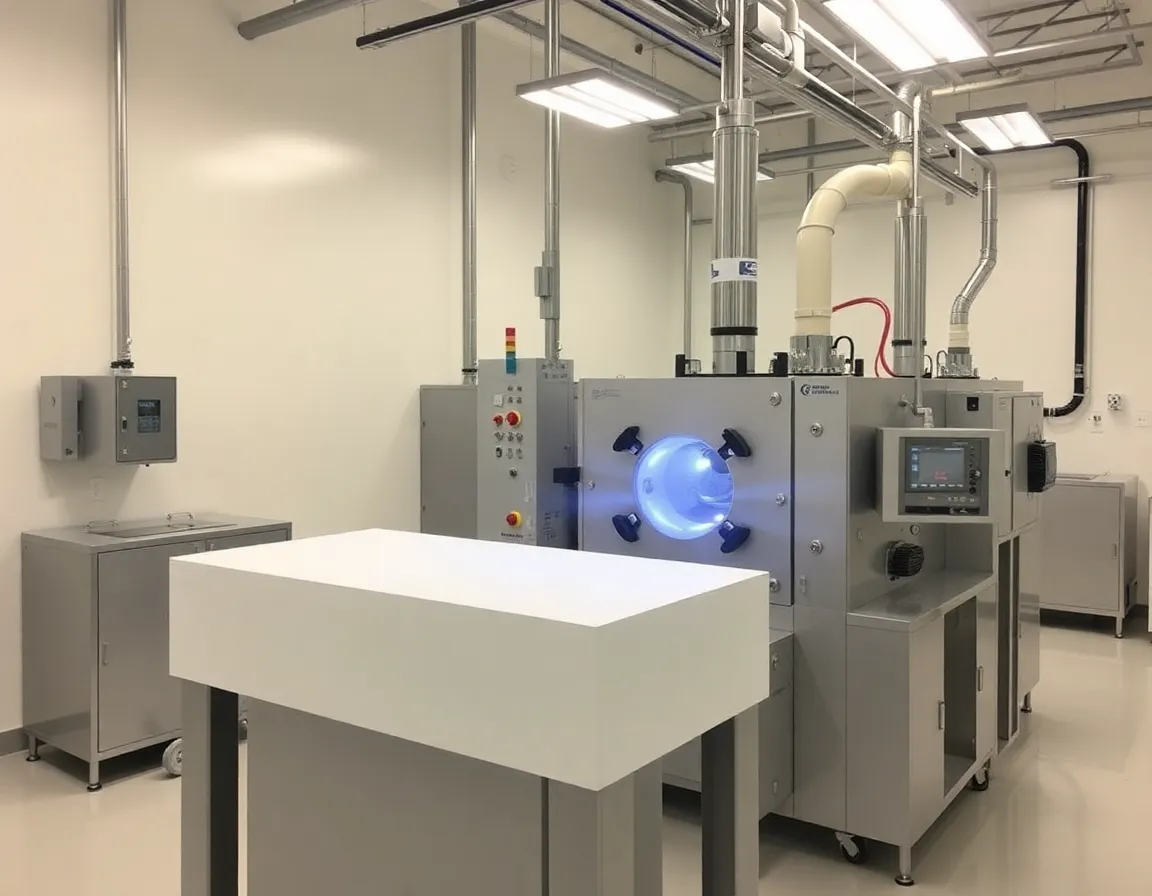
Para apreciar os benefícios, é preciso primeiro entender o processo. A moldagem por injeção em sala limpa combina a mecânica da moldagem por injeção termoplástica tradicional com um ambiente rigorosamente controlado, tipicamente classificado sob as normas ISO 14644-1 (variando da Classe 7 à Classe 5, sendo a Classe 5 a mais rigorosa). Essas salas mantêm limites específicos para a concentração de partículas transportadas pelo ar, temperatura, umidade e pressão positiva do ar. No entanto, a verdadeira sofisticação reside nos sistemas auxiliares. serviços de moldagem por injeção em sala limpa incorporar equipamentos especializados, como sistemas de filtração HEPA/ULPA, robôs automatizados de manuseio de peças e linhas de montagem downstream em sala limpa, para evitar o contato humano com as peças moldadas.
Além disso, o processo vai além do ambiente físico para incluir o manuseio de materiais. As resinas brutas são frequentemente secas a vácuo e transportadas em sistemas selados para evitar absorção de umidade e contaminação. Os próprios moldes são projetados para operação rápida e sem rebarbas, frequentemente utilizando sistemas avançados de ventilação e controle de temperatura para minimizar os tempos de ciclo e maximizar a consistência das peças. O objetivo é criar um fluxo contínuo do pellet de polímero bruto até o componente médico estéril e pronto para embalagem, sem nunca expor a peça a condições atmosféricas não controladas.
A Espinha Dorsal Regulatória: Por Que a Moldagem Padrão Falha
As oficinas de moldagem por injeção padrão não estão equipadas para lidar com o escrutínio regulatório do setor médico. As normas da FDA e ISO 13485 exigem rastreabilidade, validação e monitoramento ambiental que instalações tradicionais não podem fornecer. Os serviços de moldagem em sala limpa oferecem documentação completa de cada lote, incluindo contagens de partículas ambientais, números de lote de material e registros de parâmetros de processo. Essa trilha de dados não é apenas papelada burocrática; é a evidência científica necessária para provar que um dispositivo é seguro para uso humano. Sem esse ambiente controlado, até mesmo uma peça visualmente perfeita pode abrigar contaminantes biológicos ou particulados microscópicos que desencadeiam uma resposta imunológica ou falha do dispositivo.
Benefício 1: Segurança Biológica Superior e Risco de Contaminação Reduzido
O benefício mais óbvio e crítico da moldagem em sala limpa é a redução drástica da contaminação. Em aplicações médicas — particularmente aquelas que envolvem implantes, sistemas de administração de medicamentos ou instrumentos cirúrgicos — qualquer partícula estranha (poeira, células da pele ou esporos microbianos) pode causar reações adversas graves. serviços de moldagem por injeção em sala limpa mitigar esse risco por meio de mecanismos de defesa em múltiplas camadas.
- Controle de Partículas no Ar: A filtração HEPA limpa continuamente o ar, removendo 99,97% de partículas maiores que 0,3 mícrons.
- Zonas de Pressão Positiva: As salas limpas mantêm pressão de ar mais alta do que as áreas adjacentes, evitando que ar não filtrado entre quando as portas abrem.
- Intervenção Humana Mínima: Braços robóticos extraem as peças do molde e as transferem diretamente para embalagens seladas, eliminando a maior fonte de contaminação: os operadores humanos.
Esse ambiente controlado garante que a peça acabada atenda a limites rigorosos de endotoxinas e limites de biocarga, tornando-a segura para contato direto ou indireto com tecidos corporais. Para os fabricantes, isso se traduz em menos lotes rejeitados, risco reduzido de recalls caros e, o mais importante, maior segurança do paciente.
Benefício 2: Consistência Dimensional e Precisão Inigualáveis
Medical devices often feature micro-scale features—such as catheter tips, valve housings, or optical lenses—where tolerances are measured in thousandths of a millimeter. Fluctuations in ambient temperature and humidity can cause plastic resins to expand or contract unpredictably, leading to warpage or flash. Cleanroom environments are thermally stable, often held within ±1°C of a set point, which allows for repeatable molecular crystallization of the polymer during the cooling phase.
Process Control in Real-Time
Modern cleanroom molding machines are equipped with closed-loop control systems that monitor cavity pressure, melt temperature, and injection speed in real-time. When combined with the stable environment, these systems produce parts that are virtually identical across millions of cycles. This precision is critical for components that must interface with other parts, such as a syringe barrel and plunger, where a variance of even 0.01mm could cause leakage or breakage. The result is a product that functions exactly as designed, every time, reducing the need for secondary inspection and sorting.
Benefit 3: Enhanced Material Integrity and Performance
Many medical-grade polymers—such as PEEK, polycarbonate, and liquid silicone rubber (LSR)—are highly sensitive to environmental contaminants. Moisture absorption alone can degrade the polymer chain, leading to brittle parts or surface defects like splay. Cleanroom facilities use desiccant dryers and sealed material hoppers to ensure that the resin is processed with a moisture content below 0.02%. Furthermore, the cleanroom atmosphere prevents the deposition of airborne oils or chemicals that could react with the polymer during the high-heat molding process.
This preservation of material integrity results in parts with superior mechanical strength, chemical resistance, and optical clarity. For example, an implantable PEEK spinal cage molded in a cleanroom will exhibit the exact tensile modulus and fatigue resistance required for load-bearing applications, without the microscopic voids that can form due to moisture-induced hydrolysis. In essence, cleanroom molding unlocks the full performance potential of advanced biomaterials.
Benefit 4: Streamlined Post-Processing and Faster Time-to-Market
Traditionally, parts molded in a non-cleanroom environment require extensive secondary operations: washing, ultrasonic cleaning, flash removal, and manual inspection. These steps are not only time-consuming but also introduce additional risk of handling damage. serviços de moldagem por injeção em sala limpa are designed to eliminate or drastically reduce these downstream steps.
- In-Mold Assembly: Advanced cleanroom processes can overmold multiple materials (e.g., a rigid core with a soft-touch silicone coating) in a single cycle, eliminating separate assembly steps.
- Cleanroom-Compatible Packaging: Parts can be transferred directly into medical-grade Tyvek pouches or blister packs within the cleanroom, preserving their sterile state.
- Integrated Inspection: Vision systems inside the cleanroom can perform 100% automated inspection for flash, discoloration, or missing features, immediately rejecting defective parts without manual handling.
By collapsing the timeline between molding and final packaging, manufacturers can significantly compress their production lead times. This agility is paramount in the medical field, where speed-to-market for a novel therapeutic device can mean capturing a significant share of a lucrative market before competitors. Furthermore, eliminating secondary processes reduces labor costs and the total cost of ownership for the device.
Benefit 5: Scalability and Long-Term Cost Efficiency
While the initial setup cost for a cleanroom molding line is higher than a standard line, the long-term economic benefits are substantial. The high level of process automation and environmental stability leads to lower scrap rates and rework costs. In standard molding, scrap rates can range from 2% to 5%; in a well-managed cleanroom, this can be reduced to below 0.5%.
Total Cost of Quality
Consider the hidden costs of a contamination failure: a recalled implantable device can cost millions in legal fees, regulatory fines, and brand damage. Cleanroom molding acts as an insurance policy against these catastrophic risks. Moreover, the scalability of cleanroom operations allows manufacturers to smoothly transition from pilot runs (for clinical trials) to high-volume production (for commercial launch) without changing the core manufacturing process. The process validation remains consistent, meaning that the FDA-approved design is identical to the mass-produced version, eliminating the need for costly re-validation.
Additionally, many cleanroom molding providers offer design for manufacturability (DFM) consulting. They can suggest material substitutions or geometry changes that reduce cycle times and material waste, further driving down unit costs. When amortized over the lifecycle of a successful medical device, the investment in cleanroom molding yields a significant return on investment.
Applications Across the Medical Spectrum
The benefits of cleanroom molding are leveraged across a diverse range of medical devices. Here are just a few key application areas:
- Implantable Devices: Orthopedic anchors, pacemaker housings, and cochlear implant components that require biocompatibility and zero microbial presence.
- Sistemas de Administração de Medicamentos: Auto-injectors, insulin pens, and inhalers where precise dosing and contamination-free pathways are essential for drug efficacy.
- Instrumentos Cirúrgicos: Disposable forceps, trocars, and retractors that must be sterile and sharp for single-use procedures.
- Diagnostic Components: Microfluidic chips and cuvettes used in blood analysis, where optical clarity and chemical inertness are critical for accurate test results.
Best Practices for Selecting a Cleanroom Molding Partner
To fully realize these benefits, medical device companies must choose their manufacturing partner wisely. The following best practices are essential:
1. Verify Certifications, Not Just Claims
Ensure the facility holds current ISO 13485 certification and is in compliance with FDA 21 CFR Part 820 Quality System Regulations. Ask for recent environmental monitoring reports to verify the actual particle counts, not just the nominal class rating.
2. Assess Material Handling Capabilities
Inquire about how they handle sensitive resins. Do they use vacuum conveying? Are material lots quarantined until verified? A partner who treats raw materials with the same rigor as finished parts is a good sign.
3. Evaluate Automation and Data Acquisition
Look for facilities that employ robotic part extraction and have a robust Manufacturing Execution System (MES). The ability to provide batch-level traceability data electronically is a hallmark of a modern, reliable partner.
4. Engage Early in the Design Phase
The highest cost savings occur when the molder is consulted before the mold is cut. Their engineers can provide input on draft angles, gate locations, and material selection that will optimize performance within the cleanroom environment.
Conclusion: The Strategic Imperative of Cleanroom Molding
Cleanroom injection molding is not a luxury; it is a strategic imperative for any company serious about competing in the medical device industry. The five critical benefits—biological safety, precision, material integrity, streamlined processing, and cost efficiency—combine to create a manufacturing framework that prioritizes patient outcomes without sacrificing profitability. As regulatory bodies tighten their scrutiny and as medical technology pushes further into the realm of personalized and minimally invasive treatments, the reliance on serviços de moldagem por injeção em sala limpa will only intensify. By partnering with a certified and technologically advanced cleanroom molder, medical device manufacturers can ensure that their products are not only manufactured to specification but are also imbued with the highest level of trust and reliability that the healthcare sector demands. In the final analysis, cleanroom molding is the bridge between innovative design and life-saving clinical application.