
はじめに:精密さと純度の交差点
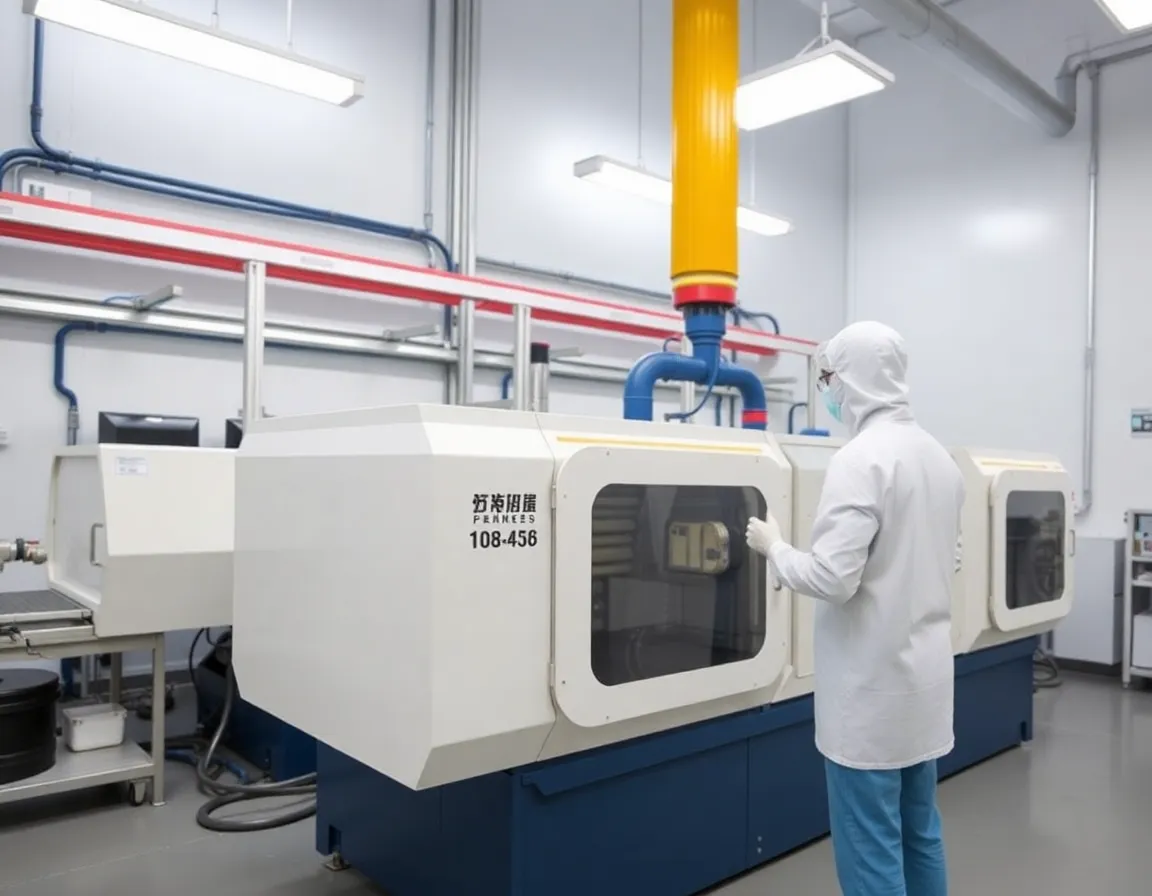
先進的な製造の世界では、クリーンルームほど厳格さが求められる環境はほとんどありません。クリーンルームの厳格な微粒子管理と、射出成形の大量生産・高公差プロセスを組み合わせると、専門的な分野に到達します: ISOクラス8クリーンルーム成形. このプロセスは単に作業場をきれいに保つことではなく、微細な汚染物質を含まないプラスチック部品を製造するための科学的に規制された方法であり、重要な用途での安全性と性能を保証します。医療機器から電子機器に至るまでの産業にとって、管理された環境で部品を成形できることは贅沢ではなく、絶対的な必要性です。.
ISOクラス8環境は、国際標準化機構(ISO)規格14644-1で定義されており、0.5ミクロン以上の粒子が1立方メートルあたり最大3,520,000個まで許容されます。これは驚くべき数に聞こえるかもしれませんが、標準的な工場の空気よりもはるかに清浄な管理された雰囲気を表しています。この文脈において、, ISOクラス8クリーンルーム成形 従来のプラスチック製造と現代技術の超清浄要件との間のギャップを埋めます。この記事では、このプロセスの複雑さ、その運用メカニズム、否定できない利点、そして現代の製造におけるその重要な役割について探ります。.
ISOクラス8規格とクリーンルームのダイナミクスを理解する
ISOクラス8クリーンルーム成形の価値を真に理解するには、まずこれらの空間を管理する分類システムを理解する必要があります。ISO 14644-1規格は、クリーンルーム分類の世界的なベンチマークであり、旧連邦規格209Eを置き換えるものです。「クラス8」の指定は、クリーンルーム製造の入門レベルと見なされることがよくありますが、決して甘いものではありません。これは、敏感な製品に対する主要な脅威である浮遊粒子状汚染の制御に焦点を当てています。.
粒子数と気流制御
ISOクラス8の中心的な指標は、許容粒子濃度です。より厳しいクラス(ISO 5やISO 7など)とは異なり、ISOクラス8ではより高い粒子濃度が許容されますが、それでも高効率微粒子空気(HEPA)フィルターが必要です。通常、これらのクリーンルームは以下を通じて清浄度を達成します:
- HEPAフィルター: 空気はHEPAフィルターを通過し、0.3ミクロンの粒子を少なくとも99.97%除去し、入ってくる空気が実質的に無菌であることを保証します。.
- 陽圧: クリーンルームは隣接エリアよりも高い圧力に保たれ、ドアや隙間から未濾過の空気が入るのを防ぎます。.
- 層流(または非一方向流): ISOクラス8では、非一方向流(濾過空気が天井のベントを介して混合される)がよく使用されますが、一部の重要なゾーンでは、成形機の上に一方向の空気の流れを作り出すために層流フードが使用される場合があります。.
目標は無菌の真空を作り出すことではなく、 予測可能で管理された環境 を確立し、汚染のリスクを統計的に許容できるレベルに最小化することです。.
Why Not a Cleaner Class?
A common question is why manufacturers don't simply use a cleaner standard like ISO Class 5. The answer lies in economics and practicality. The cost of achieving and maintaining an ISO Class 5 cleanroom is exponentially higher than an ISO Class 8 due to the need for more air changes per hour, more sophisticated gowning protocols, and more frequent testing. For many applications—particularly those where the product is not in direct contact with sterile body tissue or where downstream washing is performed—an ISO Class 8 environment provides the optimal balance between contamination control and operational cost.
The Mechanics of Cleanroom Injection Molding
ISOクラス8クリーンルーム成形 is not just about placing a standard injection molding machine inside a clean room. It requires a holistic approach that modifies equipment, materials handling, and operational procedures to prevent the machine itself from becoming a source of contamination.
Machine Design and Modifications
Standard injection molding machines generate contamination through hydraulic fluids, lubricants, and mechanical wear. In a cleanroom setting, these machines are heavily modified or replaced with specialized alternatives. Key adaptations include:
- Electric vs. Hydraulic Drives: All-electric injection molding machines are preferred because they eliminate hydraulic oil leaks, which are a major source of particulate and chemical contamination.
- Stainless Steel Enclosures: The machine's exterior is often cladded with stainless steel or smooth polymer panels to prevent paint flaking and to facilitate easy wiping with cleaning agents.
- Closed-Loop Cooling Systems: Water cooling lines are sealed and routed to prevent condensation and microbial growth, which can shed particles into the air.
- Localized Exhaust: Vents are placed over the barrel and nozzle area to capture any fumes or off-gassing from the molten plastic, preventing them from recirculating.
材料の取り扱いと乾燥
Contamination can also originate from the raw plastic resin itself. Pellets often carry static charges that attract dust and can be contaminated with paper fibers or other debris. In a cleanroom molding operation:
- Vacuum Conveying: Resin is transferred from sealed drums to the machine hopper using closed vacuum systems, eliminating manual pouring.
- Central Drying: Desiccant dryers are used to remove moisture, but they must have exhaust filters to prevent the release of fines (microscopic plastic dust) into the cleanroom.
- Ionized Air Knives: Before the resin enters the barrel, it may pass through an ionizing blower to neutralize static charge, allowing particles to be easily filtered away.
The Molding Cycle and In-Mold Monitoring
The actual molding cycle in an ISO Class 8 environment demands precision. The mold itself is typically made of polished, hardened steel to resist wear and prevent the generation of metallic particles. Moreover, the molding process often employs 金型内センサー to monitor cavity pressure and temperature. This data is crucial because it allows for real-time adjustments to the process, reducing the likelihood of flash (excess plastic) or short shots, which are defects that require secondary operations and increase the risk of contamination.
Critical Benefits and Applications Across Industries
The adoption of ISOクラス8クリーンルーム成形 is driven by the undeniable advantages it offers in product quality and regulatory compliance. The benefits extend beyond simple cleanliness, impacting the structural integrity and performance of the final part.
Primary Benefits
- Reduced Bioburden: For medical devices, the process minimizes the initial microbial load, making downstream sterilization (like ethylene oxide or gamma radiation) more effective and reliable.
- Enhanced Surface Quality: By preventing dust particles from becoming embedded in the plastic surface, the final product has a smoother, more consistent finish, which is critical for optical components or sealing surfaces.
- Improved Mechanical Properties: Contaminants can act as stress concentrators, leading to premature cracking or failure. Cleanroom molding ensures that the polymer's molecular structure is uniform, yielding stronger parts.
- 規制順守: Products manufactured in a controlled environment are easier to validate and document for FDA (Food and Drug Administration) or ISO 13485 (medical devices) audits.
Key Application Sectors
While any industry can benefit from cleaner parts, certain sectors rely on ISO Class 8 molding as a baseline requirement:
- Medical Devices: This is the largest market. Components like syringes, IV luer locks, surgical instrument handles, and implantable drug-delivery housings are molded here. The cleanroom environment prevents endotoxins and particulates from entering the patient's body.
- Pharmaceutical Packaging: Inhaler valves, diagnostic test cassettes, and pill bottles require a clean environment to prevent contamination of the medication.
- Electronics and Optics: Connectors, camera lens housings, and LED diffusers must be free of dust to prevent electrical short circuits or optical aberrations.
- Aerospace and Defense: Fittings and housings used in hydraulic systems require extreme purity to prevent valve blockage in sensitive flight control systems.
Best Practices for Operating an ISO Class 8 Molding Facility
Operating a successful ISO Class 8 cleanroom molding line requires more than just hardware; it demands a culture of discipline and a rigorous adherence to standard operating procedures (SOPs). Here are the critical best practices for maintaining purity and efficiency.
Personnel Gowning and Behavior
Humans are the largest source of contamination in any cleanroom. Even with an ISO Class 8 designation, which is more forgiving than Class 7, personnel must follow strict protocols:
- Full Gowning: Workers must wear cleanroom suits, hoods, booties, and face masks. Gloves must be powder-free and changed frequently.
- Minimal Movement: Rapid movements generate turbulence and shed particles. Personnel are trained to move slowly and deliberately.
- No Paper or Cardboard: Only cleanroom-grade paper and plastic packaging are allowed inside the controlled area.
Cleaning and Maintenance Schedules
Preventive maintenance is the lifeblood of cleanroom molding. A machine breakdown inside the cleanroom can cause a catastrophic contamination event.
- Daily Wipe-Down: All surfaces must be wiped with low-lint wipes and appropriate solvents (usually isopropyl alcohol) to remove any residue.
- HEPA Filter Certification: Filters must be tested and certified every 6-12 months to ensure they are functioning at the required efficiency.
- Lubrication Control: Only food-grade or cleanroom-approved lubricants can be used on moving parts, and they must be applied in minimal quantities to prevent overspray.
Process Validation and Monitoring
To ensure the cleanroom is performing as designed, continuous monitoring is essential. This involves both environmental monitoring (EM) and process monitoring.
- Particle Counters: Portable particle counters should be used to verify that airborne particle counts are within the ISO Class 8 limits during production.
- Microbial Monitoring: Settle plates (petri dishes) are placed in strategic locations to capture viable microorganisms that fall onto surfaces. These are incubated to check for colony-forming units (CFUs).
- First Article Inspection: The first part produced after a mold change is thoroughly inspected not only for dimensions but also for surface contamination using a microscope.
Conclusion: The Future of Pure Manufacturing
ISOクラス8クリーンルーム成形 represents a sophisticated balance between the demands of precision engineering and the realities of economic manufacturing. It is not the strictest classification available, but it is the most versatile, offering a pragmatic solution for products that require a high degree of cleanliness without the astronomical costs associated with sterile environments. As technology advances, with the miniaturization of medical implants and the increasing sensitivity of electronics, the role of this molding process is set to expand.
Manufacturers who master the discipline of ISO Class 8 molding gain a significant competitive advantage. They are not merely producing plastic parts; they are producing guarantees of purity. By investing in specialized equipment, rigorous training, and a culture of cleanliness, they ensure that the components leaving their facility are safe, reliable, and ready for the most demanding applications. In an era where product failure can have life-altering consequences, the quiet precision of the ISO Class 8 cleanroom is a powerful testament to the fact that in manufacturing, purity is the ultimate form of precision.