
Introduzione: l'intersezione tra precisione e purezza
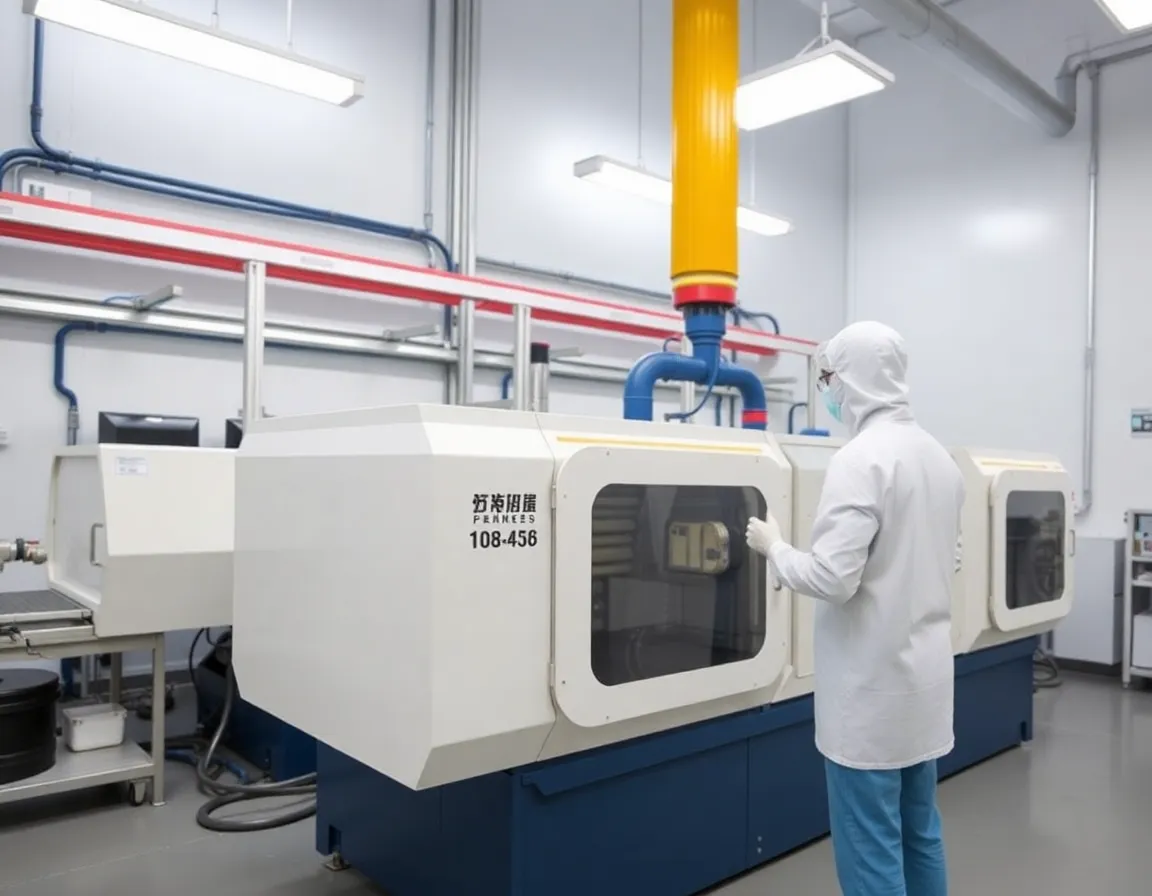
Nel mondo della produzione avanzata, pochi ambienti richiedono tanto rigore quanto la camera bianca. Quando si combinano i severi controlli delle particelle di una camera bianca con il processo di stampaggio a iniezione ad alto volume e alta tolleranza, si arriva a una disciplina specializzata: Stampaggio in camera bianca classe ISO 8. Questo processo non riguarda semplicemente il mantenere un'officina in ordine; è un metodo scientificamente regolamentato per produrre componenti in plastica privi di contaminanti microscopici, garantendone la sicurezza e le prestazioni in applicazioni critiche. Per settori che vanno dai dispositivi medici all'elettronica, la capacità di stampare un componente in un ambiente controllato non è un lusso: è una necessità assoluta.
Un ambiente di Classe ISO 8, come definito dallo standard ISO 14644-1 dell'Organizzazione Internazionale per la Normazione (ISO), consente un massimo di 3.520.000 particelle per metro cubo di dimensioni pari o superiori a 0,5 micron. Sebbene possa sembrare un numero impressionante, rappresenta un'atmosfera controllata significativamente più pulita dell'aria standard di fabbrica. In questo contesto, Stampaggio in camera bianca classe ISO 8 colma il divario tra la produzione plastica convenzionale e i requisiti di ultra-pulizia della tecnologia moderna. Questo articolo esplora le complessità di questo processo, i suoi meccanismi operativi, i suoi innegabili vantaggi e il suo ruolo critico nella produzione moderna.
Comprendere gli standard di Classe ISO 8 e le dinamiche della camera bianca
Per apprezzare veramente il valore dello stampaggio in camera bianca di Classe ISO 8, è necessario prima comprendere il sistema di classificazione che governa questi spazi. Lo standard ISO 14644-1 è il punto di riferimento globale per la classificazione delle camere bianche, sostituendo il più vecchio standard federale 209E. La designazione "Classe 8" è spesso considerata il livello base della produzione in camera bianca, ma è tutt'altro che permissiva. Si concentra sul controllo della contaminazione particellare aerodispersa, che è la principale minaccia per i prodotti sensibili.
Conteggio delle particelle e controllo del flusso d'aria
La metrica principale per la Classe ISO 8 è la concentrazione di particelle consentita. A differenza di classi più severe (come ISO 5 o ISO 7), la Classe ISO 8 consente una concentrazione maggiore di particelle, ma richiede comunque una filtrazione dell'aria a particelle ad alta efficienza (HEPA). Tipicamente, queste camere bianche raggiungono la pulizia attraverso:
- Filtrazione HEPA: L'aria viene fatta passare attraverso filtri HEPA, che rimuovono almeno il 99,97% delle particelle a 0,3 micron, garantendo che l'aria in ingresso sia virtualmente sterile.
- Pressione positiva dell'aria: La camera bianca viene mantenuta a una pressione superiore rispetto alle aree adiacenti, impedendo all'aria non filtrata di entrare attraverso porte o fessure.
- Flusso d'aria laminare (o non unidirezionale): Mentre la Classe ISO 8 utilizza spesso un flusso d'aria non unidirezionale (dove l'aria filtrata viene miscelata tramite bocchette sul soffitto), alcune zone critiche possono utilizzare cappe a flusso laminare per creare un flusso unidirezionale d'aria sopra la macchina di stampaggio.
L'obiettivo non è creare un vuoto di sterilità, ma stabilire un ambiente prevedibile e controllato dove il rischio di contaminazione è ridotto al minimo a un livello statisticamente accettabile.
Perché non una classe più pulita?
Una domanda comune è perché i produttori non utilizzano semplicemente uno standard più pulito come la Classe ISO 5. La risposta sta nell'economia e nella praticità. Il costo per ottenere e mantenere una camera bianca di Classe ISO 5 è esponenzialmente più alto rispetto a una di Classe ISO 8 a causa della necessità di un maggior numero di ricambi d'aria all'ora, protocolli di vestizione più sofisticati e test più frequenti. Per molte applicazioni—in particolare quelle in cui il prodotto non è a diretto contatto con tessuto corporeo sterile o dove viene eseguito un lavaggio a valle—un ambiente di Classe ISO 8 fornisce il equilibrio ottimale tra controllo della contaminazione e costo operativo.
La meccanica dello stampaggio a iniezione in camera bianca
Stampaggio in camera bianca classe ISO 8 non riguarda solo il posizionamento di una macchina per stampaggio a iniezione standard all'interno di una camera bianca. Richiede un approccio olistico che modifichi attrezzature, movimentazione dei materiali e procedure operative per evitare che la macchina stessa diventi una fonte di contaminazione.
Progettazione e modifiche della macchina
Le macchine standard per stampaggio a iniezione generano contaminazione attraverso fluidi idraulici, lubrificanti e usura meccanica. In un ambiente di camera bianca, queste macchine vengono pesantemente modificate o sostituite con alternative specializzate. Gli adattamenti chiave includono:
- Azionamenti elettrici vs. idraulici: Le macchine per stampaggio a iniezione completamente elettriche sono preferite perché eliminano le perdite di olio idraulico, che sono una delle principali fonti di contaminazione particellare e chimica.
- Custodie in acciaio inossidabile: L'esterno della macchina è spesso rivestito con acciaio inossidabile o pannelli polimerici lisci per prevenire la sfaldatura della vernice e facilitare la pulizia con agenti detergenti.
- Sistemi di raffreddamento a circuito chiuso: Le linee di raffreddamento dell'acqua sono sigillate e instradate per prevenire condensa e crescita microbica, che possono rilasciare particelle nell'aria.
- Aspirazione localizzata: Vents are placed over the barrel and nozzle area to capture any fumes or off-gassing from the molten plastic, preventing them from recirculating.
Gestione e Essiccazione dei Materiali
Contamination can also originate from the raw plastic resin itself. Pellets often carry static charges that attract dust and can be contaminated with paper fibers or other debris. In a cleanroom molding operation:
- Vacuum Conveying: Resin is transferred from sealed drums to the machine hopper using closed vacuum systems, eliminating manual pouring.
- Central Drying: Desiccant dryers are used to remove moisture, but they must have exhaust filters to prevent the release of fines (microscopic plastic dust) into the cleanroom.
- Ionized Air Knives: Before the resin enters the barrel, it may pass through an ionizing blower to neutralize static charge, allowing particles to be easily filtered away.
The Molding Cycle and In-Mold Monitoring
The actual molding cycle in an ISO Class 8 environment demands precision. The mold itself is typically made of polished, hardened steel to resist wear and prevent the generation of metallic particles. Moreover, the molding process often employs in-mold sensors to monitor cavity pressure and temperature. This data is crucial because it allows for real-time adjustments to the process, reducing the likelihood of flash (excess plastic) or short shots, which are defects that require secondary operations and increase the risk of contamination.
Critical Benefits and Applications Across Industries
The adoption of Stampaggio in camera bianca classe ISO 8 is driven by the undeniable advantages it offers in product quality and regulatory compliance. The benefits extend beyond simple cleanliness, impacting the structural integrity and performance of the final part.
Primary Benefits
- Reduced Bioburden: For medical devices, the process minimizes the initial microbial load, making downstream sterilization (like ethylene oxide or gamma radiation) more effective and reliable.
- Enhanced Surface Quality: By preventing dust particles from becoming embedded in the plastic surface, the final product has a smoother, more consistent finish, which is critical for optical components or sealing surfaces.
- Improved Mechanical Properties: Contaminants can act as stress concentrators, leading to premature cracking or failure. Cleanroom molding ensures that the polymer's molecular structure is uniform, yielding stronger parts.
- Conformità Normativa: Products manufactured in a controlled environment are easier to validate and document for FDA (Food and Drug Administration) or ISO 13485 (medical devices) audits.
Key Application Sectors
While any industry can benefit from cleaner parts, certain sectors rely on ISO Class 8 molding as a baseline requirement:
- Medical Devices: This is the largest market. Components like syringes, IV luer locks, surgical instrument handles, and implantable drug-delivery housings are molded here. The cleanroom environment prevents endotoxins and particulates from entering the patient's body.
- Pharmaceutical Packaging: Inhaler valves, diagnostic test cassettes, and pill bottles require a clean environment to prevent contamination of the medication.
- Electronics and Optics: Connectors, camera lens housings, and LED diffusers must be free of dust to prevent electrical short circuits or optical aberrations.
- Aerospace and Defense: Fittings and housings used in hydraulic systems require extreme purity to prevent valve blockage in sensitive flight control systems.
Best Practices for Operating an ISO Class 8 Molding Facility
Operating a successful ISO Class 8 cleanroom molding line requires more than just hardware; it demands a culture of discipline and a rigorous adherence to standard operating procedures (SOPs). Here are the critical best practices for maintaining purity and efficiency.
Personnel Gowning and Behavior
Humans are the largest source of contamination in any cleanroom. Even with an ISO Class 8 designation, which is more forgiving than Class 7, personnel must follow strict protocols:
- Full Gowning: Workers must wear cleanroom suits, hoods, booties, and face masks. Gloves must be powder-free and changed frequently.
- Minimal Movement: Rapid movements generate turbulence and shed particles. Personnel are trained to move slowly and deliberately.
- No Paper or Cardboard: Only cleanroom-grade paper and plastic packaging are allowed inside the controlled area.
Cleaning and Maintenance Schedules
Preventive maintenance is the lifeblood of cleanroom molding. A machine breakdown inside the cleanroom can cause a catastrophic contamination event.
- Daily Wipe-Down: All surfaces must be wiped with low-lint wipes and appropriate solvents (usually isopropyl alcohol) to remove any residue.
- HEPA Filter Certification: Filters must be tested and certified every 6-12 months to ensure they are functioning at the required efficiency.
- Lubrication Control: Only food-grade or cleanroom-approved lubricants can be used on moving parts, and they must be applied in minimal quantities to prevent overspray.
Process Validation and Monitoring
To ensure the cleanroom is performing as designed, continuous monitoring is essential. This involves both environmental monitoring (EM) and process monitoring.
- Particle Counters: Portable particle counters should be used to verify that airborne particle counts are within the ISO Class 8 limits during production.
- Microbial Monitoring: Settle plates (petri dishes) are placed in strategic locations to capture viable microorganisms that fall onto surfaces. These are incubated to check for colony-forming units (CFUs).
- First Article Inspection: The first part produced after a mold change is thoroughly inspected not only for dimensions but also for surface contamination using a microscope.
Conclusion: The Future of Pure Manufacturing
Stampaggio in camera bianca classe ISO 8 represents a sophisticated balance between the demands of precision engineering and the realities of economic manufacturing. It is not the strictest classification available, but it is the most versatile, offering a pragmatic solution for products that require a high degree of cleanliness without the astronomical costs associated with sterile environments. As technology advances, with the miniaturization of medical implants and the increasing sensitivity of electronics, the role of this molding process is set to expand.
Manufacturers who master the discipline of ISO Class 8 molding gain a significant competitive advantage. They are not merely producing plastic parts; they are producing guarantees of purity. By investing in specialized equipment, rigorous training, and a culture of cleanliness, they ensure that the components leaving their facility are safe, reliable, and ready for the most demanding applications. In an era where product failure can have life-altering consequences, the quiet precision of the ISO Class 8 cleanroom is a powerful testament to the fact that in manufacturing, purity is the ultimate form of precision.