
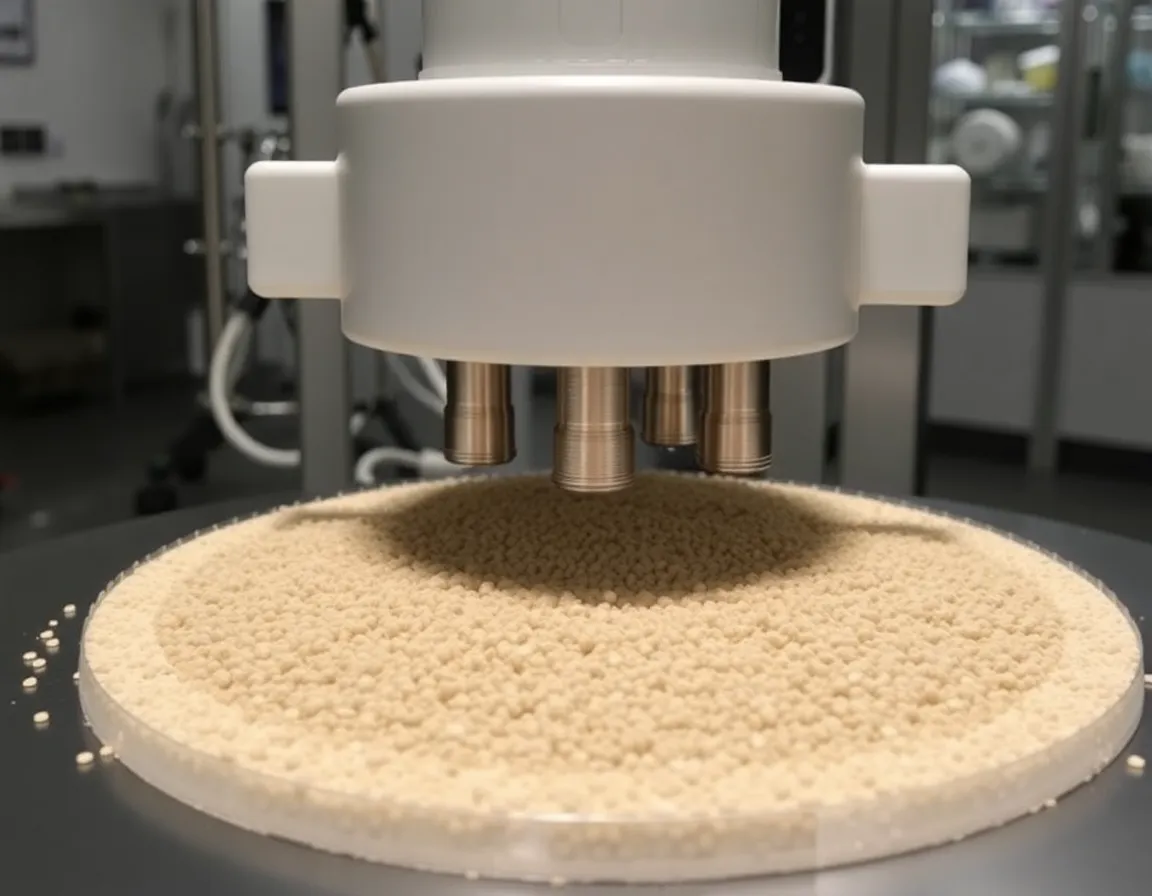
精密製造における純度の重要性
小型化、生体適合性、ゼロ欠陥生産への絶え間ない追求の中で、製造業界は地殻変動を経験しています。医療機器から先進光学、航空宇宙に至るまでの産業は、もはや単に精度を望むだけでなく、汚染が変数ではなく後付けの問題である環境を要求しています。ここで クリーンルーム成形 は従来の射出成形を超越します。それは単に管理された空間で行われるプロセスではなく、ミクロン単位で測定される形状と分子レベルでの表面完全性を持つ部品を製造するために設計された、全体的で検証済みのシステムです。A 検証済みクリーンルーム成形プロセス これは、ほこり1粒のコストが、命を救うインプラントと壊滅的な失敗の違いを意味する可能性がある場合に、完璧な精密部品を実現する方法という疑問に対する決定的な答えです。.
核心的な違いは「 バリデーション済み. 」という言葉にあります。標準的なクリーンルームが濾過された環境を提供する一方で、バリデーション済みプロセスは、文書化され再現可能な証拠を通じて、原材料の取り扱いから最終包装に至るまでのすべてのステップが、一貫して仕様内の部品を生み出すことを証明します。この記事では、このプロセスの構造、その運用メカニズム、それがもたらす具体的な利点、そしてベストプラクティスを定義する厳格なプロトコルについて詳しく説明します。エンジニアやメーカーにとって、これを理解することは必須であり、現代のハイステークス生産の基礎です。.
バリデーション済みクリーンルーム成形プロセスの分解
クリーンルーム成形の複雑さを理解するには、まずそれが単に「テント内での成形」ではないという考えを捨てなければなりません。それは、次の3つの異なる柱の共生統合です: 環境制御, プロセスバリデーション, ,および 材料科学. 。各柱は相互に連動しており、1つが失敗すると、出力全体の完全性が損なわれます。.
環境制御:ISOクラス階層
基礎は、ISO 14644-1規格によって定義された制御環境です。これらの分類は、1立方メートルあたりの浮遊粒子の最大許容濃度を規定します。精密医療部品の場合、ISOクラス7またはクラス8(Fed-Std-209Eクラス10,000または100,000に相当)が一般的ですが、埋め込み型デバイスや高感度光学部品の場合、ISOクラス5(クラス100)がベンチマークです。.
- HEPA/ULPA濾過: 高効率粒子状空気(HEPA)フィルターは、0.3ミクロンで粒子の99.97%を除去し、超低透過空気(ULPA)フィルターは、0.12ミクロンで99.999%の効率を達成します。これらは、空気中の汚染に対する最初の防衛線です。.
- 陽圧: クリーンルームは、隣接するエリアよりも高い大気圧に維持されます。これにより、ドアが開いたときに気流の方向が外側になり、濾過されていない空気が流入するのを防ぎます。.
- 温度と湿度の安定性: 精密成形は熱に敏感です。温度の変動はポリマーの粘度と収縮率を変化させます。バリデーションはこれらのパラメータを厳しい公差(例:±1°Cおよび±5%RH)に固定し、寸法の再現性を保証します。.
バリデーションの三本柱:IQ、OQ、PQ
A バリデーション済み プロセスは想定されるものではなく、証明されるものです。この証明は、業界のゴールドスタンダードである3段階のプロトコルを通じて文書化されます:
- 設置時適格性確認(IQ): これは、成形機、補助機器(乾燥機、ロボット)、およびクリーンルームのインフラストラクチャが正しく設置され、メーカーの仕様を満たしていることを検証します。ユーティリティ接続、校正証明書、およびフィルターの完全性をチェックします。.
- 運転時適格性確認(OQ): これは、定義された条件下でプロセスパラメータをテストします。エンジニアは、意図された運転範囲(例:溶融温度、射出圧力、サイクルタイム)にわたって機械を運転し、部品が公差内に留まる境界を特定します。これは、機械がクリーンルーム内で意図どおりに動作することを証明します。.
- 性能適格性確認(PQ): これは最終的で最も厳格なテストです。特定の固定パラメータで、生産材料を使用して、持続的な期間(多くの場合24〜72時間)プロセスを実行します。出力部品は統計的に分析され(CpK、Cp)、プロセスが安定しており、時間の経過とともに99.99%の適合部品を生産できることを証明します。これは、将来の生産が測定される「ゴールデンバッチ」です。.
材料の取り扱いと乾燥
精密部品に使用されるほとんどのエンジニアリング樹脂(PEEK、LCP、ポリカーボネートなど)は吸湿性があります。空気から水分を吸収し、高温の溶融温度にさらされると加水分解を引き起こします。これによりポリマー鎖が劣化し、脆い部品、表面のスプレイ、内部ボイドが発生します。バリデーションされたクリーンルームプロセスでは、材料の取り扱いは自動化され、密閉されています。乾燥剤式乾燥機を使用して水分含有量を0.02%未満に低減し、乾燥した樹脂は密閉されたクローズドループシステムを介して成形機に直接搬送され、再汚染の可能性を排除します。.
運用メカニズム:プロセスが完璧を達成する方法
環境シェルに加えて、成形プロセス自体が精密さのために最適化されています。標準的な機械をクリーンルーム内に置くだけでは不十分です。機械は、微粒子の発生を最小限に抑え、制御を最大化するように設計されていなければなりません。.
サーボ電動式 vs. 油圧式プレス
The choice of press is critical. Servo-electric molding machines are the preferred choice for cleanroom validation. Unlike hydraulic machines, which use oil and can leak or generate hydraulic vapor, servo-electric machines use electric motors. This offers three distinct advantages:
- Zero Hydraulic Contamination: No oil, no seals, no risk of lubricant aerosolizing into the cleanroom environment.
- Superior Repeatability: Servo motors provide precise, programmable screw position and injection speed, with repeatability within ±0.01mm. This is essential for maintaining consistent cavity pressure and part density.
- Energy Efficiency and Cleanliness: They generate less heat and require no cooling water for hydraulics, reducing the risk of condensation and microbial growth.
Automation and In-Situ Inspection
Human operators are the single largest source of contamination in a cleanroom. A validated process minimizes human intervention through robotic part removal および automated vision inspection. Robots with cleanroom-compatible (ISO Class 5) ratings remove parts from the mold and place them directly onto conveyor systems or into sealed trays. In-line inspection systems use high-resolution cameras and laser sensors to measure critical dimensions in real-time. If a part falls outside the tolerance band, the system automatically rejects it and signals the press to adjust parameters, preventing a run of defective parts. This closed-loop feedback is the essence of "flawless" production—it is not about finding defects later; it is about preventing them from ever occurring.
Mold Design for Cleanroom Compatibility
The mold itself must be engineered for the process. This includes using corrosion-resistant steels (like stainless 420 or H13 with PVD coating) to prevent rust and flaking. The mold must also be designed with adequate venting to allow trapped air to escape without creating flash. In a cleanroom, you cannot use standard mold releases or external lubricants, as these are volatile organic compounds (VOCs) that contaminate the environment. Therefore, the mold surface finish must be highly polished (SPI A-1 or A-2) to allow for clean ejection. Some advanced processes use vacuum venting systems to draw out air before injection, eliminating the need for chemical release agents entirely.
Strategic Benefits and High-Stakes Applications
The investment in a validated cleanroom molding process is substantial, but the return on investment is measured not just in financial terms, but in regulatory compliance, brand reputation, and patient safety.
Tangible Benefits: Beyond the Obvious
- Zero-Defect Yield: The primary benefit is a drastic reduction in scrap rates. Instead of a typical 2-5% rejection rate, validated processes achieve yields of 99.5% or higher, even for complex micro-molded parts.
- 規制順守: For medical devices (under FDA 21 CFR Part 820) and ISO 13485, validation is mandatory. A validated process provides the audit trail required to prove due diligence and product safety to regulatory bodies.
- Enhanced Material Properties: By preventing moisture absorption and thermal degradation, the process preserves the intrinsic mechanical strength, chemical resistance, and dielectric properties of the polymer. This results in parts that perform exactly as the material data sheet promises.
- Reduced Post-Processing: Because parts are molded cleanly without flash or contamination, secondary operations like deflashing, washing, or ultrasonic cleaning are often eliminated. This shortens the overall production lead time.
Where Flawlessness is Non-Negotiable
The applications for this technology are found where failure is not an option.
- Implantable Medical Devices: Components for pacemakers, neurostimulators, and drug-eluting stents require ISO Class 5 environments. Any biological or particulate contamination can cause inflammation, rejection, or embolisms. The validated process ensures the device remains sterile and inert.
- Diagnostic Microfluidics: Lab-on-a-chip devices rely on micro-channels that are fractions of a millimeter wide. A single dust particle can block the channel, rendering the diagnostic test invalid. Cleanroom molding ensures the optical clarity and dimensional fidelity of these polymer chips.
- Aerospace & Defense Optics: Lenses and housings for targeting systems and satellite communications require zero birefringence and surface roughness below 1nm. The controlled cooling and molding environment prevent internal stress and warpage.
- Pharmaceutical Delivery Systems: Pre-filled syringes, auto-injectors, and inhalers require precise tolerances to ensure correct dosing and airtight sealing. The cleanroom process prevents particulate contamination that could compromise the drug formulation.
Best Practices for Maintaining Validation Integrity
Validation is not a one-time event; it is a living system that requires constant vigilance. The following best practices are essential for maintaining the integrity of the process over the long term.
Routine Monitoring and Re-Validation
Environmental monitoring must be continuous. This includes using particle counters to sample the air on a scheduled basis, and settling plates to culture viable organisms. The molding machine's critical parameters—such as barrel temperature and injection pressure—should be monitored by the machine's control system and logged against the OQ/PQ limits. Most regulatory frameworks require re-validation at least annually or whenever a significant change is made to the tooling, material, or process. This is not a bureaucratic hurdle but a safety net.
Preventive Maintenance and Gowning Protocols
Cleanroom molding machines require specialized maintenance. When the tool is opened for maintenance, it must be done in a controlled manner to avoid contamination. All maintenance personnel must adhere to strict gowning protocols—wearing cleanroom suits, gloves, and face masks. Maintenance logs must document what was done, when, and by whom. Furthermore, the use of cleanroom-grade lubricants (e.g., perfluorinated greases) is mandatory for any moving part inside the controlled zone. These greases do not outgas and are resistant to high temperatures.
Statistical Process Control (SPC)
The most advanced cleanroom molding facilities employ real-time SPC. This involves using control charts (X-bar and R charts) to track critical-to-quality (CTQ) characteristics. If a trend is detected—for example, a gradual drift in part weight—the system alerts engineers to make a minor adjustment before the part falls out of specification. This proactive approach is the hallmark of a mature, validated process. It transforms molding from a reactive "make and inspect" operation into a proactive "predict and prevent" science.
Conclusion: The Gold Standard for Tomorrow's Components
Cleanroom molding, when properly validated, is more than a manufacturing technique; it is a philosophy of quality. It acknowledges that in the world of micron-level tolerances, the invisible is more dangerous than the visible. By integrating advanced environmental controls, rigorous IQ/OQ/PQ validation, and automated precision machinery, manufacturers can achieve a level of consistency that is unattainable through conventional methods. The process eliminates the guesswork, replaces inspection with prevention, and provides the documented confidence required for the most demanding applications.
As technologies like 5G, autonomous vehicles, and personalized medicine evolve, the demand for flawless precision parts will only intensify. The companies that invest in and master the 検証済みクリーンルーム成形プロセス will not just meet these demands—they will define the standard for reliability and safety in the next generation of engineered products. It is not the easiest path to production, but it is unequivocally the most secure.