
정밀 제조에서 순도의 필수성
소형화, 생체 적합성, 무결점 생산에 대한 끊임없는 추구 속에서 제조 환경은 급격한 변화를 겪었습니다. 의료 기기에서 첨단 광학 및 항공 우주에 이르는 산업은 더 이상 단순히 정밀도를 원하지 않습니다. 그들은 오염이 변수가 아닌 사후 고려 사항인 환경을 요구합니다. 이것이 바로 클린룸 성형 이 기존 사출 성형을 초월하는 이유입니다. 이는 단순히 통제된 공간에서 수행되는 공정이 아니라, 미크론 단위로 측정되는 형상과 분자 수준의 표면 무결성을 가진 부품을 생산하도록 설계된 총체적이고 검증된 시스템입니다. A 검증된 클린룸 성형 공정 단일 먼지 입자의 비용이 생명을 구하는 임플란트와 치명적인 실패의 차이를 의미할 수 있을 때 완벽한 정밀 부품을 달성하는 방법에 대한 질문에 대한 결정적인 답변입니다.
핵심 차이는 단어 검증된. 표준 클린룸이 여과된 환경을 제공하는 반면, 검증된 프로세스는 문서화되고 반복 가능한 증거를 통해 원자재 취급에서 최종 포장에 이르는 모든 단계가 일관되게 사양 내 부품을 생산한다는 것을 증명합니다. 이 기사는 이 프로세스의 구조, 운영 메커니즘, 제공하는 실질적인 이점 및 모범 사례를 정의하는 엄격한 프로토콜에 대해 자세히 설명합니다. 엔지니어와 제조업체에게 이것을 이해하는 것은 선택 사항이 아닙니다. 그것은 현대의 고위험 생산의 초석입니다.
검증된 클린룸 몰딩 프로세스 분해
클린룸 몰딩의 복잡성을 이해하려면 먼저 그것이 단지 "텐트 안에서의 몰딩"이라는 생각을 버려야 합니다. 그것은 세 가지 별개의 기둥의 공생 통합입니다: 환경 제어, 프로세스 검증, 및 재료 과학. 각 기둥은 서로 연결되어 있습니다. 하나의 실패는 전체 출력의 무결성을 손상시킵니다.
환경 제어: ISO 클래스 계층
기초는 ISO 14644-1 표준에 의해 정의된 제어된 환경입니다. 이러한 분류는 입방 미터당 허용되는 최대 공기 중 입자 농도를 규정합니다. 정밀 의료 부품의 경우 ISO 클래스 7 또는 클래스 8(Fed-Std-209E 클래스 10,000 또는 100,000에 해당)이 일반적이지만, 이식형 장치 또는 민감한 광학 부품의 경우 ISO 클래스 5(클래스 100)가 벤치마크입니다.
- HEPA/ULPA 여과: 고효율 미립자 공기(HEPA) 필터는 0.3 미크론에서 99.97%의 입자를 제거하는 반면, 초저침투 공기(ULPA) 필터는 0.12 미크론에서 99.999%의 효율을 달성합니다. 이것들은 공기 중 오염에 대한 첫 번째 방어선입니다.
- 양압: 클린룸은 인접 지역보다 높은 대기압으로 유지됩니다. 이는 문이 열릴 때 기류 방향이 바깥쪽으로 향하도록 보장하여, 여과되지 않은 공기가 유입되는 것을 방지합니다.
- 온도 및 습도 안정성: 정밀 성형은 열에 민감합니다. 온도 변동은 폴리머 점도와 수축률을 변화시킵니다. 검증은 이러한 매개변수를 엄격한 허용 오차(예: ±1°C 및 ±5% RH)로 고정하여 치수 반복성을 보장합니다.
검증의 3요소: IQ, OQ, PQ
A 검증된 공정은 가정되지 않습니다; 입증됩니다. 이 증명은 업계의 표준으로 여겨지는 3단계 프로토콜을 통해 문서화됩니다:
- 설치 적격성(IQ): 이는 성형 기계, 보조 장비(건조기, 로봇) 및 클린룸 인프라가 올바르게 설치되고 제조업체 사양을 충족하는지 확인합니다. 유틸리티 연결, 교정 인증서 및 필터 무결성을 점검합니다.
- 운전 적격성(OQ): 이는 정의된 조건에서 공정 매개변수를 테스트합니다. 엔지니어는 의도된 작동 범위(예: 용융 온도, 사출 압력, 사이클 시간)에서 기계를 작동하여 부품이 허용 오차 내에 유지되는 경계를 식별합니다. 이는 기계가 클린룸에서 의도된 대로 작동함을 입증합니다.
- 성능 적격성(PQ): 이는 최종적이고 가장 엄격한 테스트입니다. 생산 재료를 사용하여 특정 고정 매개변수로 지속 시간(종종 24-72시간) 동안 공정을 실행하는 것을 포함합니다. 출력 부품은 통계적으로 분석(CpK, Cp)되어 공정이 안정적이고 시간이 지남에 따라 99.99% 적합 부품을 생산할 수 있음을 입증합니다. 이는 향후 생산이 측정되는 "골든 배치'입니다.
재료 취급 및 건조
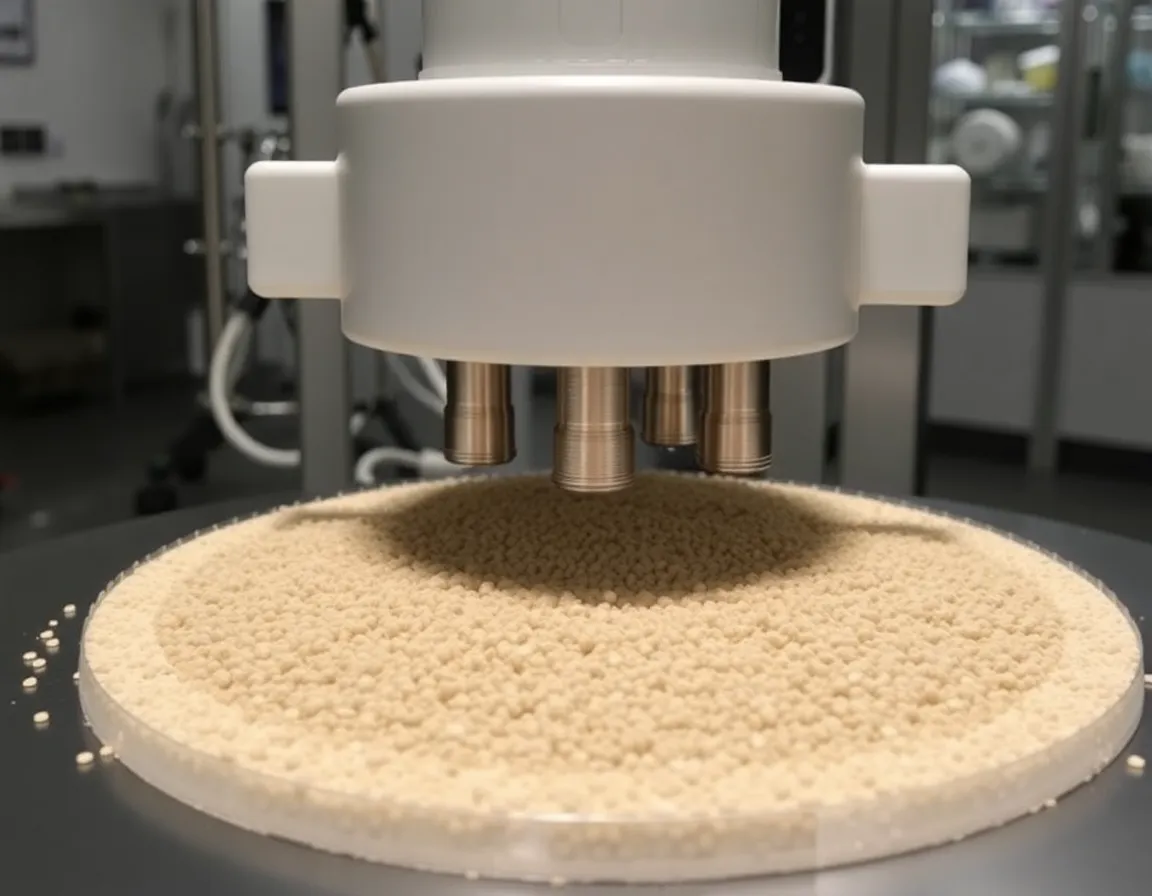
정밀 부품에 사용되는 대부분의 엔지니어링 수지(예: PEEK, LCP, 폴리카보네이트)는 흡습성입니다. 공기 중의 수분을 흡수하며, 높은 용융 온도에서 가수분해를 유발합니다. 이는 폴리머 사슬을 분해하여 취성 부품, 표면 스플레이 및 내부 보이드를 초래합니다. 검증된 클린룸 공정에서 재료 취급은 자동화되고 밀봉됩니다. 제습 건조기는 수분 함량을 0.02% 미만으로 줄이는 데 사용되며, 건조된 수지는 밀봉된 폐쇄 루프 시스템을 통해 성형 기계로 직접 이송되어 재오염 가능성을 제거합니다.
운전 메커니즘: 공정이 완벽함을 달성하는 방법
환경적 외피를 넘어, 성형 공정 자체가 정밀도를 위해 최적화됩니다. 표준 기계를 클린룸에 배치하는 것만으로는 충분하지 않습니다. 기계는 미립자 발생을 최소화하고 제어를 극대화하도록 설계되어야 합니다.
서보 전동 프레스 vs. 유압 프레스
The choice of press is critical. Servo-electric molding machines are the preferred choice for cleanroom validation. Unlike hydraulic machines, which use oil and can leak or generate hydraulic vapor, servo-electric machines use electric motors. This offers three distinct advantages:
- Zero Hydraulic Contamination: No oil, no seals, no risk of lubricant aerosolizing into the cleanroom environment.
- Superior Repeatability: Servo motors provide precise, programmable screw position and injection speed, with repeatability within ±0.01mm. This is essential for maintaining consistent cavity pressure and part density.
- Energy Efficiency and Cleanliness: They generate less heat and require no cooling water for hydraulics, reducing the risk of condensation and microbial growth.
Automation and In-Situ Inspection
Human operators are the single largest source of contamination in a cleanroom. A validated process minimizes human intervention through robotic part removal 및 automated vision inspection. Robots with cleanroom-compatible (ISO Class 5) ratings remove parts from the mold and place them directly onto conveyor systems or into sealed trays. In-line inspection systems use high-resolution cameras and laser sensors to measure critical dimensions in real-time. If a part falls outside the tolerance band, the system automatically rejects it and signals the press to adjust parameters, preventing a run of defective parts. This closed-loop feedback is the essence of "flawless" production—it is not about finding defects later; it is about preventing them from ever occurring.
Mold Design for Cleanroom Compatibility
The mold itself must be engineered for the process. This includes using corrosion-resistant steels (like stainless 420 or H13 with PVD coating) to prevent rust and flaking. The mold must also be designed with adequate venting to allow trapped air to escape without creating flash. In a cleanroom, you cannot use standard mold releases or external lubricants, as these are volatile organic compounds (VOCs) that contaminate the environment. Therefore, the mold surface finish must be highly polished (SPI A-1 or A-2) to allow for clean ejection. Some advanced processes use vacuum venting systems to draw out air before injection, eliminating the need for chemical release agents entirely.
Strategic Benefits and High-Stakes Applications
The investment in a validated cleanroom molding process is substantial, but the return on investment is measured not just in financial terms, but in regulatory compliance, brand reputation, and patient safety.
Tangible Benefits: Beyond the Obvious
- Zero-Defect Yield: The primary benefit is a drastic reduction in scrap rates. Instead of a typical 2-5% rejection rate, validated processes achieve yields of 99.5% or higher, even for complex micro-molded parts.
- Regulatory Compliance: For medical devices (under FDA 21 CFR Part 820) and ISO 13485, validation is mandatory. A validated process provides the audit trail required to prove due diligence and product safety to regulatory bodies.
- Enhanced Material Properties: By preventing moisture absorption and thermal degradation, the process preserves the intrinsic mechanical strength, chemical resistance, and dielectric properties of the polymer. This results in parts that perform exactly as the material data sheet promises.
- Reduced Post-Processing: Because parts are molded cleanly without flash or contamination, secondary operations like deflashing, washing, or ultrasonic cleaning are often eliminated. This shortens the overall production lead time.
Where Flawlessness is Non-Negotiable
The applications for this technology are found where failure is not an option.
- Implantable Medical Devices: Components for pacemakers, neurostimulators, and drug-eluting stents require ISO Class 5 environments. Any biological or particulate contamination can cause inflammation, rejection, or embolisms. The validated process ensures the device remains sterile and inert.
- Diagnostic Microfluidics: Lab-on-a-chip devices rely on micro-channels that are fractions of a millimeter wide. A single dust particle can block the channel, rendering the diagnostic test invalid. Cleanroom molding ensures the optical clarity and dimensional fidelity of these polymer chips.
- Aerospace & Defense Optics: Lenses and housings for targeting systems and satellite communications require zero birefringence and surface roughness below 1nm. The controlled cooling and molding environment prevent internal stress and warpage.
- Pharmaceutical Delivery Systems: Pre-filled syringes, auto-injectors, and inhalers require precise tolerances to ensure correct dosing and airtight sealing. The cleanroom process prevents particulate contamination that could compromise the drug formulation.
Best Practices for Maintaining Validation Integrity
Validation is not a one-time event; it is a living system that requires constant vigilance. The following best practices are essential for maintaining the integrity of the process over the long term.
Routine Monitoring and Re-Validation
Environmental monitoring must be continuous. This includes using particle counters to sample the air on a scheduled basis, and settling plates to culture viable organisms. The molding machine's critical parameters—such as barrel temperature and injection pressure—should be monitored by the machine's control system and logged against the OQ/PQ limits. Most regulatory frameworks require re-validation at least annually or whenever a significant change is made to the tooling, material, or process. This is not a bureaucratic hurdle but a safety net.
Preventive Maintenance and Gowning Protocols
Cleanroom molding machines require specialized maintenance. When the tool is opened for maintenance, it must be done in a controlled manner to avoid contamination. All maintenance personnel must adhere to strict gowning protocols—wearing cleanroom suits, gloves, and face masks. Maintenance logs must document what was done, when, and by whom. Furthermore, the use of cleanroom-grade lubricants (e.g., perfluorinated greases) is mandatory for any moving part inside the controlled zone. These greases do not outgas and are resistant to high temperatures.
Statistical Process Control (SPC)
The most advanced cleanroom molding facilities employ real-time SPC. This involves using control charts (X-bar and R charts) to track critical-to-quality (CTQ) characteristics. If a trend is detected—for example, a gradual drift in part weight—the system alerts engineers to make a minor adjustment before the part falls out of specification. This proactive approach is the hallmark of a mature, validated process. It transforms molding from a reactive "make and inspect" operation into a proactive "predict and prevent" science.
Conclusion: The Gold Standard for Tomorrow's Components
Cleanroom molding, when properly validated, is more than a manufacturing technique; it is a philosophy of quality. It acknowledges that in the world of micron-level tolerances, the invisible is more dangerous than the visible. By integrating advanced environmental controls, rigorous IQ/OQ/PQ validation, and automated precision machinery, manufacturers can achieve a level of consistency that is unattainable through conventional methods. The process eliminates the guesswork, replaces inspection with prevention, and provides the documented confidence required for the most demanding applications.
As technologies like 5G, autonomous vehicles, and personalized medicine evolve, the demand for flawless precision parts will only intensify. The companies that invest in and master the 검증된 클린룸 성형 공정 will not just meet these demands—they will define the standard for reliability and safety in the next generation of engineered products. It is not the easiest path to production, but it is unequivocally the most secure.