
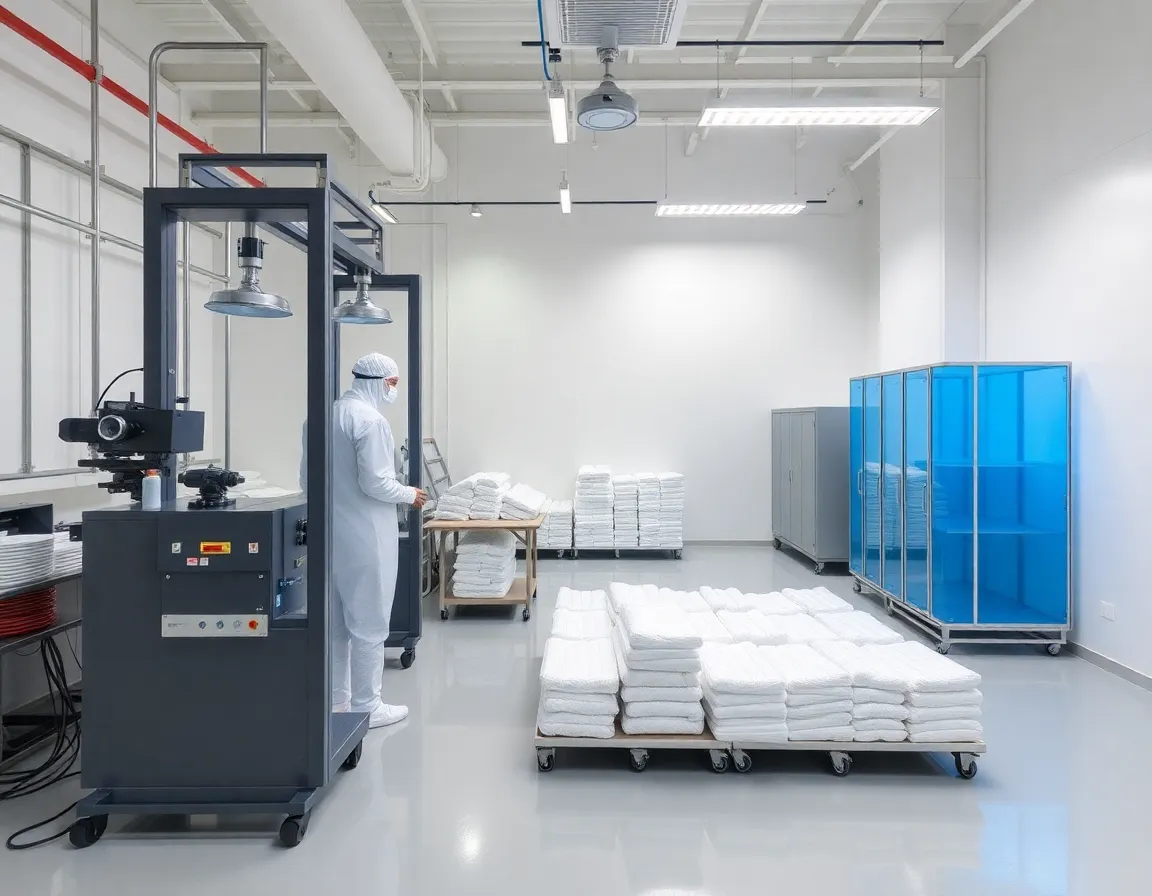
클래스 10000 클린룸 성형 이해하기
정밀 제조 세계에서 오차 허용 범위는 미크론 단위로 측정되며, 단 하나의 미세한 오염 물질이 전체 생산 배치를 무용지물로 만들 수 있습니다. 이것이 의료 기기, 반도체 부품 및 광학 장비를 생산하는 산업의 현실입니다. 이 엄격한 환경의 중심에는 클래스 10000 클린룸 성형, 이 있으며, 이는 사출 성형의 물리학과 통제된 대기 조건의 엄격한 규율을 결합한 특수 제조 공정입니다. 그러나 정확히 "클래스 10000"이 무엇을 의미하며, 왜 중요한 부품 생산의 표준이 되었을까요?
"클래스 10000"이라는 명칭은 공기 1입방피트당 허용되는 최대 부유 입자 수(0.5마이크로미터 이상)를 의미합니다. 쉽게 말해, 클래스 10000 클린룸은 공간 1입방피트마다 먼지, 피부 조각 또는 기타 오염 물질이 10,000개 미만으로 존재합니다. 이를 비교하자면, 일반적인 사무실 환경에는 1입방피트당 500,000~1,000,000개의 그러한 입자가 포함되어 있습니다. 이러한 청정도를 달성하고 유지하려면 정교한 공기 여과 시스템(HEPA 및 ULPA 필터), 양압, 특수 가운 착용 프로토콜, 지속적인 환경 모니터링이 필요합니다. 사출 성형에 적용하면 이러한 청정도 수준은 표준 제조 공정을 고도로 통제된 과학적 절차로 변환합니다.
청정도의 과학: 오염이 왜 보이지 않는 살인자인가
클린룸 성형에서 청정도가 왜 그토록 중요한지 이해하려면 먼저 제조되는 제품의 취약성을 인식해야 합니다. 예를 들어 의료용 애플리케이션에서 성형된 카테터나 이식형 센서는 표면이 완벽하게 깨끗해야 합니다. 성형 공정 중 폴리머에 박힌 입자상 물질은 박테리아 증식의 핵 생성 부위로 작용할 수 있습니다. 마찬가지로 반도체 제조에서 사출 성형된 커넥터에 갇힌 단일 먼지 입자는 전기 단락을 유발하여 치명적인 장치 고장으로 이어질 수 있습니다. 오염의 결과는 단지 외관상의 문제가 아니라 기능적, 안전상 중요하며 재정적으로도 파괴적입니다.
기존 성형에서의 오염원
표준 성형 시설의 오염은 여러 경로에서 발생합니다. 가장 명백한 것은 공기 중 부유 입자—먼지, 의복에서 나온 섬유, 작업자가 흘린 피부 세포입니다. 그러나 덜 명백한 공급원으로는 기계 윤활유 (금형 표면으로 이동할 수 있는 유압 오일 및 그리스), 원자재 취급 (정전기를 모아 먼지를 끌어들이는 폴리머 펠릿), 그리고 2차 작업 (버 제거 또는 포장으로 인해 입자가 유입됨)이 있습니다. 클래스 10000 환경에서는 이러한 각 경로가 체계적으로 무력화됩니다. 공기는 HEPA 필터를 통해 지속적으로 재순환되고, 작업자는 전체 클린룸 슈트(덮개복, 후드, 장갑, 부티)를 착용하며, 기계는 밀봉된 윤활 시스템과 매끄럽고 입자가 발생하지 않는 표면으로 설계됩니다.
또한, 금형 자체 is a critical factor. In a standard environment, mold surfaces can develop micro-pitting or oxidation over time, which traps contaminants and transfers them to each subsequent part. In a Class 10000 cleanroom, molds are constructed from specialized stainless steels or hardened tool steels, polished to a mirror finish, and subjected to rigorous cleaning protocols between runs. This attention to mold surface integrity ensures that the part’s surface replicates the mold’s pristine condition, not the accumulated grime of production.
How Class 10000 Cleanroom Molding Works: A Step-by-Step Process
The process begins long before the molten polymer enters the mold. It starts with the material preparation. Polymer resins are stored in sealed containers within the cleanroom or in adjacent staging areas with desiccant dryers that remove moisture. Moisture is a hidden contaminant—when polymer pellets absorb water vapor, the water turns to steam during injection, creating surface defects called splay or silver streaks. In a Class 10000 environment, material handling is automated where possible, reducing human contact and the associated risk of contamination.
Machine and Tooling Considerations
The injection molding machine itself must be cleanroom-compatible. This means the machine's clamping unit, injection unit, and robot systems are enclosed or shielded to prevent particulate generation. Hydraulic systems are replaced with electric servo-driven machines where feasible, as electric machines produce zero hydraulic oil mist, a common source of airborne contamination. The machine's exterior is made of stainless steel or electro-polished aluminum, and all exposed surfaces are angled to prevent dust accumulation. The mold is fitted with a purge system that uses clean, dry air or nitrogen to blow away any loose particles before the mold closes.
Process Control and Environmental Monitoring
Once production begins, the environment is continuously monitored. Particle counters sample the air at regular intervals, and alarms trigger if particle counts approach the Class 10000 limit. Temperature and humidity are tightly controlled—typically 68-72°F (20-22°C) and 40-50% relative humidity—because fluctuations can affect polymer viscosity and dimensional stability. Operators follow strict gowning procedures, passing through air showers and sticky mats to remove loose particles from their clothing. Even the tools used for part removal are made of anti-static, non-shedding materials.
The molding parameters themselves—melt temperature, injection pressure, cooling time—are monitored via a Statistical Process Control (SPC) system. This data is used to detect any drift in the process that could correlate with contamination. For example, an unexpected rise in injection pressure might indicate a blocked gate or a build-up of degraded polymer, both of which can introduce contaminants into the part. By catching these anomalies early, the cleanroom molding process ensures that purity is not just an environmental condition but a process outcome.
Critical Applications: Where Class 10000 Molding is Non-Negotiable
The demand for Class 10000 cleanroom molding has surged across several high-stakes industries. Understanding these applications illuminates why the investment in such facilities is justified.
- Medical Devices and Implants: From insulin pump components to orthopedic screws, these parts must be biocompatible and free from pyrogens (fever-inducing substances). A Class 10000 environment minimizes the risk of endotoxin contamination from bacterial debris.
- Pharmaceutical Packaging: Pre-filled syringes, vial stoppers, and inhaler mouthpieces require a sterile or high-purity surface to prevent drug-product interaction. Molding these in a cleanroom prevents particulate-induced degradation of the medication.
- Semiconductor and Electronics: Connectors, chip carriers, and sensor housings must be free of ionic contaminants that can corrode delicate circuitry. Even a single human hair (which is about 70 microns wide) can bridge circuit traces and cause a short.
- 항공우주 및 방위: Optical components, valve bodies, and guide tubes for precision instruments must withstand extreme conditions without failing due to embedded impurities.
- Food and Beverage Processing: While not sterile, components like pump impellers and valve seals for food processing must be molded in a controlled environment to prevent bacterial harborage points.
Benefits Beyond Basic Cleanliness
The advantages of Class 10000 cleanroom molding extend beyond just meeting regulatory standards. First, it offers consistency. Because the environment is stable, the molding process itself is more repeatable. Manufacturers see fewer defects, lower scrap rates, and reduced downtime for re-cleaning. Second, it provides a competitive advantage. Companies that can certify their molding process to Class 10000 standards can bid on premium contracts that are inaccessible to standard molders. Third, it enables design innovation. Engineers can design more complex, tighter-tolerance parts knowing that the manufacturing environment will not introduce unpredictable variables.
Best Practices for Operating a Class 10000 Cleanroom Molding Facility
Achieving Class 10000 certification is not a one-time event; it is a continuous operational discipline. Adherence to best practices is essential for maintaining the integrity of the cleanroom and the quality of the molded parts.
Personnel Training and Gowning Protocol
People are the largest source of contamination, generating up to 10 million particles per minute while moving. Therefore, rigorous training is paramount. Operators must understand not just how to wear a cleanroom suit, but why. The gowning sequence must be followed precisely: hairnet, beard cover, jumpsuit, booties, and gloves. The suit must be made of a low-shedding material like polyester or a static-dissipative fabric. Movement inside the cleanroom should be slow and deliberate; rapid movements create air currents that can stir up settled particles. Eating, drinking, and wearing cosmetics are strictly prohibited.
Routine Cleaning and Validation
The cleanroom must be cleaned on a strict schedule using non-shedding, low-particulate wipes and sterile or filtered cleaning solutions. Floors are mopped daily, and surfaces are wiped down after each shift. However, cleaning itself can be a source of contamination if not done correctly. Therefore, cleaning is performed in a specific direction (from the cleanest area to the dirtiest) and with tools that are dedicated to the cleanroom. Additionally, the facility must undergo periodic certification—typically every 6 to 12 months—by an independent third-party that tests airborne particle counts, airflow velocity, and filter integrity. This certification is not just a formality; it is a legal requirement for many regulated industries, such as medical devices under ISO 13485 or pharmaceuticals under GMP guidelines.
Material and Tooling Management
Raw materials should be inspected upon arrival for packaging integrity. Incoming polymer pellets should be passed through a de-dusting or de-ionizing system before entering the cleanroom. The molds themselves should have a dedicated storage area within the cleanroom environment, protected by covers. When a mold is not in use, it should be stored under a nitrogen purge or in a sealed bag to prevent oxidation. The mold maintenance schedule must be strictly adhered to, with more frequent inspections for pitting, wear, or residue build-up than in a standard facility.
The Future of Cleanroom Molding: Trends and Innovations
As technology advances, the standards for cleanroom molding are becoming even more stringent. The industry is seeing a shift toward Class 1000 and even Class 100 cleanrooms for the most critical applications, particularly in next-generation semiconductor packaging and implantable drug-delivery devices. This is driven by the miniaturization of electronics and the growing complexity of combination products (drug-device hybrids).
Another trend is the integration of Industry 4.0 technologies. Smart sensors embedded in the molding machine now provide real-time data on particle counts, temperature gradients, and humidity levels, feeding into a central AI system that can predictively adjust the molding parameters to maintain purity. Furthermore, the development of bio-based and biodegradable polymers that are inherently more sensitive to contamination is pushing cleanroom facilities to adopt even more advanced air purification technologies, such as photocatalytic oxidation (PCO), which destroys organic contaminants at a molecular level.
In conclusion, Class 10000 cleanroom molding is far more than a manufacturing niche; it is a critical enabler of modern technology and medicine. The purity it provides is not a luxury but a fundamental requirement for safety, functionality, and reliability. For manufacturers willing to invest in this discipline, the rewards are substantial: higher yields, premium market positioning, and the assurance that their products can be trusted in the most demanding environments. As the global demand for precision components continues to rise, the importance of cleanroom molding—and the purity it guarantees—will only grow.