
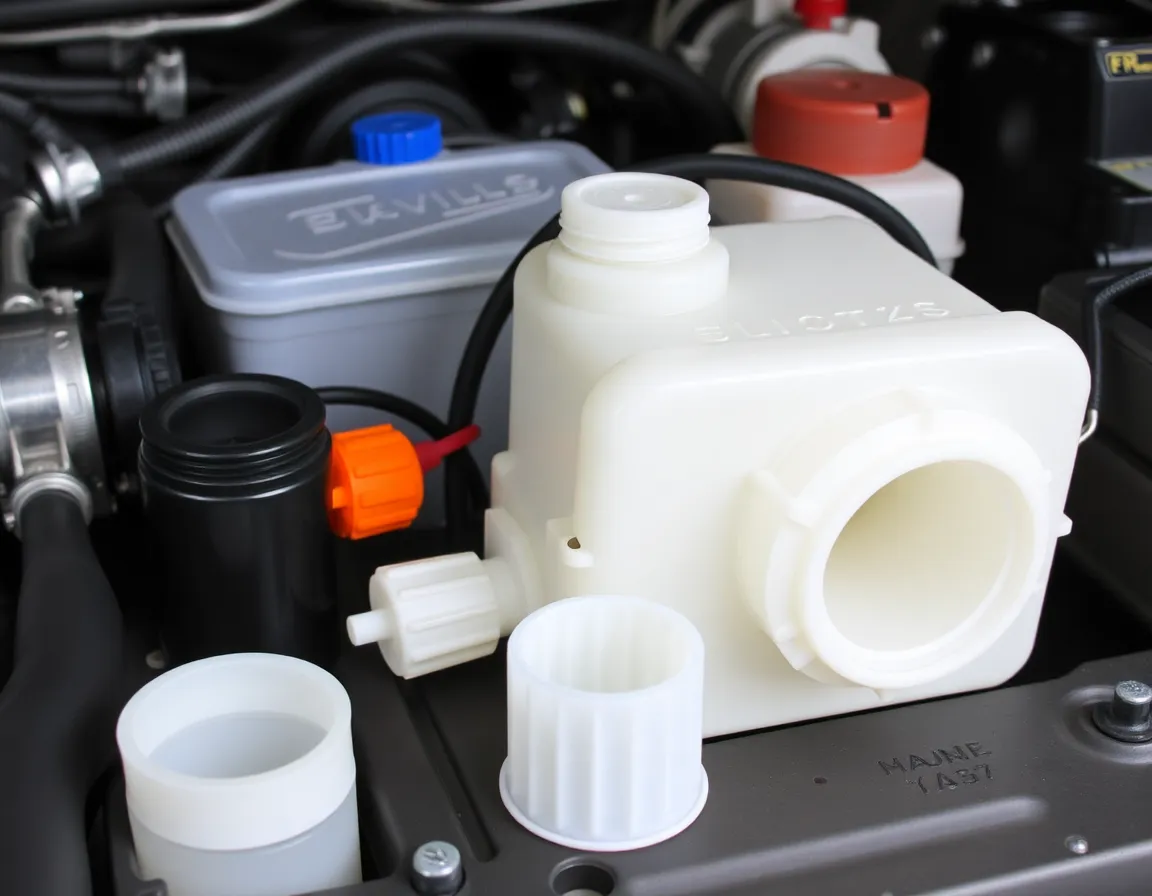
はじめに:EV効率の隠れた鍵
電気自動車(EV)が自動車業界を変革し続ける中、メーカーとドライバーの両方にとって重要な要素が航続距離です。バッテリー容量やモーター効率が注目されがちですが、より静かで基本的な技術がゲームチェンジャーとなりつつあります。. 自動車用熱管理部品—車両全体の温度を調整する高度なシステム—は、航続距離を最大化するための必須コンポーネントとして認識されています。実際、熱管理が不十分だと、極端な気候ではEVのバッテリーエネルギーの最大30〜40%が無駄になる可能性があります。この記事では、スマートな熱部品がEVの航続距離を向上させる5つの具体的な方法を探り、技術、その利点、実際の応用について詳しく説明します。.
1. インテリジェントバッテリー熱管理システム(BTMS)
バッテリーパックはあらゆるEVの心臓部であり、その性能は温度に非常に敏感です。リチウムイオンセルは、通常20°Cから40°C(華氏68度から104度)の狭い範囲内で最適に動作します。温度が逸脱すると、内部抵抗が増加し、使用可能容量が減少し、劣化が加速します。スマートな熱管理部品は、この課題に正面から取り組みます。.
アクティブ液体冷却と加熱の仕組み
現代のEVは採用しています アクティブ液体熱管理システム これは、バッテリーパックに統合されたチャネルを通じて冷却液混合物を循環させます。空気冷却に依存するパッシブシステムとは異なり、スマートシステムはセンサーと予測アルゴリズムを使用して、冷却液の流量と温度を正確に制御します。例えば、急速充電中、システムはバッテリーを事前冷却して発生する激しい熱を吸収し、充電セッションがより長くピーク電力を維持できるようにします。逆に、寒い天候では、抵抗ヒーターまたはヒートポンプシステムが運転開始前にバッテリーを最適温度に温めます。.
航続距離への影響と利点
バッテリーを理想的な温度に維持することにより、スマートBTMS部品は回復できます 15-25% アクティブ熱管理のない車両と比較して、極寒で失われた航続距離。暑い気候では、バッテリー管理システムが過熱を避けるために電力を制限する熱スロットリングを防ぎます。これは、ドライバーが天候に関係なく一貫した性能に依存できることを意味します。さらに、これらのシステムは熱ストレスを減らすことでバッテリー寿命を延ばし、間接的に車両の寿命を通じて航続距離を維持します。.
実装のベストプラクティス
- 可変速ポンプとバルブを使用する 正確な制御を維持しながら、寄生エネルギー消費を最小限に抑えます。.
- 車両のナビゲーションシステムと統合する ルートと充電停止に基づいてバッテリーを事前調整します。.
- Employ phase-change materials (PCMs) in the battery pack to passively absorb heat spikes, reducing load on the active system.
2. High-Efficiency Heat Pump Systems for Cabin and Powertrain
Cabin heating has historically been a major drain on EV range, especially in cold climates. Traditional resistive heaters can consume 3-5 kW of power, effectively reducing range by 30-40% in winter. Smart thermal management parts, particularly heat pump systems, offer a transformative solution.
How Heat Pumps Differ from Resistive Heaters
A heat pump uses a refrigeration cycle to transfer heat from the ambient air, the powertrain, or the battery to the cabin. Instead of generating heat directly from electricity, it moves existing heat—much like an air conditioner in reverse. This process is highly efficient, achieving a coefficient of performance (COP) of 2 to 4, meaning for every 1 kW of electrical energy input, it delivers 2-4 kW of heat. In contrast, a resistive heater has a COP of just 1.
Range Recovery and System Integration
Modern heat pump systems are integrated with the entire thermal loop of the EV. They can scavenge waste heat from the electric motor, inverter, and battery to warm the cabin. For example, the Tesla Model Y and Hyundai Ioniq 5 use advanced heat pump architectures that recover heat from the drivetrain and even the ambient air. This integration can recover 10-30% of range in cold-weather driving compared to vehicles using resistive heaters alone. In mild conditions, the heat pump can also function as a reversible system, providing cooling with minimal energy penalty.
Applications and Future Trends
- Multi-zone thermal management allows the heat pump to prioritize cabin comfort or battery heating based on driver needs.
- Vapor injection technology improves heat pump performance in extremely cold temperatures (below -10°C).
- Integration with smart thermostats enables pre-conditioning while the vehicle is plugged in, using grid power instead of battery energy.
3. Smart Thermal Interface Materials (TIMs) for Component Efficiency
Beyond the battery and cabin, individual electronic components like inverters, DC-DC converters, and onboard chargers generate significant heat. If this heat is not efficiently dissipated, these components must throttle performance, leading to energy losses. Smart thermal interface materials (TIMs) are advanced parts that improve heat transfer between components and cooling systems.
The Role of Gap Fillers, Pads, and Phase-Change TIMs
Traditional TIMs like thermal grease are static and can degrade over time. Smart TIMs include phase-change materials that liquefy at specific temperatures to fill microscopic air gaps, dramatically reducing thermal resistance. Others use graphite-based or ceramic-filled polymers that offer high thermal conductivity while electrically insulating sensitive electronics. By ensuring that heat flows rapidly away from power modules, these materials allow components to operate at peak efficiency without derating.
How This Boosts Range
Every watt of power lost as heat in the inverter or motor is a watt that does not reach the wheels. By reducing thermal resistance by 20-40%, smart TIMs enable higher power density and lower energy conversion losses. For example, a silicon carbide (SiC) inverter with optimized TIMs can achieve 99% efficiency, compared to 97% with older materials. Over a typical driving cycle, this translates to a 2-5% improvement in overall range. While this may seem modest, it compounds with other thermal improvements.
Best Practices for Selection and Application
- Match TIM properties to the component’s heat flux—high-power modules require high-conductivity materials, while low-power sensors can use standard pads.
- Use automated dispensing systems to ensure consistent thickness and coverage, avoiding air voids.
- Consider reliability in thermal cycling—phase-change TIMs can self-heal after repeated heating and cooling.
4. Predictive Thermal Control via Software and IoT
The hardware is only half the story. The true intelligence of modern thermal management lies in software-defined control algorithms that anticipate thermal needs before they arise. These systems use data from temperature sensors, ambient weather forecasts, GPS routes, and driving history to optimize thermal operations.
How Predictive Algorithms Work
Imagine an EV approaching a fast-charging station. The predictive thermal controller analyzes the remaining distance, outside temperature, and battery state of charge. It then adjusts the cooling system to pre-cool the battery to an optimal temperature for charging, all while minimizing energy consumption. Similarly, on a cold morning, the system can pre-heat the cabin and battery using grid power while the vehicle is plugged in, preserving battery energy for driving. This anticipatory logic is far more efficient than reactive control, which only responds after a temperature deviation occurs.
Range Benefits and Real-World Examples
Automakers like Tesla, Ford, and BMW have adopted predictive thermal control in their latest models. Tesla’s “Octovalve” system, for instance, uses a single smart valve to direct coolant flow between battery, motor, and cabin circuits based on real-time conditions. This reduces energy waste by 5-10% compared to fixed routing systems. Additionally, over-the-air updates allow these algorithms to improve over time, meaning the vehicle becomes more efficient without hardware changes.
Applications and Data Integration
- Cloud-based thermal models can predict thermal loads based on traffic and elevation data.
- Machine learning can adapt thermal strategies to individual driving habits, such as frequent short trips versus long highway commutes.
- V2G (Vehicle-to-Grid) integration uses thermal management to optimize battery health during grid services.
5. Lightweight and Compact Thermal Components
Every kilogram of weight in an EV reduces range, and thermal management systems have traditionally been heavy. Smart thermal parts are now being designed with lightweight materials and compact geometries to minimize this penalty while maintaining or improving performance.
Material Innovations: Aluminum, Composites, and 3D Printing
Traditional radiators and heat exchangers are made from copper and brass, which are heavy. Modern smart thermal parts use aluminum micro-channel tubes that provide higher surface area for heat transfer while weighing 30-50% less. Carbon-fiber-reinforced polymer housings replace metal casings in pumps and valves, reducing weight further. Additive manufacturing (3D printing) allows for complex internal geometries that optimize fluid flow, reducing the size of components like coolant manifolds and oil coolers.
Weight Reduction and Range Impact
Reducing the weight of the thermal management system by 10-15 kg can improve range by approximately 1-2% on a typical EV. While this seems small, it is achieved without sacrificing thermal performance. For example, a lightweight, compact heat exchanger can still dissipate the same amount of heat as a heavier traditional unit. When combined with other efficiency gains, these savings add up. Moreover, smaller components free up space for larger battery packs, which directly increases range.
Best Practices for Design and Integration
- Use topology optimization software to design minimal-weight brackets and housings that meet structural requirements.
- Integrate thermal parts into structural elements, such as using the battery case as a heat sink.
- Consider lifecycle costs—lightweight materials may cost more initially but save energy over the vehicle’s lifetime.
Conclusion: The Future of EV Range Is Thermal
As electric vehicles continue to evolve, the role of 自動車用熱管理部品 will only grow in importance. From intelligent battery cooling and high-efficiency heat pumps to advanced thermal interface materials and predictive software, these smart components are quietly but powerfully extending EV range. For manufacturers, investing in these technologies is no longer optional—it is a competitive necessity. For drivers, understanding these systems means appreciating that every mile of range is the result of a carefully orchestrated thermal dance. The next time you see an EV with impressive range numbers, remember: it’s not just the battery that makes it possible—it’s the smart thermal parts working tirelessly behind the scenes.