
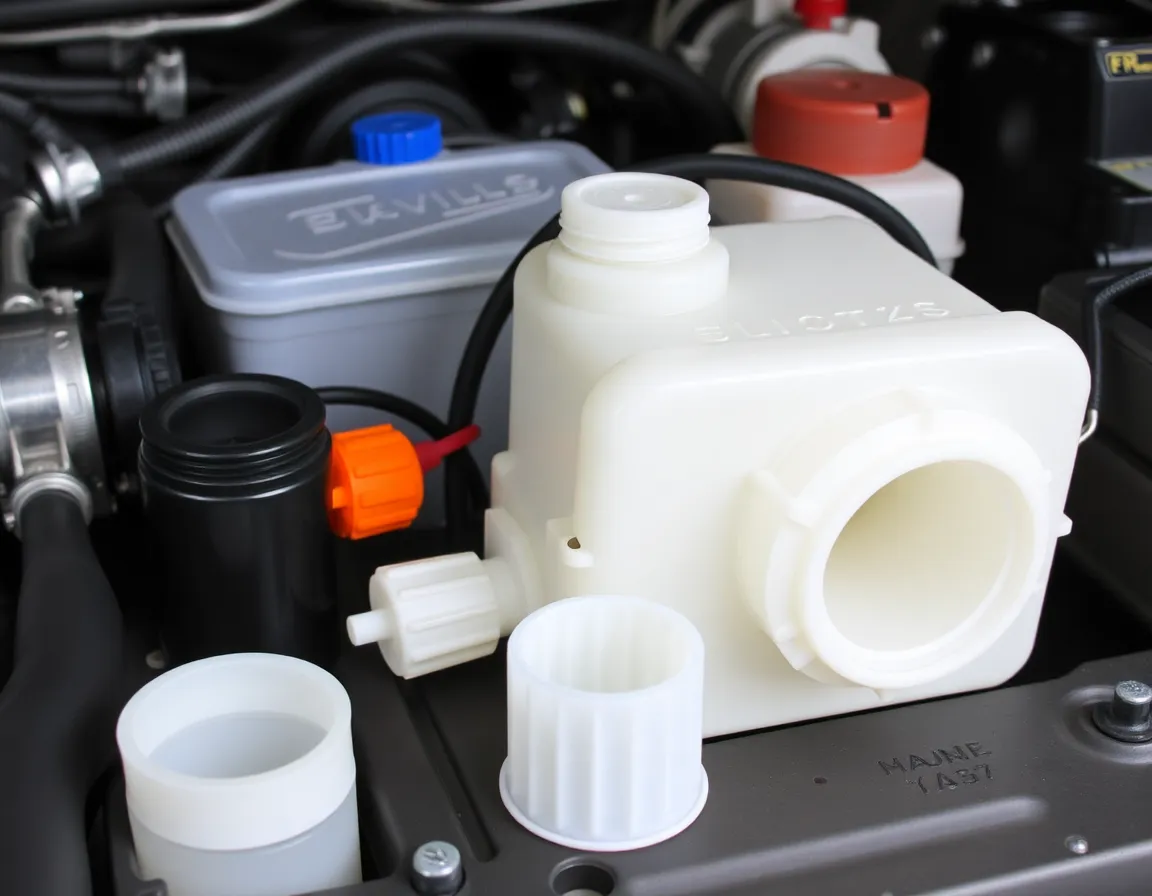
소개: EV 효율성의 숨은 열쇠
전기 자동차(EV)가 자동차 산업을 계속 재편함에 따라, 제조업체와 운전자 모두에게 가장 중요한 요소 중 하나는 주행 거리입니다. 배터리 용량과 모터 효율이 종종 주목을 받지만, 더 조용하고 더 근본적인 기술이 게임 체인저로 입증되고 있습니다. 자동차 열관리 부품—차량 전반에 걸쳐 온도를 조절하는 정교한 시스템—은 이제 주행 거리를 극대화하는 필수 구성 요소로 인정받고 있습니다. 실제로 열관리가 제대로 되지 않으면 극한 기후에서 EV 배터리 에너지의 최대 30-40%가 낭비될 수 있습니다. 이 기사는 스마트 열 부품이 EV 주행 거리를 향상시키는 다섯 가지 특정 방법을 탐구하고, 기술, 이점 및 실제 적용 사례를 자세히 살펴봅니다.
1. 지능형 배터리 열 관리 시스템(BTMS)
배터리 팩은 모든 전기차의 심장이며, 그 성능은 온도에 매우 민감합니다. 리튬이온 셀은 일반적으로 20°C~40°C(68°F~104°F)의 좁은 범위 내에서 최적으로 작동합니다. 온도가 벗어나면 내부 저항이 증가하여 사용 가능한 용량이 줄어들고 열화가 가속화됩니다. 스마트 열 관리 부품은 이러한 문제를 정면으로 해결합니다.
능동형 액체 냉각 및 가열 작동 방식
최신 전기차는 능동형 액체 열 관리 시스템 을 채택하여 배터리 팩에 통합된 채널을 통해 냉각수 혼합물을 순환시킵니다. 공기 냉각에 의존하는 수동 시스템과 달리, 스마트 시스템은 센서와 예측 알고리즘을 사용하여 냉각수 흐름과 온도를 정밀하게 제어합니다. 예를 들어, 급속 충전 중에는 시스템이 배터리를 사전 냉각하여 발생하는 강렬한 열을 흡수함으로써 충전 세션이 더 오랫동안 최고 출력을 유지할 수 있게 합니다. 반대로 추운 날씨에는 저항 히터 또는 히트 펌프 시스템이 주행 시작 전에 배터리를 최적 온도로 예열합니다.
주행 거리 영향 및 이점
배터리를 이상적인 온도로 유지함으로써, 스마트 BTMS 부품은 능동형 열 관리가 없는 차량에 비해 극심한 추위에서 손실되는 주행 거리의 15-25% 를 회복할 수 있습니다. 더운 기후에서는 배터리 관리 시스템이 과열을 방지하기 위해 출력을 제한하는 열 조절(서멀 스로틀링)을 방지합니다. 이는 운전자가 날씨에 관계없이 일관된 성능을 신뢰할 수 있음을 의미합니다. 또한, 이러한 시스템은 열 스트레스를 줄여 배터리 수명을 연장하며, 이는 차량 수명 동안 주행 거리를 간접적으로 보존합니다.
구현을 위한 모범 사례
- 가변 속도 펌프와 밸브를 사용하여 정밀한 제어를 유지하면서 기생 에너지 소비를 최소화합니다.
- 차량의 내비게이션 시스템과 통합하여 경로와 충전 정차 지점에 따라 배터리를 사전 조절합니다.
- 상변화 물질(PCM)을 사용합니다. in the battery pack to passively absorb heat spikes, reducing load on the active system.
2. High-Efficiency Heat Pump Systems for Cabin and Powertrain
Cabin heating has historically been a major drain on EV range, especially in cold climates. Traditional resistive heaters can consume 3-5 kW of power, effectively reducing range by 30-40% in winter. Smart thermal management parts, particularly heat pump systems, offer a transformative solution.
How Heat Pumps Differ from Resistive Heaters
A heat pump uses a refrigeration cycle to transfer heat from the ambient air, the powertrain, or the battery to the cabin. Instead of generating heat directly from electricity, it moves existing heat—much like an air conditioner in reverse. This process is highly efficient, achieving a coefficient of performance (COP) of 2 to 4, meaning for every 1 kW of electrical energy input, it delivers 2-4 kW of heat. In contrast, a resistive heater has a COP of just 1.
Range Recovery and System Integration
Modern heat pump systems are integrated with the entire thermal loop of the EV. They can scavenge waste heat from the electric motor, inverter, and battery to warm the cabin. For example, the Tesla Model Y and Hyundai Ioniq 5 use advanced heat pump architectures that recover heat from the drivetrain and even the ambient air. This integration can recover 10-30% of range in cold-weather driving compared to vehicles using resistive heaters alone. In mild conditions, the heat pump can also function as a reversible system, providing cooling with minimal energy penalty.
Applications and Future Trends
- Multi-zone thermal management allows the heat pump to prioritize cabin comfort or battery heating based on driver needs.
- Vapor injection technology improves heat pump performance in extremely cold temperatures (below -10°C).
- Integration with smart thermostats enables pre-conditioning while the vehicle is plugged in, using grid power instead of battery energy.
3. Smart Thermal Interface Materials (TIMs) for Component Efficiency
Beyond the battery and cabin, individual electronic components like inverters, DC-DC converters, and onboard chargers generate significant heat. If this heat is not efficiently dissipated, these components must throttle performance, leading to energy losses. Smart thermal interface materials (TIMs) are advanced parts that improve heat transfer between components and cooling systems.
The Role of Gap Fillers, Pads, and Phase-Change TIMs
Traditional TIMs like thermal grease are static and can degrade over time. Smart TIMs include phase-change materials that liquefy at specific temperatures to fill microscopic air gaps, dramatically reducing thermal resistance. Others use graphite-based or ceramic-filled polymers that offer high thermal conductivity while electrically insulating sensitive electronics. By ensuring that heat flows rapidly away from power modules, these materials allow components to operate at peak efficiency without derating.
How This Boosts Range
Every watt of power lost as heat in the inverter or motor is a watt that does not reach the wheels. By reducing thermal resistance by 20-40%, smart TIMs enable higher power density and lower energy conversion losses. For example, a silicon carbide (SiC) inverter with optimized TIMs can achieve 99% efficiency, compared to 97% with older materials. Over a typical driving cycle, this translates to a 2-5% improvement in overall range. While this may seem modest, it compounds with other thermal improvements.
Best Practices for Selection and Application
- Match TIM properties to the component’s heat flux—high-power modules require high-conductivity materials, while low-power sensors can use standard pads.
- Use automated dispensing systems to ensure consistent thickness and coverage, avoiding air voids.
- Consider reliability in thermal cycling—phase-change TIMs can self-heal after repeated heating and cooling.
4. Predictive Thermal Control via Software and IoT
The hardware is only half the story. The true intelligence of modern thermal management lies in software-defined control algorithms that anticipate thermal needs before they arise. These systems use data from temperature sensors, ambient weather forecasts, GPS routes, and driving history to optimize thermal operations.
How Predictive Algorithms Work
Imagine an EV approaching a fast-charging station. The predictive thermal controller analyzes the remaining distance, outside temperature, and battery state of charge. It then adjusts the cooling system to pre-cool the battery to an optimal temperature for charging, all while minimizing energy consumption. Similarly, on a cold morning, the system can pre-heat the cabin and battery using grid power while the vehicle is plugged in, preserving battery energy for driving. This anticipatory logic is far more efficient than reactive control, which only responds after a temperature deviation occurs.
Range Benefits and Real-World Examples
Automakers like Tesla, Ford, and BMW have adopted predictive thermal control in their latest models. Tesla’s “Octovalve” system, for instance, uses a single smart valve to direct coolant flow between battery, motor, and cabin circuits based on real-time conditions. This reduces energy waste by 5-10% compared to fixed routing systems. Additionally, over-the-air updates allow these algorithms to improve over time, meaning the vehicle becomes more efficient without hardware changes.
Applications and Data Integration
- Cloud-based thermal models can predict thermal loads based on traffic and elevation data.
- Machine learning can adapt thermal strategies to individual driving habits, such as frequent short trips versus long highway commutes.
- V2G (Vehicle-to-Grid) integration uses thermal management to optimize battery health during grid services.
5. Lightweight and Compact Thermal Components
Every kilogram of weight in an EV reduces range, and thermal management systems have traditionally been heavy. Smart thermal parts are now being designed with lightweight materials and compact geometries to minimize this penalty while maintaining or improving performance.
Material Innovations: Aluminum, Composites, and 3D Printing
Traditional radiators and heat exchangers are made from copper and brass, which are heavy. Modern smart thermal parts use aluminum micro-channel tubes that provide higher surface area for heat transfer while weighing 30-50% less. Carbon-fiber-reinforced polymer housings replace metal casings in pumps and valves, reducing weight further. Additive manufacturing (3D printing) allows for complex internal geometries that optimize fluid flow, reducing the size of components like coolant manifolds and oil coolers.
Weight Reduction and Range Impact
Reducing the weight of the thermal management system by 10-15 kg can improve range by approximately 1-2% on a typical EV. While this seems small, it is achieved without sacrificing thermal performance. For example, a lightweight, compact heat exchanger can still dissipate the same amount of heat as a heavier traditional unit. When combined with other efficiency gains, these savings add up. Moreover, smaller components free up space for larger battery packs, which directly increases range.
Best Practices for Design and Integration
- Use topology optimization software to design minimal-weight brackets and housings that meet structural requirements.
- Integrate thermal parts into structural elements, such as using the battery case as a heat sink.
- Consider lifecycle costs—lightweight materials may cost more initially but save energy over the vehicle’s lifetime.
Conclusion: The Future of EV Range Is Thermal
As electric vehicles continue to evolve, the role of 자동차 열관리 부품 will only grow in importance. From intelligent battery cooling and high-efficiency heat pumps to advanced thermal interface materials and predictive software, these smart components are quietly but powerfully extending EV range. For manufacturers, investing in these technologies is no longer optional—it is a competitive necessity. For drivers, understanding these systems means appreciating that every mile of range is the result of a carefully orchestrated thermal dance. The next time you see an EV with impressive range numbers, remember: it’s not just the battery that makes it possible—it’s the smart thermal parts working tirelessly behind the scenes.