
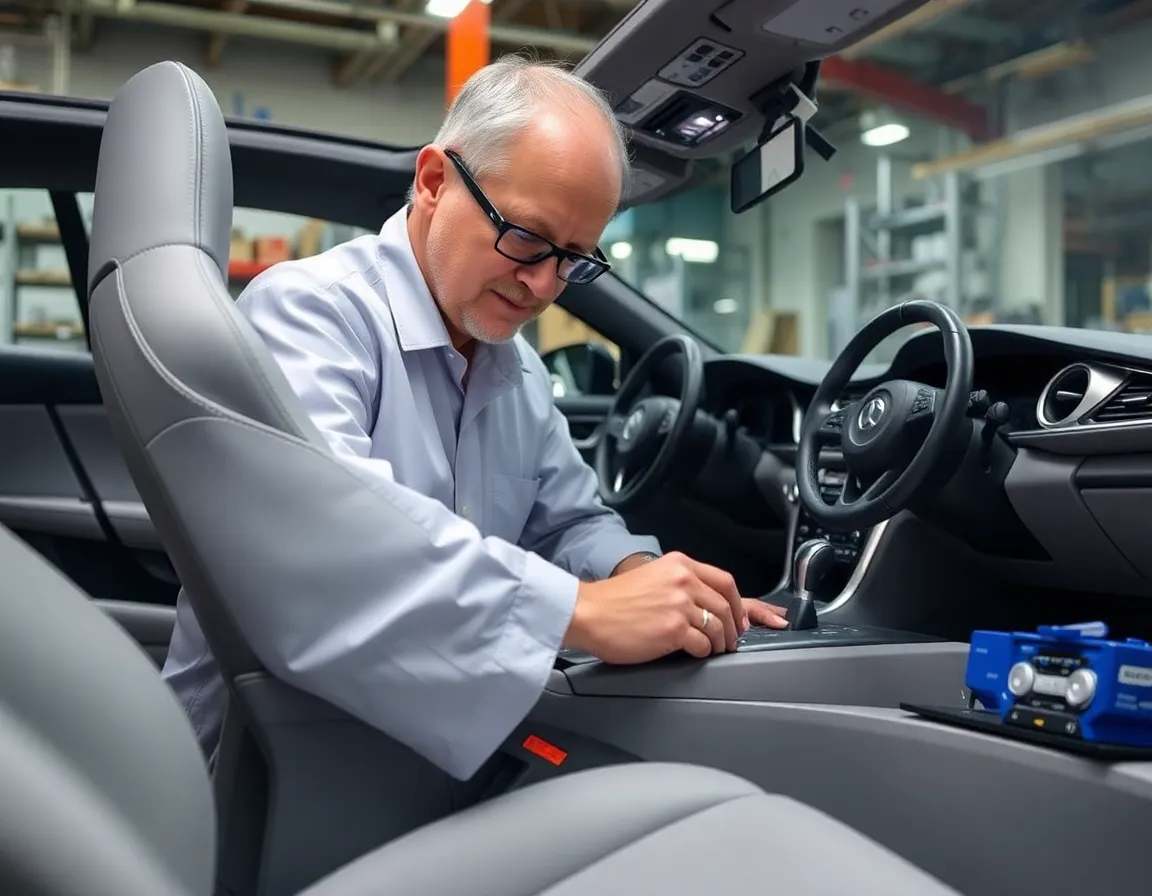
Introduction: The Critical Role of an Automotive Injection Molding Supplier
The modern automotive industry is a marvel of precision engineering, where thousands of components must work in perfect harmony. Among the most vital yet often overlooked contributors to this ecosystem is the automotive injection molding supplier. These specialized manufacturers produce everything from dashboard panels and door handles to intricate engine components and electrical housings. As vehicles become lighter, more fuel-efficient, and increasingly electrified, the demand for high-quality, durable plastic parts has skyrocketed. However, not all suppliers are created equal. Choosing the wrong partner can lead to production delays, quality failures, and costly recalls. This article explores the top five qualities that define a trusted automotive injection molding supplier, providing you with a comprehensive framework for evaluation and partnership.
Quality 1: Uncompromising Precision and Quality Control
In the automotive sector, there is zero tolerance for error. A single defective part can compromise vehicle safety, trigger warranty claims, and damage a brand’s reputation. The first and most critical quality of a trusted automotive injection molding supplier is their commitment to uncompromising precision and robust quality control systems.
Advanced Tooling and Mold Design
The foundation of precision lies in the mold. A reputable supplier invests heavily in high-grade steel molds and advanced CNC machining capabilities. They employ experienced toolmakers who understand the nuances of plastic flow, cooling rates, and shrinkage. Without a perfect mold, even the best injection molding machine cannot produce consistent, dimensionally accurate parts. Look for suppliers that use computer-aided design (CAD) and computer-aided manufacturing (CAM) software to simulate and optimize the molding process before steel is ever cut.
Stringent Quality Management Systems
A trusted supplier will be certified to IATF 16949, the international standard specifically for automotive quality management. This certification goes far beyond general ISO 9001 requirements. It mandates rigorous process control, continuous improvement, defect prevention, and reduction of variation in the supply chain. Furthermore, they should employ in-process inspection techniques such as:
- Real-time process monitoring using sensors to track temperature, pressure, and cycle times.
- Statistical Process Control (SPC) to detect trends before they result in defects.
- Coordinate Measuring Machines (CMMs) for precise dimensional verification.
- Non-destructive testing methods like X-ray or ultrasonic inspection for internal part integrity.
Traceability and Documentation
In the event of a field failure, a trusted supplier can trace every batch of parts back to the specific raw material lot, machine operator, and process parameters used. This level of full traceability is non-negotiable for automotive OEMs. They maintain meticulous documentation, including material certifications, inspection reports, and process deviation records, ensuring complete accountability throughout the production lifecycle.
Quality 2: Deep Material Science Expertise and Innovation
Automotive plastics are no longer simple commodities. They are engineered materials with specific properties for strength, heat resistance, UV stability, and chemical resistance. A top-tier automotive injection molding supplier must possess deep material science expertise to recommend and process the right polymers for each application.
Wide Range of Material Capabilities
A trusted supplier works with a broad spectrum of materials, from standard polypropylene (PP) and acrylonitrile butadiene styrene (ABS) to high-performance engineering plastics like polyamide (PA), polycarbonate (PC), and polyetheretherketone (PEEK). They also have experience with specialty compounds such as glass-filled, carbon-filled, and flame-retardant grades. Crucially, they understand how to process these materials to achieve the required mechanical properties without degradation from heat or shear forces.
Support for Lightweighting and Sustainability
As automakers strive to meet stringent fuel economy and emissions regulations, lightweighting is a primary strategy. A trusted supplier can offer solutions like microcellular foaming (MuCell) to reduce part weight, or the use of long-fiber thermoplastics that replace metal components. Additionally, they are at the forefront of sustainable manufacturing, offering expertise in recycled content (PCR), bio-based polymers, and closed-loop recycling systems for production scrap. This innovation is not just a value-add; it is increasingly a requirement for doing business with major automotive brands.
Material Validation and Testing
Beyond simply processing material, a quality supplier conducts or facilitates rigorous testing. This includes tensile strength, impact resistance, heat deflection temperature (HDT), and accelerated weathering tests. They maintain in-house laboratories or partner with accredited testing facilities to validate that every batch of material meets the OEM’s specific performance specifications.
Quality 3: Robust Supply Chain and Production Scalability
The automotive industry operates on just-in-time (JIT) manufacturing principles, where delays are catastrophic. A trusted automotive injection molding supplier must demonstrate robust supply chain management and the ability to scale production seamlessly.
Reliable Capacity and Redundancy
Trusted suppliers maintain a fleet of modern, well-maintained injection molding machines ranging from small tonnage (for intricate connectors) to very large tonnage (for bumpers and body panels). They have redundant capacity and contingency plans for equipment breakdowns. They also strategically source raw materials from multiple suppliers to avoid disruptions caused by geopolitical issues, natural disasters, or supplier bankruptcies. A supplier that can guarantee 99.9% on-time delivery is worth its weight in gold.
Global Footprint and Logistics
For large automotive programs, a supplier with a global manufacturing footprint is a significant advantage. They can produce parts near the OEM’s assembly plants, reducing shipping costs and lead times. They also have expertise in international logistics, customs compliance, and packaging solutions that protect parts during transit. Whether you need parts delivered to a plant in Detroit, Shanghai, or Stuttgart, a capable supplier has the infrastructure in place.
Scalability for Ramp-Up and Sustained Production
A trusted supplier can handle the entire product lifecycle. They support prototype and low-volume production for new vehicle launches, then seamlessly ramp up to high-volume mass production (often exceeding millions of parts per year). They also manage end-of-life production and service parts requirements, ensuring that replacement parts remain available long after a model has been discontinued. This flexibility is a hallmark of a mature and reliable partner.
Quality 4: Comprehensive Value-Added Services
Modern automotive injection molding suppliers are more than just manufacturers; they are integrated service providers. The best suppliers offer a suite of value-added services that streamline the development process and reduce total cost of ownership.
제조 가능성 설계(DFM)
Early supplier involvement is critical. A trusted supplier provides design for manufacturability (DFM) feedback during the product design phase. They analyze part geometry, wall thickness, draft angles, and gate locations to identify potential molding issues before the tool is built. This collaboration prevents costly mold modifications and ensures that the part can be produced efficiently and consistently. Their engineers act as a partner, not just a vendor.
Secondary Operations and Assembly
Many automotive parts require secondary operations such as ultrasonic welding, heat staking, pad printing, laser etching, or overmolding. A full-service supplier has these capabilities in-house, which eliminates the need to manage multiple vendors. They can also perform sub-assembly, delivering complete modules (e.g., a fully assembled door panel with switches and wiring) directly to the automotive assembly line. This reduces the OEM’s inventory and handling costs.
Tooling Maintenance and Lifecycle Management
Injection molds are expensive capital assets that require regular maintenance. A trusted supplier offers comprehensive tooling management, including preventive maintenance schedules, mold repair, and refurbishment. They can extend the life of a mold through engineering changes and surface treatments. This proactive approach prevents unplanned downtime and ensures consistent part quality over millions of cycles.
Quality 5: Proven Industry Track Record and Financial Stability
Finally, trust is built on a foundation of experience and reliability. The fifth quality of a trusted automotive injection molding supplier is a proven track record and demonstrable financial stability.
Established Relationships with Major OEMs
A supplier’s client list speaks volumes. If they have long-standing contracts with major automotive manufacturers (Tier 1 suppliers or OEMs like Toyota, Volkswagen, Ford, or Tesla), it indicates they have passed rigorous audits and consistently met demanding requirements. Ask for references and case studies. A supplier that has successfully launched dozens of new vehicle programs understands the complexities of the industry’s Advanced Product Quality Planning (APQP) and Production Part Approval Process (PPAP).
Financial Health and Investment Capacity
Automotive programs are capital-intensive, often requiring significant upfront investment in tooling and equipment. A financially stable supplier has the resources to invest in new technology, expand capacity, and weather economic downturns. Review their financial statements or credit ratings. A supplier that is debt-free or has strong cash reserves is less likely to go bankrupt mid-program, which would leave you with unfinished tooling and no parts.
Commitment to Continuous Improvement
The best suppliers are never satisfied with the status quo. They embrace methodologies like Lean Manufacturing, Six Sigma, and Kaizen to drive continuous improvement in quality, cost, and delivery. They regularly benchmark their performance against industry standards and invest in employee training. This culture of excellence ensures that their capabilities evolve with the automotive industry’s changing demands, particularly in areas like electric vehicle (EV) components and autonomous driving sensor housings.
Conclusion: Choosing a Partner for the Long Haul
Selecting a trusted automotive injection molding supplier is one of the most consequential decisions an automotive manufacturer can make. It is not merely a transactional relationship but a strategic partnership that impacts product quality, time-to-market, and overall competitiveness. By prioritizing uncompromising precision, material science expertise, robust supply chain capabilities, comprehensive value-added services, and a proven industry track record, you can identify a supplier that will not only meet your immediate needs but also grow with you into the future.
Remember, the cheapest quote is rarely the best value in the long run. Invest the time to audit potential suppliers, visit their facilities, and speak with their existing customers. The right partner will be transparent, communicative, and committed to your success. In the demanding world of automotive manufacturing, a trusted injection molding supplier is not just a vendor—they are an essential pillar of your operational excellence.