
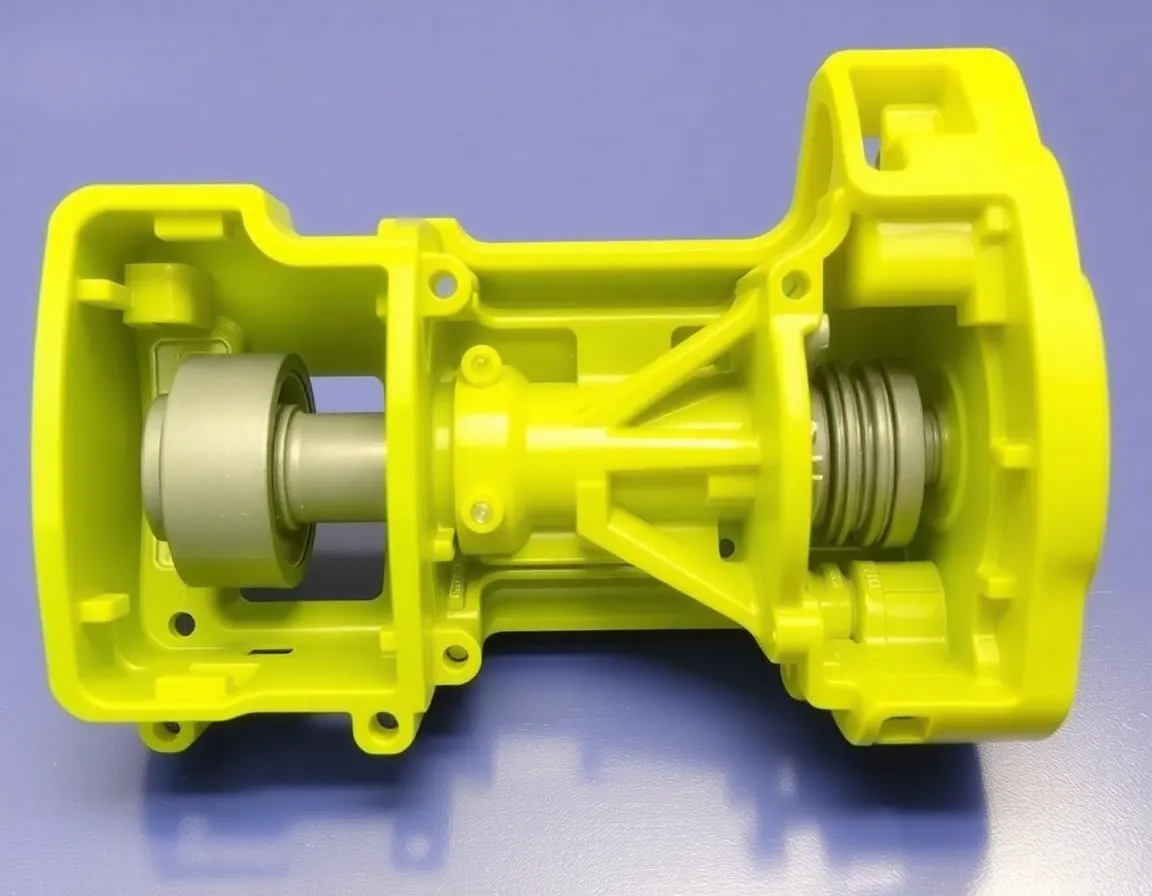
자동차 조명의 진화: 기능에서 형태로
수십 년 동안 자동차 조명은 순수한 기능적 구성 요소, 즉 할로겐 전구를 담는 단순한 유리 렌즈였습니다. 오늘날 그것은 차량 디자인, 안전 및 브랜드 정체성의 중요한 요소입니다. 기본 조명에서 적응형 헤드라이트, 매트릭스 LED, 레이저 조명과 같은 고급 시스템으로의 전환은 제조 정밀도에 전례 없는 요구를 부과했습니다. 이 변혁의 중심에는 복잡하고 광학적으로 투명하며 매우 내구성 있는 구성 요소의 생산을 가능하게 하는 사출 성형의 전문 분야인 자동차 조명 시스템 몰딩, 가 있습니다. 이 기사는 정밀 몰딩이 자동차 조명을 어떻게 혁신하고 있는지 탐구하며, 이 최첨단 산업을 정의하는 기술, 재료, 이점 및 모범 사례를 다룹니다.
자동차 조명 시스템 몰딩이란 무엇인가?
자동차 조명 시스템 몰딩은 차량 조명 어셈블리(헤드램프, 테일 라이트, 안개등, 방향 지시등, 실내 분위기 조명 포함)에 사용되는 플라스틱 부품을 사출 성형을 통해 제조하는 공정을 말합니다. 표준 플라스틱 몰딩과 달리, 이 분야는 광학적 투명성, 치수 안정성, 열 및 환경 스트레스에 대한 장기 내성을 달성하기 위해 극도의 정밀도를 요구합니다.
생산되는 부품은 다음과 같습니다:
- 렌즈 및 커버 – 내부 전자 장치를 보호하면서 광 출력을 유도하는 투명 또는 반투명 부품.
- 반사경 및 라이트 가이드 – LED 또는 레이저의 빛을 채널링하고 집중시키는 광학 요소.
- 하우징 및 베젤 – 장착 지점과 환경 밀봉을 제공하는 구조 부품.
- 방열판 및 열 관리 부품 – 고출력 LED에서 열을 방출하는 데 중요합니다.
이 공정은 일반적으로 엔지니어링 등급 열가소성 플라스틱 예: 폴리카보네이트(PC), 폴리메틸메타크릴레이트(PMMA), 폴리에테르이미드(PEI)를 사용합니다. 이러한 재료는 높은 광 투과율, UV 안정성, 내충격성을 제공하며, 이는 자동차 응용 분야에 필수적인 특성입니다.
정밀 몰딩의 차이점
표준 사출 성형은 ±0.1mm의 공차를 달성할 수 있지만, 자동차 조명은 훨씬 더 엄격한 사양을 요구합니다. 조명 시스템용 정밀 몰딩은 일반적으로 ±0.01mm 이상의 공차를 달성합니다. 이 수준의 정확도는 광학적 왜곡을 방지하고, 균일한 광 분포를 보장하며, 복잡한 형상에서 일관된 벽 두께를 유지하는 데 필요합니다. 이 정밀도가 없으면 사소한 결함조차도 핫스팟, 눈부심 또는 광효율 저하를 유발할 수 있습니다—안전과 미학을 모두 손상시킵니다.
정밀 사출 성형의 작동 원리: 기술 및 공정
자동차 조명 부품의 생산은 기계 설계, 재료 과학, 공정 제어의 정교한 상호 작용을 수반합니다. 아래는 이 분야에서 정밀 성형을 가능하게 하는 핵심 기술 기둥입니다.
고성능 사출 성형 기계
자동차 조명에 사용되는 현대식 성형 기계에는 서보 전기 구동 장치 및 폐쇄 루프 제어 시스템. 이러한 기능을 통해 전체 사이클 동안 사출 속도, 압력 및 온도를 정밀하게 제어할 수 있습니다. 광학 부품의 경우 기계는 용융 온도를 ±2°C 이내로 유지하여 황변 또는 헤이즈를 유발할 수 있는 재료 열화를 방지해야 합니다.
고급 금형 설계 및 제조
금형은 정밀 성형에서 가장 중요한 요소입니다. 조명 부품의 경우 금형은 일반적으로 경화 공구강 또는 베릴륨 구리 합금 으로 만들어져 높은 사출 압력과 열 사이클을 견딥니다. 주요 설계 고려 사항은 다음과 같습니다:
- Multi-cavitation and hot runner systems – To ensure uniform filling and reduce material waste.
- Conformal cooling channels – 3D-printed cooling lines that follow the part geometry for faster, more uniform cooling.
- Surface finishes – Mirror-polished cavities (Ra < 0.01 µm) for lenses to achieve optical clarity.
Material Selection and Drying
Polycarbonate and PMMA are hygroscopic—they absorb moisture from the air. Even trace amounts of water can cause hydrolysis during molding, leading to bubbles, streaks, or reduced mechanical strength. Precision molding requires desiccant dryers that reduce moisture content to below 0.02% before processing. Additionally, materials are often compounded with UV stabilizers and impact modifiers to meet automotive durability standards.
Process Monitoring and Quality Control
Real-time monitoring systems track variables such as cavity pressure, melt temperature, and injection velocity. Many manufacturers employ statistical process control (SPC) 결함 부품이 생산되기 전에 편차를 감지하기 위함입니다. 사출 후 검사에는 종종 좌표 측정기(CMM), 광학 프로파일러, 광 투과율 테스트가 포함되어 치수 및 광학 사양을 검증합니다.
자동차 조명을 위한 정밀 사출 성형의 주요 이점
정밀 사출 성형의 채택은 자동차 제조업체와 조명 공급업체에게 여러 가지 혁신적인 이점을 제공했습니다.
우수한 광학 성능
정밀 사출 성형된 렌즈와 라이트 가이드는 거의 0에 가까운 복굴절 및 최소한의 표면 결함을 나타냅니다. 이는 균일한 광 분포, 로우빔 헤드라이트의 더 선명한 컷오프 라인, 그리고 마주 오는 차량에 대한 눈부심 감소를 초래합니다. 개별 LED가 독립적으로 제어되는 매트릭스 LED 시스템의 경우, 광학 정밀도는 각 광 픽셀이 정확하게 방향을 잡도록 보장합니다.
설계 자유도 및 통합
사출 성형은 유리나 금속으로는 불가능한 복잡한 형상을 허용합니다. 설계자는 스냅핏 마운트, 정렬 리브, 방열판 핀 과 같은 기능을 플라스틱 부품에 직접 통합하여 조립 단계와 전체 무게를 줄일 수 있습니다. 이는 구조적 무결성을 유지하면서 0.5mm만큼 얇을 수 있는 라이트 가이드의 박막 사출 성형 에 특히 유용합니다.
향상된 내구성 및 수명
자동차 조명 부품은 극한의 온도(-40°C ~ 120°C), 자외선, 도로 염분, 기계적 진동을 견뎌야 합니다. UV 안정화 폴리카보네이트 또는 PMMA로 만든 정밀 사출 성형 부품은 황변, 균열 또는 박리 없이 차량 수명 동안 지속될 수 있습니다. precise control of residual stress during molding also prevents warpage and stress cracking over time.
Cost Efficiency at Scale
While precision molding requires higher upfront investment in molds and machinery, it delivers significant cost savings in high-volume production. Cycle times for lighting components can be as low as 30–60 seconds, and multi-cavity molds can produce dozens of parts per cycle. The reduction in secondary operations (such as polishing or coating) further lowers per-unit costs.
Applications Across Modern Vehicle Lighting Systems
Precision molding is enabling the next generation of automotive lighting technologies. Below are some of the most impactful applications.
Adaptive Front-Lighting Systems (AFS)
AFS headlights pivot and adjust beam patterns based on steering angle, vehicle speed, and weather conditions. The optical lenses and reflectors in these systems require ultra-precise contours to create dynamic beam shapes without mechanical linkages. Precision molding allows for the production of freeform reflectors that can be tailored to specific vehicle models.
Matrix LED and Micro-LED Headlights
Matrix headlights use arrays of individually addressable LEDs to create high-resolution light patterns that can selectively block glare for oncoming vehicles. The collimating lenses and light guides in these systems demand micron-level accuracy to ensure that each LED's light is focused into a narrow, controlled beam. Precision molding is the only cost-effective method to produce these complex optical arrays at scale.
OLED Tail Lights and Signal Lamps
Organic light-emitting diodes (OLEDs) offer uniform, diffuse illumination that is ideal for tail lights. The encapsulation and light distribution layers for OLED panels are often produced via precision injection molding to achieve the required thinness and optical homogeneity. The result is a distinctive, high-end lighting signature that enhances brand recognition.
Ambient Interior Lighting
Modern vehicles feature ambient lighting strips that run across dashboards, door panels, and footwells. These systems rely on extruded or injection-molded light guides that distribute light from a single LED source. Precision molding ensures consistent brightness and color along the entire length of the guide, even in curved or contoured shapes.
Best Practices for Automotive Lighting Molding
To achieve the highest quality results, manufacturers must adhere to a set of proven best practices throughout the design and production process.
제조 가능성 설계(DFM)
Collaboration between lighting designers and molding engineers is essential from the concept stage. Key DFM principles include:
- Uniform wall thickness – Variations in thickness cause differential shrinkage and optical distortion. Aim for a thickness range of 2–4 mm for most lighting components.
- Draft angles – A minimum of 1–2° per side is required for easy part ejection without surface damage.
- Rib and boss design – Avoid sharp corners that create stress concentrations; use radii of at least 0.5 mm.
- Gate placement – Position gates to avoid flow lines in optically critical areas. Submarine or edge gates are common for lenses.
Mold Maintenance and Cleaning
Optical molds require meticulous care. After each production run, cavities must be cleaned with non-abrasive solvents to remove residual polymer and any deposits. Regular inspection for wear or damage is critical, as even a microscopic scratch on the mold surface will be replicated on every part. Many manufacturers schedule preventive maintenance every 50,000–100,000 cycles.
Process Optimization and Validation
Before full-scale production, a design of experiments (DOE) should be conducted to determine optimal processing parameters—including melt temperature, injection speed, holding pressure, and cooling time. Validation steps include:
- First article inspection (FAI) – Full dimensional and optical testing of the initial production run.
- Capability studies (CpK) – Statistical analysis to ensure the process can consistently meet tolerances.
- Accelerated aging tests – Exposure to UV, heat, and humidity to confirm long-term performance.
Material Handling and Traceability
Given the critical safety function of lighting, material lot traceability is mandatory. Each batch of resin should be logged with its supplier, lot number, and date of receipt. Contamination control is equally vital—dedicated drying hoppers and conveying systems prevent cross-contamination with other plastics.
The Future of Precision Molding in Auto Lighting
As vehicle lighting continues to evolve toward digital light processing (DLP) 및 holographic projection, the demands on molding technology will only increase. Emerging trends include the use of liquid silicone rubber (LSR) for flexible light guides, two-shot molding for combining clear and opaque materials in a single part, and 금형 내 장식(IMD) to integrate logos or patterns directly into the lens.
Furthermore, the rise of electric and autonomous vehicles is creating new opportunities. With fewer cooling grilles and engine components, the front end of vehicles is becoming a canvas for lighting design. Precision molding will enable seamless integration of lighting into bumpers, pillars, and even the vehicle's glass roof.
Conclusion
Automotive lighting system molding has evolved from a secondary manufacturing process into a core competency for modern vehicle production. Through the combination of advanced materials, high-precision machinery, and rigorous process control, manufacturers can produce optical components that meet the exacting standards of safety, durability, and aesthetics demanded by today's market. As lighting technology continues to push boundaries—from adaptive beams to interactive communication with pedestrians—precision molding will remain the enabling force behind every illuminated surface on the road. For automakers and suppliers alike, investing in this capability is not just a competitive advantage; it is a prerequisite for leadership in the future of mobility.