
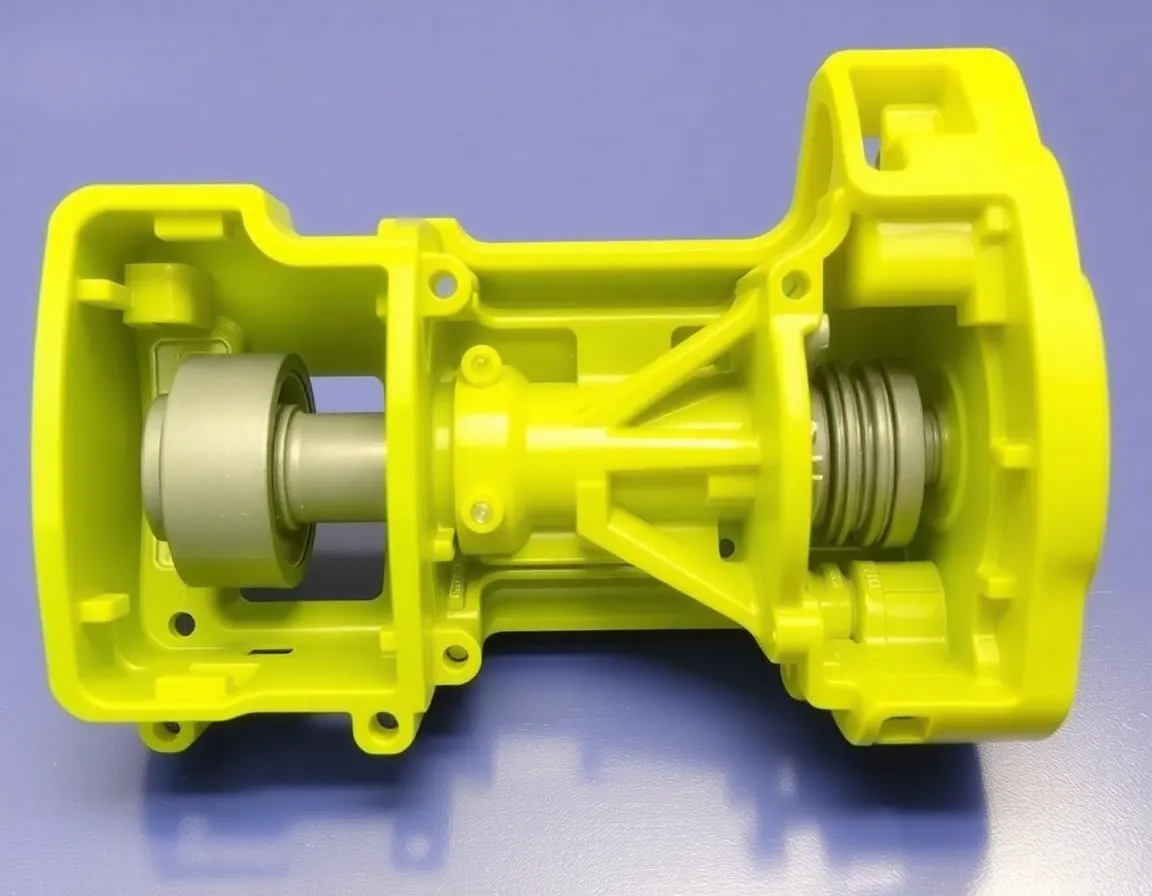
تطور إضاءة السيارات: من الوظيفة إلى الشكل
لعقود من الزمن، كانت إضاءة السيارات مجرد مكون وظيفي بحت—عدسة زجاجية بسيطة تحتوي على مصباح هالوجين. اليوم، أصبحت عنصرًا حاسمًا في تصميم المركبات وسلامتها وهوية العلامة التجارية. وقد فرض التحول من الإضاءة الأساسية إلى الأنظمة المتقدمة مثل المصابيح الأمامية المتكيفة، ومصابيح LED المصفوفية، وإضاءة الليزر متطلبات غير مسبوقة على دقة التصنيع. في قلب هذا التحول تكمن قولبة نظام إضاءة السيارات, ، وهو مجال متخصص في القولبة بالحقن يتيح إنتاج مكونات معقدة وواضحة بصريًا ومتينة للغاية. تستكشف هذه المقالة كيف تُحدث القولبة الدقيقة ثورة في إضاءة السيارات، وتغطي التكنولوجيا والمواد والفوائد وأفضل الممارسات التي تحدد هذه الصناعة المتطورة.
ما هي قولبة نظام إضاءة السيارات؟
تشير قولبة نظام إضاءة السيارات إلى عملية تصنيع المكونات البلاستيكية المستخدمة في تجميعات إضاءة المركبات—بما في ذلك المصابيح الأمامية والمصابيح الخلفية ومصابيح الضباب وإشارات الانعطاف والإضاءة المحيطة الداخلية—من خلال القولبة بالحقن. على عكس القولبة البلاستيكية القياسية، يتطلب هذا التخصص دقة متناهية لتحقيق وضوح بصري واستقرار أبعادي ومقاومة طويلة الأمد للإجهاد الحراري والبيئي.
تشمل المكونات المنتجة:
- العدسات والأغطية – أجزاء شفافة أو شبه شفافة تحمي الإلكترونيات الداخلية مع توجيه خرج الضوء.
- العاكسات وموجهات الضوء – عناصر بصرية تقوم بتوجيه وتركيز الضوء من مصابيح LED أو الليزر.
- الأغلفة والحواف – مكونات هيكلية توفر نقاط التثبيت والإغلاق البيئي.
- المشتتات الحرارية وأجزاء الإدارة الحرارية – ضرورية لتبديد الحرارة من مصابيح LED عالية الطاقة.
تستخدم العملية عادةً لدائن حرارية بدرجة هندسية مثل البولي كربونات (PC)، وpolymethyl methacrylate (PMMA)، وpolyetherimide (PEI). توفر هذه المواد نفاذية ضوء عالية، وثباتًا ضد الأشعة فوق البنفسجية، ومقاومة للصدمات—وهي خصائص أساسية لتطبيقات السيارات.
فرق القولبة الدقيقة
يمكن أن يحقق القولبة بالحقن القياسية تفاوتات تبلغ ±0.1 مم، لكن إضاءة السيارات تتطلب مواصفات أكثر صرامة بكثير. القولبة الدقيقة لأنظمة الإضاءة تحقق عادةً تفاوتات تبلغ ±0.01 مم أو أفضل. هذا المستوى من الدقة ضروري لمنع التشوهات البصرية، وضمان توزيع الضوء بشكل موحد، والحفاظ على سمك جدار ثابت عبر الأشكال الهندسية المعقدة. بدون هذه الدقة، حتى العيوب البسيطة يمكن أن تخلق نقاطًا ساخنة، أو وهجًا، أو تقلل من كفاءة الإضاءة—مما يعرض السلامة والجماليات للخطر.
كيف تعمل القولبة الدقيقة: التكنولوجيا والعملية
يتضمن إنتاج مكونات إضاءة السيارات تفاعلًا متطورًا بين تصميم الماكينة، وعلوم المواد، والتحكم في العملية. فيما يلي الركائز التكنولوجية الرئيسية التي تمكن القولبة الدقيقة في هذا المجال.
آلات القولبة بالحقن عالية الأداء
آلات القولبة الحديثة المستخدمة لإضاءة السيارات مجهزة بـ محركات مؤازرة كهربائية و أنظمة تحكم ذات حلقة مغلقة. تسمح هذه الميزات بالتحكم الدقيق في سرعة الحقن، والضغط، ودرجة الحرارة طوال الدورة. بالنسبة للمكونات البصرية، يجب أن تحافظ الآلات على درجة حرارة الذوبان ضمن ±2 درجة مئوية لمنع تدهور المواد الذي قد يسبب الاصفرار أو الضبابية.
تصميم وتصنيع القوالب المتقدمة
القالب هو العامل الأكثر أهمية في القولبة الدقيقة. بالنسبة لمكونات الإضاءة، تُصنع القوالب عادةً من الفولاذ الأدواتي المقسى أو سبائك البريليوم والنحاس لتحمل ضغوط الحقن العالية والدورات الحرارية. تشمل اعتبارات التصميم الرئيسية:
- أنظمة التجويف المتعدد والسباقات الساخنة – لضمان تعبئة موحدة وتقليل هدر المواد.
- قنوات التبريد المطابقة – خطوط تبريد مطبوعة ثلاثية الأبعاد تتبع هندسة الجزء لتبريد أسرع وأكثر تجانسًا.
- تشطيبات السطح – تجاويف مصقولة كالمرآة (Ra < 0.01 ميكرومتر) للعدسات لتحقيق وضوح بصري.
اختيار المواد والتجفيف
البولي كربونات و PMMA مواد استرطابية—تمتص الرطوبة من الهواء. حتى الكميات الضئيلة من الماء يمكن أن تسبب التحلل المائي أثناء القولبة، مما يؤدي إلى فقاعات أو خطوط أو انخفاض في القوة الميكانيكية. يتطلب القولبة الدقيقة مجففات بمجفف ماص that reduce moisture content to below 0.02% before processing. Additionally, materials are often compounded with UV stabilizers and impact modifiers to meet automotive durability standards.
Process Monitoring and Quality Control
Real-time monitoring systems track variables such as cavity pressure, melt temperature, and injection velocity. Many manufacturers employ statistical process control (SPC) to detect deviations before they produce defective parts. Post-molding inspection often includes coordinate measuring machines (CMM), optical profilometers, and light transmission testing to verify dimensional and optical specifications.
Key Benefits of Precision Molding for Automotive Lighting
The adoption of precision molding has unlocked several transformative advantages for automakers and lighting suppliers.
Superior Optical Performance
Precision-molded lenses and light guides exhibit near-zero birefringence and minimal surface defects. This results in uniform light distribution, sharper cutoff lines for low-beam headlights, and reduced glare for oncoming traffic. For matrix LED systems, where individual LEDs are controlled independently, optical precision ensures that each pixel of light is accurately directed.
حرية التصميم والتكامل
Injection molding allows for complex geometries that are impossible with glass or metal. Designers can integrate features such as snap-fit mounts, alignment ribs, and heat sink fins directly into the plastic part, reducing assembly steps and overall weight. This is particularly valuable for قولبة الجدران الرقيقة of light guides, which can be as thin as 0.5 mm while maintaining structural integrity.
Enhanced Durability and Longevity
Automotive lighting components must withstand extreme temperatures (from -40°C to 120°C), UV radiation, road salts, and mechanical vibration. Precision-molded parts made from UV-stabilized polycarbonate or PMMA can last the lifetime of the vehicle without yellowing, cracking, or delaminating. The precise control of residual stress during molding also prevents warpage and stress cracking over time.
Cost Efficiency at Scale
While precision molding requires higher upfront investment in molds and machinery, it delivers significant cost savings in high-volume production. Cycle times for lighting components can be as low as 30–60 seconds, and multi-cavity molds can produce dozens of parts per cycle. The reduction in secondary operations (such as polishing or coating) further lowers per-unit costs.
Applications Across Modern Vehicle Lighting Systems
Precision molding is enabling the next generation of automotive lighting technologies. Below are some of the most impactful applications.
Adaptive Front-Lighting Systems (AFS)
AFS headlights pivot and adjust beam patterns based on steering angle, vehicle speed, and weather conditions. The optical lenses and reflectors in these systems require ultra-precise contours to create dynamic beam shapes without mechanical linkages. Precision molding allows for the production of freeform reflectors that can be tailored to specific vehicle models.
Matrix LED and Micro-LED Headlights
Matrix headlights use arrays of individually addressable LEDs to create high-resolution light patterns that can selectively block glare for oncoming vehicles. The collimating lenses and light guides in these systems demand micron-level accuracy to ensure that each LED's light is focused into a narrow, controlled beam. Precision molding is the only cost-effective method to produce these complex optical arrays at scale.
OLED Tail Lights and Signal Lamps
Organic light-emitting diodes (OLEDs) offer uniform, diffuse illumination that is ideal for tail lights. The encapsulation and light distribution layers for OLED panels are often produced via precision injection molding to achieve the required thinness and optical homogeneity. The result is a distinctive, high-end lighting signature that enhances brand recognition.
Ambient Interior Lighting
Modern vehicles feature ambient lighting strips that run across dashboards, door panels, and footwells. These systems rely on extruded or injection-molded light guides that distribute light from a single LED source. Precision molding ensures consistent brightness and color along the entire length of the guide, even in curved or contoured shapes.
Best Practices for Automotive Lighting Molding
To achieve the highest quality results, manufacturers must adhere to a set of proven best practices throughout the design and production process.
التصميم للتصنيع (DFM)
Collaboration between lighting designers and molding engineers is essential from the concept stage. Key DFM principles include:
- Uniform wall thickness – Variations in thickness cause differential shrinkage and optical distortion. Aim for a thickness range of 2–4 mm for most lighting components.
- Draft angles – A minimum of 1–2° per side is required for easy part ejection without surface damage.
- Rib and boss design – Avoid sharp corners that create stress concentrations; use radii of at least 0.5 mm.
- Gate placement – Position gates to avoid flow lines in optically critical areas. Submarine or edge gates are common for lenses.
Mold Maintenance and Cleaning
Optical molds require meticulous care. After each production run, cavities must be cleaned with non-abrasive solvents to remove residual polymer and any deposits. Regular inspection for wear or damage is critical, as even a microscopic scratch on the mold surface will be replicated on every part. Many manufacturers schedule preventive maintenance every 50,000–100,000 cycles.
Process Optimization and Validation
Before full-scale production, a design of experiments (DOE) should be conducted to determine optimal processing parameters—including melt temperature, injection speed, holding pressure, and cooling time. Validation steps include:
- First article inspection (FAI) – Full dimensional and optical testing of the initial production run.
- Capability studies (CpK) – Statistical analysis to ensure the process can consistently meet tolerances.
- Accelerated aging tests – Exposure to UV, heat, and humidity to confirm long-term performance.
Material Handling and Traceability
Given the critical safety function of lighting, material lot traceability is mandatory. Each batch of resin should be logged with its supplier, lot number, and date of receipt. Contamination control is equally vital—dedicated drying hoppers and conveying systems prevent cross-contamination with other plastics.
The Future of Precision Molding in Auto Lighting
As vehicle lighting continues to evolve toward digital light processing (DLP) و holographic projection, the demands on molding technology will only increase. Emerging trends include the use of liquid silicone rubber (LSR) for flexible light guides, two-shot molding for combining clear and opaque materials in a single part, and الزخرفة داخل القالب (IMD) to integrate logos or patterns directly into the lens.
Furthermore, the rise of electric and autonomous vehicles is creating new opportunities. With fewer cooling grilles and engine components, the front end of vehicles is becoming a canvas for lighting design. Precision molding will enable seamless integration of lighting into bumpers, pillars, and even the vehicle's glass roof.
Conclusion
Automotive lighting system molding has evolved from a secondary manufacturing process into a core competency for modern vehicle production. Through the combination of advanced materials, high-precision machinery, and rigorous process control, manufacturers can produce optical components that meet the exacting standards of safety, durability, and aesthetics demanded by today's market. As lighting technology continues to push boundaries—from adaptive beams to interactive communication with pedestrians—precision molding will remain the enabling force behind every illuminated surface on the road. For automakers and suppliers alike, investing in this capability is not just a competitive advantage; it is a prerequisite for leadership in the future of mobility.