
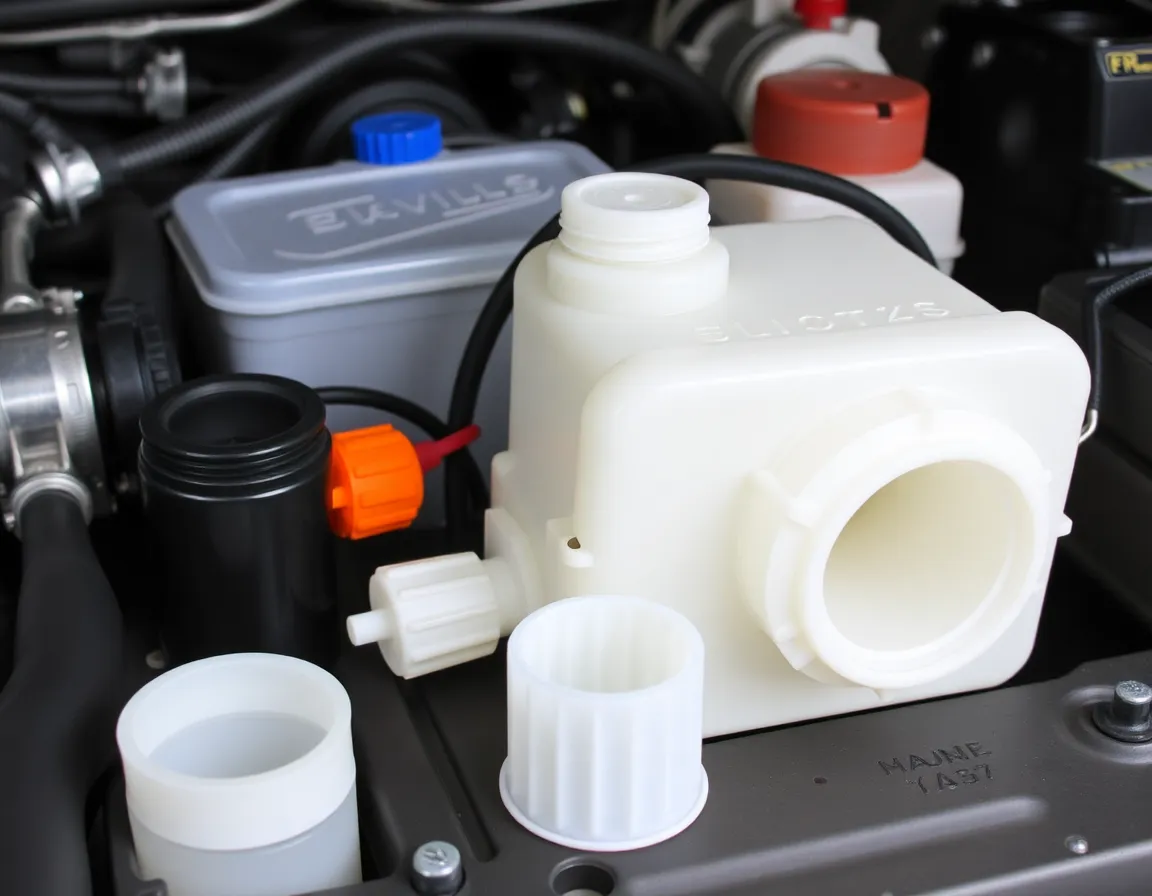
Introduzione: La Chiave Nascosta per l'Efficienza dei VE
Mentre i veicoli elettrici (VE) continuano a rimodellare il panorama automobilistico, un fattore critico rimane in cima ai pensieri di produttori e conducenti: l'autonomia. Mentre la capacità della batteria e l'efficienza del motore spesso rubano la scena, una tecnologia più silenziosa e fondamentale si sta rivelando un punto di svolta. Parti di gestione termica automobilistica—i sistemi sofisticati che regolano la temperatura in tutto il veicolo—sono ora riconosciuti come componenti essenziali per massimizzare l'autonomia di guida. Infatti, una scarsa gestione termica può sprecare fino al 30-40% dell'energia della batteria di un VE in climi estremi. Questo articolo esplora cinque modi specifici in cui le parti termiche intelligenti stanno aumentando l'autonomia dei VE, approfondendo la tecnologia, i suoi benefici e le applicazioni nel mondo reale.
1. Sistemi Intelligenti di Gestione Termica della Batteria (BTMS)
Il pacco batteria è il cuore di qualsiasi veicolo elettrico e le sue prestazioni sono estremamente sensibili alla temperatura. Le celle agli ioni di litio operano in modo ottimale entro una finestra ristretta, tipicamente tra 20°C e 40°C (68°F e 104°F). Quando le temperature si discostano, la resistenza interna aumenta, riducendo la capacità utilizzabile e accelerando il degrado. I componenti intelligenti di gestione termica affrontano questa sfida direttamente.
Come funzionano il raffreddamento e il riscaldamento a liquido attivi
I veicoli elettrici moderni impiegano sistemi di gestione termica a liquido attivi che fanno circolare una miscela di refrigerante attraverso canali integrati nel pacco batteria. A differenza dei sistemi passivi che si affidano al raffreddamento ad aria, i sistemi intelligenti utilizzano sensori e algoritmi predittivi per controllare con precisione il flusso e la temperatura del refrigerante. Ad esempio, durante la ricarica rapida, il sistema può pre-raffreddare la batteria per assorbire il calore intenso generato, consentendo alla sessione di ricarica di mantenere la potenza di picco più a lungo. Al contrario, in condizioni di freddo, riscaldatori resistivi o sistemi a pompa di calore riscaldano la batteria alla temperatura ottimale prima di iniziare la guida.
Impatto sull'autonomia e vantaggi
Mantenendo la batteria alla sua temperatura ideale, i componenti BTMS intelligenti possono recuperare 15-25% dell'autonomia persa in condizioni di freddo estremo rispetto ai veicoli senza gestione termica attiva. Nei climi caldi, prevengono il thermal throttling, in cui il sistema di gestione della batteria limita la potenza per evitare il surriscaldamento. Ciò significa che i conducenti possono fare affidamento su prestazioni costanti indipendentemente dalle condizioni meteorologiche. Inoltre, questi sistemi prolungano la durata della batteria riducendo lo stress termico, che indirettamente preserva l'autonomia nel corso della vita del veicolo.
Migliori pratiche per l'implementazione
- Utilizzare pompe e valvole a velocità variabile per ridurre al minimo il consumo energetico parassita mantenendo un controllo preciso.
- Integrare con il sistema di navigazione del veicolo per pre-condizionare la batteria in base al percorso e alle fermate di ricarica.
- Employ phase-change materials (PCMs) in the battery pack to passively absorb heat spikes, reducing load on the active system.
2. High-Efficiency Heat Pump Systems for Cabin and Powertrain
Cabin heating has historically been a major drain on EV range, especially in cold climates. Traditional resistive heaters can consume 3-5 kW of power, effectively reducing range by 30-40% in winter. Smart thermal management parts, particularly heat pump systems, offer a transformative solution.
How Heat Pumps Differ from Resistive Heaters
A heat pump uses a refrigeration cycle to transfer heat from the ambient air, the powertrain, or the battery to the cabin. Instead of generating heat directly from electricity, it moves existing heat—much like an air conditioner in reverse. This process is highly efficient, achieving a coefficient of performance (COP) of 2 to 4, meaning for every 1 kW of electrical energy input, it delivers 2-4 kW of heat. In contrast, a resistive heater has a COP of just 1.
Range Recovery and System Integration
Modern heat pump systems are integrated with the entire thermal loop of the EV. They can scavenge waste heat from the electric motor, inverter, and battery to warm the cabin. For example, the Tesla Model Y and Hyundai Ioniq 5 use advanced heat pump architectures that recover heat from the drivetrain and even the ambient air. This integration can recover 10-30% of range in cold-weather driving compared to vehicles using resistive heaters alone. In mild conditions, the heat pump can also function as a reversible system, providing cooling with minimal energy penalty.
Applications and Future Trends
- Multi-zone thermal management allows the heat pump to prioritize cabin comfort or battery heating based on driver needs.
- Vapor injection technology improves heat pump performance in extremely cold temperatures (below -10°C).
- Integration with smart thermostats enables pre-conditioning while the vehicle is plugged in, using grid power instead of battery energy.
3. Smart Thermal Interface Materials (TIMs) for Component Efficiency
Beyond the battery and cabin, individual electronic components like inverters, DC-DC converters, and onboard chargers generate significant heat. If this heat is not efficiently dissipated, these components must throttle performance, leading to energy losses. Smart thermal interface materials (TIMs) are advanced parts that improve heat transfer between components and cooling systems.
The Role of Gap Fillers, Pads, and Phase-Change TIMs
Traditional TIMs like thermal grease are static and can degrade over time. Smart TIMs include phase-change materials that liquefy at specific temperatures to fill microscopic air gaps, dramatically reducing thermal resistance. Others use graphite-based or ceramic-filled polymers that offer high thermal conductivity while electrically insulating sensitive electronics. By ensuring that heat flows rapidly away from power modules, these materials allow components to operate at peak efficiency without derating.
How This Boosts Range
Every watt of power lost as heat in the inverter or motor is a watt that does not reach the wheels. By reducing thermal resistance by 20-40%, smart TIMs enable higher power density and lower energy conversion losses. For example, a silicon carbide (SiC) inverter with optimized TIMs can achieve 99% efficiency, compared to 97% with older materials. Over a typical driving cycle, this translates to a 2-5% improvement in overall range. While this may seem modest, it compounds with other thermal improvements.
Best Practices for Selection and Application
- Match TIM properties to the component’s heat flux—high-power modules require high-conductivity materials, while low-power sensors can use standard pads.
- Use automated dispensing systems to ensure consistent thickness and coverage, avoiding air voids.
- Consider reliability in thermal cycling—phase-change TIMs can self-heal after repeated heating and cooling.
4. Predictive Thermal Control via Software and IoT
The hardware is only half the story. The true intelligence of modern thermal management lies in software-defined control algorithms that anticipate thermal needs before they arise. These systems use data from temperature sensors, ambient weather forecasts, GPS routes, and driving history to optimize thermal operations.
How Predictive Algorithms Work
Imagine an EV approaching a fast-charging station. The predictive thermal controller analyzes the remaining distance, outside temperature, and battery state of charge. It then adjusts the cooling system to pre-cool the battery to an optimal temperature for charging, all while minimizing energy consumption. Similarly, on a cold morning, the system can pre-heat the cabin and battery using grid power while the vehicle is plugged in, preserving battery energy for driving. This anticipatory logic is far more efficient than reactive control, which only responds after a temperature deviation occurs.
Range Benefits and Real-World Examples
Automakers like Tesla, Ford, and BMW have adopted predictive thermal control in their latest models. Tesla’s “Octovalve” system, for instance, uses a single smart valve to direct coolant flow between battery, motor, and cabin circuits based on real-time conditions. This reduces energy waste by 5-10% compared to fixed routing systems. Additionally, over-the-air updates allow these algorithms to improve over time, meaning the vehicle becomes more efficient without hardware changes.
Applications and Data Integration
- Cloud-based thermal models can predict thermal loads based on traffic and elevation data.
- Machine learning can adapt thermal strategies to individual driving habits, such as frequent short trips versus long highway commutes.
- V2G (Vehicle-to-Grid) integration uses thermal management to optimize battery health during grid services.
5. Lightweight and Compact Thermal Components
Every kilogram of weight in an EV reduces range, and thermal management systems have traditionally been heavy. Smart thermal parts are now being designed with lightweight materials and compact geometries to minimize this penalty while maintaining or improving performance.
Material Innovations: Aluminum, Composites, and 3D Printing
Traditional radiators and heat exchangers are made from copper and brass, which are heavy. Modern smart thermal parts use aluminum micro-channel tubes that provide higher surface area for heat transfer while weighing 30-50% less. Carbon-fiber-reinforced polymer housings replace metal casings in pumps and valves, reducing weight further. Additive manufacturing (3D printing) allows for complex internal geometries that optimize fluid flow, reducing the size of components like coolant manifolds and oil coolers.
Weight Reduction and Range Impact
Reducing the weight of the thermal management system by 10-15 kg can improve range by approximately 1-2% on a typical EV. While this seems small, it is achieved without sacrificing thermal performance. For example, a lightweight, compact heat exchanger can still dissipate the same amount of heat as a heavier traditional unit. When combined with other efficiency gains, these savings add up. Moreover, smaller components free up space for larger battery packs, which directly increases range.
Best Practices for Design and Integration
- Use topology optimization software to design minimal-weight brackets and housings that meet structural requirements.
- Integrate thermal parts into structural elements, such as using the battery case as a heat sink.
- Consider lifecycle costs—lightweight materials may cost more initially but save energy over the vehicle’s lifetime.
Conclusion: The Future of EV Range Is Thermal
As electric vehicles continue to evolve, the role of parti di gestione termica automobilistica will only grow in importance. From intelligent battery cooling and high-efficiency heat pumps to advanced thermal interface materials and predictive software, these smart components are quietly but powerfully extending EV range. For manufacturers, investing in these technologies is no longer optional—it is a competitive necessity. For drivers, understanding these systems means appreciating that every mile of range is the result of a carefully orchestrated thermal dance. The next time you see an EV with impressive range numbers, remember: it’s not just the battery that makes it possible—it’s the smart thermal parts working tirelessly behind the scenes.