
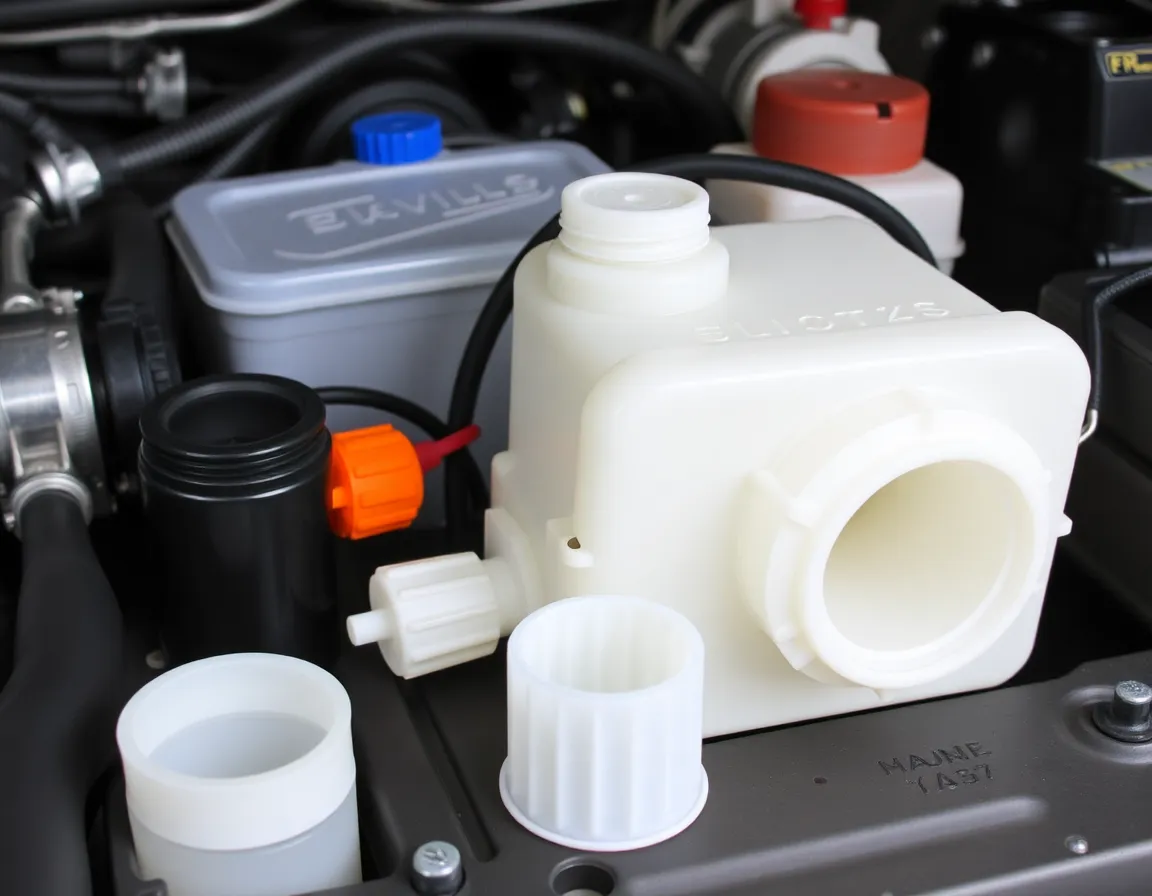
Введение: Скрытый ключ к эффективности электромобилей
Поскольку электромобили (ЭМ) продолжают менять автомобильный ландшафт, один критический фактор остается главным для производителей и водителей: запас хода. В то время как емкость аккумулятора и эффективность двигателя часто привлекают внимание, более тихая, более фундаментальная технология оказывается революционной. Детали терморегулирования для автомобилей— сложные системы, регулирующие температуру по всему автомобилю, — теперь признаны важнейшими компонентами для максимального увеличения запаса хода. Фактически, плохое управление температурой может привести к потере до 30-40% энергии аккумулятора электромобиля в экстремальных климатических условиях. В этой статье рассматриваются пять конкретных способов, с помощью которых интеллектуальные термодетали повышают запас хода электромобиля, с углублением в технологию, ее преимущества и реальные применения.
1. Интеллектуальные системы управления температурой аккумулятора (BTMS)
Аккумуляторный блок является сердцем любого электромобиля, и его производительность очень чувствительна к температуре. Литий-ионные элементы работают оптимально в узком диапазоне, обычно от 20°C до 40°C (от 68°F до 104°F). При отклонении температуры внутреннее сопротивление увеличивается, снижая полезную емкость и ускоряя деградацию. Интеллектуальные термодетали решают эту проблему напрямую.
Как работают активное жидкостное охлаждение и нагрев
Современные электромобили используют активные жидкостные системы управления температурой которые циркулируют охлаждающую смесь по каналам, встроенным в аккумуляторный блок. В отличие от пассивных систем, полагающихся на воздушное охлаждение, интеллектуальные системы используют датчики и прогностические алгоритмы для точного управления потоком и температурой охлаждающей жидкости. Например, во время быстрой зарядки система может предварительно охладить аккумулятор, чтобы поглотить интенсивное выделяемое тепло, позволяя сеансу зарядки поддерживать пиковую мощность дольше. И наоборот, в холодную погоду резистивные нагреватели или системы теплового насоса нагревают аккумулятор до оптимальной температуры перед началом движения.
Влияние на запас хода и преимущества
Поддерживая аккумулятор при идеальной температуре, интеллектуальные компоненты BTMS могут восстановить 15-25% запаса хода потерянного в сильный холод, по сравнению с автомобилями без активного управления температурой. В жарком климате они предотвращают тепловое ограничение, при котором система управления аккумулятором ограничивает мощность во избежание перегрева. Это означает, что водители могут рассчитывать на стабильную производительность независимо от погоды. Кроме того, эти системы продлевают срок службы аккумулятора, снижая тепловое напряжение, что косвенно сохраняет запас хода на протяжении всего срока службы автомобиля.
Лучшие практики внедрения
- Используйте насосы и клапаны с переменной скоростью для минимизации паразитного потребления энергии при сохранении точного контроля.
- Интегрируйте с навигационной системой автомобиля для предварительной подготовки аккумулятора с учетом маршрута и остановок для зарядки.
- Использовать материалы с фазовым переходом (PCM) в аккумуляторном блоке для пассивного поглощения пиков тепла, снижая нагрузку на активную систему.
2. Высокоэффективные тепловые насосы для салона и силовой установки
Отопление салона исторически было основным фактором снижения запаса хода электромобиля, особенно в холодном климате. Традиционные резистивные нагреватели могут потреблять 3-5 кВт мощности, фактически снижая запас хода на 30-40% зимой. Умные компоненты терморегулирования, особенно системы тепловых насосов, предлагают преобразующее решение.
Чем тепловые насосы отличаются от резистивных нагревателей
Тепловой насос использует холодильный цикл для передачи тепла от окружающего воздуха, силовой установки или аккумулятора в салон. Вместо прямого преобразования электроэнергии в тепло, он перемещает существующее тепло — как кондиционер наоборот. Этот процесс очень эффективен, достигая коэффициента преобразования (COP) от 2 до 4, что означает, что на каждый 1 кВт потребляемой электроэнергии он выдает 2-4 кВт тепла. В отличие от этого, резистивный нагреватель имеет COP всего 1.
Восстановление запаса хода и системная интеграция
Современные системы тепловых насосов интегрированы со всем тепловым контуром электромобиля. Они могут улавливать отработанное тепло от электродвигателя, инвертора и аккумулятора для обогрева салона. Например, Tesla Model Y и Hyundai Ioniq 5 используют передовые архитектуры тепловых насосов, которые восстанавливают тепло от трансмиссии и даже из окружающего воздуха. Такая интеграция может восстановить 10-30% запаса хода при движении в холодную погоду по сравнению с автомобилями, использующими только резистивные нагреватели. В мягких условиях тепловой насос также может работать как обратимая система, обеспечивая охлаждение с минимальными энергетическими потерями.
Applications and Future Trends
- Multi-zone thermal management allows the heat pump to prioritize cabin comfort or battery heating based on driver needs.
- Vapor injection technology improves heat pump performance in extremely cold temperatures (below -10°C).
- Integration with smart thermostats enables pre-conditioning while the vehicle is plugged in, using grid power instead of battery energy.
3. Smart Thermal Interface Materials (TIMs) for Component Efficiency
Beyond the battery and cabin, individual electronic components like inverters, DC-DC converters, and onboard chargers generate significant heat. If this heat is not efficiently dissipated, these components must throttle performance, leading to energy losses. Smart thermal interface materials (TIMs) are advanced parts that improve heat transfer between components and cooling systems.
The Role of Gap Fillers, Pads, and Phase-Change TIMs
Traditional TIMs like thermal grease are static and can degrade over time. Smart TIMs include phase-change materials that liquefy at specific temperatures to fill microscopic air gaps, dramatically reducing thermal resistance. Others use graphite-based or ceramic-filled polymers that offer high thermal conductivity while electrically insulating sensitive electronics. By ensuring that heat flows rapidly away from power modules, these materials allow components to operate at peak efficiency without derating.
How This Boosts Range
Every watt of power lost as heat in the inverter or motor is a watt that does not reach the wheels. By reducing thermal resistance by 20-40%, smart TIMs enable higher power density and lower energy conversion losses. For example, a silicon carbide (SiC) inverter with optimized TIMs can achieve 99% efficiency, compared to 97% with older materials. Over a typical driving cycle, this translates to a 2-5% improvement in overall range. While this may seem modest, it compounds with other thermal improvements.
Best Practices for Selection and Application
- Match TIM properties to the component’s heat flux—high-power modules require high-conductivity materials, while low-power sensors can use standard pads.
- Use automated dispensing systems to ensure consistent thickness and coverage, avoiding air voids.
- Consider reliability in thermal cycling—phase-change TIMs can self-heal after repeated heating and cooling.
4. Predictive Thermal Control via Software and IoT
The hardware is only half the story. The true intelligence of modern thermal management lies in software-defined control algorithms that anticipate thermal needs before they arise. These systems use data from temperature sensors, ambient weather forecasts, GPS routes, and driving history to optimize thermal operations.
How Predictive Algorithms Work
Imagine an EV approaching a fast-charging station. The predictive thermal controller analyzes the remaining distance, outside temperature, and battery state of charge. It then adjusts the cooling system to pre-cool the battery to an optimal temperature for charging, all while minimizing energy consumption. Similarly, on a cold morning, the system can pre-heat the cabin and battery using grid power while the vehicle is plugged in, preserving battery energy for driving. This anticipatory logic is far more efficient than reactive control, which only responds after a temperature deviation occurs.
Range Benefits and Real-World Examples
Automakers like Tesla, Ford, and BMW have adopted predictive thermal control in their latest models. Tesla’s “Octovalve” system, for instance, uses a single smart valve to direct coolant flow between battery, motor, and cabin circuits based on real-time conditions. This reduces energy waste by 5-10% compared to fixed routing systems. Additionally, over-the-air updates allow these algorithms to improve over time, meaning the vehicle becomes more efficient without hardware changes.
Applications and Data Integration
- Cloud-based thermal models can predict thermal loads based on traffic and elevation data.
- Machine learning can adapt thermal strategies to individual driving habits, such as frequent short trips versus long highway commutes.
- V2G (Vehicle-to-Grid) integration uses thermal management to optimize battery health during grid services.
5. Lightweight and Compact Thermal Components
Every kilogram of weight in an EV reduces range, and thermal management systems have traditionally been heavy. Smart thermal parts are now being designed with lightweight materials and compact geometries to minimize this penalty while maintaining or improving performance.
Material Innovations: Aluminum, Composites, and 3D Printing
Traditional radiators and heat exchangers are made from copper and brass, which are heavy. Modern smart thermal parts use aluminum micro-channel tubes that provide higher surface area for heat transfer while weighing 30-50% less. Carbon-fiber-reinforced polymer housings replace metal casings in pumps and valves, reducing weight further. Additive manufacturing (3D printing) allows for complex internal geometries that optimize fluid flow, reducing the size of components like coolant manifolds and oil coolers.
Weight Reduction and Range Impact
Reducing the weight of the thermal management system by 10-15 kg can improve range by approximately 1-2% on a typical EV. While this seems small, it is achieved without sacrificing thermal performance. For example, a lightweight, compact heat exchanger can still dissipate the same amount of heat as a heavier traditional unit. When combined with other efficiency gains, these savings add up. Moreover, smaller components free up space for larger battery packs, which directly increases range.
Best Practices for Design and Integration
- Use topology optimization software to design minimal-weight brackets and housings that meet structural requirements.
- Integrate thermal parts into structural elements, such as using the battery case as a heat sink.
- Consider lifecycle costs—lightweight materials may cost more initially but save energy over the vehicle’s lifetime.
Conclusion: The Future of EV Range Is Thermal
As electric vehicles continue to evolve, the role of автомобильные детали для терморегулирования will only grow in importance. From intelligent battery cooling and high-efficiency heat pumps to advanced thermal interface materials and predictive software, these smart components are quietly but powerfully extending EV range. For manufacturers, investing in these technologies is no longer optional—it is a competitive necessity. For drivers, understanding these systems means appreciating that every mile of range is the result of a carefully orchestrated thermal dance. The next time you see an EV with impressive range numbers, remember: it’s not just the battery that makes it possible—it’s the smart thermal parts working tirelessly behind the scenes.