
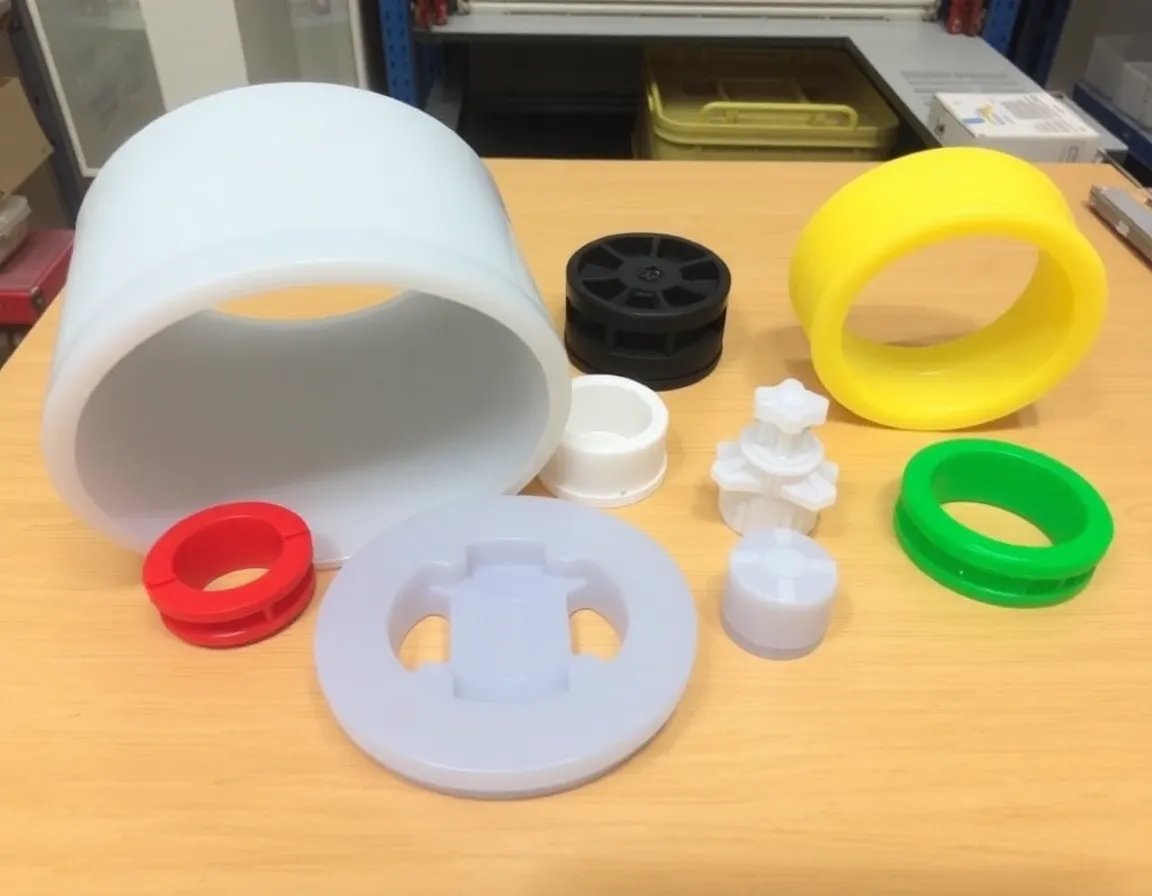
Эволюция литья пластиковых деталей для силовых агрегатов
Автомобильная промышленность переживает глубокую трансформацию, обусловленную двойными императивами топливной эффективности и производительности. В основе этой эволюции лежит критически важная инженерная дисциплина: Литье пластиковых деталей для силовых агрегатов. Эта специализированная область включает проектирование и производство пластиковых компонентов для двигателя, трансмиссии и трансмиссионных систем с использованием передовых методов литья под давлением. Традиционно в силовых агрегатах доминировали тяжелые металлы, такие как чугун и алюминий, но сейчас они переживают революцию снижения веса, где высокоэффективные пластики заменяют металлические детали для снижения веса, улучшения топливной экономичности и снижения выбросов. Эта статья исследует тонкости литья пластиковых деталей для силовых агрегатов, его технологические основы, преимущества, применения и лучшие практики для достижения оптимальных результатов.
Литье пластиковых деталей для силовых агрегатов — это не просто замена металла пластиком; это требует глубокого понимания материаловедения, термодинамики и машиностроения. Компоненты в среде силового агрегата подвергаются воздействию экстремальных температур, высоких давлений, агрессивных жидкостей и постоянной вибрации. Поэтому используемые пластики должны быть разработаны так, чтобы выдерживать эти суровые условия, обеспечивая при этом снижение веса и гибкость конструкции, которые металлы не могут обеспечить. Результатом является класс компонентов, которые легче, долговечнее и часто более экономичны, чем их металлические предшественники.
Как работает литье пластмасс для силовых агрегатов
Выбор материалов для высокопроизводительных применений
Основой успешного литья пластмасс для силовых агрегатов является выбор материала. В отличие от товарных пластмасс, используемых для внутренней отделки, компоненты силовых агрегатов требуют инженерных термопластов с исключительными свойствами. Обычные материалы включают:
- Полиамид (ПА) 6 и 66: Известен отличной механической прочностью, термостойкостью и химической стойкостью к маслам и охлаждающим жидкостям. Часто армируется стекловолокном для повышения жесткости.
- Полифталамид (PPA): Обеспечивает более высокую термостойкость, чем стандартные нейлоны, что делает его идеальным для компонентов двигателя вблизи камеры сгорания.
- Полифениленсульфид (PPS): Обеспечивает выдающуюся химическую стойкость и размерную стабильность при высоких температурах, используется в деталях трансмиссии и топливной системы.
- Полиэфирэфиркетон (PEEK): Высокоэффективный полимер, используемый для экстремальных условий, таких как уплотнения и подшипники в трансмиссиях.
- Термопласты, армированные длинным волокном (LFRT): Обеспечивают превосходную ударную вязкость и ползучесть для конструкционных компонентов, таких как масляные поддоны и крышки двигателя.
The molding process begins with drying the plastic pellets to remove moisture, which can cause defects like bubbles or weakness. The pellets are then fed into a heated barrel, melted, and injected under high pressure into a precision-machined steel mold. The mold is designed to replicate the exact geometry of the part, including complex features like internal channels, mounting bosses, and snap-fits. After injection, the plastic is allowed to cool and solidify before the mold opens and the part is ejected.
Advanced Molding Techniques for Powertrain Parts
Powertrain plastic molding often employs specialized techniques to meet stringent requirements. Insert molding is common, where metal inserts—such as threaded nuts or bushings—are placed into the mold before injection, allowing the plastic to form around them. This creates a strong, leak-proof bond for mounting points. Литьё поверх is another technique, where a soft-touch or sealing material is molded over a rigid plastic substrate, useful for gaskets or vibration-dampening features.
For complex geometries like intake manifolds or air ducts, gas-assisted injection molding is used. In this process, nitrogen gas is injected into the molten plastic to create hollow sections, reducing weight and material usage while maintaining structural integrity. Two-shot molding allows for the combination of different materials in a single cycle, enabling components with integrated seals or color-coded connectors.
Key Benefits of Plastic in the Powertrain
Снижение веса и топливная эффективность
The most significant advantage of powertrain plastic molding is weight reduction. Plastics are approximately 40-60% lighter than aluminum and up to 80% lighter than steel. Every kilogram saved in the powertrain has a multiplicative effect: lighter components reduce the load on the engine, transmission, and suspension, further improving efficiency. For internal combustion engines, a 10% reduction in vehicle weight can improve fuel economy by 6-8%. In electric vehicles (EVs), weight reduction directly translates to increased range, making plastic molding a critical enabler for next-generation mobility.
Свобода дизайна и интеграция
Plastic injection molding allows for complex geometries that are impossible or prohibitively expensive with metal casting or machining. Engineers can design parts with intricate internal channels for coolant or oil flow, integrated mounting points, and aerodynamic profiles that reduce parasitic losses. This design freedom enables parts consolidation, where multiple metal components can be replaced by a single plastic part. For example, a plastic intake manifold can integrate the air filter housing, resonance chambers, and sensor mounts into one unit, reducing assembly time, cost, and potential leak points.
Corrosion Resistance and NVH Reduction
Unlike metals, plastics are inherently resistant to corrosion from coolants, oils, and road salts. This extends the lifespan of components and reduces maintenance costs. Additionally, plastics have excellent damping properties, absorbing vibrations and reducing noise, vibration, and harshness (NVH). This is particularly beneficial for engine covers, oil pans, and transmission housings, where metal parts can transmit noise and vibration into the cabin. Plastic components contribute to a quieter, more comfortable driving experience.
Cost Efficiency and Sustainability
Powertrain plastic molding offers significant cost advantages over metal fabrication. Injection molding is a high-volume, automated process with short cycle times (often 30-60 seconds per part). Tooling costs are lower than die-casting dies, and the ability to consolidate parts reduces assembly labor and inventory. Furthermore, many engineering plastics are recyclable, and the lightweight nature of plastic parts reduces fuel consumption throughout the vehicle’s life, lowering its overall carbon footprint. Emerging bio-based and recycled-content plastics are further enhancing the sustainability profile of these components.
Applications of Powertrain Plastic Molding
Engine Components
Plastic has made significant inroads into the engine bay. Intake manifolds are one of the most common applications, where glass-filled nylon provides the strength to withstand hot air and vacuum pressures while offering a smooth interior surface for optimal airflow. Engine covers и camshaft covers are now almost exclusively plastic, providing aesthetic appeal, noise insulation, and oil-tight seals. Oil pans are increasingly made from reinforced plastics, replacing stamped steel or cast aluminum. These plastic oil pans are lighter, corrosion-resistant, and can be designed with integrated baffles and oil level sensors.
Other engine applications include coolant pumps with plastic impellers and housings, timing chain guides made from wear-resistant PPA, and throttle bodies with integrated plastic components. Even turbocharger air ducts are now molded from high-temperature plastics like PPS to handle the extreme heat and pressure of forced induction systems.
Transmission and Drivetrain Parts
Modern automatic and dual-clutch transmissions rely on plastic components for their hydraulic control systems. Valve bodies и solenoid housings are molded from PPA or PPS to maintain dimensional stability under high oil pressures and temperatures. Transmission oil pans are another growing application, offering weight savings and the ability to integrate filters and baffles. Seal rings и thrust washers made from PEEK or other high-performance plastics reduce friction and wear in gearboxes.
In the drivetrain, plastic is used for transfer case components, differential covers, и driveshaft center bearings. The shift toward electric drivetrains has opened new opportunities: plastic housings for electric motors и inverters are being developed to reduce weight while providing electrical insulation and thermal management.
Powertrain Cooling and Fluid Management
The thermal management system is a major area for plastic molding. Water pump housings, thermostat housings, и coolant expansion tanks are commonly made from glass-reinforced nylon. These parts must withstand constant exposure to high-temperature coolant and pressure cycles. Oil cooler housings и transmission fluid lines are also increasingly plastic, using materials like PA12 for its flexibility and chemical resistance. Heat exchangers with plastic end caps and manifolds are lighter and less prone to galvanic corrosion than all-metal designs.
Best Practices for Powertrain Plastic Molding
Design for Manufacturing (DFM)
Successful powertrain plastic molding begins with design for manufacturing. Engineers must consider the flow of molten plastic, cooling rates, and shrinkage. Wall thickness should be uniform to prevent sink marks and warpage. Sharp corners should be avoided; generous radii reduce stress concentrations and improve mold filling. Draft angles of 1-3 degrees are essential for easy part ejection. For metal inserts, proper knurling or undercuts must be designed to ensure a secure mechanical bond.
Process Control and Quality Assurance
Given the critical nature of powertrain components, process control is paramount. Mold temperature, injection speed, packing pressure, and cooling time must be precisely monitored and controlled. Mold flow analysis software is used to simulate the injection process, identifying potential issues like air traps, weld lines, or incomplete fill. In-process sensors can detect variations in viscosity or pressure, allowing real-time adjustments. Post-molding, parts undergo rigorous testing, including dimensional inspection, leak testing, burst pressure testing, and thermal cycling to ensure reliability under extreme conditions.
Обращение с материалами и сушка
Engineering plastics are hygroscopic, meaning they absorb moisture from the air. Proper drying is essential to prevent hydrolysis during molding, which can degrade the polymer and cause weak parts. Drying ovens or desiccant dryers must be used to reduce moisture content to manufacturer-recommended levels (often below 0.1%). The dried material should be kept in sealed hoppers and used within a specified time window to avoid re-absorption.
Supplier Collaboration and Validation
Developing powertrain plastic parts requires close collaboration between the OEM, the molder, and the material supplier. Early supplier involvement ensures that material selection, mold design, and processing parameters are optimized for the application. Prototyping using rapid tooling or 3D printing can validate part function before committing to production tooling. Validation testing should simulate the full lifecycle of the part, including thermal aging, chemical exposure, and mechanical fatigue. Compliance with industry standards such as ISO 9001, IATF 16949, and specific OEM specifications is mandatory.
The Future of Powertrain Plastic Molding
The trend toward electrification is reshaping the landscape of powertrain plastic molding. While internal combustion engines will remain relevant for years, the growth of electric vehicles is driving demand for new plastic applications. Battery pack housings, electric motor stators, and power electronics enclosures all require materials that combine electrical insulation, thermal conductivity, and flame retardancy. Thermally conductive plastics are being developed to dissipate heat from batteries and inverters, replacing metal heat sinks.
Additionally, additive manufacturing (3D printing) is beginning to complement injection molding for low-volume production and complex tooling. Hybrid approaches, where 3D-printed inserts are used in injection molds, are reducing lead times. The continued development of sustainable materials, including bio-based polymers and chemically recycled plastics, will further enhance the environmental credentials of powertrain plastic molding.
In conclusion, powertrain plastic molding is a cornerstone of lightweight innovation in the automotive industry. By combining advanced materials, sophisticated molding techniques, and rigorous quality control, manufacturers are creating components that are lighter, stronger, and more efficient than ever before. As the industry moves toward cleaner and more efficient vehicles, the role of plastic in the powertrain will only continue to expand, driving the next generation of automotive engineering.