
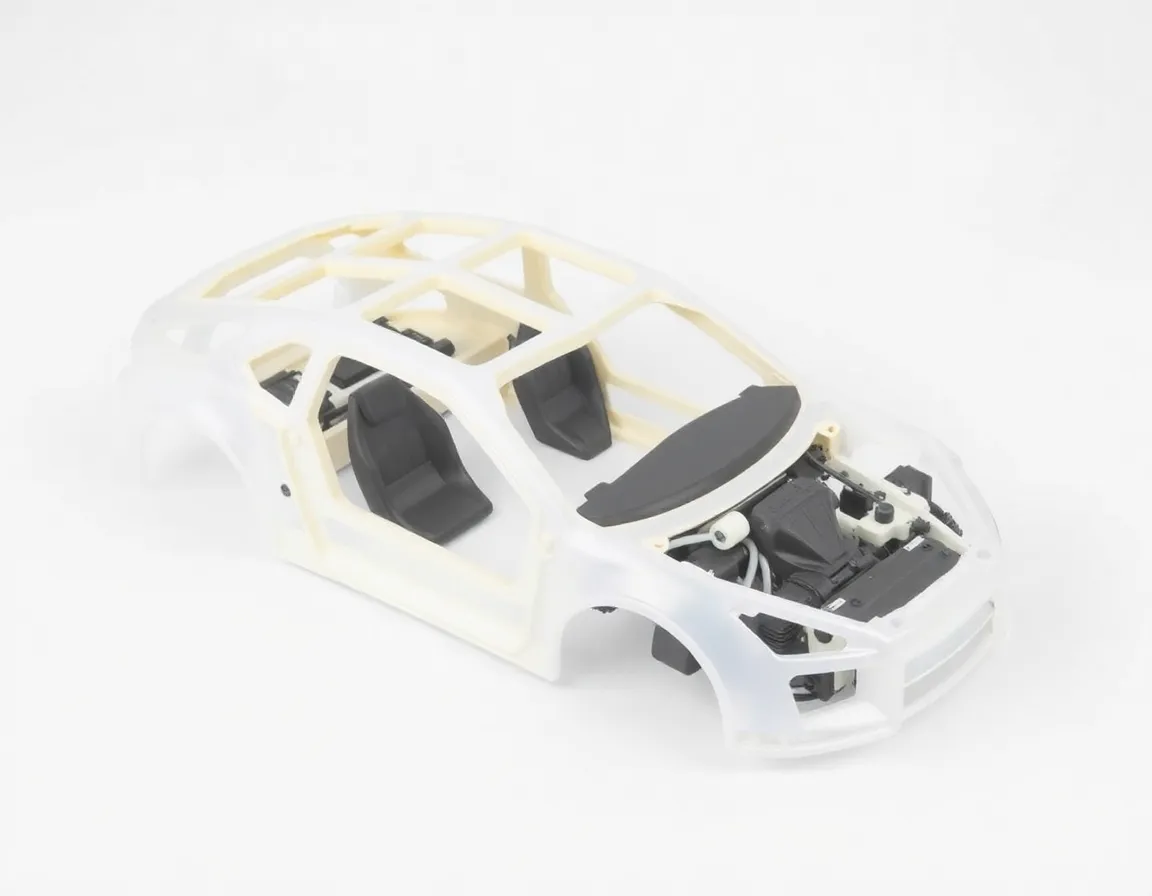
The Evolution of Automotive Interiors: A New Era of Manufacturing
The automotive industry is undergoing a profound transformation, and nowhere is this more visible than inside the vehicle cabin. Car interior component manufacturing has shifted from a focus on simple utility and cost reduction to a complex discipline balancing luxury, sustainability, technology, and safety. As vehicles become mobile living spaces and second offices, the demand for high-quality, intelligent, and eco-friendly interiors has never been higher. This article explores five critical trends shaping the future of how car interiors are designed, engineered, and produced.
Trend 1: Sustainable Materials and Circular Economy Integration
Environmental concerns and stringent regulations are driving a radical shift in material sourcing for interior components. Manufacturers are moving away from virgin plastics and animal-based leathers toward bio-based, recycled, and recyclable materials. This trend is not merely about marketing; it is a fundamental change in the supply chain and production processes.
Что это такое и как это работает
Sustainable material manufacturing involves the use of alternatives such as vegan leathers made from cactus, apple peels, or mushrooms, as well as recycled polyester from ocean plastics and PET bottles. For structural components, natural fibers like hemp, flax, and kenaf are replacing glass fibers in door panels and dashboards. The process requires close collaboration with chemical suppliers to ensure these materials meet strict automotive standards for UV resistance, durability, and flame retardancy.
Преимущества и применение
- Reduced Carbon Footprint: Using recycled materials can lower CO2 emissions by up to 60% compared to virgin plastics.
- End-of-Life Recyclability: Mono-material designs (e.g., all-polyester seat covers and foams) simplify disassembly and recycling.
- Brand Differentiation: Premium manufacturers like BMW (using recycled fishing nets) and Mercedes-Benz (using mushroom-based leather) are leveraging sustainability as a key selling point.
Applications range from seat upholstery and carpeting to center console trims and headliners. The challenge remains in scaling production while maintaining cost parity with traditional materials.
Trend 2: Smart Surfaces and Human-Machine Interface (HMI) Integration
The traditional dashboard with separate gauges, buttons, and knobs is rapidly disappearing. Smart surfaces are turning interior components into interactive, digital canvases. This trend merges decorative trim with functional electronics, creating a seamless user experience.
Что это такое и как это работает
Smart surfaces are manufactured by embedding capacitive touch sensors, haptic feedback modules, and LED lighting directly behind or within decorative materials like wood, metal, or leather. Advanced manufacturing techniques such as in-mold electronics (IME) and 3D printed electronics allow circuits to be printed onto thermoformable films, which are then molded into the final component. This eliminates the need for separate switch assemblies and wiring harnesses.
Преимущества и применение
- Minimalist Design: Clean, uninterrupted surfaces that appear inert until touched, activating backlit icons or controls.
- Improved Ergonomics: Haptic feedback provides tactile confirmation without looking away from the road.
- Weight Reduction: Eliminating mechanical switches and wiring can reduce component weight by up to 30%.
Key applications include center stacks, steering wheel controls, door panels with window switches, and ambient lighting strips that double as notification systems. Best practices involve rigorous testing for durability, as these surfaces must withstand extreme temperatures, UV exposure, and thousands of touch cycles.
Trend 3: Modular Architecture and Simplified Assembly
As vehicle platforms become electrified and shared across multiple models, interior component manufacturing is adopting modular design principles. This approach standardizes core structures while allowing for high levels of customization in visible surfaces.
Что это такое и как это работает
Modularity in interior manufacturing involves creating a common "cockpit module" or "door module" that houses all electronics, airbag systems, and structural supports. Trim pieces, seat covers, and decorative elements are then attached as snap-on or clip-in components on the final assembly line. Advanced injection molding with multi-shot capabilities allows for the production of a single part with hard structural plastic, soft-touch surfaces, and integrated seals in one cycle.
Преимущества и применение
- Faster Production: Pre-assembled modules can be installed in minutes rather than hours.
- Lower Inventory Costs: Common base modules reduce the number of unique part numbers.
- Easier Customization: Automakers can offer dozens of color and material combinations without retooling the entire production line.
Best practices include designing for robust snap-fit connections to avoid screws and adhesives, and using digital twin simulations to verify assembly sequences before physical tooling is created. This trend is particularly critical for electric vehicle startups that need to rapidly scale production.
Trend 4: Advanced Lighting and Ambient Experience Engineering
Lighting has evolved from a simple functional necessity to a core element of interior design and brand identity. Ambient lighting systems are now complex, multi-zone installations that interact with vehicle functions, driver state, and infotainment systems.
Что это такое и как это работает
Manufacturing advanced lighting involves integrating RGB LEDs, light guides, and diffusers into trim panels, door cards, and dashboards. The latest trend is "surface lighting," where light is distributed evenly across large areas using micro-optical structures etched into plastic films. These components are produced using precision injection molding with light-guiding polymers and are often combined with opaque overmolding to create sharp, defined light lines.
Преимущества и применение
- Personalization: Users can select from millions of colors and dynamic effects (e.g., pulsing to match music).
- Safety Communication: Lighting can warn of blind-spot objects, guide navigation turns, or indicate charging status.
- Wellness: Circadian rhythm lighting adjusts color temperature to reduce driver fatigue on long journeys.
Applications are expanding beyond traditional footwell and door pocket lighting to include illuminated speaker grilles, glowing seatbelt buckles, and holographic head-up displays projected onto the windshield. Manufacturing best practices demand strict quality control for color consistency and brightness uniformity across all parts.
Trend 5: Lightweighting and Structural Integration
Reducing vehicle weight is critical for extending electric vehicle range and improving fuel efficiency. Consequently, interior components are being redesigned to serve dual purposes: aesthetic trim and structural support. This structural integration trend is revolutionizing how parts are engineered.
Что это такое и как это работает
Manufacturers are using carbon fiber composites, magnesium alloys, and high-strength polypropylene foams to replace heavier steel and traditional plastics. Injection molding processes like foaming (MuCell) create parts with a solid skin and a cellular core, reducing weight by 15-20% while maintaining stiffness. Additionally, components like seat frames and cross-car beams are being integrated with airbag housings and electronic modules, eliminating separate brackets and fasteners.
Преимущества и применение
- Improved Range: Every kilogram saved in the interior contributes directly to electric vehicle efficiency.
- Enhanced Safety: Advanced composites can absorb more energy in a crash than traditional materials.
- Design Freedom: Lightweight materials allow for thinner, more sculptural forms that were previously impossible.
Key applications include seat structures, instrument panel carriers, door inner panels, and center console frames. Best practices involve using hybrid molding (combining metal inserts with plastic overmolding) and employing computer-aided engineering to optimize material placement for maximum strength with minimal weight.
Conclusion: The Future of Car Interior Manufacturing
The five trends outlined above—sustainable materials, smart surfaces, modular architecture, advanced lighting, and lightweighting—are not isolated developments. They are converging to create a new paradigm for car interior component manufacturing. The factory of the future will be a highly automated, digitally integrated environment where bio-based polymers are injection molded with embedded electronics, and where lighting systems are assembled into clip-on modules that can be swapped in seconds.
For manufacturers, the key to success lies in investing in flexible production systems that can adapt to rapidly changing consumer preferences and regulatory demands. Collaboration between material scientists, electronics engineers, and industrial designers is no longer optional—it is essential. As vehicles continue to evolve into personalized, connected spaces, the quality and innovation of their interiors will be a primary differentiator for automakers worldwide.