
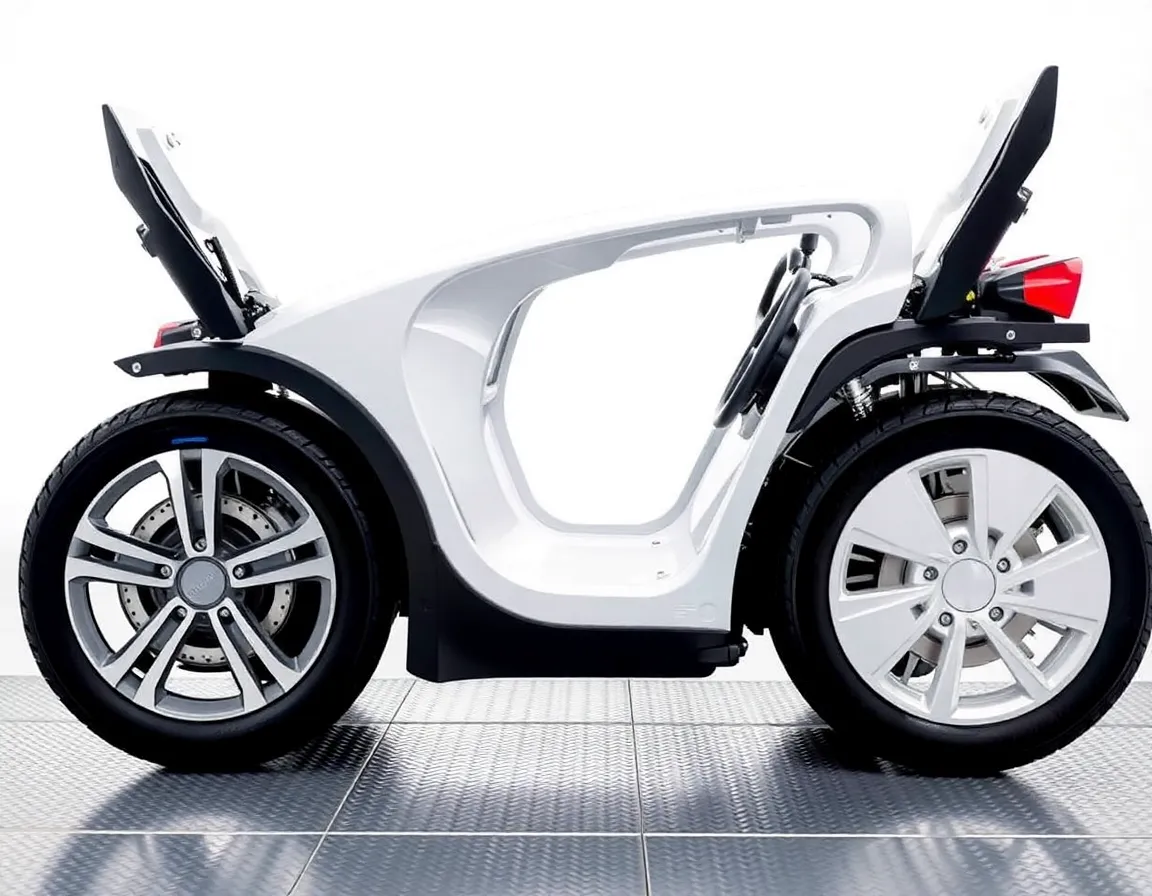
はじめに:ポリマー変革の隠された世界
プラスチックは至る所に存在します。車のダッシュボードからスマートフォンの筐体まで、現代の生活を形作っています。しかし、その普及にもかかわらず、原料の樹脂ペレットから完成した複雑な部品への道のりは、ほとんどの人にとって謎のままです。. アンダー・ザ・フッドのプラスチック製造 とは、ポリマーを高性能部品に変える複雑で、しばしば目に見えないプロセスを指し、主に自動車、航空宇宙、電子機器、医療機器向けです。この記事では、これらの高度な製造技術の幕を開け、業界を牽引する科学、機械、秘密を明らかにします。.
おもちゃの単純な射出成形とは異なり、アンダー・ザ・フッドの製造には、極限の精度、材料強度、耐久性が求められます。部品は、高温、化学薬品への曝露、機械的ストレスに何十年も耐えなければなりません。これには、ポリマー化学、金型設計、プロセス制御に関する深い理解が必要です。これを可能にする中核技術を探ってみましょう。.
中核となる製造プロセス:エンジンルーム
射出成形:精密加工の主力
射出成形は、アンダー・ザ・フッド部品に最も一般的なプロセスです。プラスチックペレットを溶かし、高圧で鋼製の金型に注入します。秘密は 金型設計. にあります。自動車のエンジン部品の場合、金型には均一な固化を確実にし、反りや内部応力を防ぐための複雑な冷却チャネルを組み込む必要があります。高度なシミュレーションソフトウェアが溶融プラスチックの流れを予測し、エンジニアがゲート位置とベントを最適化できるようにします。.
主要パラメータは以下の通りです:
- 溶融温度: ポリマー(例:ナイロン、PEEK)に応じて、通常200°Cから350°Cの間です。.
- 射出圧力: 高粘度材料では2,000 barを超えることがあります。.
- サイクルタイム: 小さな部品で10秒から、大きく肉厚の部品では2分以上に及びます。.
最新の射出成形機は サーボ電動ドライブ を採用し、エネルギー効率と再現性を実現し、±0.01 mmという厳しい公差を達成しています。この精度は、燃料レールコネクタやトランスミッションバルブボディなどの部品にとって重要です。.
押出成形:連続プロファイルとチューブ
押出成形は、ウェザーシール、ワイヤー絶縁、流体ラインなどの連続プラスチックプロファイルを作成するために使用されます。このプロセスでは、プラスチックペレットが溶融され、所望の断面形状のダイを通して押し出されます。高品質な押出成形の秘訣は、 ダイ設計と冷却キャリブレーション. です。冷却ホースなどのエンジンルーム内用途では、プラスチックは多層で共押出される必要があります(例:耐薬品性のためのナイロンバリア層と柔軟性のためのゴム状の外層)。.
主な考慮事項は以下の通りです:
- スクリュー設計: 特殊な混合スクリューにより、均一な溶融と色の分散が保証されます。.
- 冷却トラフ: 精密に制御された水槽が変形を防ぎます。.
- 引取機: Constant tension maintains dimensional accuracy over long lengths.
Blow Molding: Hollow Forms for Fluid Systems
Blow molding is the preferred method for manufacturing hollow plastic parts like fuel tanks, air intake ducts, and windshield washer reservoirs. The process begins with a heated preform (parison) of plastic, which is clamped into a mold. Compressed air (up to 10 bar) inflates the parison against the mold walls. The secret to success is parison programming — controlling the thickness of the parison wall along its length to ensure the final part has uniform strength. For a complex fuel tank, this might involve 100+ thickness adjustments per cycle.
Advanced techniques like 3D blow molding allow for the creation of parts with complex bends and integrated brackets, reducing assembly steps and weight.
Material Science: The Secret Recipe
The plastic itself is only half the story. Under-the-hood components rely on engineering thermoplastics および thermosets that are heavily modified with additives. The selection of the right material is a trade-off between mechanical properties, chemical resistance, thermal stability, and cost.
Common High-Performance Polymers
- Polyamide (Nylon): Excellent strength and heat resistance (up to 160°C). Often glass-filled for increased stiffness. Used in engine covers, intake manifolds.
- Polybutylene Terephthalate (PBT): Good dimensional stability and electrical properties. Common in connectors and sensors.
- Polyetheretherketone (PEEK): A high-end thermoplastic with exceptional chemical resistance and continuous service temperature of 250°C. Used in transmission components and oil pump gears.
- Phenolic Resins (Thermosets): Used for brake pistons and clutch components due to their high heat resistance and low creep.
The Role of Additives
Pure polymers rarely meet the demands of under-the-hood environments. Additives are the secret sauce that transforms basic plastic into a high-performance material.
- Reinforcements: Glass fibers (30-50% by weight) increase tensile strength and reduce thermal expansion. Carbon fibers provide even higher strength but at a premium cost.
- Stabilizers: Heat stabilizers (e.g., copper salts) prevent degradation from engine heat. UV stabilizers protect parts exposed to sunlight.
- Flame Retardants: Essential for electrical components to meet safety standards like UL 94 V-0.
- Lubricants: Reduce friction in moving parts like gears and bushings.
- Impact Modifiers: Rubber particles are added to improve toughness at low temperatures, preventing brittle failure in winter.
Quality Control and Testing: The Unseen Assurance
No secret of manufacturing is more critical than rigorous quality control. A failed plastic part in a braking system or fuel line can have catastrophic consequences. Under-the-hood manufacturers employ a multi-layered testing regime.
In-Process Monitoring
Modern injection molding machines are equipped with キャビティ圧力センサー および temperature probes that provide real-time data. This data is fed into a closed-loop control system that automatically adjusts injection speed, packing pressure, and cooling time to maintain consistency. If a parameter drifts outside the control limits, the machine rejects the part automatically.
Destructive and Non-Destructive Testing
- Dimensional Inspection: Using coordinate measuring machines (CMM) and laser scanners to verify critical dimensions to ±0.05 mm.
- Mechanical Testing: Tensile, flexural, and impact tests are performed on sample parts from every production batch.
- Thermal Cycling: Parts are subjected to temperature extremes (e.g., -40°C to +150°C) to simulate years of use in a few days.
- 耐薬品性: Immersion in oils, coolants, and fuels to ensure no swelling, cracking, or degradation.
- X-Ray and CT Scanning: Used to detect internal voids, weld lines, or foreign inclusions that could cause failure.
Applications: Where the Rubber Meets the Road
自動車パワートレイン
The engine bay is the harshest environment for plastics. Intake manifolds, once made of cast aluminum, are now widely produced from glass-filled nylon. This reduces weight by 40-60% and improves airflow due to smoother internal surfaces. Oil pans made from high-temperature nylon are quieter and more corrosion-resistant than metal. Timing chain guides および water pump impellers rely on plastics for their low friction and wear resistance.
Electrical and Electronic Systems
Modern vehicles contain kilometers of wiring and hundreds of connectors. Plastic housings for ECUs (Engine Control Units), sensors, ,および relays must provide electrical insulation, thermal management, and protection from moisture. Liquid crystal polymer (LCP) is often used for its low moisture absorption and high-temperature stability during soldering.
Fluid Handling Systems
Fuel systems, brake lines, and coolant circuits rely on plastic components. Quick-connect fittings for fuel lines use a combination of rigid nylon and flexible elastomeric seals. Brake fluid reservoirs are blow-molded from polyamide to resist the corrosive effects of brake fluid while providing visibility for fluid level checks.
Best Practices for Manufacturers
To succeed in under-the-hood plastic manufacturing, companies must adopt a holistic approach that integrates design, material selection, and process optimization.
Design for Manufacturing (DFM)
- Uniform wall thickness: Avoid thick sections that cause sink marks and long cycle times. Aim for 2-4 mm for most components.
- Generous radii: Sharp corners create stress concentrations. Use radius of at least 0.5 times the wall thickness.
- Draft angles: 1-3 degrees per side for easy ejection from the mold.
- Rib design: Use ribs for stiffness instead of increasing wall thickness. Rib height should be no more than 3 times the wall thickness.
Tooling Excellence
The mold is the heart of the process. Invest in hardened tool steel (e.g., H13 or S7) for high-volume production. For corrosive materials like glass-filled nylon, use corrosion-resistant coatings like titanium nitride (TiN) or chromium nitride (CrN). コンフォーマル冷却チャンネル, created by 3D-printed mold inserts, can reduce cycle times by up to 30% while improving part quality.
Process Optimization
- Scientific Molding: Use a systematic approach to establish process parameters based on material data and part geometry.
- Moisture Control: Many engineering plastics (e.g., nylon, PET) are hygroscopic. Dry them thoroughly (typically at 80-120°C for 4-8 hours) before processing to prevent hydrolysis and surface defects.
- Regrind Management: Use only virgin material for structural parts. For non-critical components, limit regrind to 10-20% to maintain mechanical properties.
Conclusion: The Future of Under-the-Hood Plastics
The secrets of under-the-hood plastic manufacturing lie in the mastery of materials, the precision of machinery, and the rigor of quality control. As the automotive industry shifts toward electric vehicles (EVs), the demands on plastics are evolving. Battery housings require flame retardancy and thermal management. Lightweight components are essential to offset battery weight. Advanced composites and bio-based polymers are emerging as sustainable alternatives.
Manufacturers who embrace smart factory technologies — including IoT sensors, AI-driven process optimization, and digital twins — will gain a competitive edge. The ability to produce complex, reliable, and cost-effective plastic parts is not just a technical achievement; it is a cornerstone of modern engineering. By understanding what happens under the hood of the manufacturing process itself, we can appreciate the invisible ingenuity that powers the world around us.