
利点

劇的な単価削減

高額な金型コストを数百万個の部品に分散し、個々の部品コストを大幅に削減します。.

比類のない生産速度と効率

短いサイクルタイムと自動化されたプロセスにより、厳しい納期に間に合わせるために大量の部品を迅速に生産します。.

優れた部品の一貫性と品質

精密で再現性のある成形により、すべての部品が最小限のばらつきで正確な仕様を満たします。.

材料と廃棄物の最適化

大量生産プロセスはスクラップ率を低減し、原材料の使用を最大化して、全体的な廃棄物を削減します。.

はじめに:現代の自動車製造におけるスピードと精度の必須性

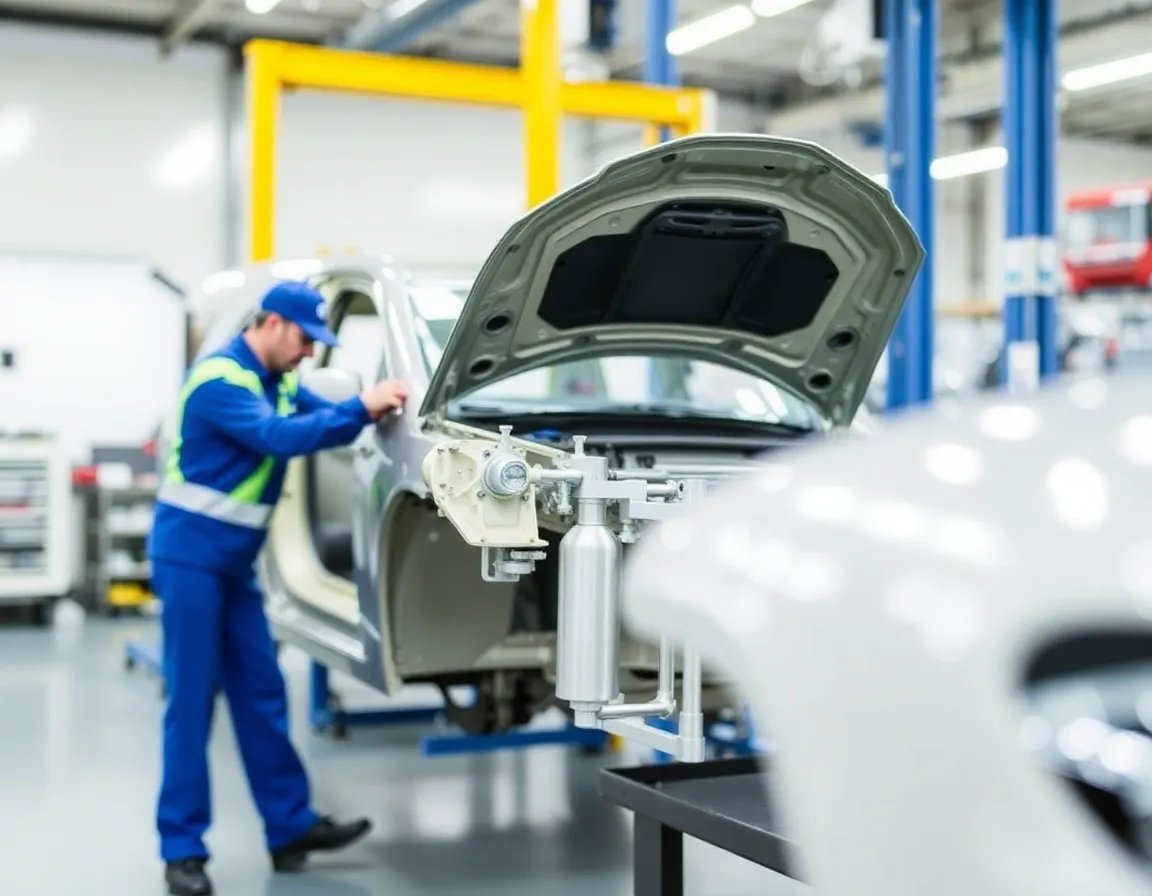
自動車産業は絶え間ない需要のエンジンであり、世界中の組立ラインに合わせたペースで、正確な仕様、ゼロ欠陥、そして数百万個の部品の生産を必要とします。この製造エコシステムの中心にあるのが、 大量生産の自動車部品成形. です。この射出成形の専門分野は、単にプラスチック部品を作ることではなく、高速サイクルタイムと微細な精度という一見矛盾する目標をバランスさせる高度な技術です。ドライバーを迎えるダッシュボードから、ボンネットの下の複雑なエンジンルーム部品まで、大量生産成形は現代の自動車生産を実現可能で収益性の高いものにする静かな主力です。この記事では、この重要な製造プロセスを定義する中核技術、利点、用途、およびベストプラクティスについて詳しく説明します。.

大量生産の自動車部品成形とは何か?

大量生産の自動車部品成形とは、 量産 のプラスチックおよび複合材料部品を、高いサイクルレートで稼働する射出成形機を使用して製造することを指します。試作や少量生産が柔軟性と反復を優先するのに対し、大量生産はスループットを重視して設計されています。このプロセスは通常、多キャビティ金型、ホットランナーシステム、自動化された補助装置を使用して、年間数十万個から数百万個の同一部品を生産します。主な違いは、 再現性への relentless な焦点です。毎日の最初の部品であろうと1万個目の部品であろうと、すべての部品が設計の正確なレプリカでなければなりません。.

中核プロセス:スケールでの射出成形

基本的なプロセスは標準的な射出成形と同じですが、速度のために強化されています。熱可塑性または熱硬化性ポリマーペレットは加熱されたバレルに供給され、溶融され、高圧で鋼またはアルミニウムの金型に射出されます。金型は、射出圧力に耐えるために、数百トンから数千トンの巨大な力でクランプされます。プラスチックが冷却・固化すると、金型が開き、部品が排出されます。大量生産環境では、この全サイクルは、小さな部品の場合、 30秒未満 で完了し、機械は24時間365日稼働します。.

大量生産を可能にする主要技術

必要な速度と精度を達成するために、いくつかの高度な技術が重要です:

  • 多キャビティ金型: 1サイクルで1個の部品を生産する代わりに、金型は2、4、8、16、または32個のキャビティを持つことができます。これにより、サイクルタイムを増やさずに生産量が倍増します。.
  • ホットランナーシステム: これらのシステムは、金型のチャネル内でプラスチックを溶融状態に保ち、毎ショットでランナー(廃材)を排出して再溶融する必要をなくします。これにより、材料を節約し、サイクルタイムを短縮し、部品品質を向上させます。.
  • 高速サーボ駆動機械: Electric and hybrid injection molding machines offer faster platen movement, precise screw positioning, and lower energy consumption compared to hydraulic systems. They are essential for achieving sub-second cycle time reductions.
  • Automation and Robotics: Robots remove finished parts, handle inserts, and perform secondary operations (like trimming or stacking) without human intervention, keeping the molding machine running at peak efficiency.

How Speed and Precision are Achieved Simultaneously

The greatest challenge in high-volume molding is maintaining precision while pushing for faster cycles. Speed introduces thermal and mechanical stresses that can cause warpage, sink marks, or dimensional variation. Mastering this balance requires a holistic engineering approach.

Mold Design and Cooling Optimization

The mold is the single most critical factor. Conformal cooling channels—which follow the exact contour of the part—are designed using advanced simulation software. These channels remove heat much faster and more uniformly than traditional straight-line drilled cooling lines. By reducing the cooling phase (which often accounts for 60-70% of the cycle time), manufacturers can dramatically increase speed without sacrificing part integrity. A well-designed mold can reduce cycle time by 20-30% while improving dimensional stability.

Material Science and Process Control

Not all plastics are created equal for high-speed molding. Materials with high flow characteristics, such as polypropylene (PP), ABS, and polyamide (nylon), are favored because they fill the mold quickly and evenly. Additives, such as glass fibers or mineral fillers, can improve strength but may require hotter barrel temperatures or slower injection speeds to prevent degradation. Precision is maintained through closed-loop process control systems that monitor and adjust injection pressure, temperature, and screw position in real-time, compensating for any variations in material viscosity or ambient conditions.

In-Mold Monitoring and Quality Assurance

To catch defects before they become waste, high-volume lines employ cavity pressure sensors and temperature probes embedded directly in the mold. These sensors provide a "fingerprint" of a good shot. If the pressure curve deviates from the baseline, the system can automatically reject the part or adjust the machine parameters for the next cycle. This level of real-time feedback is essential for maintaining the six-sigma quality levels demanded by automotive OEMs.

Benefits of High Volume Car Part Molding

The shift to high-volume molding is driven by clear, quantifiable advantages that impact the entire supply chain.

Unmatched Cost-Efficiency at Scale

The primary benefit is economies of scale. While the initial investment in a multi-cavity mold and a high-speed machine can be substantial (often hundreds of thousands of dollars), the per-part cost plummets as production volume increases. Faster cycle times mean more parts per hour, reducing labor, energy, and overhead costs per unit. For a component like a clip, bracket, or connector, the cost can be reduced to mere cents.

Consistent Quality and Reduced Scrap

Automated, tightly controlled processes yield remarkably consistent parts. Human error is minimized, and process drift is corrected instantly. This leads to scrap rates below 1% in well-run facilities. For automotive manufacturers, this reliability is non-negotiable, as a single defective part can cause a recall or assembly line stoppage costing millions.

Design Freedom and Part Consolidation

Injection molding allows for complex geometries that would be impossible or prohibitively expensive with metal stamping or machining. Designers can integrate multiple functions—such as clips, bosses, ribs, and snap-fits—into a single molded part. This part consolidation reduces assembly time, inventory, and overall vehicle weight, contributing to fuel efficiency and lower emissions.

Applications Across the Vehicle

High-volume molding touches virtually every system in a modern car. The applications can be categorized into three main areas:

Interior and Exterior Trim

This is the most visible application. High-volume molds produce instrument panels, door panels, center consoles, pillar trims, glove boxes, and cup holders. These parts require a Class A surface finish with no visible flow lines, sinks, or gate marks. Textured molds and in-mold decoration (IMD) processes are often used to create wood, carbon fiber, or metallic finishes without painting.

Under-the-Hood and Powertrain Components

These parts must withstand extreme heat, chemical exposure, and mechanical stress. High-volume molding produces air intake manifolds, engine covers, oil pans, coolant reservoirs, and timing chain guides. These components typically use glass-filled nylon (PA6 or PA66) or PPS (polyphenylene sulfide) for their high thermal and chemical resistance. Precision is critical here, as mating surfaces must seal perfectly against gaskets.

Electrical and Lighting Systems

With the rise of electric vehicles (EVs), the demand for molded electrical components has exploded. High-volume molding produces connectors, housings for battery management systems, sensor housings, and LED headlamp lenses. These parts require extremely tight tolerances (often ±0.01mm) to ensure proper electrical contact and light transmission. Liquid silicone rubber (LSR) molding is also used for high-voltage connectors requiring excellent sealing properties.

Best Practices for Successful High-Volume Molding

Implementing a successful high-volume molding program requires discipline from design through production. Adhering to these best practices can prevent costly mistakes.

Design for Manufacturability (DFM)

Engage the molder early in the design phase. Key DFM considerations include: uniform wall thickness to prevent sink marks and warpage; generous draft angles (typically 1-3 degrees) for easy ejection; and proper placement of gates and ejector pins. Avoid sharp corners, which create stress concentrations and impede material flow. A design that is optimized for molding will always run faster and yield higher quality.

Robust Mold Maintenance and Validation

A high-volume mold is a precision tool that experiences millions of cycles. Implement a proactive maintenance schedule that includes regular cleaning of cooling channels, inspection of hot runner tips, and replacement of wear-prone components like seals and guide bushings. Before production begins, run a rigorous mold validation process using statistical process control (SPC) to establish baseline parameters and capability indices (Cpk > 1.67 is a common target).

Material Handling and Drying

Moisture is the enemy of precision molding. Many engineering plastics (like nylon and polycarbonate) are hygroscopic and must be dried to less than 0.02% moisture content before processing. Use desiccant dryers with dew point monitoring to ensure consistent material quality. Contaminated or improperly dried material can cause splay, bubbles, and brittleness, ruining the speed advantage of the process.

Leverage Simulation and Digital Twins

Before cutting steel, use mold flow simulation software to predict fill patterns, cooling rates, and potential defects. A digital twin of the mold and process can be used to optimize parameters virtually, reducing the trial-and-error time on the production floor. This is especially valuable for complex parts with thin walls or long flow paths.

Conclusion: The Future of Automotive Molding

High volume car part molding is far more than a manufacturing method; it is a strategic capability that defines the competitiveness of automotive suppliers. The ability to produce millions of parts with sub-second cycle times and micron-level precision is the foundation upon which modern vehicle production is built. As the industry transitions toward electric vehicles, lightweight materials, and increasingly complex electronic architectures, the demands on molding technology will only intensify. Innovations in bi-injection molding, in-mold electronics, and real-time adaptive process control will continue to push the boundaries of what is possible. For manufacturers who master the delicate balance of speed and precision, the road ahead is paved with opportunity.

Frequently Asked Questions

What exactly is high volume car part molding and how does it differ from low-volume production?

+

High volume car part molding refers to the manufacturing process designed to produce thousands or even millions of identical automotive components efficiently and consistently. Unlike low-volume production, which often uses slower methods like 3D printing or silicone molding for prototypes or niche parts, high volume molding relies on techniques such as injection molding, compression molding, or die casting. These processes use hardened steel or aluminum tools that can withstand repeated use without wear, allowing for rapid cycle times—often seconds per part. The key difference lies in upfront tooling investment: high volume requires expensive, durable molds, but the per-part cost becomes very low at scale. This makes it ideal for mass-produced vehicles where consistency, speed, and cost efficiency are critical. High volume molding also supports advanced automation, including robotic part removal and quality inspection, ensuring every component meets strict automotive standards.

How does the high volume car part molding process work from design to finished part?

+

The high volume car part molding process begins with part design using CAD software, which must account for material flow, cooling, and ejection. Once approved, a precision mold is machined from hardened steel or aluminum, often with multiple cavities to produce several parts per cycle. The mold is installed in a press, such as an injection molding machine, where plastic pellets or metal alloys are heated until molten and forced into the mold cavity under high pressure. The material cools and solidifies rapidly—typically in seconds to a minute—then the mold opens, and ejector pins push the part out. For high volume production, the cycle repeats continuously, often 24/7, with automated systems handling material feeding, part removal, and quality checks. Secondary operations like trimming or assembly may follow, but the core molding step is highly streamlined. This process ensures tight tolerances and repeatability, making it suitable for components like dashboards, bumpers, and engine covers.

What are the main benefits of choosing high volume car part molding for large-scale automotive manufacturing?

+

High volume car part molding offers several critical benefits for large-scale automotive production. First, it achieves extremely low per-unit costs once the initial tooling is amortized, making it economical for millions of parts. Second, it provides exceptional consistency: each part is virtually identical, which is vital for safety and assembly line fitment. Third, cycle times are very fast—often under 60 seconds per part—enabling high throughput to meet demanding production schedules. Fourth, it supports a wide range of materials, from engineering plastics like ABS and nylon to metals for structural components, allowing designers to optimize for weight, strength, or heat resistance. Fifth, the process is highly automatable, reducing labor costs and human error. Finally, high volume molding facilitates complex geometries and integrated features, such as snap-fits or mounting bosses, which can eliminate secondary assembly steps. These advantages make it the backbone of modern automotive manufacturing, from interior trim to under-the-hood parts.

What are common quality and durability concerns with high volume car part molding, and how are they addressed?

+

Common concerns with high volume car part molding include warpage, sink marks, short shots (incomplete filling), and flash (excess material). These issues often stem from improper mold design, inconsistent material temperature, or pressure variations. To address them, manufacturers use advanced mold flow simulation software to optimize gate locations and cooling channels before cutting steel. Real-time process monitoring with sensors tracks temperature, pressure, and cycle times, allowing immediate adjustments. For durability, automotive parts must withstand extreme temperatures, UV exposure, and mechanical stress. This is ensured by selecting appropriate materials—like glass-filled nylon for strength or UV-stabilized polypropylene for exterior trim—and conducting rigorous testing, including thermal cycling, impact tests, and accelerated aging. Additionally, high volume molds are built from hardened tool steel and undergo regular maintenance to prevent wear that could degrade part quality. Many suppliers also implement statistical process control (SPC) to catch deviations early, ensuring each batch meets OEM specifications.

How is pricing typically structured for high volume car part molding, and what factors influence the cost?

+

Pricing for high volume car part molding is typically divided into two main components: tooling cost and per-part cost. The tooling cost is a one-time upfront investment for designing and machining the mold, which can range from tens of thousands to over a million dollars depending on complexity, cavity count, and material (e.g., steel vs. aluminum). The per-part cost covers raw materials, machine time, labor, and overhead, and decreases significantly as volume increases due to economies of scale. Key factors influencing cost include part size and geometry (complex parts require more expensive molds and longer cycle times), material choice (engineering plastics or metals cost more than commodity resins), and required tolerances (tight specs may slow production or require secondary operations). Annual volume also matters: higher volumes justify more cavities per mold, lowering per-part cost. Additional costs may include packaging, shipping, and quality certifications. Many suppliers offer tiered pricing based on volume commitments, making it essential to forecast accurately for the best value.

Comments

Sarah Mitchell

We switched to this supplier for high volume car part molding and it was a game-changer. Our order o

James Kowalski

Overall, a solid experience with high volume molding. We needed 20,000 dashboard trim pieces fast, a

Maria Chen

I run a custom car restoration shop, so our needs are unique. We ordered 10,000 reproduction door ha

Tom Bradshaw

Good experience for high volume production of engine covers. We needed 30,000 units for a new model

Get a Quote