
複雑な3Dプラスチック部品のCADファイルを量産に変えるには、堅牢な金型エンジニアリングと精密な熱管理が必要です。不適切なキャビティレイアウト、不十分な抜き勾配、またはバランスの悪い流動ゲートは、外観上のヒケ、過度の部品反り、および早期の金型破損につながります。入念な3D金型モデリングは、鋼材を切削する前にポリマー流動力学と冷却挙動を予測し、高歩留まりの量産製造を保証します。この技術エンジニアリングガイドでは、DfMレビュープロトコル、ホットランナーゲート配置戦略、および金型鋼材の選定基準について説明します。.
目次
社内3D金型エンジニアリングと24時間以内の無料DfMレビュー
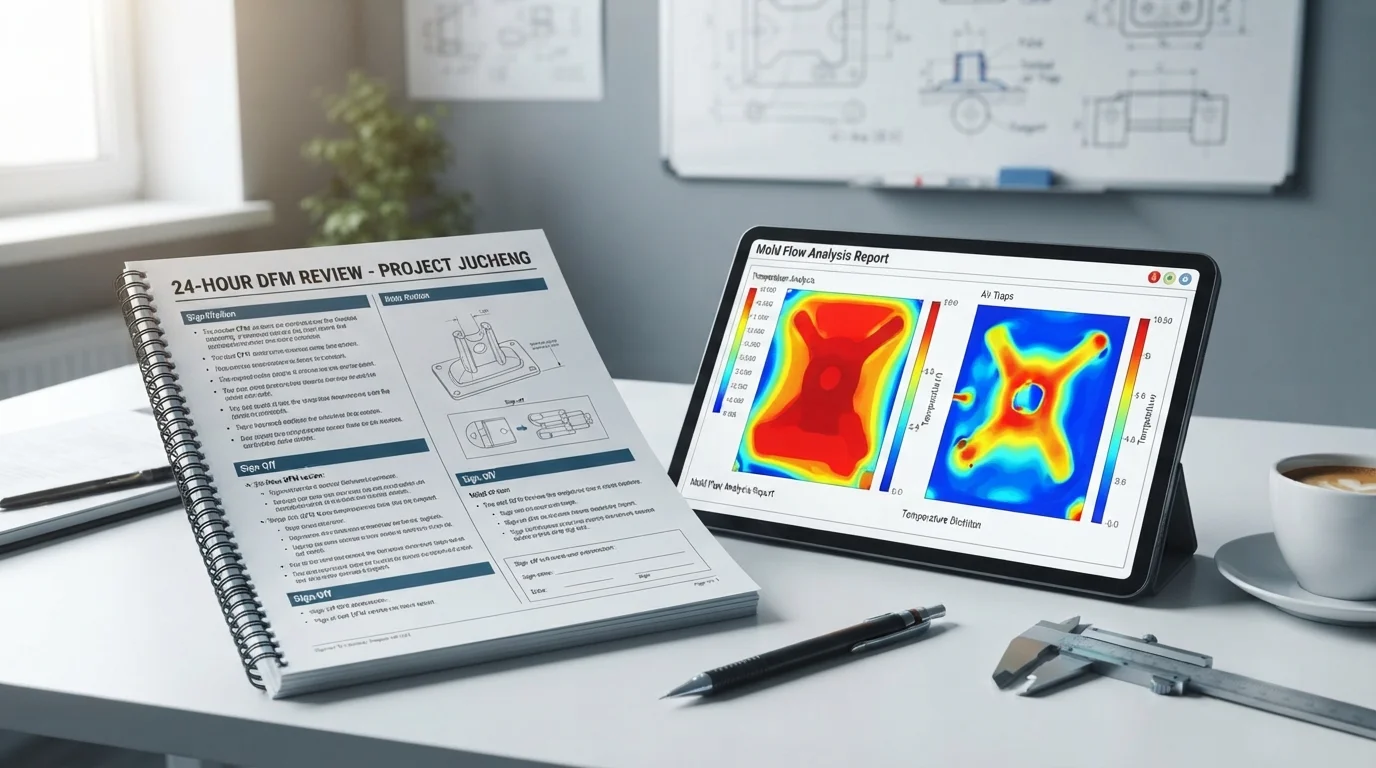
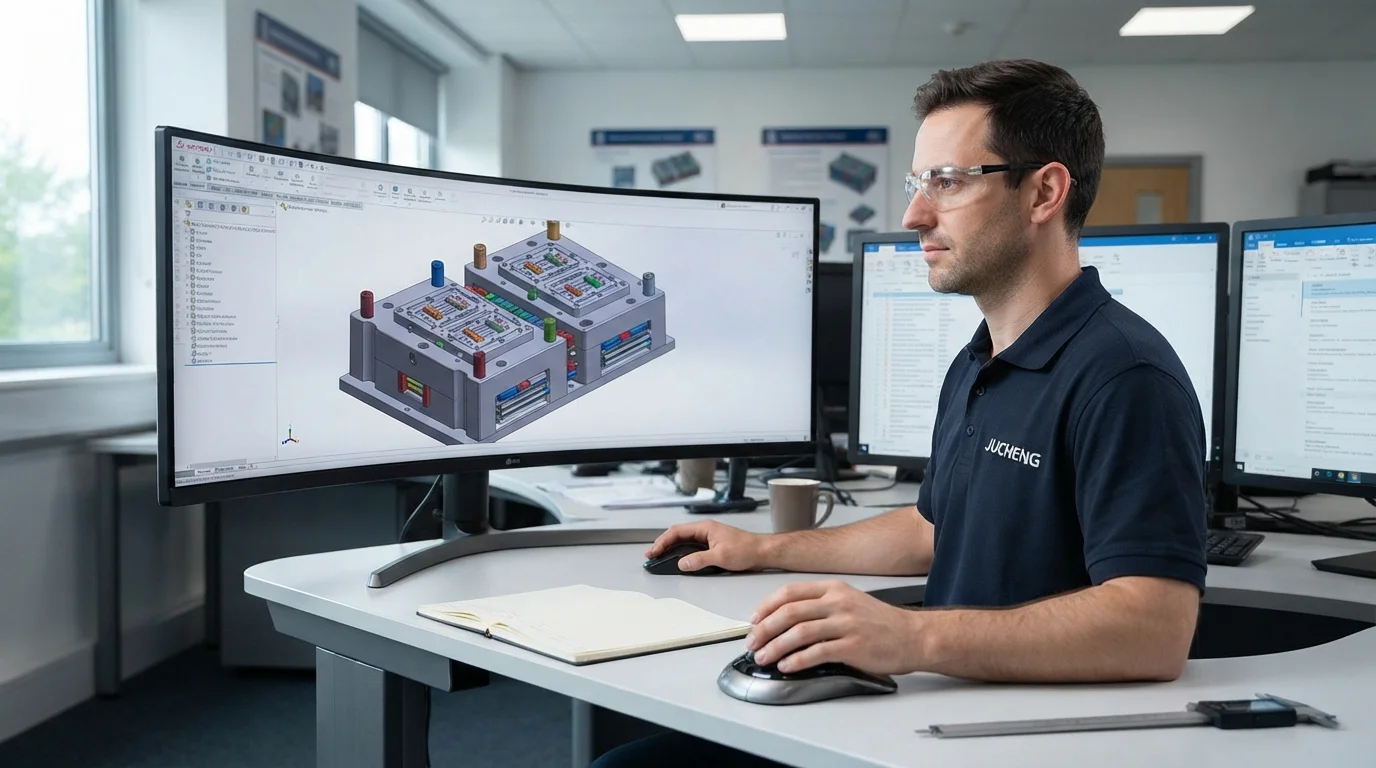
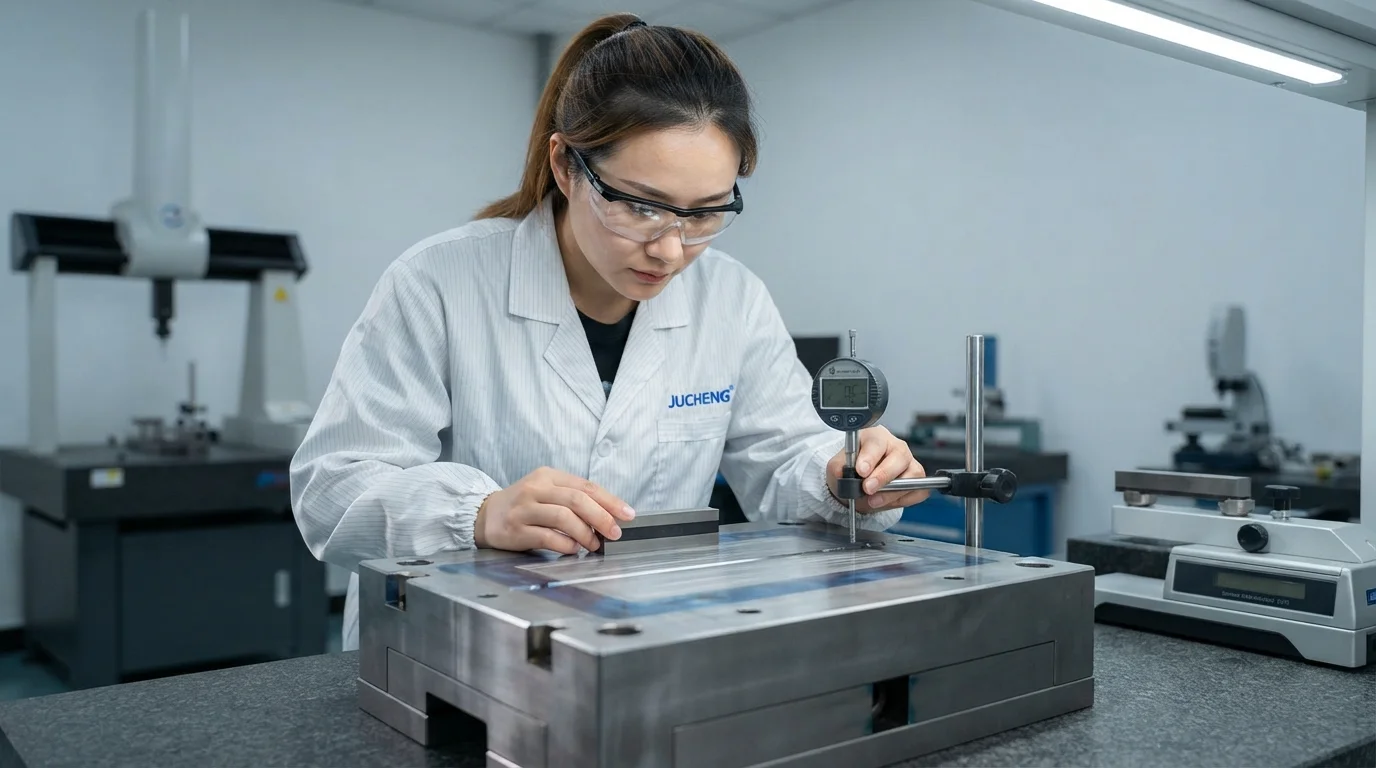
専門的な 射出成形金型設計 は、3Dファイル提出から24時間以内に作成される包括的な設計製造性(DfM)レポートから始まります。エンジニアリングレビューでは、公称肉厚の均一性、抜き勾配の適切性、およびコアサイドアクション機構を評価します。エアトラップや局所的な肉厚集中を早期に特定することで、金型製作開始後の高価な鋼材修正を防ぎます。3Dソリッドモデリングソフトウェアは、詳細なコアおよびキャビティアセンブリ、ガイド付きエジェクタプレート、およびカスタムスライド機構を構築します。プロアクティブなDfMコラボレーションにより、シームレスな部品排出が保証され、生産中のサイクルタイムが最適化されます。.
重要なDfMエンジニアリング評価パラメータには以下が含まれます:
- 公称肉厚レビュー—断面を評価することで、均一なポリマー冷却速度が保証され、ヒケの発生が防止されます。.
- 抜き勾配解析—垂直面のテーパーを検証することで、ドラッグマークを作成せずにスムーズな部品排出が保証されます。.
- パーティングラインの定義—Positioning parting lines along natural part boundaries prevents cosmetic flash on appearance faces.
- Ejection layout planning—Placing ejector pins and sleeve mechanisms on interior non-cosmetic surfaces preserves external aesthetics.
Hot Runner Manifold, Gate Placement & Parting Line Engineering
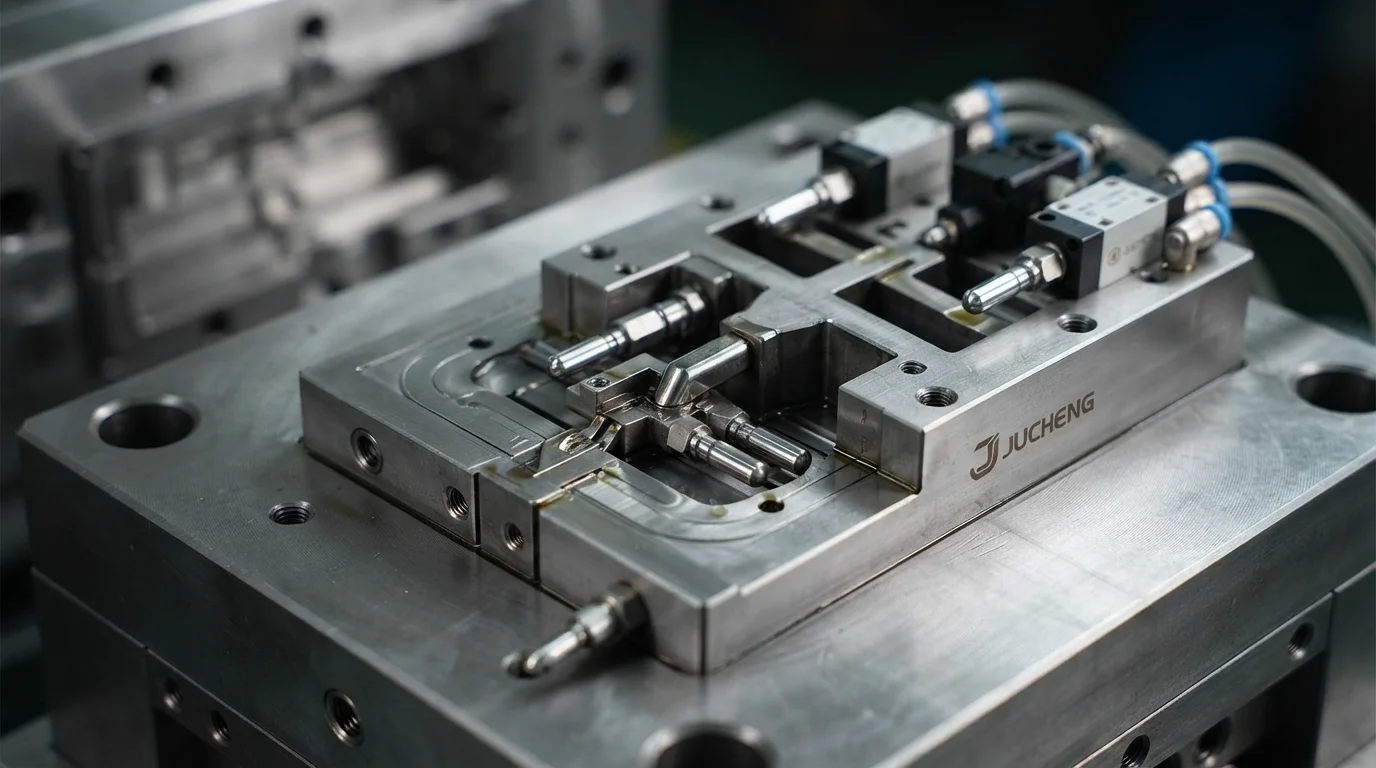
Optimizing hot runner manifold systems and gate locations determines cavity filling symmetry and structural weld line placement. Valve-gated hot runners control melt flow fronts precisely, eliminating sprue waste and preventing gate vestige on appearance faces. Conventional cold runner layouts utilize submarine gates or edge gates to distribute melt into smaller structural components. Gate placement at the thickest cross-section allows molten resin to flow into thin sections smoothly, preventing short shots. Parting line engineering incorporates tight shut-off steel lands to maintain flash-free sealing during high-pressure packing.
Hardened Tool Steel Selection (S136, H13) for SPI Class 101 Molds
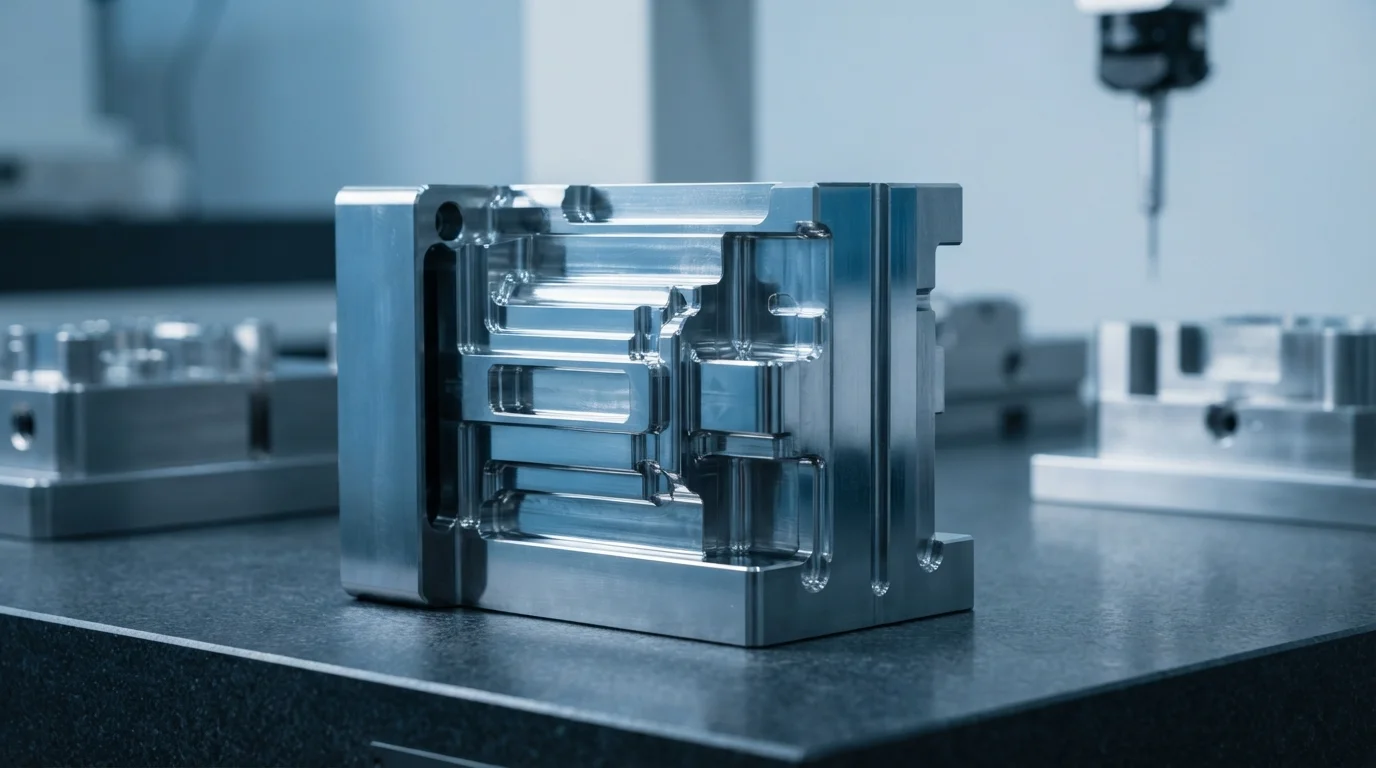
Tool steel selection dictates mold longevity, thermal conductivity, and chemical resistance against polymer outgassing. Building SPI Class 101 molds requires premium hardened steels like S136ステンレス鋼 および H13工具鋼, heat-treated to HRC 48-52. High-chrome S136 steel provides superior corrosion resistance against flame-retardant gases released by engineering polymers like PA66-GF30 または PC/ABS. Hardened H13 steel delivers high impact toughness for heavy structural tools operating under continuous high clamping forces. Advanced injection mold design pairs correct cavity steels with conformal cooling circuits, achieving production lifespans exceeding 1,000,000 cycles.
| Tool Steel Grade | Hardness (HRC) | Corrosion Resistance | Polishability Level | Primary Tooling Application |
|---|---|---|---|---|
| S136 Stainless Steel | HRC 48 – 52 | Exceptional (High Chrome) | SPI A-1 Mirror Finish | Medical clear parts & corrosive FR resins |
| H13工具鋼 | HRC 46 – 50 | 中程度 | SPI B-1 High Polish | Heavy structural enclosures & glass-filled nylons |
| P20 Pre-Hardened Steel | HRC 28 – 32 | 規格 | SPI C-1 Commercial Finish | Bridge tooling & low-volume production molds |
よくある質問 (FAQ)
Why is a 24-hour DfM review essential before starting mold fabrication?
A 24-hour DfM review identifies part geometry risks like inadequate draft angles, thick wall sections, and sharp internal corners before tool steel is cut. Detecting these issues early allows engineers to modify CAD files, preventing expensive mold rework and long tooling delays. Proactive DfM reviews guarantee optimal mold filling and clean part ejection from day one.
When should valve-gated hot runner manifolds be used instead of cold runners?
Valve-gated hot runner manifolds are ideal for multi-cavity tools, large structural parts, and cosmetic appearance components where gate vestige is prohibited. Hot runners eliminate sprue and runner scrap material, lowering unit resin costs. Cold runners are more economical for prototype tooling or low-volume production where lower upfront NRE costs are prioritized.
What is the difference between S136 and H13 tool steel for injection molds?
S136 is a high-chrome stainless steel offering exceptional corrosion resistance and SPI A-1 mirror polishability, making it ideal for medical and optical clear parts. H13 is an ultra-tough hot-work tool steel providing high fatigue strength and impact resistance for heavy structural components. Both steels are hardened to HRC 48-52 for SPI Class 101 mold guarantees exceeding 1,000,000 shots.