
Transforming complex 3D plastic component CAD files into volume production requires robust mold engineering and precise thermal management. Improper cavity layout, inadequate draft angles, or poorly balanced flow gates lead to cosmetic sink marks, excessive part warpage, and premature tool failure. Before cutting steel, tool modeling and flow analysis can identify filling and cooling risks. Mold trials are needed to confirm actual part quality and process performance. This technical engineering guide examines DfM review protocols, hot runner gate placement strategies, and tool steel selection criteria.

جدول المحتويات
هندسة القوالب ثلاثية الأبعاد داخل الشركة ومراجعة DfM مجانية خلال 24 ساعة
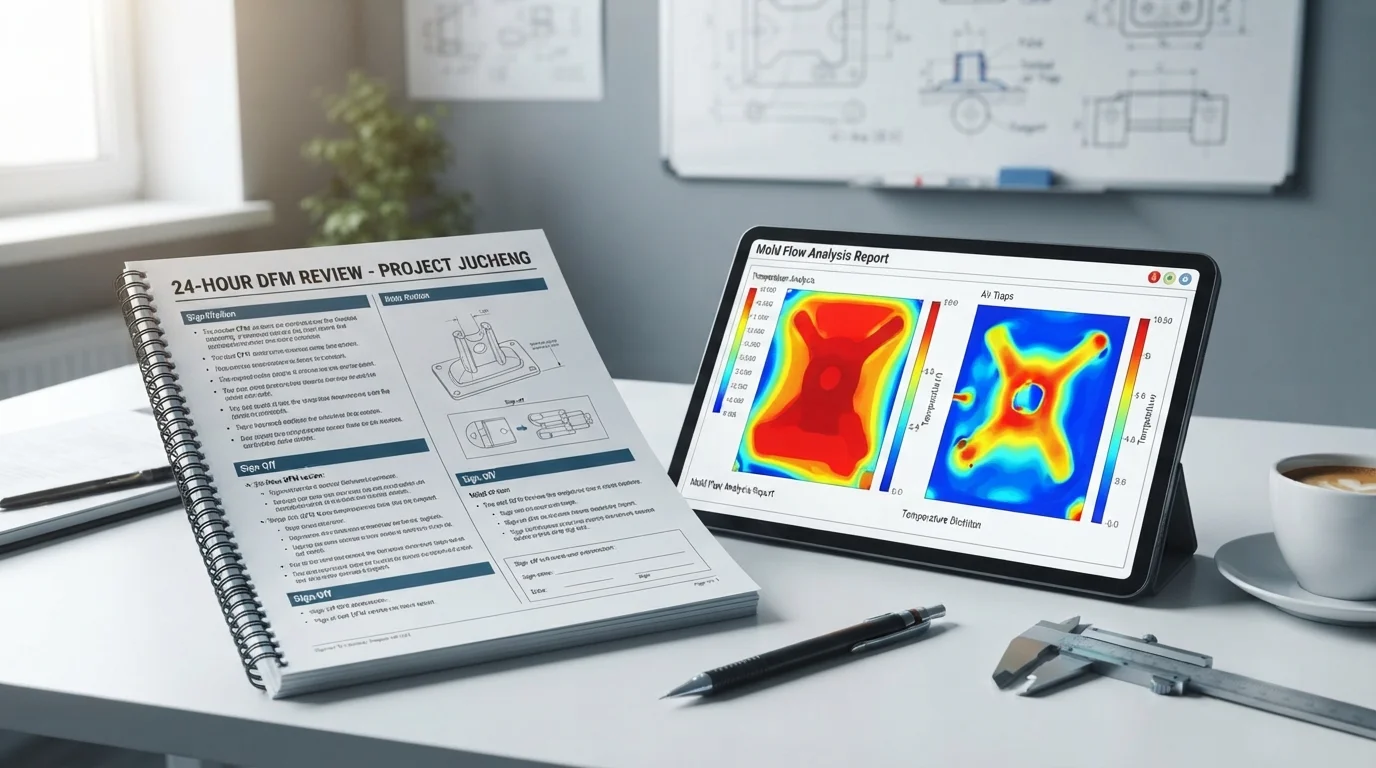
تنفيذ احترافي لتصميم قوالب الحقن begins with a comprehensive التصميم من أجل قابلية التصنيع (DfM) report generated within 24 hours of 3D file submission. Engineering reviews evaluate nominal wall thickness uniformity, draft angle adequacy, and core side-action mechanisms. Identifying potential air traps and thick sections early can reduce the risk of tooling rework. 3D solid modeling software builds detailed core and cavity assemblies, guided ejector plates, and custom slide mechanisms. DfM helps evaluate ejection and cycle-time risks early; confirm ejection and cycle performance in mold trials.
تشمل معايير التقييم الهندسي الحرجة لـ DfM ما يلي:
- مراجعة سمك الجدار الاسمي—تقييم المقاطع العرضية يضمن معدلات تبريد موحدة للبوليمر ويمنع تكوين علامات الانكماش.
- تحليل زاوية السحب—Review draft for the material, texture and ejection direction, then check for drag marks on trial parts.
- تحديد خط الفصل—وضع خطوط الفصل على طول حدود الأجزاء الطبيعية يمنع الوميض التجميلي على الأسطح الخارجية.
- تخطيط تخطيط القذف—وضع دبابيس القاذف وآليات الأكمام على الأسطح الداخلية غير التجميلية يحافظ على الجماليات الخارجية.
هندسة مشعب القناة الساخنة، موضع البوابة وخط الفصل
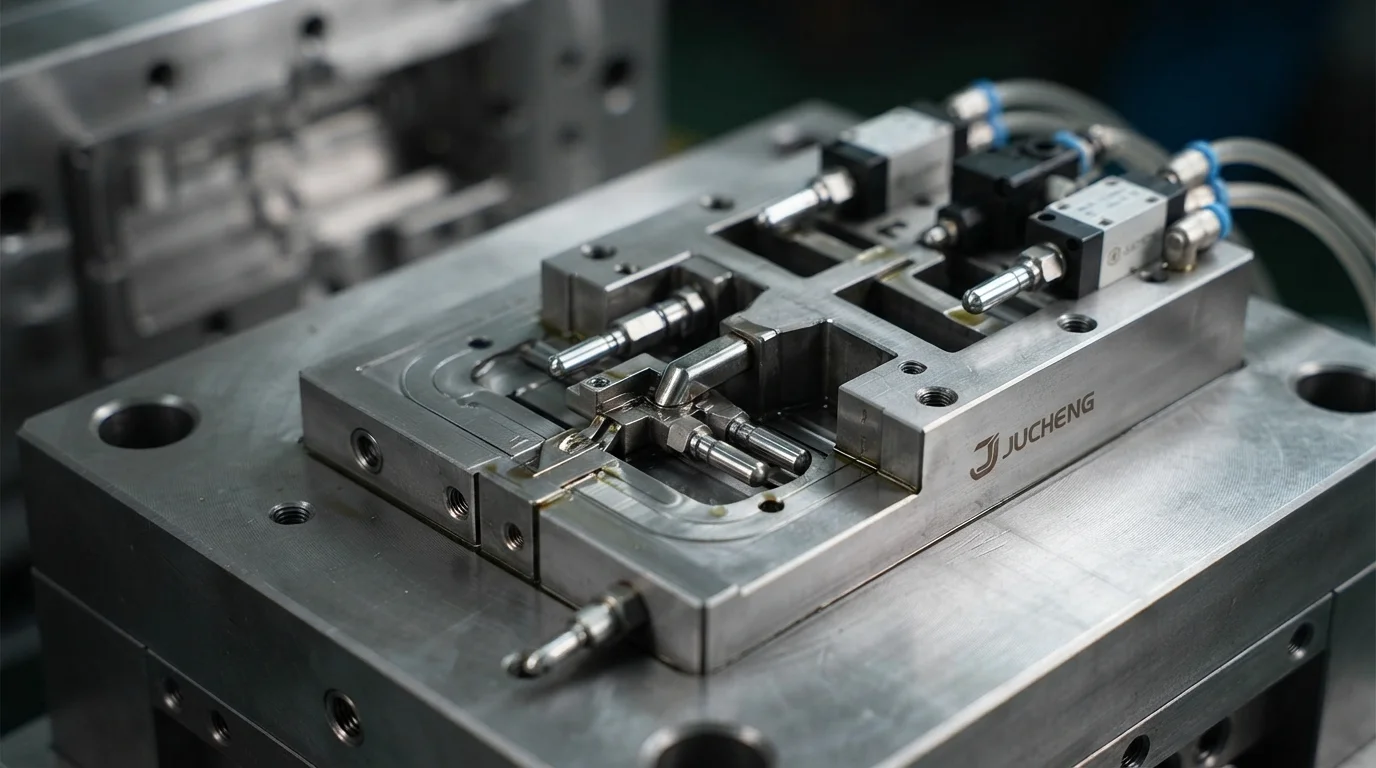
تحسين مشعب القناة الساخنة systems and gate locations determines cavity filling symmetry and structural weld line placement. Valve-gated hot runners can control the timing of melt entry and can reduce runner scrap. A valve pin can still leave a visible witness ring. Identify the cosmetic zones, agree on gate location and permissible marks, and approve representative molded samples. Conventional cold runner layouts utilize بوابات غاطسة or edge gates to distribute melt into smaller structural components. Gating into a thicker region can help maintain filling and packing paths. Select the site with flow balance, venting and appearance in mind, and confirm complete filling in trials. Parting line engineering incorporates tight shut-off steel lands to maintain flash-free sealing during high-pressure packing.
اختيار فولاذ الأدوات المقسى (S136، H13) لقوالب SPI Class 101
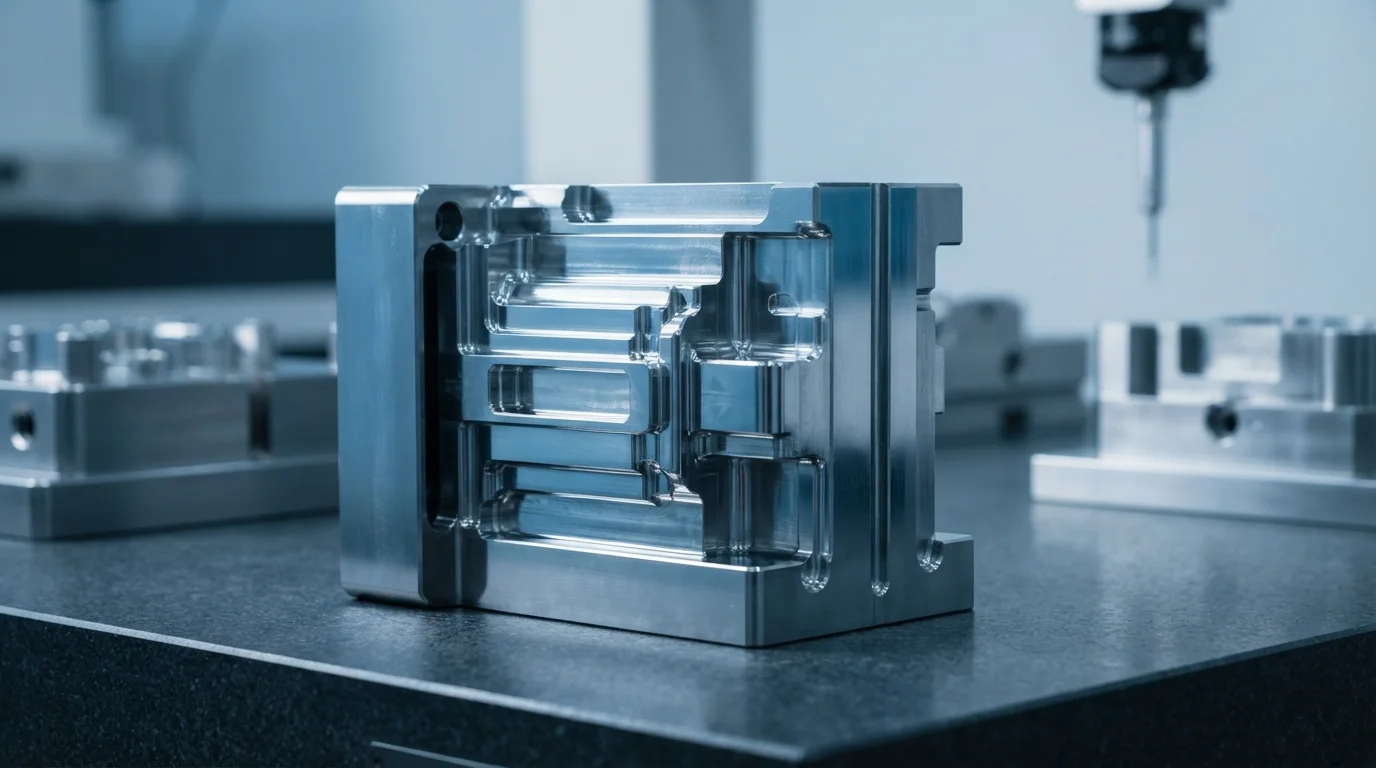
Tool steel selection dictates mold longevity, thermal conductivity, and chemical resistance against polymer outgassing. For a Class 101 quote, the classification guides construction and approximate duty; it is not a service-life guarantee. Specify the required steel and heat treatment by component. Options may include الفولاذ المقاوم للصدأ S136 و فولاذ الأدوات H13, depending on the duty. Corrosion-resistant S136 can be considered when the actual formulation or service conditions create a corrosion risk. Check the exact grade and additives rather than assuming that broad material descriptions denote flame retardancy, including PA66-GF30 أو PC/ABS. Hardened H13 steel delivers high impact toughness for heavy structural tools operating under continuous high clamping forces. When quoting tool life, agree on construction, resin, expected shot duty, maintenance and any written life commitment. A steel choice or mold class alone does not establish service life.
| درجة فولاذ الأدوات | Hardness Specification | مقاومة التآكل | Cavity Finish Specification | تطبيق العدة الأساسي |
|---|---|---|---|---|
| فولاذ مقاوم للصدأ S136 | Set by component and heat treatment | استثنائي (كروم عالي) | Specify polish for the intended surface | أجزاء شفافة طبية وراتنجات FR أكالة |
| فولاذ الأدوات H13 | Set by component and heat treatment | متوسطة | Specify finish for the intended surface | أغلفة إنشائية ثقيلة ونيلونات معززة بالألياف الزجاجية |
| فولاذ P20 مسبق التقسية | Confirm supplied hardness and tool specification | المعيار | Specify finish for the intended surface | عدد جسرية وقوالب إنتاج منخفضة الحجم |
الأسئلة الشائعة (FAQs)

لماذا تُعد مراجعة التصميم للتصنيع (DfM) خلال 24 ساعة ضرورية قبل بدء تصنيع القالب؟
A 24-hour DfM review identifies part geometry risks like inadequate draft angles, thick wall sections, and sharp internal corners before tool steel is cut. Early findings allow engineers to revisit the CAD before machining. Confirm filling and clean ejection in trials with the actual mold and resin.
متى ينبغي استخدام مجمعات التشغيل الساخن ذات البوابات الصمامية بدلاً من المجاري الباردة؟
Valve-gated hot runners may suit multi-cavity or cosmetic parts and can reduce runner scrap. A gate can still leave a witness ring, so specify the cosmetic zone, agree on an acceptable gate location and check the mark on molded samples. Cold runners are more economical for prototype tooling or low-volume production where lower upfront NRE costs are prioritized.
ما الفرق بين فولاذ القالب S136 وH13 لقوالب الحقن؟
S136 is a corrosion-resistant mold steel that can be considered where polish or corrosion resistance matters. H13 is a hot-work tool steel that can be considered where toughness is important. Specify hardness by component and heat treatment, and specify the required cavity finish separately. Class 101 describes intended duty and construction, not guaranteed shots.