
Electric vehicle (EV) battery packs demand robust thermal management, electrical isolation, and impact-resistant structures.
Transitioning from heavy metal enclosures to high-strength engineering plastics represents a major evolution in automotive pack design.
This technical guide details the mold engineering, DfM considerations, and advanced polymer processing technologies essential for producing reliable enclosures.
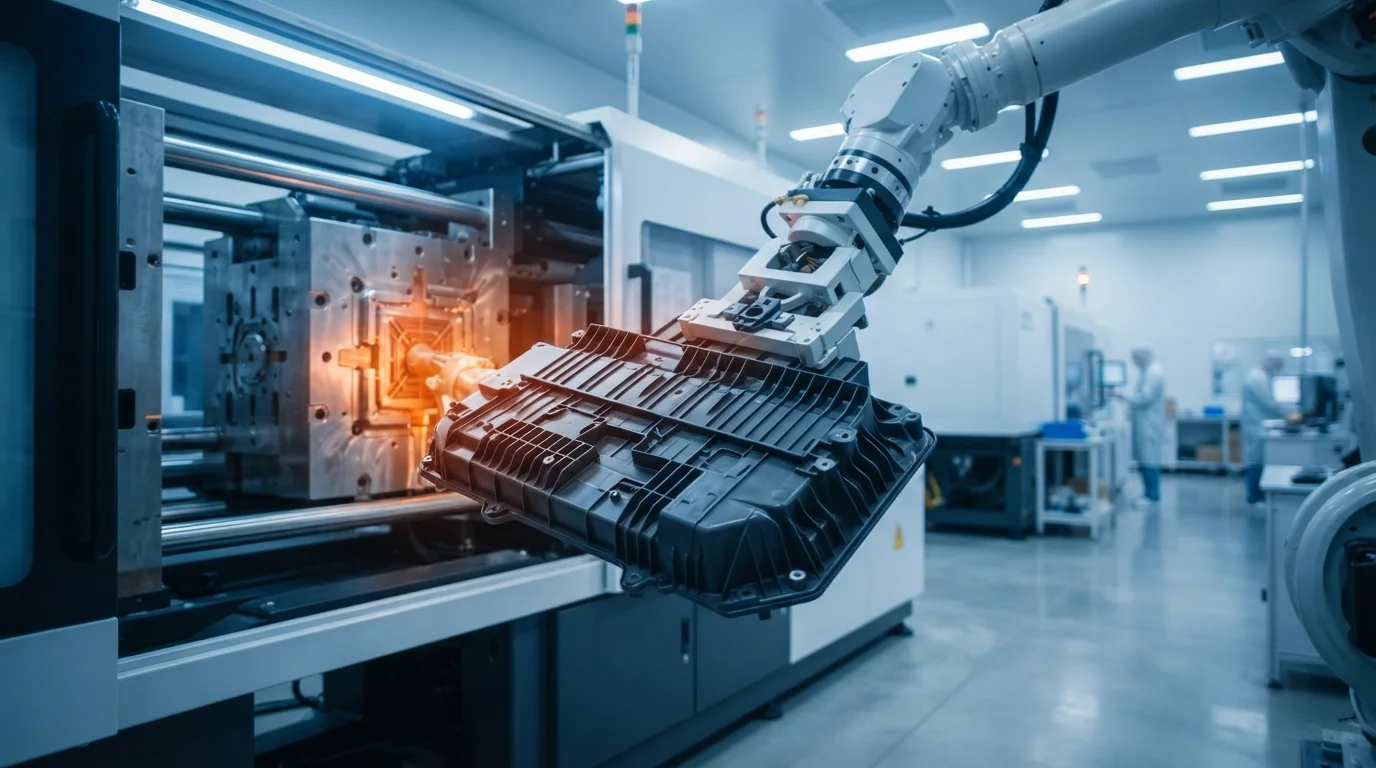
JUCHENG Injection Molding operates as a high-end, custom-job contract manufacturing facility specializing in custom tooling and precision plastic molding.
We do not retail standard or off-the-shelf battery boxes; every component is engineered from customer-supplied 3D CAD models to meet stringent performance specifications.
Whether navigating prototype phases or transitioning to multi-cavity high-volume production, our facility delivers tailored manufacturing support backed by IATF 16949 and ISO 13485 certifications.
Table of Contents
Why Custom Injection Molding is Critical for EV Battery Enclosures
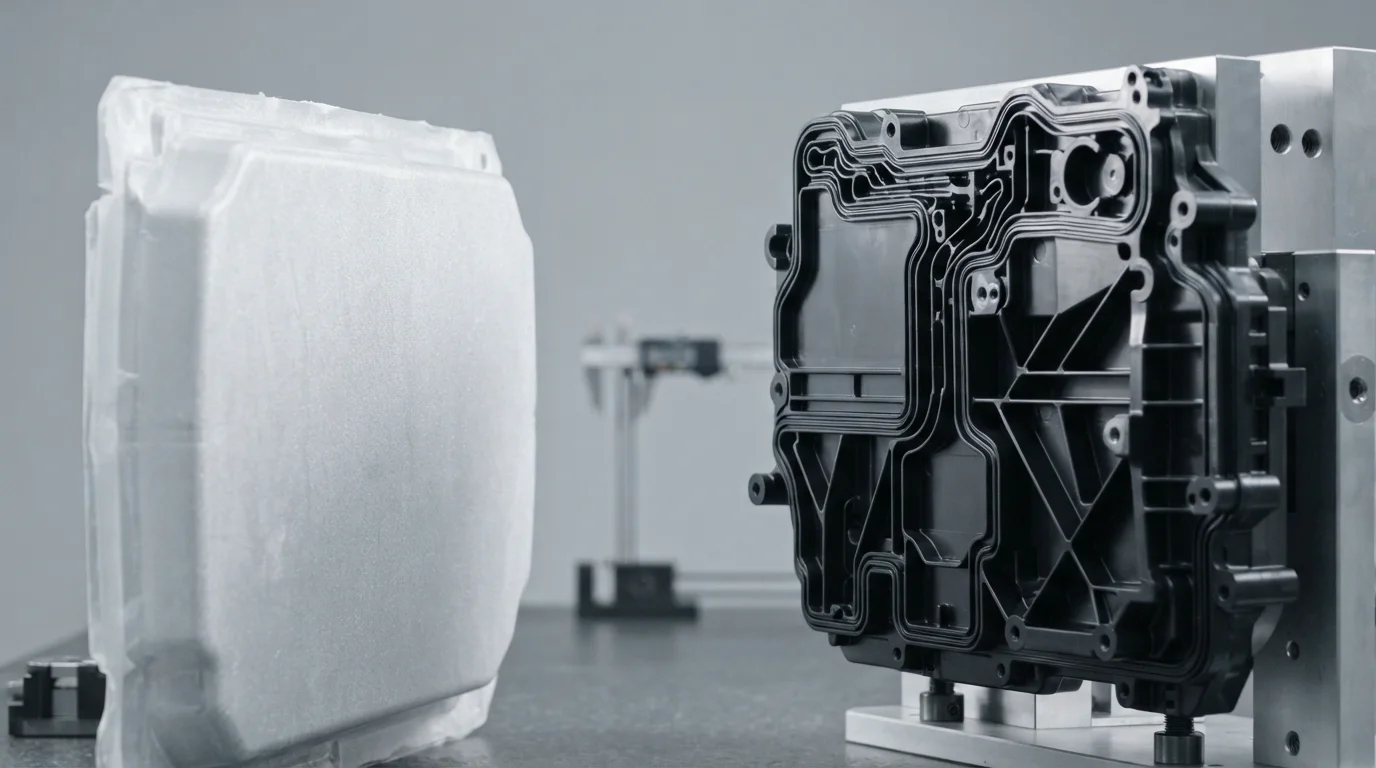
Engineering robust custom plastic battery housings for EV requires an understanding of structural integration and tight tolerance control.
Traditional metallic casings are heavy and require secondary insulation liners to prevent short circuits.
By utilizing high-performance polymers, engineers can mold complex geometries, internal features, and functional mounts directly into a single unified part.
Consolidating components in this manner reduces bill-of-materials costs, eliminates secondary assembly steps, and shaves critical weight off the vehicle chassis.
Integrating internal components is crucial for protecting individual lithium-ion cells from thermal runaway propagation.
Seamless integration of electric vehicle battery cell holders directly within the structural walls of the main housing prevents vibrational wear on cell terminals.
Furthermore, incorporating thin, high-insulation electric vehicle battery spacers prevents thermal runaway from leaping between pouch or prismatic cell modules.
Such configurations optimize space utilization inside the battery pack, allowing higher energy density while maintaining structural integrity during mechanical impacts.
Compared to alternative processing methods like sheet metal stamping or thermoforming, injection molding provides superior repeatability and dimensional accuracy.
High-pressure injection molding forces molten plastic into precision-machined cavities, producing parts with zero draft variations and highly consolidated molecular structures.
This is especially crucial for molding elastomeric sealing channels and perimeter tongue-and-groove joints that prevent moisture and dust from breaching the battery module.
Partnering with an experienced manufacturing specialist ensures that your custom parts conform to rigorous automotive safety standards.
Materials and Flame Retardancy Standards (UL94 V-0)
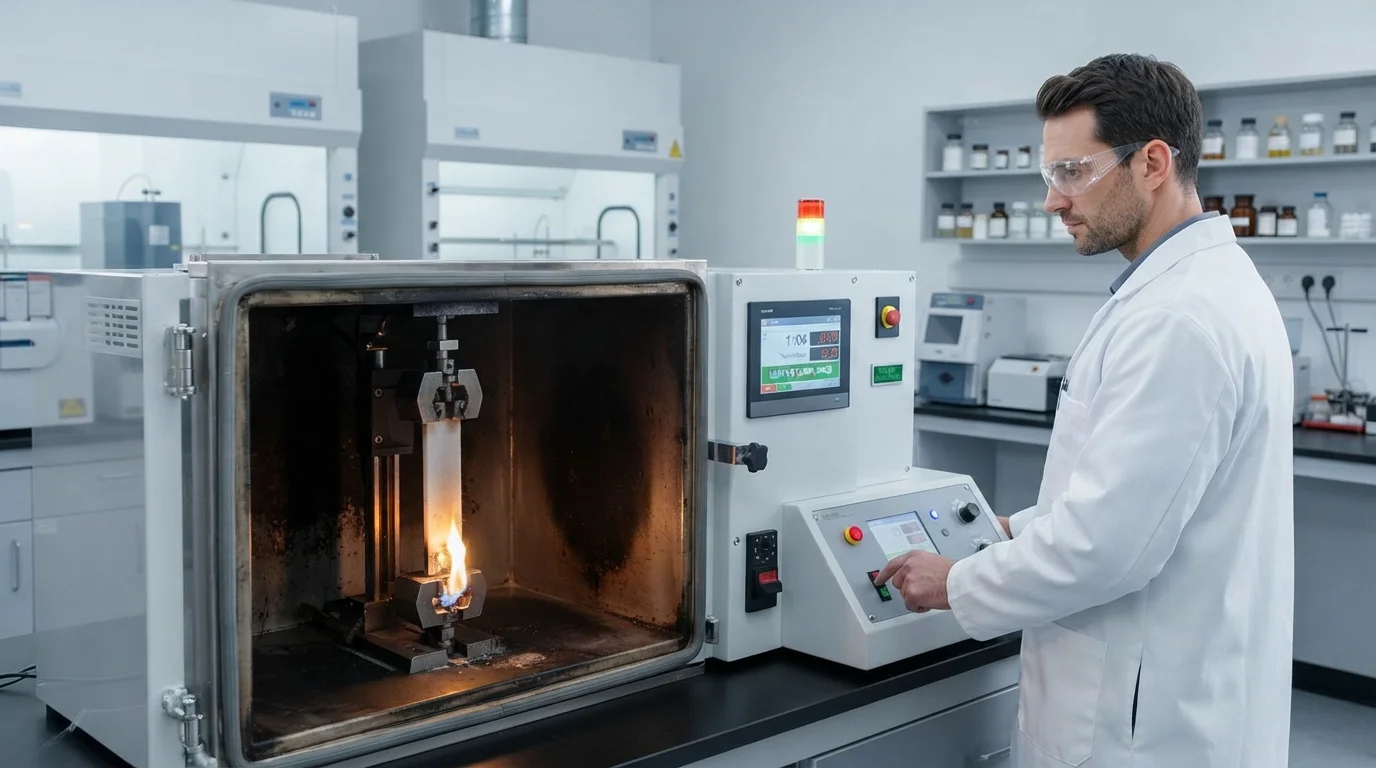
Developing specialized custom plastic battery housings for EV relies on high-performance thermoplastics.
Engineers must balance impact strength, chemical resistance to battery electrolytes, heat deflection temperature, and long-term creep resistance.
Consequently, utilizing injection molding Bayblend FR3010 for EV battery modules secures superior impact performance down to -30°C while achieving a UL94 V-0 flammability rating at 1.5mm thickness.
This amorphous polycarbonate and acrylonitrile butadiene styrene blend provides predictable shrinkage rate characteristics, facilitating the production of flat, warp-free covers.
Core material performance requirements for high-voltage battery enclosures include:
- Thermal stability—Engineering plastics must maintain structural integrity under continuous operating temperatures exceeding 100°C.
- Flame retardancy—Achieving a strict UL94 V-0 rating prevents fire propagation and self-extinguishes plastic parts within seconds.
- Dielectric strength—High volume resistivity prevents electrical arcing between battery cells and the outer chassis.
- Impact resistance—Robust physical properties safeguard the delicate lithium cell matrix from debris puncture during dynamic driving.
Similarly, manufacturing flame retardant PC ABS battery enclosures ensures structural rigidity while providing reliable electrical insulation.
When high mechanical rigidity is required to withstand extreme drop tests, glass-fiber reinforced polymers represent the optimal choice.
For instance, choosing injection molded Lexan 940A battery frames offers exceptional flame retardancy coupled with the dimensional stability required for interlocking prismatic cell matrices.
This polycarbonate resin maintains its physical properties under constant thermal loads, preventing cell migration during rapid charging and discharging cycles.
Safety compliance remains non-negotiable for all high-voltage automotive components.
Therefore, specifying UL94 V-0 flame retardant plastic cell carrier injection molding guarantees that the polymer will self-extinguish within 10 seconds of a flame application, preventing catastrophic thermal fire propagation.
Structural trays also demand extreme load-bearing capabilities.
Indeed, handling glass fiber reinforced polyamide battery trays manufacturing presents challenges with warpage due to the differential shrinkage between the transverse and parallel glass fiber orientations.
Our mold design team overcomes this by optimizing gate locations and using balanced hot runner systems to distribute fiber alignment evenly across the mold cavity.
| Material Grade | Polymer Type | Tensile Strength (MPa) | HDT @ 1.82 MPa (°C) | Flammability Rating |
|---|---|---|---|---|
| Bayblend FR3010 | PC + ABS Blend | 60 | 110 | UL94 V-0 |
| Lexan 940A | Polycarbonate (PC) | 65 | 125 | UL94 V-0 |
| PA66-GF30 (FR) | Polyamide 66 + 30% GF | 150 | 240 | UL94 V-0 |
| TPV (70A-40D) | Thermoplastic Vulcanizate | 8 – 15 | N/A (Elastomeric) | UL94 HB / V-0 |
Advanced Tooling Capabilities for Complex Battery Geometry
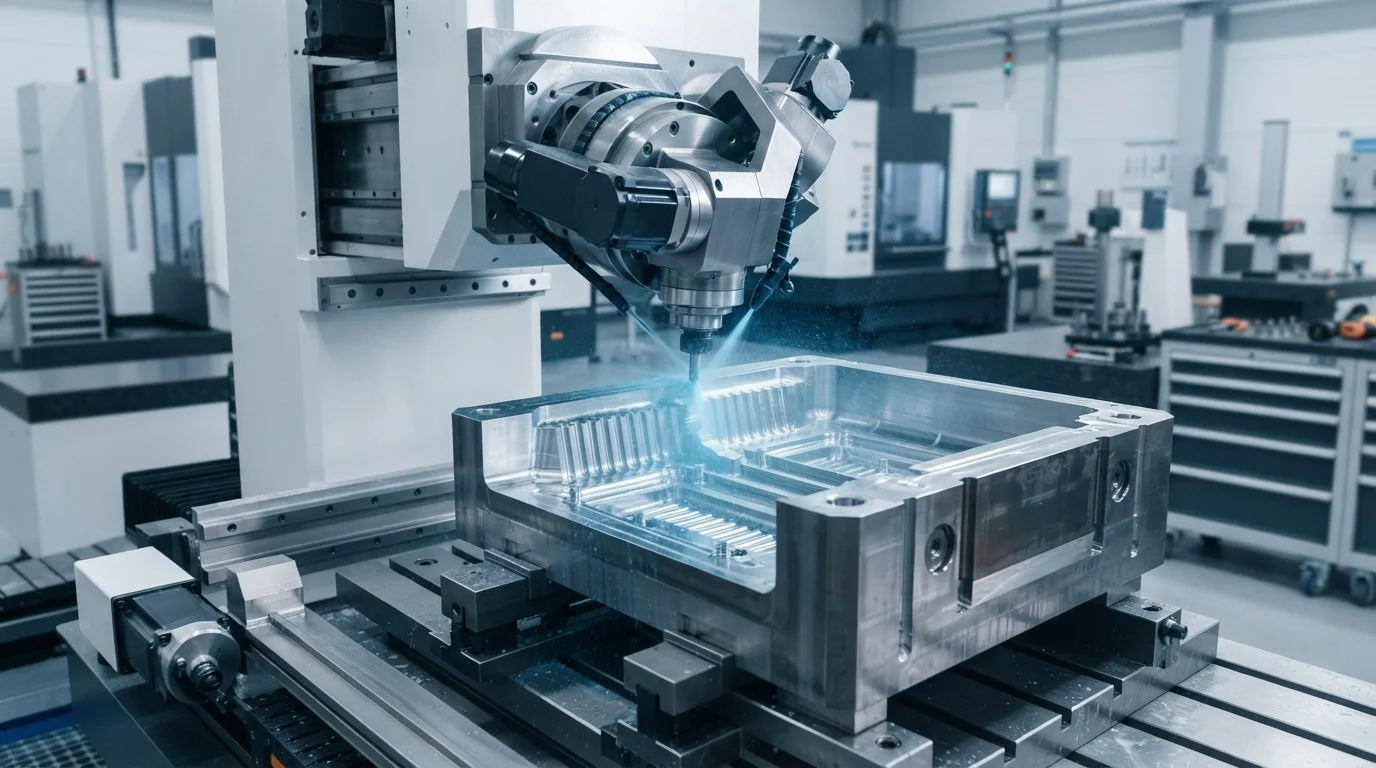
Mold design directly influences the long-term quality, flatness, and structural reliability of custom components.
Our dual-certified facility leverages 25+ in-house 5-axis CNC machines to cut precise mold cores out of hardened H13 or S136 tool steel.
Hardened steels are mandatory for handling highly corrosive, flame-retardant additives and abrasive glass fibers without suffering pitting or rapid dimensional erosion.
During the molding process, optimized conformal cooling channels integrated into the mold steel reduce cycle times by up to 30%, ensuring even heat dissipation and preventing post-mold warpage.
One prominent technique involves overmolding high-voltage conductive elements directly inside the structural shell.
Specifically, employing insert molding busbars in EV battery covers minimizes assembly errors and prevents environmental moisture from leaking into critical high-voltage contact areas.
This requires incredibly tight tooling shut-off tolerances to prevent plastic flash from flowing onto the active contact surfaces of copper or aluminum busbars.
Our precise tooling designs utilize spring-loaded core pins and real-time cavity pressure sensors to prevent crushing the metal inserts during mold clamp-up.
Moisture and dust ingress must be prevented to avoid short-circuiting expensive lithium cell modules.
Thus, performing custom molding thermoplastic vulcanizate TPV battery gaskets ensures that our custom plastic battery housings for EV achieve dynamic sealing profiles directly integrated onto the rigid PC/ABS cover.
Achieving this dual-material integration is possible through advanced multi-shot injection molding or custom overmolding processes, completely eliminating the labor-intensive hand-application of adhesive foam strips.
Such multi-material integrations remain a hallmark of automotive-grade manufacturing, providing robust protection against IP67 and IP69K moisture standards.
DfM Analysis & Complete Turnkey Services
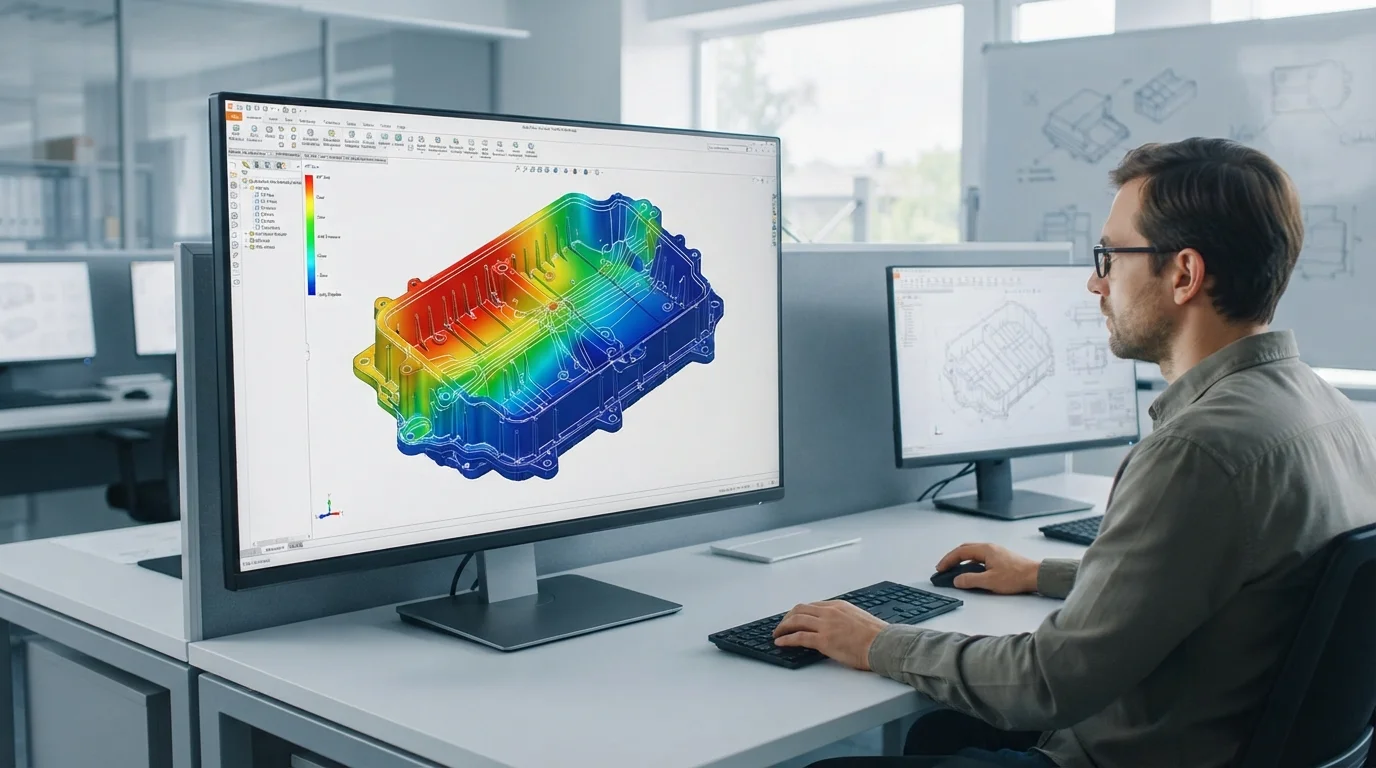
Optimizing structural geometries for custom plastic battery housings for EV prevents defects and lowers production costs.
Draft angles of at least 1.5 to 2 degrees must be incorporated on all vertical ribs and side walls to permit clean ejection without part distortion.
Wall thickness must remain as uniform as possible, ideally ranging from 2.5mm to 3.5mm, to prevent differential shrinkage and sink marks.
Flow simulation analysis prevents problematic knit lines, especially around the molded insert zones where molten plastic splits and recombines around cold metal busbars.
Our end-to-end custom tooling and manufacturing workflow typically follows this path:
- Design evaluation (DfM)—Providing a detailed manufacturability review, assessing draft angles, gate locations, and predicting potential knit lines within 24 hours.
- Tooling fabrication—Milling high-precision mold cavities from hardened H13/S136 steel using our in-house 5-axis high-speed CNC machining centers.
- Trial molding (T0/T1)—Conducting trial runs to optimize injection pressure, melt temperature, and holding times, yielding initial physical samples for dimensional checks.
- Quality verification—Utilizing Zeiss coordinate measuring machines to scan critical part geometries and cell pocket concentricity, compiling precise dimensional reports.
- Final production—Executing low-to-high volume injection molding runs backed by IATF 16949-certified quality control and complete lot traceability.
For design validation, relying on low volume rapid tooling for EV battery prototypes accelerates validation times while limiting initial non-recurring engineering tooling expenses.
Our facility builds rapid mold structures utilizing P20 or Alumec 89 aluminum cores, permitting functional molded prototypes of custom plastic battery housings for EV to be delivered in as fast as 10 to 12 business days.
This bridge-to-production strategy allows automotive engineering teams to perform real-world environmental stress screening, drop testing, and vibration analysis before investing in mass-production, multi-cavity hardened steel tools.
Our team manages the entire project from initial design optimization to post-mold assembly under one roof.
Our in-house 5-axis CNC machining, ultrasonic plastic welding, thermal heat staking, and coordinate measuring machine inspections complete our comprehensive turnkey operations.
Every production lot is fully traceable, and our quality control engineers verify critical-to-quality dimensions on every shipment.
We sign non-disclosure agreements early in the design cycle, safeguarding proprietary intellectual property and ensuring confidential product launches.
Frequently Asked Questions (FAQ)
How do you manage warpage in large, glass-filled battery trays?
Shrinkage management involves balancing the fiber orientation in glass-filled polyamide materials.
Glass fibers tend to align with the melt flow, causing the material to shrink less along the flow direction than across it.
We use advanced mold-flow software to simulate gate placement, frequently utilizing valve-gated hot runner systems to control the flow front and balance orientation, minimizing structural warpage.
What is the typical mold lifespan for flame-retardant plastics?
Mold lifespans vary depending on the tooling steel and polymer additives.
Flame-retardant agents release corrosive gasses at high temperatures, which degrade soft steels.
By using premium hardened S136 or H13 stainless steels with specialized anti-corrosive coatings, our molds consistently achieve over 500,000 cycles, maintaining tight dimensional tolerances over high-volume production runs.
Can you mold copper or aluminum busbars directly into battery covers?
Insert molding requires precise clamping pressure and strict shut-off tolerances to prevent plastic flash.
Our robotic insert systems place busbars with sub-millimeter precision.
We design custom sealing lands on the mold steel that firmly grip the metallic inserts, ensuring a leak-proof seal and preventing any flash onto the connection terminals.