
Precision Two-Shot (2K) Injection Molding

Core Benefits of Two-Shot Molding
Reduced Assembly Costs
Molecular-Level Bonding
Enhanced Aesthetics & Grip
What is 2K Molding & How it Works
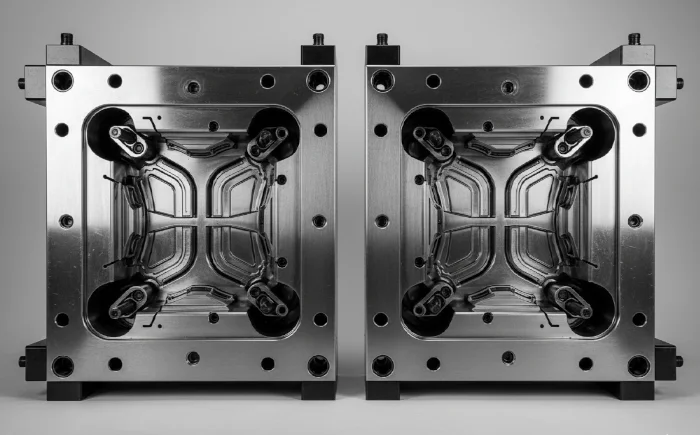
2K Molding Technical Specifications
| Specification | Jucheng Capability |
|---|---|
| Clamping Force Range | 50 Tons to 650 Tons |
| 2K Tooling Methods | Rotary Table, Core-Back, Robotic Transfer |
| Standard Tolerances | ±0.05 mm (Tighter tolerances achievable depending on material) |
| Mold Life Guarantee | Up to 1,000,000+ shots (SPI Class 101/102 Production Tooling) |
| Lead Time (T1 Samples) | As fast as 15-20 Business Days for complex 2K Molds |
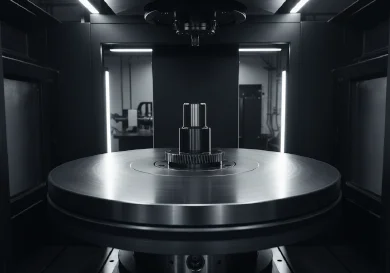
The Jucheng Advantage in 2K Molding
Executing a flawless 2K part requires absolute precision in tooling. If the mold doesn’t align perfectly during rotation, flash and defects occur. Here is how we guarantee perfection:
- In-House Tooling Mastery: We do not outsource our molds. With 25+ advanced 5-axis CNC machines in our tool room, we manufacture complex rotary and core-back 2K molds with micron-level accuracy.
- Robust Production Capacity: Equipped with 35+ modern injection presses (50T to 650T), we can scale from low-volume bridge production to millions of parts annually.
- Certified Zero-Defect Quality: Operating under strict ISO 13485 (Medical) and IATF 16949 (Automotive) standards, every dimension is verified using our in-house Zeiss CMMs.
Material Compatibility Guide
Excellent Chemical Bond
These combinations fuse naturally during the molding cycle:
- PC (Polycarbonate) + TPU or ABS
- ABS + TPE or PC
- PP (Polypropylene) + TPE
- PA (Nylon) + Special Adhesion TPEs
Requires Mechanical Interlocking
These combinations do not bond chemically and require DfM features (undercuts, through-holes) to lock together:
- POM (Delrin) + Almost all elastomers
- PP + TPU
- Standard Metals + Plastics (Requires Insert Molding)
DFM Best Practices for 2K Designs
1. Uniform Wall Thickness: Ensure the substrate has uniform wall thickness to prevent sink marks before the second material is applied.
2. Shut-Off Angles: Design clear step-offs (minimum 0.5mm) where the two materials meet. Avoid feather edges which can lead to peeling or flashing.
3. Material Shrinkage: Select materials with similar shrink rates. If the second material shrinks significantly more than the substrate, it can cause the entire part to warp.
Proven Expertise Across Demanding Industries
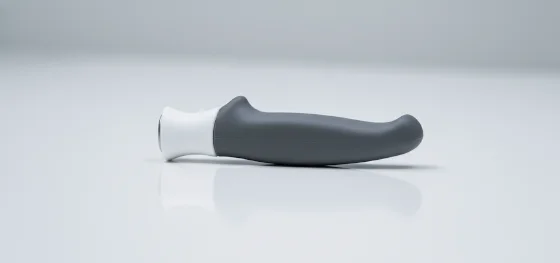
Medical Devices
Automotive Interiors
Consumer Electronics
Expert Answers to Your Questions
Can you encapsulate delicate electronics or PCBs?
Yes. While standard high-pressure injection molding can damage delicate electronics, we employ specialized low-pressure molding techniques and specific resin flows to safely encapsulate sensors and PCBs without causing damage.
Is it cheaper to use insert molding or press-in inserts later?
For low-volume prototyping, heat staking or pressing in inserts after molding might be cheaper due to simpler tooling. However, for mid-to-high volume production, insert molding is significantly more cost-effective as it eliminates manual assembly labor and provides far superior part strength.
What happens if the metal insert expands due to mold heat?
Our tooling engineers calculate the thermal expansion of the specific metal insert at mold operating temperatures. We design the locating pins and mold cavities to accommodate this micro-expansion, ensuring the insert fits perfectly without damaging the tool.