
Manufacturing cost-effective structural enclosures and multi-functional plastic hardware requires balancing pristine surface aesthetics with low raw material expenses. Solid single-material components using virgin engineering resins drive up production costs, whereas using 100% recycled polymers compromises surface cosmetics and impact strength. Specifying professional co injection molding resolves these conflicting requirements by encapsulating a low-cost or recycled polymer core inside a high-purity virgin outer skin. JUCHENG operates specialized multi-barrel co-injection machinery, delivering multi-layer structural parts strictly according to customer technical CAD drawings.
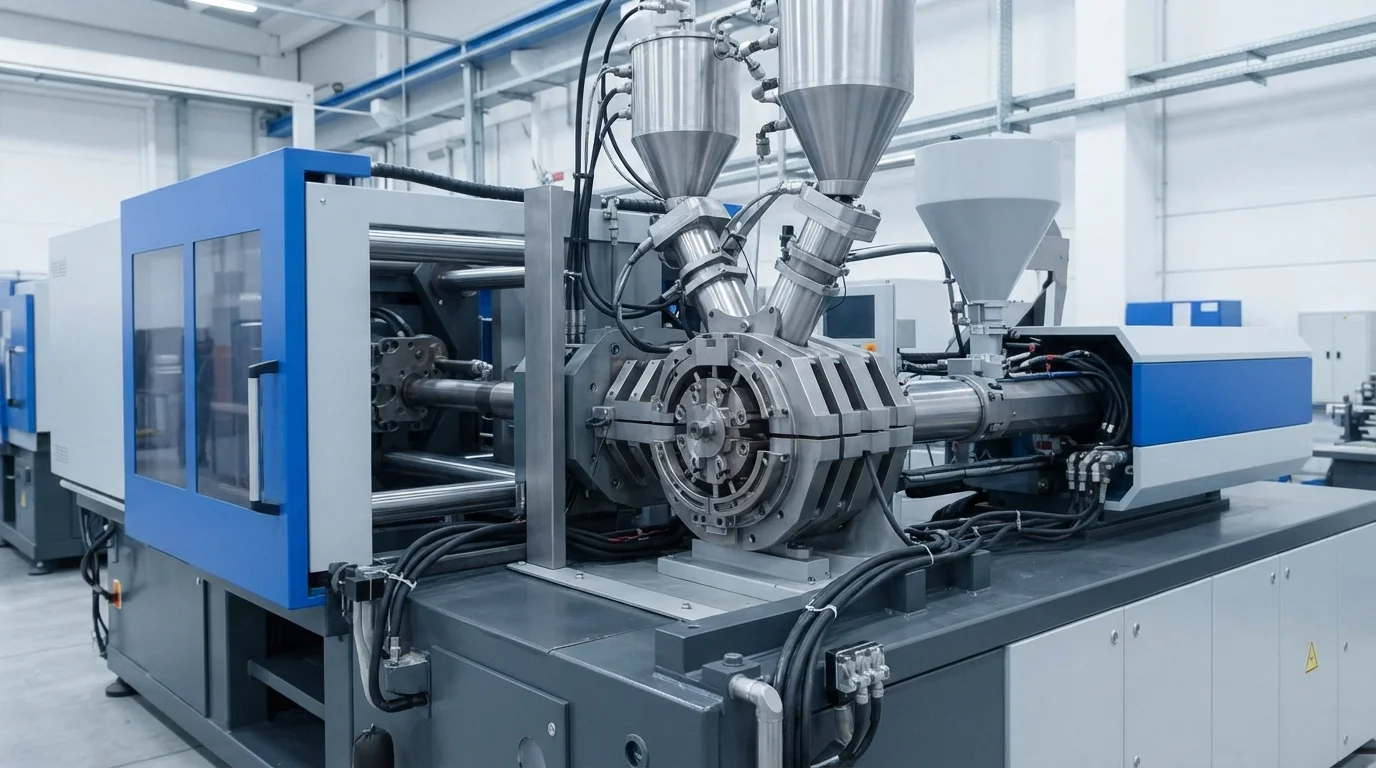
Table of Contents
Sandwich Molding: Virgin Outer Skin with Recycled/Regrind Core
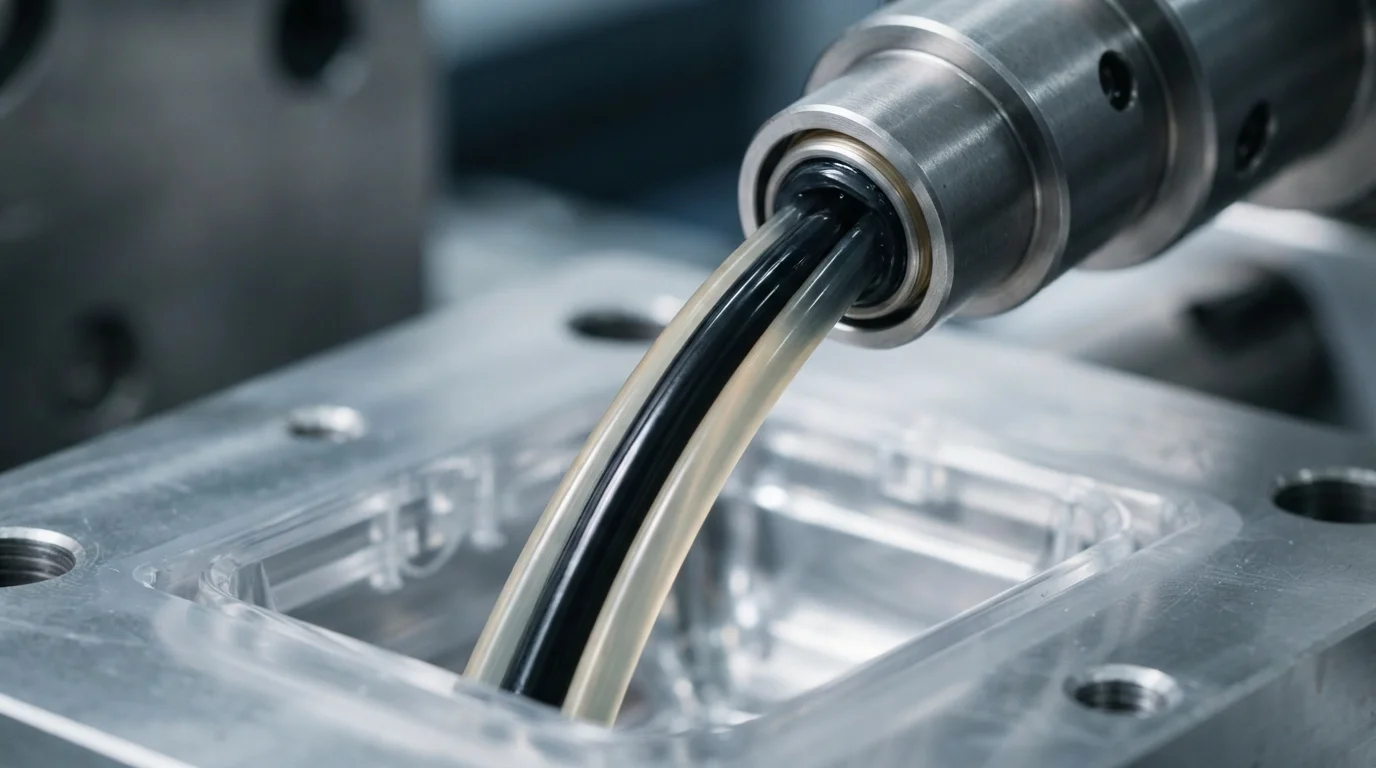
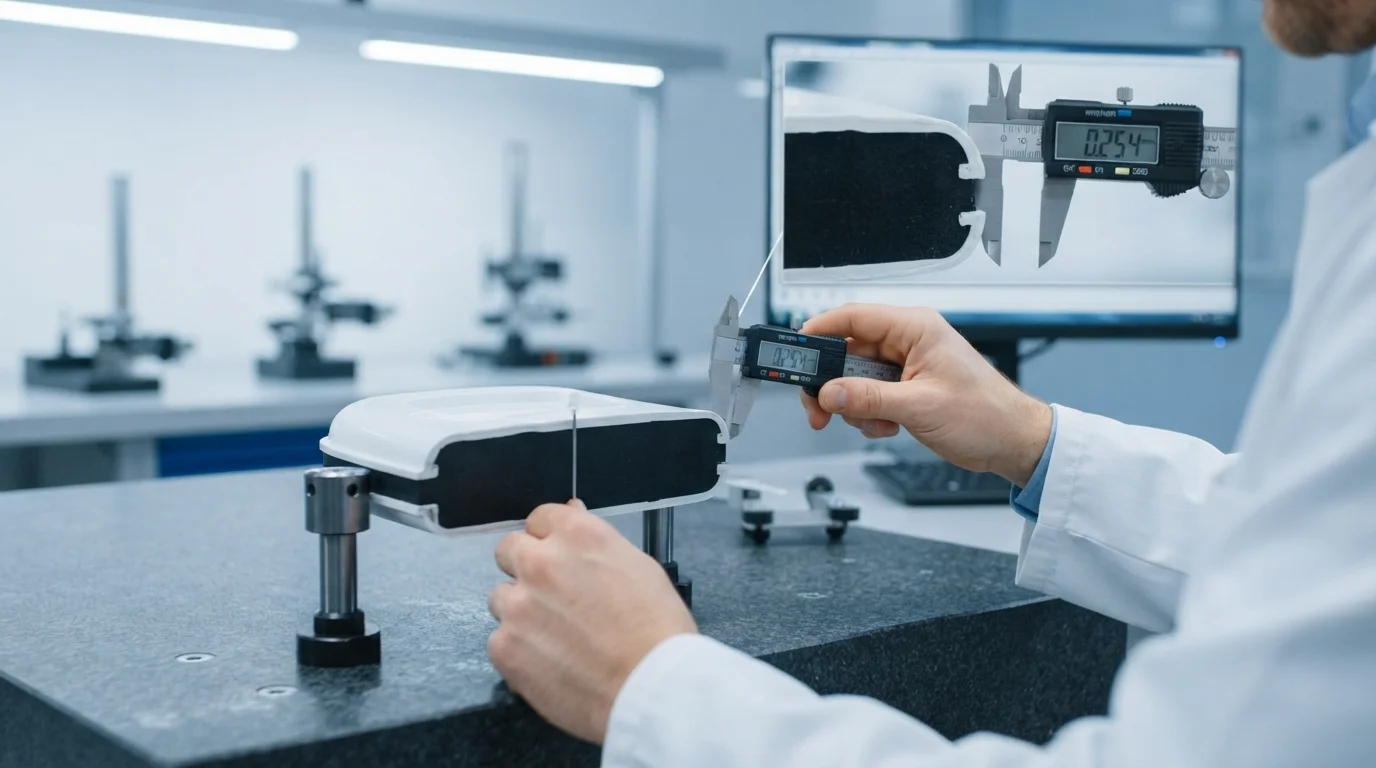
Executing multi-layer processing utilizes sandwich molding technology through specialized dual-concentric nozzles or sequential manifold valves. First-stage injection introduces the virgin skin resin, filling the cavity walls to form a pristine outer surface. Second-stage injection introduces the core material directly into the warm center of the skin melt, expanding the core from within. Using a lower-priced regrind core or recycled polymer can reduce resin spend. Calculate savings from the mass and price of each resin, actual material losses and the yield of acceptable parts. A final skin shot can cover the gate area; it does not establish full coverage elsewhere on the part.
Co-injection sandwich sequence steps include:
- Virgin skin injection—The first shot forms the outer layer against the mold walls. Check surface quality and coverage on molded samples.
- Core melt displacement—The core advances within the skin melt; the coverage and layer thickness can vary along the flow path.
- Gate skin purging—A short final skin shot can cover the gate area. Check the gate, thickness transitions and end-of-fill for exposed core.
- Cavity pressure packing—Holding packing pressure ensures uniform density and prevents sink mark formation.
Material Interlayer Adhesion & Viscosity Matching in Dual Injections
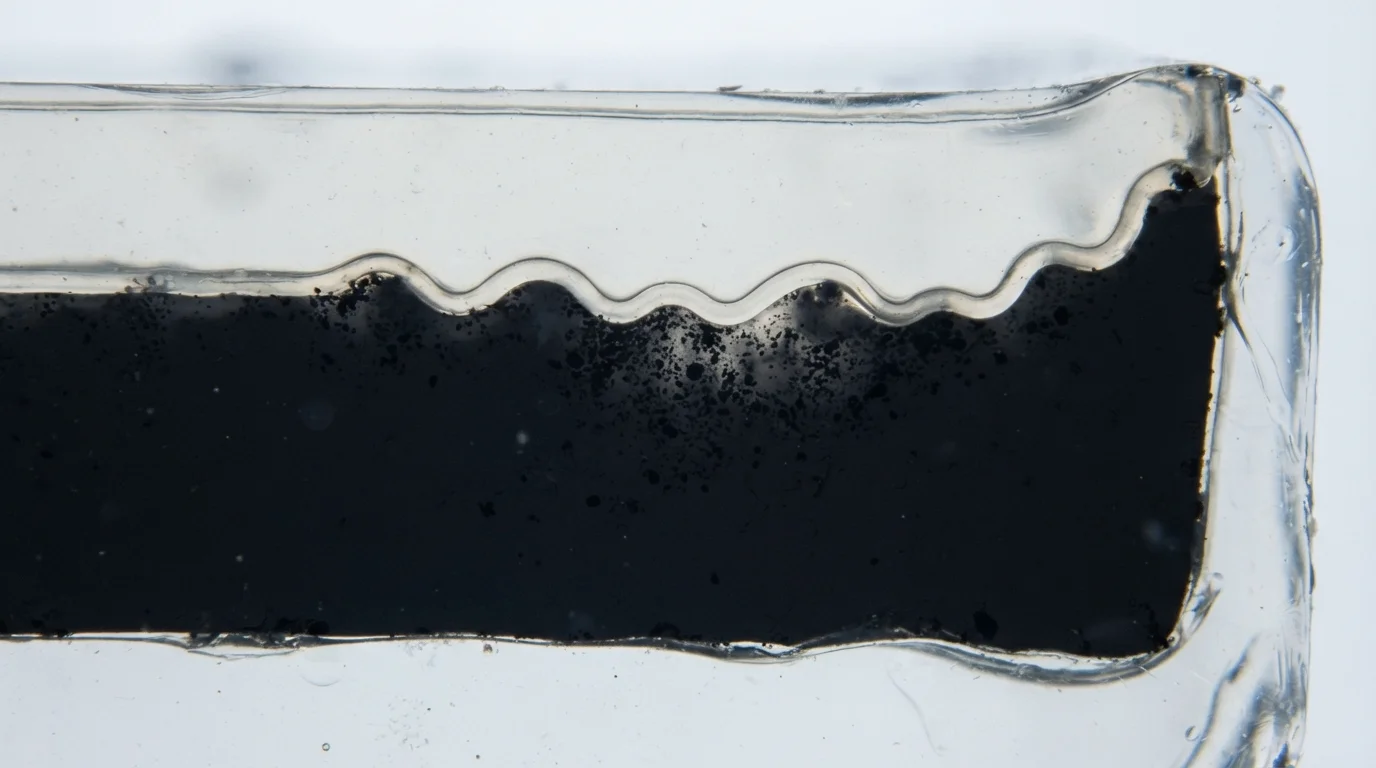
Evaluate viscosity matching at representative melt temperatures and shear rates. No universal percentage difference predicts skin breakthrough; the skin/core shot split, switching conditions and part geometry also matter. Skin breakthrough exposes the internal core material on part surfaces, causing cosmetic rejection. For PC/ABS or polypropylene (PP), use the exact grade pair and intended settings in a tool trial. Check the interlayer bond and core location on representative parts.
| Outer Skin Material | Encapsulated Core Material | Viscosity Ratio Target | Core Volume Share (%) | Primary Functional Benefit |
|---|---|---|---|---|
| Virgin PC/ABS (Bayblend) | Recycled PC/ABS + Carbon Fiber | Establish in tool trials | Measure on trial parts | Built-in EMI/RFI shielding & lower resin cost |
| Virgin PP (SABIC PP 570P) | Post-Consumer Recycled PP | Establish in tool trials | Measure on trial parts | Sustainable structural panels & pallets |
| Virgin ABS (Polylac PA-757) | Heavy-Filled Regrind ABS | Establish in tool trials | Measure on trial parts | Thick appliance housings with high stiffness |
Cost-Effective Structural Panels & EMI Shielded Enclosures
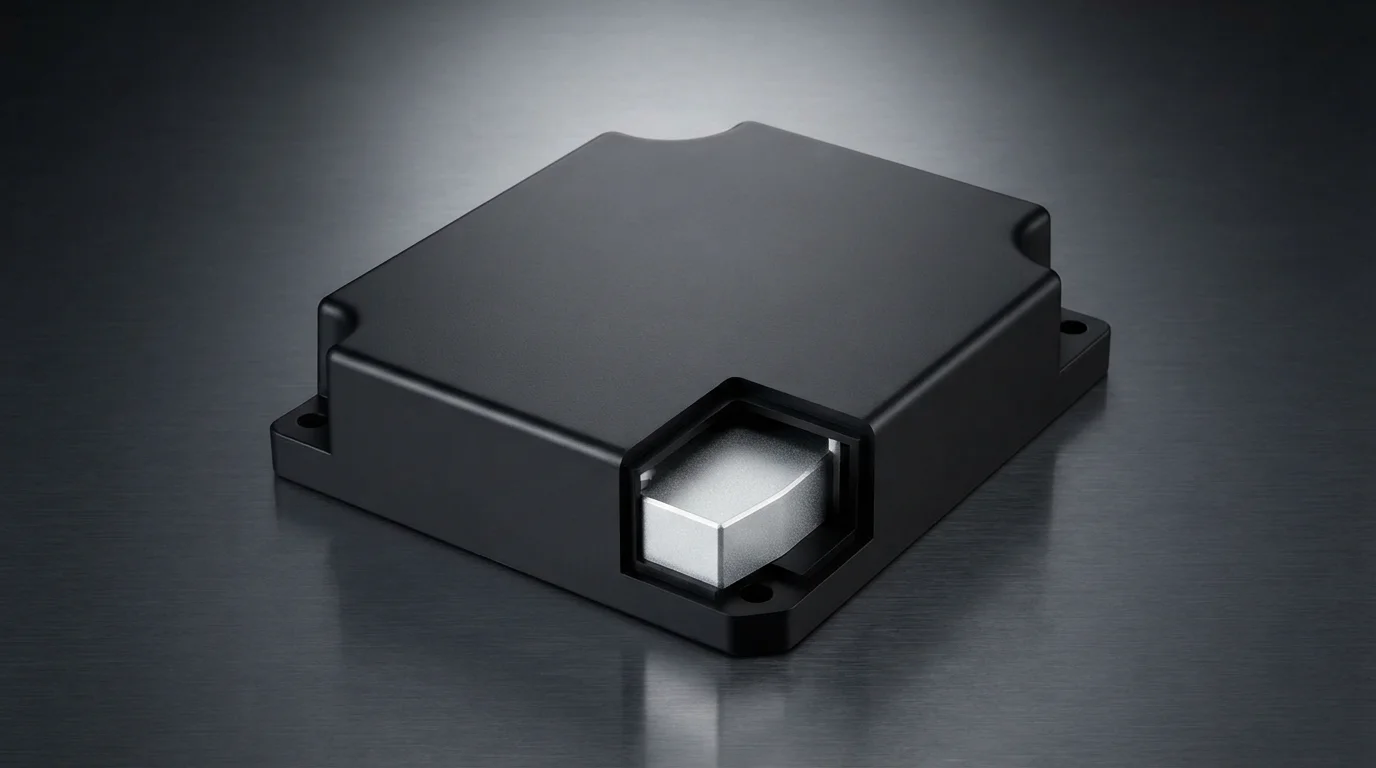
Co-injection processing enables unique functional material combinations impossible with single-shot molding. Electronic housings incorporate a carbon-filled conductive core inside a cosmetic PC/ABS outer skin, providing built-in EMI/RFI shielding without secondary conductive painting. Industrial transport pallets and structural panels encapsulate low-cost post-consumer recycled resin inside a weather-resistant virgin PP outer shell. Multi-layer encapsulation satisfies strict environmental sustainability criteria while lowering total part manufacturing expenses.
Key industry co-injection advantages include:
- Raw material cost reduction—Compare resin spend per acceptable part using measured resin consumption, prices, purge and rejects.
- Built-in conductive shielding—Enclosing conductive carbon black cores delivers internal EMI attenuation without secondary painting.
- Pristine surface appearance—Hiding discolored or heavily filled core resins behind a virgin skin maintains A-class cosmetic standards.
Frequently Asked Questions (FAQs)
What is the difference between co injection molding and two shot (2K) molding?
Co injection molding injects two different material streams simultaneously or sequentially through a single gate to form a multi-layer sandwich structure (skin and core). Two shot molding injects two materials into distinct sections of a part using a rotating mold platen.
How much recycled material can be encapsulated inside a co-injection core?
The usable core share depends on the grades, part geometry and process. Specify whether the share is measured by mass or volume; they are not interchangeable. Confirm the required minimum skin thickness on molded sections rather than using one thickness for all parts.
How do you prevent core breakthrough in sandwich molding?
Adjust the skin/core shot split, switching and injection conditions for the actual geometry and resin pair. Check cross-sections at the gate, thickness transitions and end-of-fill for exposed core and minimum skin thickness.