
“A strong plastic that is not too expensive” is a difficult brief to quote and an unreliable brief to approve. Injection molding material selection works better when the team defines what the part must survive, how it may deform, and which manufacturing or appearance requirements cannot change. A named polymer family is a shortlist category, not a complete purchasing specification.
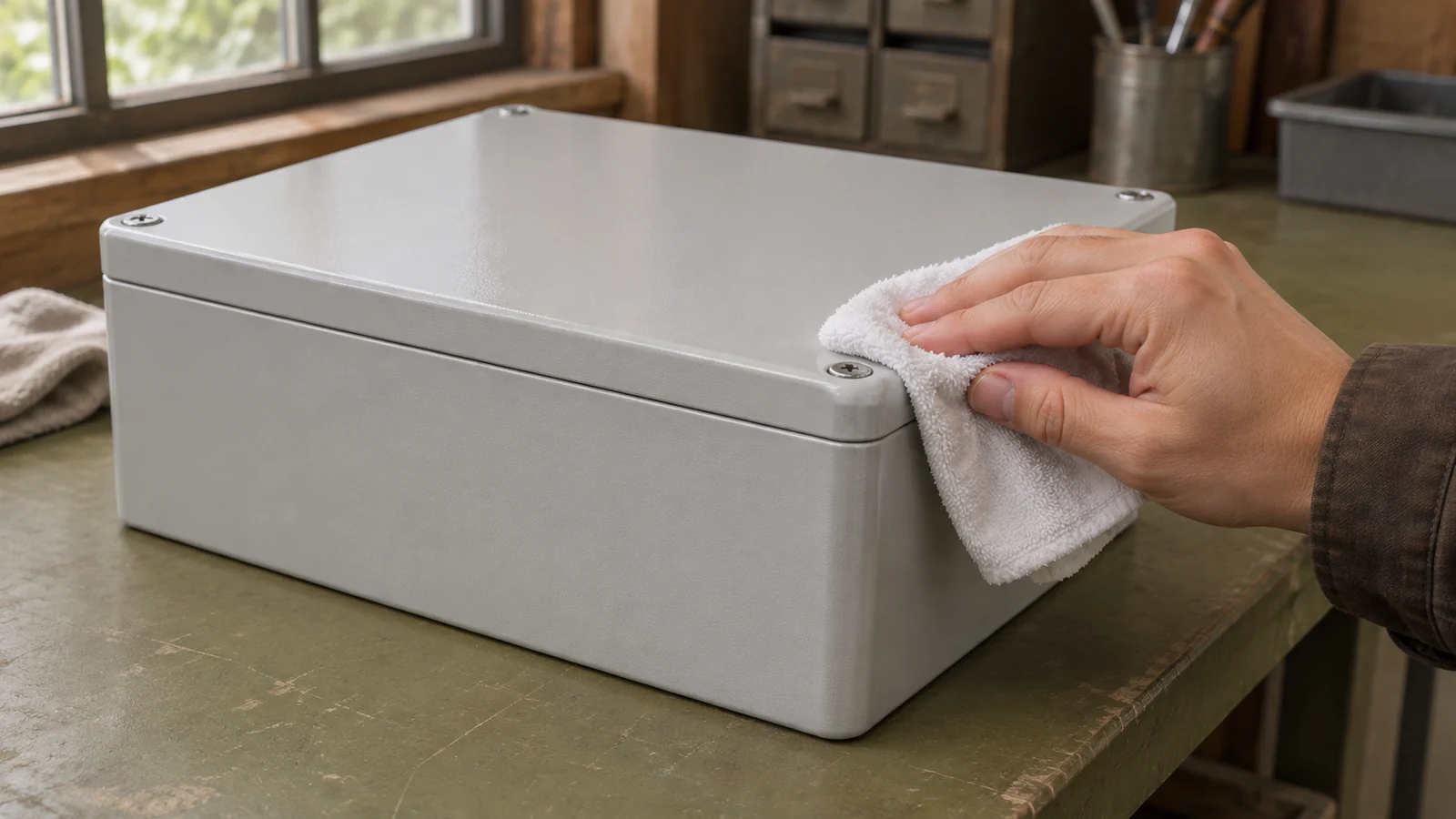
The buyer does not need to become a polymer chemist. The useful contribution is a clear operating envelope and an approval plan. For a hypothetical indoor equipment cover, that might mean repeated wiping, clips that remain engaged, a stable gap around a display, and a consistent visible finish. Those requirements can point toward different grades even before price is discussed.
Replace adjectives with operating conditions
Start with the environment and the load rather than a preferred resin. “Heat resistant” needs a temperature, duration, load, and acceptable change. “Chemical resistant” needs the substance, concentration where relevant, contact method, frequency, and any simultaneous mechanical stress. Without those details, a supplier can provide a plausible data sheet while the product still fails in its intended use.
Describe failure in observable terms. A mounting flange may not be allowed to creep enough to loosen a seal; a clip may need to keep a lid engaged after repeated operation; a visible panel may need to resist a defined cleaning routine. These are different tasks. One tensile-strength value at room temperature cannot settle all of them.
Separate normal conditions from occasional events. A brief should distinguish continuous operation, short excursions, transport, storage, and maintenance. Record which conditions occur together. A material that tolerates a cleaning liquid without load may behave differently at a stressed corner. This is why a recommendation for one application cannot simply be transferred to another part made from the same polymer family.
Use material families to eliminate, not to declare a winner
Use family-level information to narrow the field, then compare exact grades. ABS, PC, polypropylene, nylon, and acetal offer different combinations of properties and processing behavior. Additives, reinforcement, color, and grade formulation can change that balance. A list that ranks these families from “weakest” to “strongest” obscures the tradeoffs that decide the actual component.
For example, the POM material overview is a useful starting point when sliding behavior or repeated mechanical motion is relevant. It is not approval for a painted exterior cover, a bonded assembly, or an unspecified temperature and chemical environment. The same discipline applies to any alternative: identify the property that earns it a place on the shortlist and the limitation that could remove it.
Do not jump to a high-performance polymer merely because it has a higher listed temperature rating. Additional processing demands, cost, appearance, and assembly behavior may be unnecessary if a lower-cost grade meets the real operating envelope. Conversely, keeping a familiar resin without checking the actual load and exposure can move a small purchasing saving into a larger product risk.
Write an evidence column beside every requirement
A selection matrix should connect the product requirement, the available material evidence, and the finished-part check. This prevents a typical test-bar property from becoming an accidental product guarantee. It also shows where information is missing before the team commits to a tool or purchases production resin.
| Requirement in the brief | Material evidence to request | What the molded component must show |
|---|---|---|
| Hold a mounting load over time | Time- and temperature-dependent deformation information for the grade | Acceptable movement at the actual attachment and load |
| Survive routine cleaning | Relevant chemical compatibility guidance and limitations | Appearance and function after the agreed exposure while appropriately loaded |
| Maintain an assembly gap | Shrinkage, moisture response, and dimensional information | Fit after defined molding and conditioning states |
| Meet an appearance standard | Color, texture, and finishing compatibility | Representative molded surfaces under agreed viewing conditions |
| Meet a product-specific compliance requirement | Current documentation for the exact grade and relevant conditions | The product-level evaluation required for the application |
Use the matrix to mark evidence as available, pending, or not applicable. An empty cell is a question to resolve, not permission to infer success. If different suppliers report different test methods or specimen conditions, keep those differences visible instead of placing the numbers in a supposedly direct comparison.
The injection molding material selection shortlist should therefore contain complete grade identities and relevant documents, not only family names. Ask for the manufacturer, grade, reinforcement or additive designation, and document revision. A colorant or proposed substitute also belongs in the approval discussion when it can affect a critical requirement.
Let the mold and assembly challenge the shortlist
A resin can satisfy the operating requirements yet be a poor match for the proposed geometry. Long flow paths, thin features, thick junctions, gate access, and ejection all influence whether the component can be produced reliably. Review these interactions with the Plastic Injection Molding route before treating the material decision as frozen.
Changing the resin after a tool has been designed can change the dimensional assumptions. Different shrinkage behavior or orientation may affect hole pitch, clip engagement, or a sealing interface. The mold may also need different thermal or processing arrangements. The question is not whether two grades can enter the same machine, but whether the tool and finished design remain suitable for both.
Follow the connection, not just the shell
Check joining and finishing early. Welding, adhesive bonding, overmolding, printing, and painting each introduce another material interaction. A grade that is attractive for low friction may not be equally attractive for a bonded or decorated surface. Confirm compatibility for the specific joining route, surface preparation, and exposure rather than relying on a general statement that a resin is “easy to assemble.”
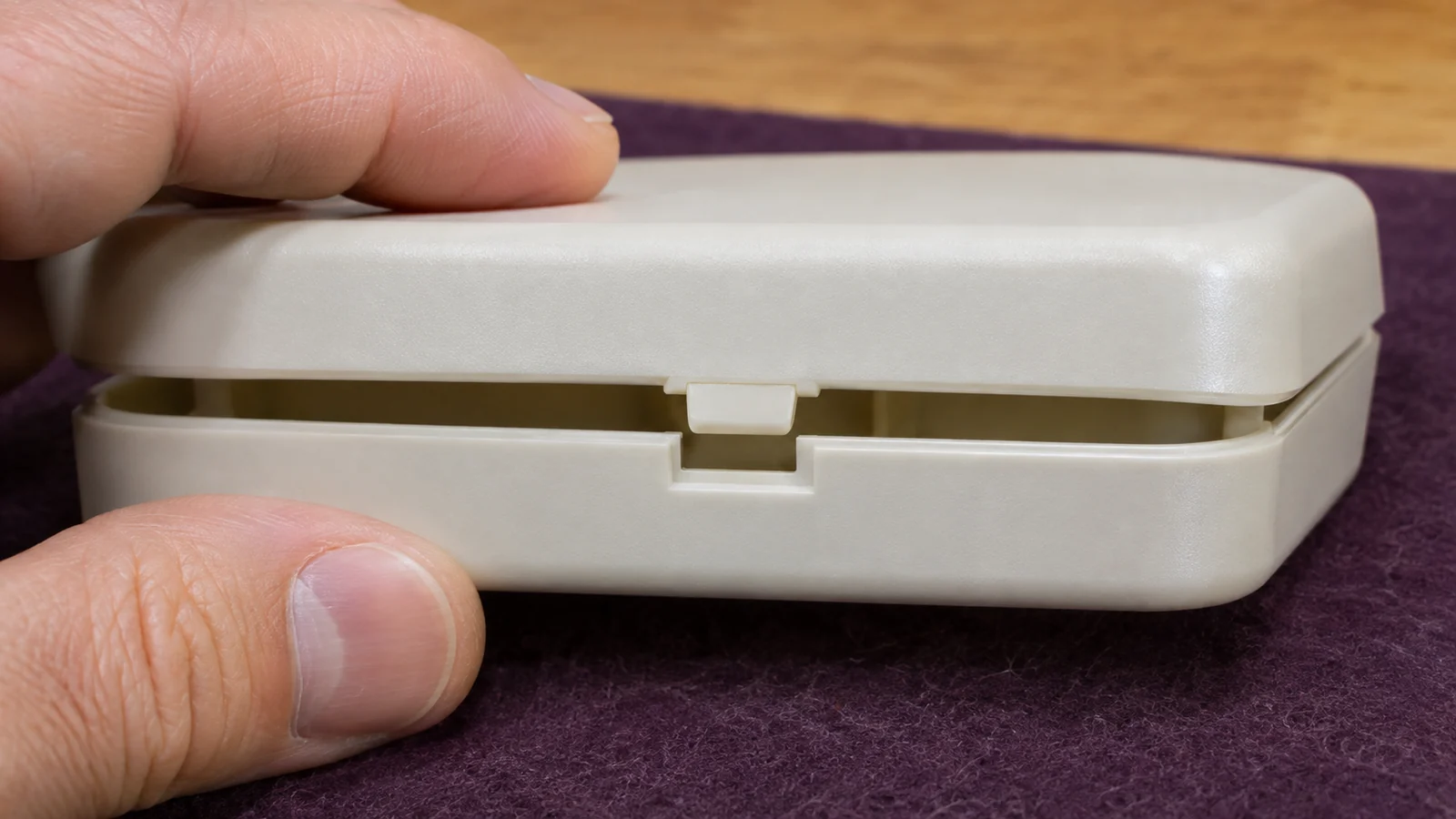
Return to the hypothetical cover. If its latches work dry but the gap changes after conditioning, increasing the room-temperature strength target may not address the problem. The review should return to dimensional response, assembly restraint, and the relevant material evidence. This keeps the selection centered on the product instead of a contest between headline properties.
Control a substitution as a design change
An “equivalent” grade should be assessed against the approved requirements, not accepted because its family name or melt-flow value looks similar. The proposed replacement may differ in additives, mechanical behavior, shrinkage, color, or processing guidance. Ask which differences matter to the part and what repeat verification is justified.
- Record the original and proposed grade identities and the reason for substitution.
- Compare relevant data under matching methods and conditions where possible.
- Review the effect on the tool, joining, appearance, and critical dimensions.
- Agree the sample checks and approval owner before the replacement enters routine production.
Keep approval records linked to the actual resin and revision used in sampling. If the original selection is still provisional, say so in the purchasing documents. Injection molding material selection is complete only when the named material, manufacturing assumptions, and product evidence agree; a promising sample or attractive property table is not the whole decision.
For a manufacturing review, provide the CAD model and drawing together with the operating envelope, appearance criteria, intended assembly, expected quantities, and any mandated grade. Identify which requirements are fixed and which can be discussed. That brief makes a useful recommendation possible without asking anyone to guess what “durable” means.
Material approval questions
Can a data sheet prove the finished housing is compliant?
No. A material document addresses a defined material and test context. Product compliance may depend on geometry, color, thickness, assembly, and use. Confirm the evaluation required for the actual product rather than transferring a material designation to the whole assembly.
Is a filled grade always the safer choice?
No. Reinforcement can change stiffness and dimensional behavior, but also changes other tradeoffs. Evaluate the actual load, orientation, appearance, impact requirements, and molding conditions for the proposed grade.
What if no grade meets every preference?
Distinguish mandatory requirements from preferences. Revisit geometry, surface treatment, joining, or the operating assumptions where allowed. Do not quietly relax a critical requirement merely to complete a material comparison.