
Choosing a hot runner vs. cold runner system is not simply a choice between higher and lower tooling cost. A hot runner keeps the melt heated through the distribution system; a cold runner cools and ejects the runner with the molded parts. The better fit depends on resin, gate and appearance requirements, production pattern, and how the runner affects scrap, cycle, and maintenance over the life of the tool.
For a buyer, the useful question is not “Which system is better?” It is “Which trade-off creates less risk for this part and program?” Compare both before the mold design is locked.
In this article:
- The short answer
- How the systems work
- Trade-offs that change the decision
- When a cold runner may fit
- When a hot runner deserves review
- A pre-tooling checklist
- Frequently asked questions
The short answer: start with the part, not the runner
A cold runner is often worth evaluating when a project prioritizes a simpler initial tool, lower commitment, or flexibility for a prototype or shorter production program. A hot runner becomes more attractive when runner scrap, part layout, gate placement, or sustained production makes heated melt delivery valuable enough to justify added design and maintenance considerations.
These are starting points, not rules. High part volume alone does not automatically justify a hot runner, and low volume does not automatically rule one out. Resin thermal behavior, color-change frequency, gate count and position, quality requirements, and the cost of handling or reclaiming runner material can change the answer. Compare the complete part-and-tool system rather than mold price alone.
How the two runner systems deliver melt
Both systems move molten resin from the molding machine nozzle toward the cavity gates. The difference is what happens to the distribution channels during each cycle.
- Cold runner: resin in the runner cools and solidifies. The runner is ejected with the molded parts and must be separated. Whether it can be reground and reused depends on the resin specification, color, contamination controls, and customer requirements.
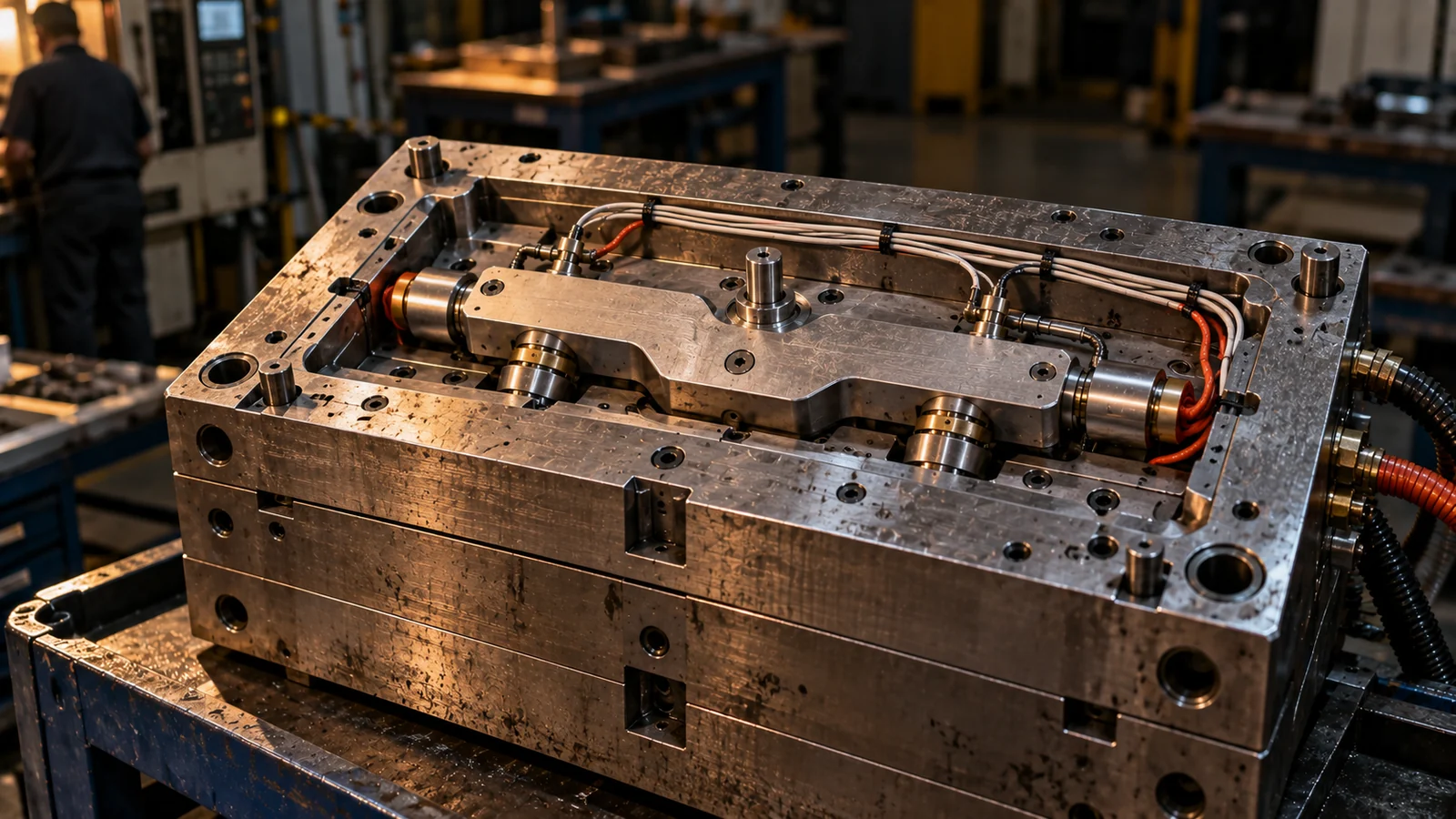
- Hot runner: heated components keep resin molten through some or all of the manifold and nozzle path, so the distribution runner is not ejected as a solid runner each cycle. The part still has a gate, and gate vestige and quality remain design and process considerations.
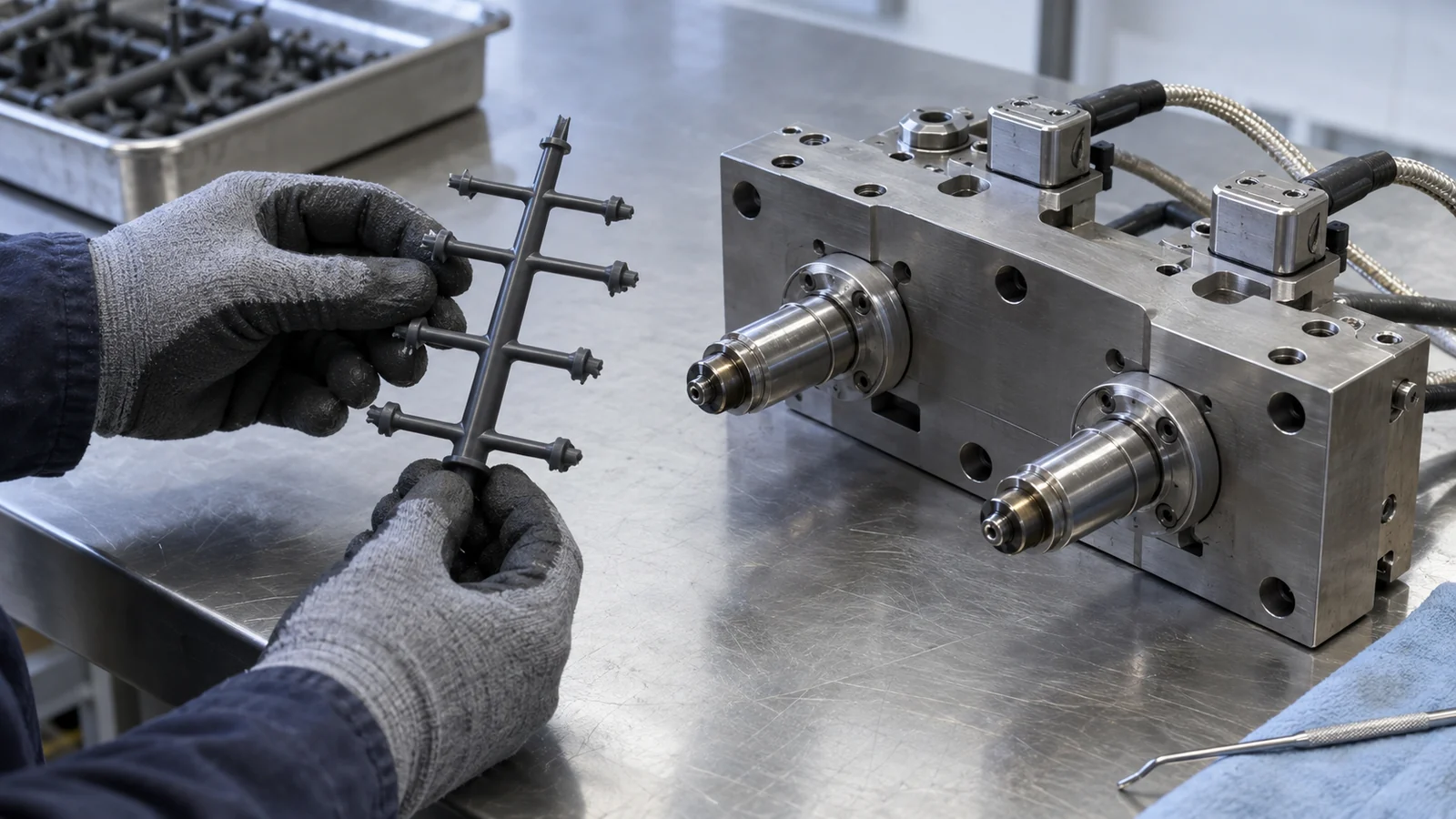
The terms describe the runner thermal condition, not a guarantee about part quality or total cost. Balanced filling, suitable gate location, venting, cooling, and a validated process window still matter in either design. Our injection mold design and CAD engineering guide explains how runner and gate choices connect to the broader mold layout.
The trade-offs that change the decision
| Decision factor | Cold runner considerations | Hot runner considerations |
|---|---|---|
| Initial tooling | Can offer a less complex starting design, depending on part and layout. | Heated manifolds, nozzles, controls, and interfaces add design and service considerations. |
| Runner material | Creates a solid runner to separate and manage; regrind is not always permitted. | Can reduce solid runner scrap, but does not remove gate vestige or all process waste. |
| Thermal exposure | Runner resin cools each cycle. | Resin remains hot in the melt path; residence time and temperature need review for the selected grade. |
| Gate and cavity layout | Runner geometry and parting-line space influence how melt reaches each cavity. | Can offer different gate-placement and cavity-layout options, subject to tool design. |
| Changeovers | Runner is removed with the part; material changeover still requires a planned purge. | Manifold design, flow path, material, and color sequence can affect purging and restart planning. |
| Maintenance | Fewer heated components, though the mold still needs routine inspection. | Heaters, thermocouples, tips, seals, and controls add items to inspect and maintain. |
This is a screening comparison, not a quote. Reduced runner scrap may matter when resin is costly or regrind is restricted, but compare that value with added tooling, energy, startup, and service requirements. Use the approved material, part weight, cavity plan, production schedule, scrap policy, and maintenance assumptions. For the broader tooling-versus-part economics, see what an injection molding quote includes.
When a cold runner may be the better fit
A cold runner can be sensible when the project benefits from a straightforward tool concept and the runner can be managed without compromising part economics or quality. This may include early design validation, uncertain demand, a limited production program, or a part whose layout works well with a conventional runner and gate arrangement.
It may also suit a project where material is expensive but the runner can be cleanly separated and reuse is expressly allowed. Do not assume regrind is acceptable: confirm the customer specification, resin supplier guidance, color requirements, and traceability rules. If the runner must be discarded, include that material in the cost model instead of treating it as recoverable.
Cold runners are not low quality by definition. They can produce acceptable parts when the runner is balanced, the gate is appropriate, and the process is validated. The practical limitation is that the runner occupies space, cools, is ejected, and must be handled as part of the cycle.
When a hot runner deserves a closer look
Evaluate a hot runner when reducing solid runner material or changing gate access could solve a documented part or program issue. Examples include a layout constrained by runner space, multiple cavities requiring a considered gate strategy, or recurring runner handling that adds an operational burden.
Keeping resin molten also introduces controls that a cold runner does not use in the same way. Material residence, temperature uniformity, startup, shutdown, and unplanned pauses need review for the specific resin and manifold design. Husky’s hot-runner handbook describes temperature interlocks and standby functions intended to help manage startup and resin exposure when cycling stops; exact controls depend on system and application.
A hot runner is not a shortcut around gate design. Gate location and type still affect vestige, flow marks, weld-line position, packing, and appearance. Review these requirements with the complete hot runner mold design scope, not only expected runner-weight reduction.
A pre-tooling decision checklist
Give the tooling team enough information to compare the same part and production assumptions on both sides:

- Resin and grade: identify the exact resin, colorants or additives, processing requirements, and sensitivity to prolonged heat exposure.
- Part and gate requirements: mark cosmetic surfaces, gate-vestige limits, critical dimensions, weld-line restrictions, and trimming constraints.
- Production pattern: share forecast range, expected run size, color or material changes, and whether demand is stable or uncertain.
- Runner policy: confirm whether runners are discarded, recycled externally, or eligible for controlled regrind under the part specification.
- Tool upkeep: clarify who maintains the mold and heated components, what spares are expected, and how service access is planned.
- Validation: agree how cavity balance, part quality, startup parts, changeovers, and the acceptable process window will be checked.
Ask for the assumptions behind the recommendation: cavity count, runner and gate concept, estimated runner handling, maintenance scope, and the conditions that could change the preferred option. If the mold is at concept stage, a custom mold-making review can bring part geometry, tool architecture, and production intent into the same discussion.
Frequently asked questions
Does a hot runner eliminate all plastic waste?
No. It can reduce the solid runner ejected each cycle, but startup material, rejected parts, purging, and other process losses may remain. The part still has a gate, and actual waste depends on design and operating plan.
Is a cold runner always cheaper?
Not across the full program. A cold-runner tool may have a lower initial cost in some designs, but runner material, handling, cooling, and cycle effects contribute to operating cost. Compare the same assumptions and include maintenance and material policy.
Can a hot runner be used with any plastic resin?
Do not assume every resin or grade suits every hot-runner layout. Confirm the material processing window, residence-time considerations, color-change needs, and system compatibility with the mold designer.
Which system is better for a prototype mold?
A cold runner is often considered when simplicity and flexibility are priorities, but geometry, resin, gate requirements, and validation goals can change the decision. “Prototype” alone is not enough information to choose.
What should I send for a runner-system review?
Provide the 3D model and drawing, resin and color, forecast range, appearance and gate requirements, regrind policy, and changeover or validation needs. This lets the team compare the runner as part of the complete mold plan.
Next step: Share the part geometry, resin, forecast range, and gate or appearance constraints when requesting a tooling review. The useful comparison is grounded in your requirements, not a universal claim that one runner type always wins.