
Cold-runner material waste comes from polymer that solidifies in the sprue and runner system instead of becoming part of the finished component. How significant that material is depends on runner volume relative to part mass, shot size, layout, and whether any regrind is allowed by the resin specification and product requirements. Before changing the mold concept, measure the actual material flow and define what happens to the runner after ejection.
Map where material goes
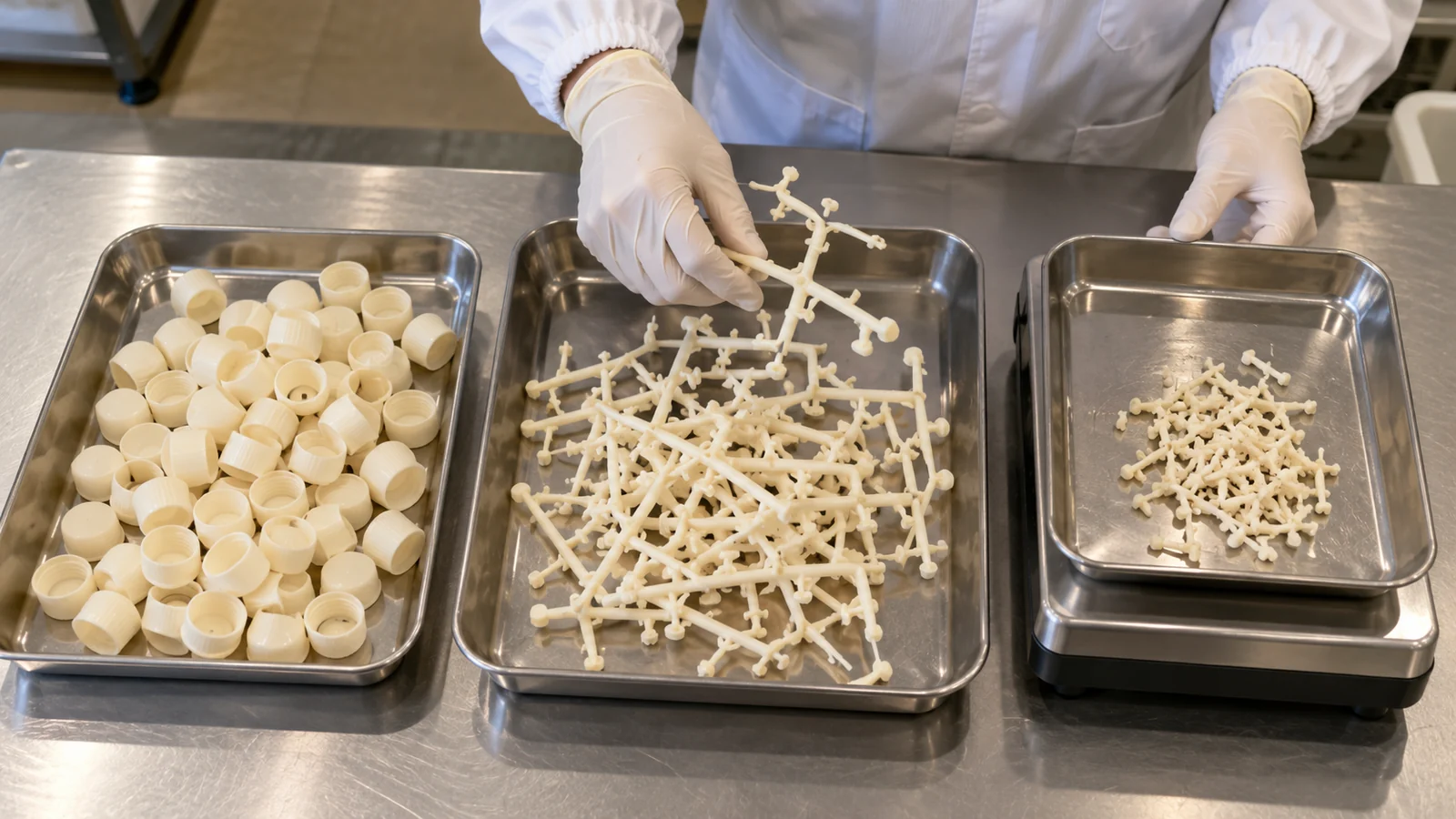
Separate the shot into finished parts, sprue, runners, purge material, and rejected parts. This simple material map prevents the team from calling every non-part portion “runner waste” when some loss may come from startup, color changeover, or process instability.
Use actual shot and part records where available. A runner that looks small beside the mold can represent a meaningful share of the shot for a compact component; a larger part may make the same runner geometry less significant. Avoid estimating the impact from a photo alone.
Understand runner-to-part material balance
Runner volume depends on the number and position of cavities, flow path length, cross-section, gating strategy, and the need to fill the part reliably. The design must provide a suitable flow path, not minimize runner volume at any cost. An undersized or poorly arranged runner can increase pressure demand or create filling inconsistency and scrap elsewhere.
Compare candidate layouts against the part geometry and material. Consider whether the runner can be shortened or simplified without compromising balance, gate location, venting, or tool robustness. For multi-cavity tools, every cavity must remain adequately supplied; a material-saving change that creates cavity-specific defects is not a net improvement.
Check whether regrind is permitted
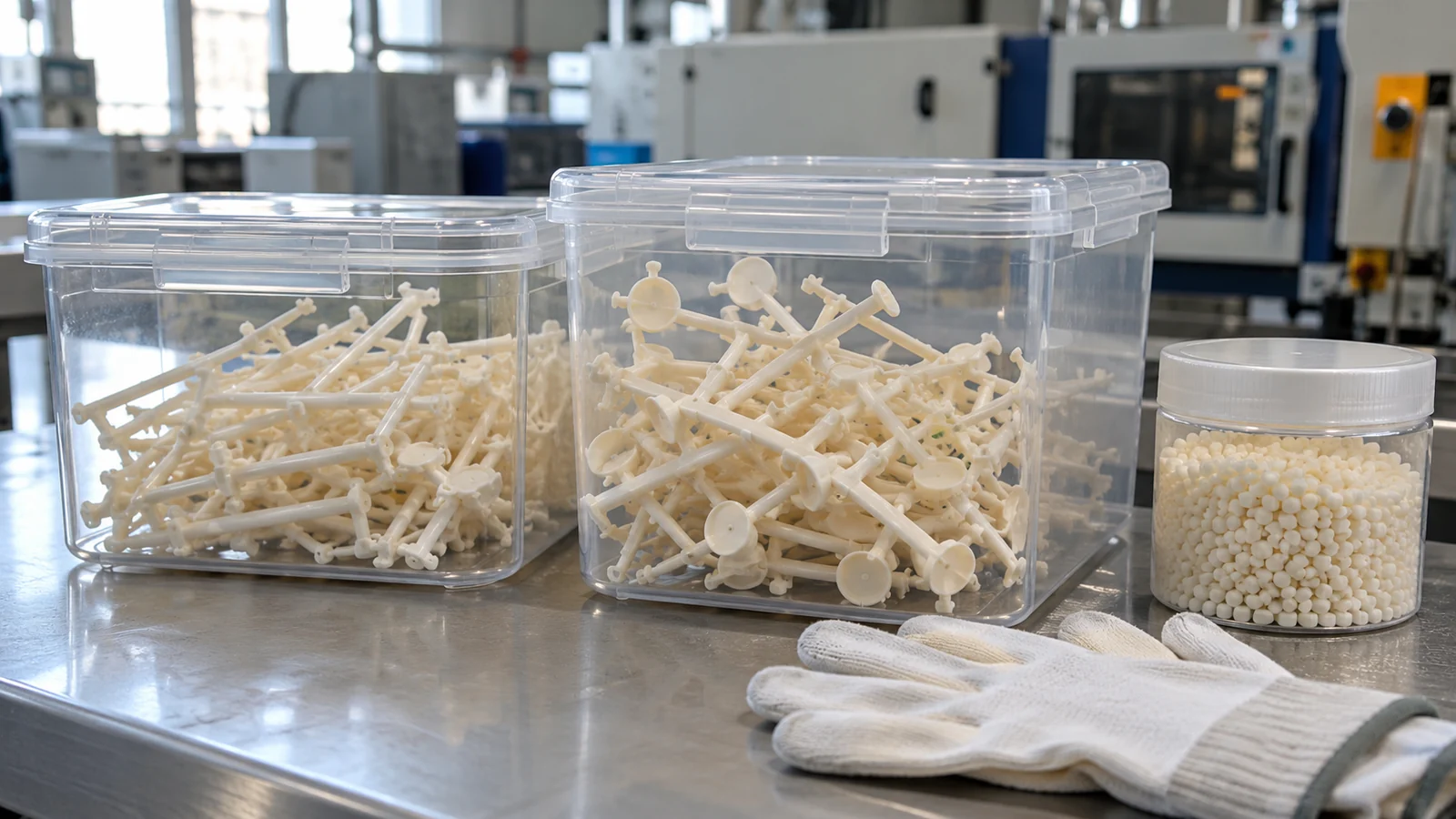
Runner material may sometimes be recovered and reprocessed, but that decision is controlled by the resin supplier’s guidance, customer specification, application, contamination risk, and the quality system. Regrind is not automatically equivalent to virgin resin, and the allowable amount—if any—must be documented and approved for the part.
Before counting regrind as a cost saving, confirm collection and segregation practices, material identification, cleanliness, blending controls, and traceability. Different colors or grades should not be mixed casually. If the product has appearance, mechanical, regulatory, or customer-specific requirements, obtain the relevant approval before reintroducing runner material into production.
Ways to reduce avoidable runner waste
- Review the layout: look for unnecessarily long flow paths and runner sections that can be improved while maintaining reliable filling.
- Revisit gate placement: evaluate whether a gate move can simplify the runner without creating unacceptable weld lines, appearance marks, or filling risk.
- Stabilize startup and changeover: record purge and reject material separately to reveal losses that are not caused by runner geometry.
- Improve handling: keep any approved recoverable material identified and protected from contamination.
- Compare mold concepts: include tooling, temperature control, maintenance, and validation—not only material usage per shot.
Each change needs confirmation against the part’s quality requirements. A shorter runner may affect filling or gate location; better material utilization is valuable only if acceptable parts continue to be produced.
When a different runner concept deserves review
If the runner represents a significant recurring share of material, discuss whether an alternate runner approach is technically appropriate. The decision depends on production volume, resin sensitivity, color changes, gate requirements, process control, maintenance capability, and tooling investment. A hot-runner system can reduce solidified runner material but introduces its own hardware, control, and maintenance considerations; it is not automatically the lower-cost route.
For a cold-runner tooling overview, see cold-runner mold design. Compare the entire production route using measured material data and documented quality requirements rather than assuming that one system always creates less waste.
FAQ
Can all cold-runner material be reground?
No. Reuse depends on resin guidance, customer and product requirements, contamination controls, and approval. Do not treat regrind as acceptable without a documented basis.
Does a smaller runner always reduce total cost?
No. The runner must still support reliable filling and cavity balance. If a smaller design increases defects or process instability, the apparent material saving may be offset by scrap and downtime.
Is a hot runner always better for material efficiency?
Not in every program. It can reduce solidified runner material but changes tooling, control, maintenance, and changeover considerations. Compare those factors with actual shot data and project requirements.