
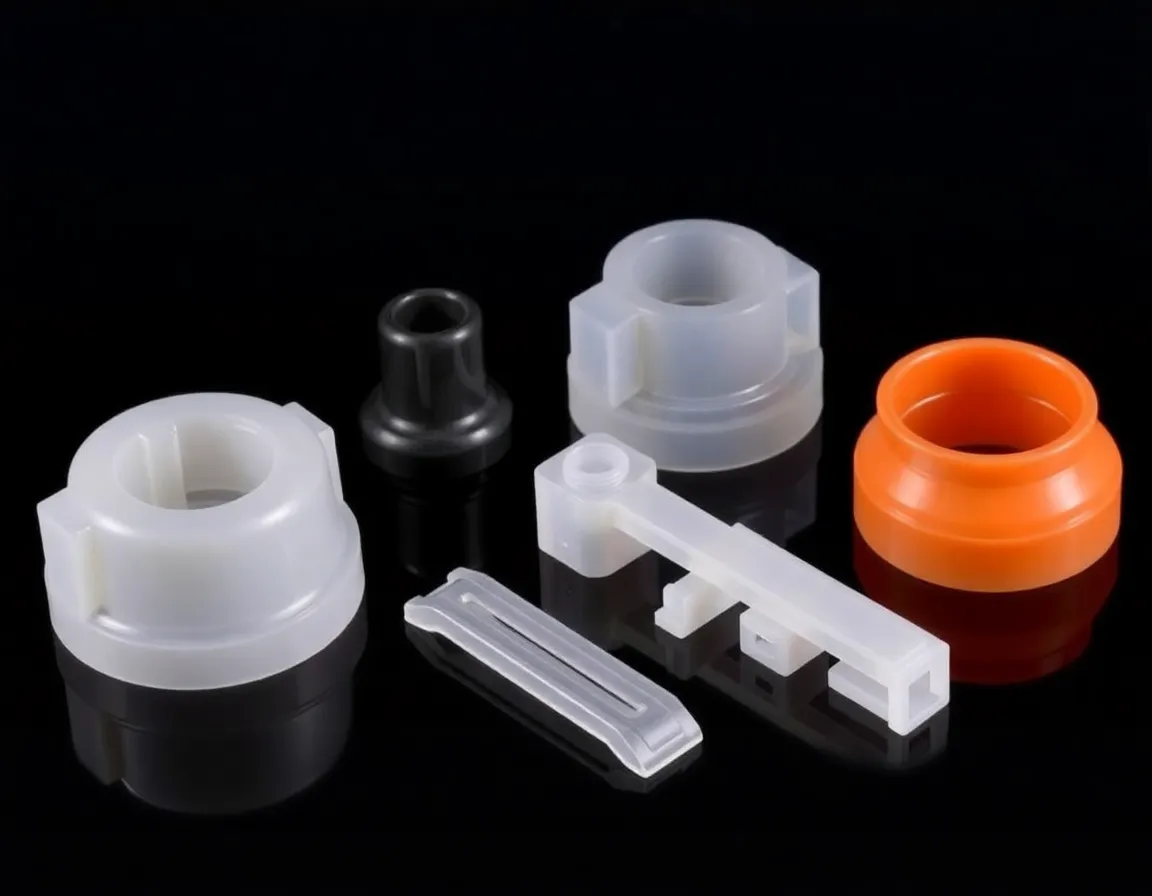
In the world of modern manufacturing, the margin for error is shrinking by the day. From microscopic components in medical devices to complex automotive connectors, the demand for parts that fit perfectly every single time has never been higher. This is where tight tolerance plastic molding comes into play. While standard injection molding is sufficient for many products, tight tolerance molding is a specialized discipline that requires a level of precision akin to watchmaking.
But what separates a standard molding job from one that achieves tight tolerances? It is not just about having a good machine; it is a combination of art, science, and rigorous process control. In this article, we will explore the five secrets to mastering this challenging manufacturing process.
What is Tight Tolerance Plastic Molding?
Before diving into the secrets, it is essential to define what we mean by "tight tolerance." In the plastics industry, standard tolerances are often governed by general guidelines, such as those found in the SPI (Society of the Plastics Industry) standards. These standard tolerances can allow for variations of several thousandths of an inch.
Tight tolerance plastic molding, on the other hand, refers to manufacturing processes that achieve dimensions significantly closer to the nominal design. While "tight" is relative to the size of the part, it generally refers to tolerances of less than ±0.001 inches (0.025 mm), and in some micro-molding applications, tolerances can be as precise as ±0.0001 inches.
Achieving these dimensions is difficult because plastic is inherently unstable. It shrinks as it cools, it absorbs moisture, and it reacts to pressure and heat. Mastering tight tolerances means mastering the variables that cause plastic to move.
Secret 1: Design for Manufacturability (DFM) and Material Science
The first secret to success happens long before the mold is cut or the machine is turned on. It happens at the design table. You cannot mold a part to tight tolerances if the part design itself is fighting against the laws of physics.
The Critical Role of Material Selection
Not all plastics are created equal. The choice of resin is the foundation of tolerance control. Amorphous polymers, such as Polycarbonate (PC) and Acrylic (PMMA), generally offer better dimensional stability than semi-crystalline polymers like Polypropylene (PP) or Nylon (PA).
Semi-crystalline materials have a sharp melting point and undergo significant volumetric shrinkage as they transition from liquid to solid. This shrinkage is difficult to predict and control. Amorphous materials, however, soften over a range of temperatures and shrink less predictably but more uniformly. Furthermore, additives like glass fibers can reduce shrinkage but introduce anisotropic behavior (shrinkage differs in flow and cross-flow directions), which complicates tolerance prediction.
Wall Thickness Uniformity
Another critical design aspect is wall thickness. Variations in wall thickness are the enemy of tight tolerances. If a part has a thick section connected to a thin section, the thick section will cool slower. This differential cooling leads to warpage, internal stresses, and sink marks.
- Uniformity: Maintain consistent nominal wall thickness throughout the part.
- Transitions: If thickness must change, use gradual transitions rather than abrupt steps.
- Ribs and Bosses: Design ribs and bosses to be thinner than the main wall (typically 50-60% of the nominal wall) to prevent sinking and warping.
Secret 2: The Mold is the Machine
In tight tolerance molding, the injection molding machine is often viewed as the delivery vehicle, but the mold itself is the precision instrument. A poorly constructed mold will never produce tight tolerance parts, regardless of how advanced the press is.
Tool Steel and Construction
The mold must be rigid enough to withstand immense injection pressures without deflecting. If the mold plates deflect, the cavity dimensions change, and the part dimensions will be inconsistent. High-quality tool steels, such as H13 or S136, are essential for longevity and stability.
Gate Design and Location
The gate is the entry point for the molten plastic. Its design dictates how the material flows into the cavity and how it packs. For tight tolerances, gate location is critical because it determines the orientation of the polymer chains and the direction of shrinkage.
A common technique for tight tolerance molding is Multi-Cavity Balance. If a mold has multiple cavities, the runner system must be balanced so that each cavity fills at the exact same time and pressure. If one cavity fills faster, it will pack differently, leading to dimensional differences between cavities.
Cooling Channel Design
Cooling is not just about cycle time; it is about dimensional control. Uneven cooling is the primary cause of warpage. The mold must feature conformal cooling channels that follow the contour of the part. This ensures that the part cools uniformly, minimizing internal stresses that would otherwise cause the part to twist or bow after ejection.
Secret 3: Process Optimization and Scientific Molding
Once you have a good design and a precision mold, you must establish a robust process. "Scientific Molding" is the methodology used to achieve this. It moves away from the "art" of molding (tweaking knobs until it looks right) to a data-driven science.
The Decoupled Molding Process
To achieve tight tolerances, molders often use a "Decoupled Molding" process. This separates the injection phase into two distinct steps:
- Velocity-Controlled Filling: The screw moves forward at a set speed to fill the mold approximately 95-98% full.
- Pressure-Controlled Packing: The machine switches to pressure control to pack out the remaining volume and compensate for shrinkage.
By decoupling these stages, the molder can ensure that the part is filled consistently every time. The switchover point from velocity to pressure is the most critical variable. If it varies, the part dimensions will vary.
Gate Seal Study
Plastic continues to flow into the mold until the gate freezes off. If the packing pressure is held for too short a time, the part will be under-packed and undersized. If held too long, it may be over-packed and oversized or stressed. A Gate Seal Study is conducted to determine the exact time required for the gate to freeze. Holding pressure beyond this point is useless and only adds stress to the part.
Melt Temperature and Viscosity
The viscosity of the plastic affects how easily it fills the mold. Melt temperature must be controlled within a very narrow window. If the temperature fluctuates, the viscosity changes, and the pressure required to fill the mold changes. This directly impacts the final dimensions of the part. Using a Melt Pressure Sensor at the end of the fill can help monitor this in real-time.
Secret 4: Temperature Control and Cooling Dynamics
We touched on cooling in the mold design section, but the process control of temperature is a secret weapon in tight tolerance molding. Plastics expand when heated and contract when cooled. The temperature at which the part is ejected dictates its final dimensions once it reaches room temperature.
Consistent Mold Temperature
The mold temperature controller must be capable of maintaining the set point within ±1°F. If the mold temperature fluctuates, the shrinkage rate of the plastic fluctuates. For example, a hotter mold generally produces a part that shrinks more (because it cools slower and the polymer chains have time to relax), while a colder mold produces a part that shrinks less.
Post-Mold Shrinkage
Some materials, particularly semi-crystalline plastics like Nylon and PBT, continue to shrink after they are ejected from the mold. This is known as post-mold shrinkage. To master tight tolerances with these materials, parts may need to be annealed or conditioned. Annealing involves heating the part to a specific temperature and cooling it slowly to relieve internal stresses and stabilize dimensions.
Moisture Control
Hygroscopic materials (materials that absorb moisture from the air, like ABS or Polycarbonate) must be dried properly before molding. If the resin contains moisture, it can hydrolyze during the molding process, breaking down the polymer chains. This reduces the mechanical properties and changes the shrinkage rate, making tight tolerances impossible to hold.
Secret 5: Metrology and Quality Assurance
You cannot manage what you do not measure. The final secret to mastering tight tolerance plastic molding is the implementation of rigorous metrology and quality assurance systems. Visual inspection is not enough; you need hard data.
In-Process Monitoring
Modern injection molding machines can be equipped with sensors that monitor cavity pressure. Cavity pressure is the most reliable indicator of part quality. By monitoring the pressure curve inside the mold, you can detect variations in viscosity, mold temperature, and check for short shots or flash in real-time.
The Right Measurement Tools
To verify tight tolerances, you need measurement tools that are more precise than the tolerance itself. Standard calipers are often insufficient for tolerances under ±0.002 inches.
- Coordinate Measuring Machines (CMM): These are the gold standard for 3D dimensional analysis.
- Optical Comparators: Ideal for measuring small, complex 2D profiles without touching the part.
- Laser Micrometers: Used for high-speed, non-contact measurement of diameters and widths.
Environmental Control
Plastic is sensitive to its environment. A part measured immediately after molding will be larger than the same part measured 24 hours later (due to cooling and moisture absorption). Therefore, quality control measurements must be taken in a climate-controlled room after the parts have reached equilibrium.
Furthermore, the measurement room itself should be temperature-controlled. A variation of 10°F in the inspection room can cause a plastic part to expand or contract enough to fail a tight tolerance inspection.
Conclusion
Mastering tight tolerance plastic molding is a holistic endeavor. It requires a marriage of part design, tooling engineering, scientific processing, and meticulous quality control. It is not a process that can be bought off the shelf; it must be developed and refined.
By focusing on Design for Manufacturability, investing in precision tooling, utilizing scientific molding techniques, strictly controlling temperature and cooling, and relying on robust metrology, manufacturers can unlock the ability to produce parts that meet the most demanding specifications. As industries like medical, aerospace, and electronics continue to miniaturize and complicate their designs, the mastery of these five secrets will be the defining factor between success and failure.