
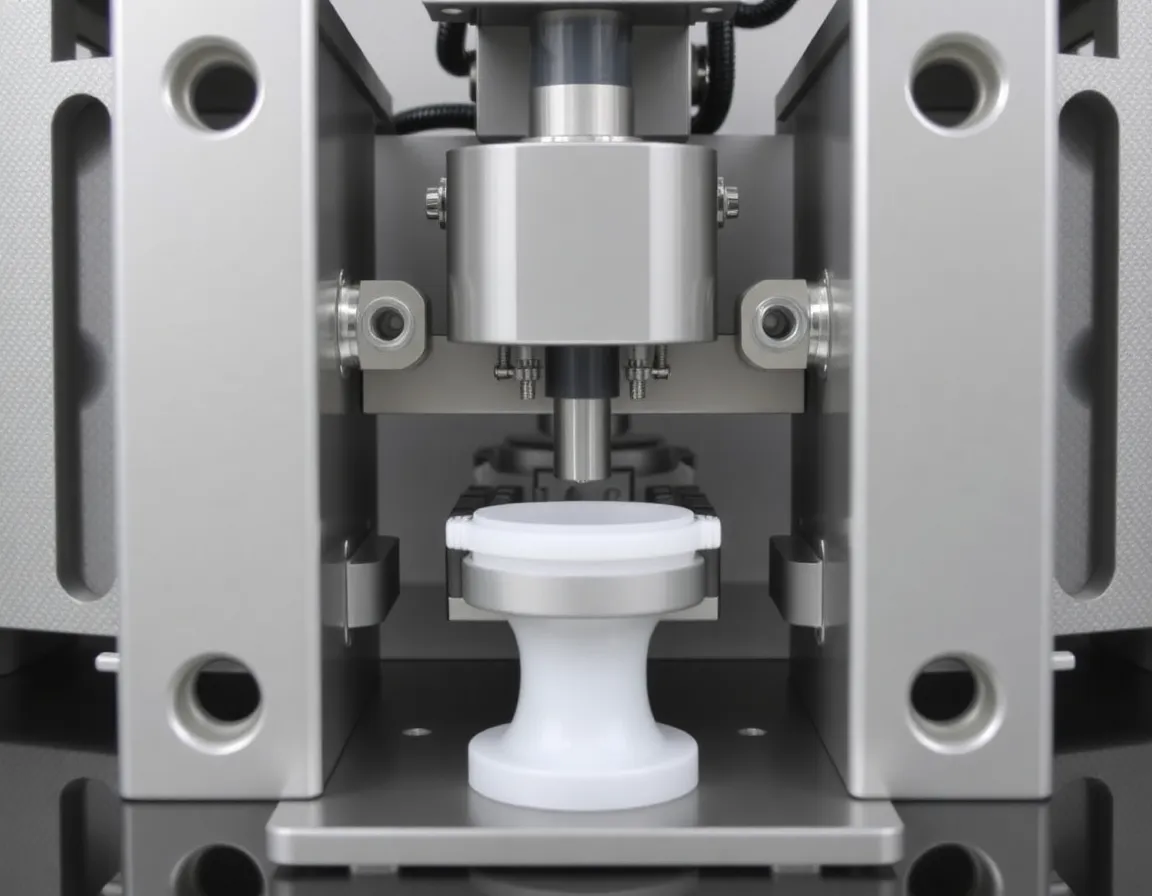
In the world of modern manufacturing, the margin for error is often measured in microns. When a component is destined for a medical device, a fiber optic connector, or a microfluidic chip, standard injection molding simply isn't enough. This is where ultra precision plastic molding comes into play. For buyers, understanding the nuances of this specialized process is the difference between a successful product launch and a costly recall. This article breaks down exactly what ultra precision molding entails, how it differs from standard molding, and what you must evaluate before signing a purchase order.
What Exactly Is Ultra Precision Plastic Molding?
At its core, ultra precision plastic molding is an advanced manufacturing process used to produce plastic parts with extremely tight tolerances, often in the range of ±0.001 mm to ±0.01 mm (1 to 10 microns). While standard injection molding might hold tolerances of ±0.1 mm or looser, ultra precision molding demands a level of control that touches every aspect of the production cycle—from mold design and material selection to machine calibration and environmental conditions.
This isn't just about making small parts. It is about making parts where dimensional accuracy, surface finish, and optical clarity are non-negotiable. Think of the tiny lenses inside a smartphone camera, the microfluidic channels in a lab-on-a-chip device, or the connector ferrules that align fiber optic cables. These components cannot function if they are off by even a fraction of a human hair.
Key Characteristics of Ultra Precision Molding
- Tolerance range: Typically between 1 and 10 microns, sometimes tighter for specific features.
- Surface finish: Often optical-grade (SPI A1-A3) with no visible flow lines or defects.
- Material consistency: Requires engineering-grade resins with tight batch-to-batch consistency.
- Process control: Real-time monitoring of pressure, temperature, and injection speed at a micro-level.
How Ultra Precision Molding Works: A Step-by-Step Breakdown
Understanding the workflow helps buyers ask the right questions. Ultra precision molding is not a single step but a chain of highly controlled processes.
1. Mold Design and Fabrication
The mold is the heart of the process. For ultra precision work, molds are often machined using single-crystal diamond turning or micro-electrical discharge machining (micro-EDM). The steel or carbide used must be free of microscopic defects. Cooling channels are designed with computational fluid dynamics (CFD) to ensure uniform temperature distribution, preventing warpage that could ruin tolerances.
2. Material Selection and Drying
Not all plastics are created equal. Ultra precision molding often uses materials like PMMA (acrylic), polycarbonate, COC/COP (cyclic olefin polymers), and liquid crystal polymers (LCP). These materials must be dried to extremely low moisture levels—often below 0.02%—before molding. Any residual moisture can create micro-bubbles or splay marks that compromise optical or dimensional integrity.
3. The Injection Molding Process
Here, the machine does the heavy lifting. Ultra precision molding machines are typically all-electric (not hydraulic) because they offer repeatability down to 0.01 mm per shot. Key parameters include:
- Injection pressure: Controlled in multiple stages to avoid over-packing thin walls.
- Melt temperature: Maintained within ±0.5°C of the target.
- Mold temperature: Often cycled rapidly using variothermal heating to improve surface replication.
- Shot size: Calculated to 0.001 grams accuracy.
4. Inspection and Metrology
You cannot claim ultra precision without proof. Suppliers use coordinate measuring machines (CMMs), optical comparators, white-light interferometry, and laser scanning to verify every critical dimension. For high-volume runs, statistical process control (SPC) is mandatory, with CpK values typically required to be 1.67 or higher.
Why Buyers Choose Ultra Precision Molding: Benefits and Applications
The premium cost of ultra precision molding is justified by the benefits it delivers in specific high-stakes industries.
Benefits
- Assembly elimination: Parts fit together perfectly without secondary machining or adjustment.
- Miniaturization: Enables complex, tiny features that would be impossible with subtractive manufacturing.
- Optical clarity: Produces lenses and light guides with minimal birefringence and haze.
- Consistency at scale: Once dialed in, the process repeats millions of times with negligible variation.
- Reduced waste: Fewer rejects mean lower total cost of ownership despite higher upfront tooling costs.
Critical Applications
You will find ultra precision molded parts in:
- Medical devices: Microfluidic chips, drug delivery components, diagnostic cartridges, and minimally invasive surgical tools.
- Telecommunications: Fiber optic ferrules, lens arrays, and waveguide connectors.
- Consumer electronics: Smartphone camera lenses, VCSEL collimators, and micro-speaker components.
- Automotive: LiDAR optics, sensor housings, and fuel injection nozzles.
- Photonics: Diffractive optical elements and light pipes for augmented reality glasses.
What Buyers Must Evaluate Before Choosing a Supplier
Not every injection molder can handle ultra precision work. Many claim to, but few have the equipment, culture, and metrology to back it up. As a buyer, you need to dig deep.
1. Machine Capability and Tonnage
Ask for the specific machine brands and models. Ultra precision molding is often done on small-tonnage all-electric presses (5 to 50 tons) from manufacturers like Sodick, Fanuc, and Arburg. These machines have closed-loop control over injection velocity and packing pressure. If a supplier only has hydraulic machines, walk away.
2. In-House Metrology
A supplier without a temperature-controlled metrology lab is a red flag. You need to know they can measure what they promise. Ask about their CMM accuracy, whether they use vision systems, and how they calibrate their instruments. ISO 17025 accreditation for their lab is a strong positive signal.
3. Material Handling Protocols
Ultra precision molding fails if the resin is contaminated. Ask how they store and dry materials. Do they use desiccant dryers with dew point monitoring? Do they purge lines between material changes? Do they allow regrind? (For ultra precision, the answer should almost always be no regrind.)
4. Process Validation and Documentation
You are not just buying parts; you are buying a validated process. The supplier should provide:
- Process Failure Mode and Effects Analysis (PFMEA)
- Control plans for every critical dimension
- First Article Inspection (FAI) reports with full dimensional data
- Capability studies (CpK, PpK) over multiple lots
5. Cleanroom Environment
For medical and optical parts, molding must occur in a Class 100 to Class 10,000 cleanroom. Even a single dust particle can ruin an optical surface or clog a microfluidic channel. Verify their cleanroom certification and particle monitoring logs.
6. Communication and Change Management
Ultra precision projects often require design for manufacturability (DFM) feedback. The best suppliers will tell you when your design is impossible or unnecessarily expensive. They will also have a formal change management process—because a tiny tweak to wall thickness or gate location can shift tolerances dramatically.
Common Pitfalls and How to Avoid Them
Even experienced buyers make mistakes. Here are the most common traps in ultra precision plastic molding.
- Over-specifying tolerances: Do not call out ±0.001 mm on every dimension. Only critical features need ultra precision. Over-tolerancing drives up cost and lead time without adding value.
- Ignoring draft angles: Ultra precision does not mean you can skip draft. Without proper draft, parts stick and deform during ejection.
- Assuming standard lead times: Ultra precision tooling can take 8–16 weeks or more. Plan accordingly.
- Forgetting secondary operations: Some parts need annealing, laser trimming, or coating. These steps can introduce variation. Ensure the supplier controls them or partners with a validated vendor.
- Not auditing the supply chain: If your molder outsources mold making or metrology, you lose visibility. Demand a single-source accountability model.
Cost vs. Value: The Buyer's Bottom Line
Ultra precision plastic molding is not cheap. Tooling can cost $50,000 to $250,000 or more, and piece prices are often 2–5 times higher than standard molding. However, for the right application, the value is undeniable. A single failed optical component in a medical device can cost millions in recalls. A misaligned fiber optic ferrule can degrade network performance across a data center.
When evaluating quotes, do not compare only the piece price. Compare the total cost of ownership: scrap rates, assembly yield, inspection costs, and field failure risk. A supplier who charges 30% more but delivers 99.9% yield is almost always the better choice.
Final Checklist for Buyers
Before you commit to an ultra precision molding project, run through this checklist:
- Have you defined which dimensions truly require ultra precision?
- Have you reviewed the supplier's machine list and metrology lab?
- Have you seen a CpK study from a similar project?
- Is the molding environment cleanroom-certified?
- Are material handling and drying protocols documented?
- Have you agreed on inspection frequency and reporting format?
- Do you have a change management process in place?
Ultra precision plastic molding is a powerful capability, but it is not a commodity. It requires a partnership between buyer and molder, built on transparency, technical rigor, and a shared commitment to microns. Choose your partner wisely, and you will unlock products that were once considered impossible to manufacture at scale.