
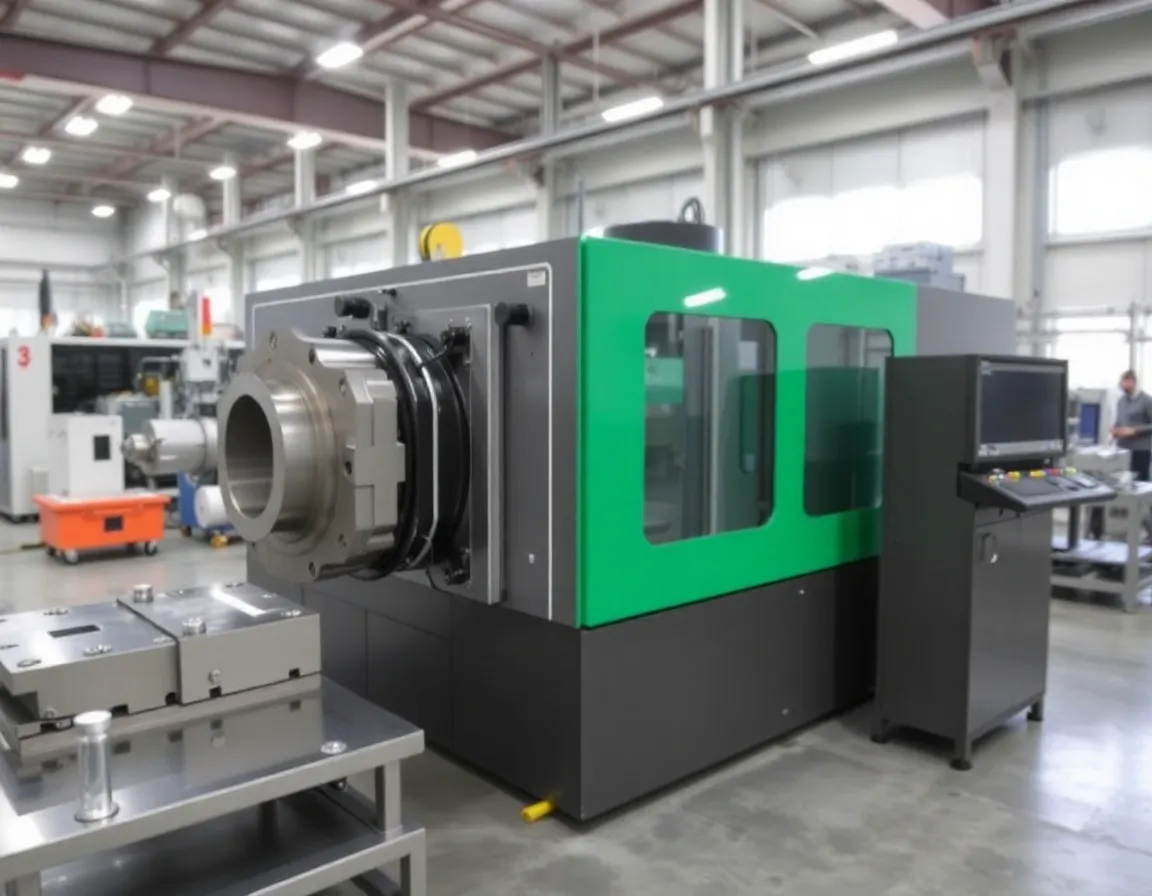
In the modern manufacturing landscape, the demand for components that are both incredibly small and impossibly precise has never been higher. From microscopic medical implants that must function flawlessly inside the human body to intricate aerospace connectors that endure extreme pressure, the margin for error is virtually zero. This is where high precision custom molding becomes not just a manufacturing option, but a critical strategic advantage. This process bridges the gap between a conceptual design and a tangible, mass-produced reality, allowing engineers and designers to create complex geometries with tolerances measured in microns.
What is High Precision Custom Molding?
At its core, high precision custom molding is a specialized manufacturing technique used to produce parts with exceptionally tight tolerances, complex geometries, and superior surface finishes. Unlike standard injection molding, which prioritizes speed and cost-efficiency for general-purpose parts, high precision molding prioritizes accuracy, repeatability, and material integrity. The term "custom" indicates that the tooling—the mold itself—is engineered specifically for a unique part design, rather than relying on stock shapes or standard profiles.
The process typically involves injecting molten material—most commonly engineering-grade thermoplastics, silicone, or specialized elastomers—into a precisely machined metal mold. Once the material cools and solidifies, the mold opens, and the finished part is ejected. What distinguishes this from ordinary molding is the level of control exerted over every variable: temperature, pressure, injection speed, and cooling time. In high precision applications, even a fraction of a degree in temperature fluctuation can mean the difference between a functional part and scrap.
The Distinction Between Standard and Precision Molding
To understand the value of high precision custom molding, one must appreciate the difference in tolerances. Standard injection molding might hold tolerances of ±0.005 inches. High precision molding, however, routinely achieves tolerances of ±0.0005 inches or tighter. This level of accuracy requires:
- Micro-machined tooling: Molds are cut using high-speed CNC or EDM (Electrical Discharge Machining) processes to ensure exact cavity dimensions.
- Advanced process monitoring: Real-time sensors track pressure and temperature inside the mold cavity.
- Controlled environments: Many precision molding facilities operate in cleanrooms to prevent contamination.
- Specialized materials: Use of high-performance polymers like PEEK, PSU, or liquid silicone rubber (LSR) that maintain properties under stress.
From Prototype to Production: The Workflow
The journey from a digital design file to a full production run is a multi-stage process that demands collaboration between the client and the molder. Skipping or rushing any step in this workflow inevitably leads to costly delays or functional failures down the line.
1. Design for Manufacturability (DFM) and Prototyping
Before a single piece of metal is cut, the part design undergoes a rigorous DFM analysis. Engineers review the 3D CAD model to identify potential issues such as wall thickness variations, undercuts, or inadequate draft angles that could cause defects during molding. At this stage, rapid prototyping methods—such as 3D printing or CNC machining of a single cavity—are often used to create physical samples. These prototypes allow the client to test fit, form, and function. For high precision custom molding, the prototype phase is also used to validate the material choice and predict shrinkage rates, which is critical because all polymers shrink as they cool.
2. Tooling and Mold Fabrication
The mold is the heart of the operation. For high precision work, molds are typically made from hardened tool steels or stainless steel to withstand the high pressures and abrasive nature of engineering resins. The fabrication process involves:
- Core and cavity machining: Creating the negative space that defines the part's external and internal surfaces.
- Gate and runner design: Engineering the channels that deliver molten plastic to the cavity to ensure balanced flow and minimize weld lines.
- Cooling channel optimization: Conformal cooling channels are often used to ensure uniform cooling, which prevents warping and maintains dimensional stability.
This stage is the most capital-intensive. A high precision mold can cost tens of thousands of dollars, but it is an investment that pays off over millions of cycles.
3. Validation and Process Optimization
Once the mold is mounted in the press, the molder conducts a scientific molding study. This involves creating a "process window"—a range of settings where the part meets all specifications. Using Design of Experiments (DOE), engineers determine the optimal injection velocity, packing pressure, and cooling time. For high precision custom molding, this stage often includes:
- Capability studies (Cpk): Statistical analysis to prove the process can consistently produce parts within tolerance.
- First Article Inspection (FAI): Detailed measurement of parts from the first production run using coordinate measuring machines (CMM) or optical comparators.
- Material validation: Testing for mechanical properties, chemical resistance, or biocompatibility as required.
4. Scaling to Full Production
Once the process is validated, production scales up. This may involve moving from a single-cavity prototype mold to a multi-cavity production mold (e.g., 8, 16, or 64 cavities) to increase output. The challenge here is maintaining precision across all cavities. High precision molders use automated vision systems and in-line inspection to monitor parts as they are produced, rejecting any that fall outside the acceptable range. The transition from prototype to production is not merely about volume; it is about maintaining the exact same dimensional integrity at 10,000 units per day as was achieved on day one.
Key Benefits of High Precision Custom Molding
Why do industries ranging from medical to automotive pay a premium for this service? The benefits extend far beyond simple accuracy.
- Unmatched Repeatability: Once the process is locked in, millions of identical parts can be produced with negligible variation. This is essential for automated assembly lines where a single out-of-spec part can halt production.
- Complex Geometry Integration: Precision molding allows for the consolidation of multiple parts into a single molded component. This reduces assembly time, eliminates fasteners, and lowers overall system costs.
- Material Versatility: The process supports a vast range of materials, including high-temperature resins, biocompatible polymers, and optically clear plastics. This allows designers to select the ideal material for chemical resistance, flexibility, or strength without compromising on precision.
- Superior Surface Finish: High precision molds can be polished to a mirror finish, eliminating secondary operations like painting or coating. This is critical for optical components or consumer-facing medical devices.
- Cost Efficiency at Scale: While the upfront tooling cost is high, the per-part cost drops dramatically at high volumes. For a part that requires 500,000 units per year, high precision molding is often the most economical choice.
Critical Applications Across Industries
The demand for high precision custom molding is driven by industries where failure is not an option.
Medical and Healthcare
This is perhaps the most demanding sector. High precision molding is used to create:
- Microfluidic chips: Lab-on-a-chip devices with channels smaller than a human hair.
- Implantable devices: Components for pacemakers, drug delivery pumps, and cochlear implants that must be biocompatible and sterilizable.
- Surgical instruments: Single-use forceps, scalpel handles, and trocars that require smooth surfaces and precise dimensions.
- Syringe components: Barrels and plungers with tolerances that ensure a leak-proof seal.
Aerospace and Defense
In aerospace, weight reduction and reliability are paramount. Precision molding produces:
- Electrical connectors: High-density connectors that must withstand vibration and extreme temperatures.
- Interior components: Lightweight brackets, clips, and housings that meet stringent flammability and smoke toxicity standards.
- Seals and gaskets: Critical for fuel systems and hydraulic lines.
Automotive and Electronics
As vehicles become more electrified and autonomous, the need for precision molded sensors, connectors, and housings has exploded. Under-the-hood components must resist heat, oil, and vibration. In consumer electronics, precision molding creates the tiny lenses, light guides, and structural frames for smartphones and wearables.
Best Practices for Success
To maximize the benefits of high precision custom molding, follow these guidelines:
- Involve the molder early: Bring your manufacturing partner into the design phase. Their input on draft angles, gate location, and material selection can save weeks of rework.
- Prioritize material consistency: Use only virgin, high-grade resins from reputable suppliers. Regrind material can introduce variability that ruins precision.
- Invest in metrology: You cannot manage what you do not measure. Ensure your molder has the equipment to verify dimensions at the micron level.
- Document everything: A robust quality management system (ISO 13485 for medical, AS9100 for aerospace) ensures traceability from raw material to finished part.
- Plan for maintenance: Precision molds wear out. Establish a preventive maintenance schedule to keep tooling in peak condition.
Conclusion
High precision custom molding is the cornerstone of modern advanced manufacturing. It transforms innovative designs into reliable, high-performance products that improve lives and push the boundaries of technology. While the process demands significant investment in tooling, process control, and expertise, the payoff—unmatched quality, repeatability, and efficiency—makes it indispensable for any industry where "close enough" is not good enough. By understanding the journey from prototype to production and adhering to best practices, manufacturers can harness the full potential of this powerful technology.