
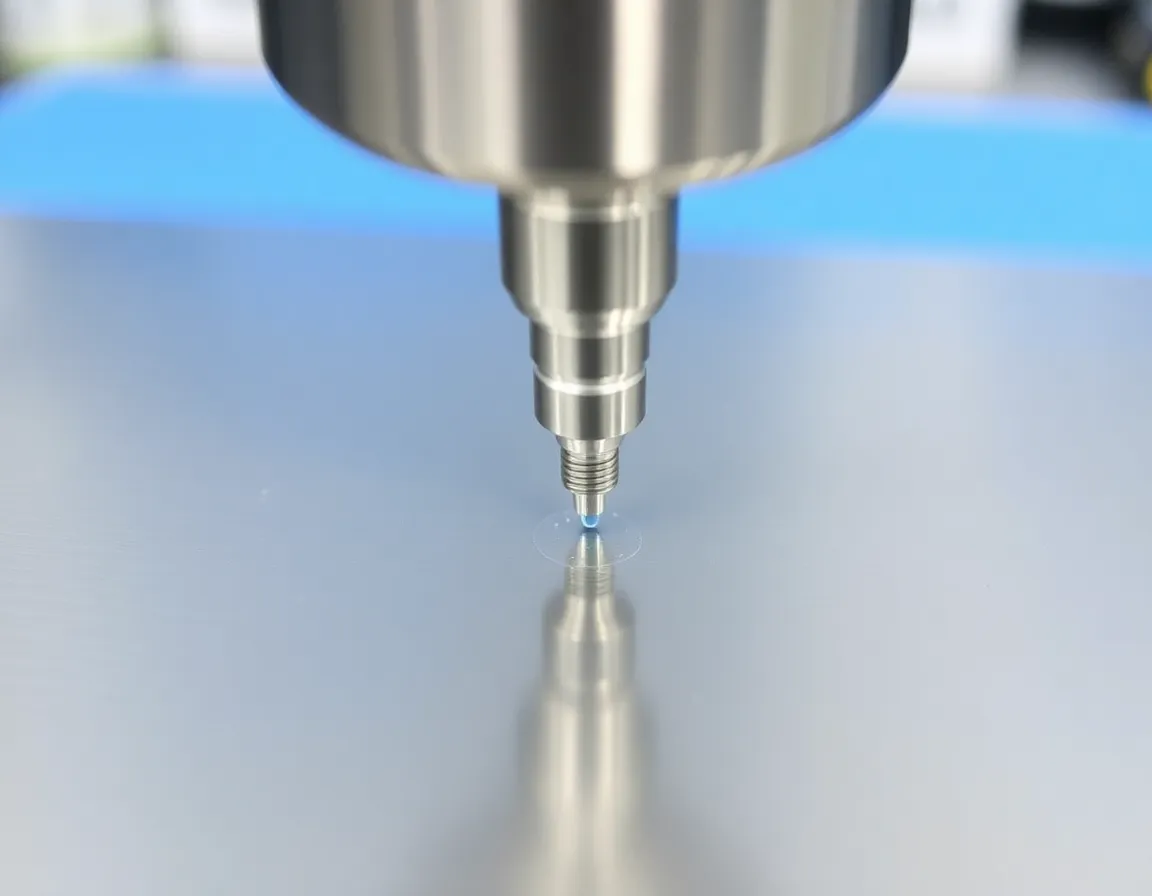
In the world of modern manufacturing, precision is currency. As industries from medical devices to consumer electronics push the boundaries of miniaturization, the demand for parts with tolerances measured in microns has never been higher. Micron tolerance injection molding sits at the apex of this precision-driven evolution. But what exactly does it take to hold tolerances tighter than a human hair, and why is it becoming a critical capability for high-tech manufacturers? This article breaks down the essentials of micron tolerance injection molding, from the machinery required to the practical realities on the shop floor.
What Is Micron Tolerance Injection Molding?
To understand micron tolerance injection molding, it helps to first define the term "micron." A micron, or micrometer, is one-millionth of a meter—approximately 0.000039 inches. For context, a typical human hair is about 70 to 100 microns in diameter. When manufacturers speak of micron tolerance injection molding, they are generally referring to processes capable of holding dimensional tolerances in the range of 1 to 10 microns (and occasionally tighter) on critical features.
Standard injection molding typically operates within tolerances of ±0.001 to ±0.005 inches (roughly 25 to 125 microns). Micron tolerance molding represents a dramatic leap in precision—often an order of magnitude or more. This level of accuracy is not simply a matter of buying a better machine; it requires an integrated approach involving specialized equipment, climate-controlled environments, advanced tooling, and rigorous process control.
It is important to note that "micron tolerance" does not mean every dimension on a part is held to one micron. Instead, it usually applies to specific critical-to-function features, such as the diameter of a microfluidic channel, the thickness of a lens, or the fit between mating components. The rest of the part may have more relaxed tolerances, which helps keep costs and complexity manageable.
How Micron Tolerance Injection Molding Works
Achieving single-digit micron precision requires control over every variable in the injection molding process. The fundamental steps—melting plastic, injecting it into a mold, packing, cooling, and ejecting—remain the same, but each step is executed with extreme discipline and advanced technology.
1. Machine and Screw Design
Standard injection molding machines are not built for micron-level repeatability. Micron tolerance molding demands machines with:
- High-resolution servo controls for injection velocity and pressure, allowing shot-to-shot repeatability within fractions of a percent.
- Small-diameter, low-compression screws that provide gentle, uniform melting and precise shot sizes—often just a few grams or less.
- Closed-loop process monitoring that adjusts in real time based on cavity pressure and temperature feedback.
- Electric (all-electric) drives, which offer cleaner, more repeatable motion than hydraulic systems.
2. Mold and Tooling Precision
The mold itself must be manufactured to tolerances even tighter than the final part, because mold wear and variation directly translate to part variation. Key considerations include:
- High-grade tool steels with excellent dimensional stability and wear resistance.
- Sub-micron CNC machining and EDM to create cavity and core features.
- Balanced runner systems and precise gate design to ensure uniform filling.
- Advanced cooling channel layouts, sometimes conformal cooling, to minimize thermal gradients that cause warpage.
3. Material Selection
Not all plastics are suitable for micron tolerance molding. Amorphous polymers like polycarbonate (PC), acrylic (PMMA), and some cyclic olefin copolymers (COC) tend to hold dimensions better than semi-crystalline materials, which shrink variably as they crystallize. Low-shrink, high-flow grades with consistent lot-to-lot properties are essential. Fillers and reinforcements, while useful for strength, often introduce anisotropy and unpredictable shrinkage, so they are used sparingly in precision applications.
4. Environmental Control
Temperature and humidity fluctuations can expand or contract both the mold and the molded part by several microns. Production is therefore often carried out in climate-controlled cleanrooms with stable temperature (typically 20–22°C ± 0.5°C) and controlled humidity. Airborne particles are also filtered out to prevent contamination that could affect micro-features.
Benefits of Micron Tolerance Injection Molding
The ability to hold micron-level tolerances unlocks several advantages that are difficult or impossible to achieve with conventional molding or other manufacturing methods.
- Assembly simplification: Parts fit together without secondary machining or adjustment, reducing labor and scrap.
- Miniaturization: Enables the production of micro-components with features smaller than 100 microns, such as microfluidic channels, microlenses, and tiny gears.
- Consistency at scale: Once the process is validated, millions of identical parts can be produced with minimal variation.
- Reduced post-processing: Eliminates the need for drilling, milling, or laser trimming after molding.
- Improved product performance: In optical, medical, and fluidic applications, micron-level accuracy directly translates to better function and reliability.
- Material savings: Precision gating and thin-wall capabilities reduce waste and cycle times.
These benefits come with trade-offs in cost, lead time, and process complexity, but for high-value applications, the return on investment is often substantial.
Applications Across Industries
Micron tolerance injection molding is not a niche curiosity—it is a foundational technology for several rapidly growing industries.
Medical and Pharmaceutical
Drug delivery devices, microfluidic diagnostic chips, syringe components, and implantable device housings often require features with tolerances of ±5 microns or less. For example, the channels in a lab-on-a-chip must be precisely dimensioned to control fluid flow and mixing at the microliter scale.
Optics and Photonics
Microlenses, light guides, and optical connectors demand exceptional surface finish and dimensional accuracy. Injection-molded optics can replace ground glass in many applications if the mold and process hold tolerances tight enough to avoid optical distortion.
Electronics and Connectors
As electronic devices shrink, connectors, sockets, and micro-switches require ever-smaller features with reliable fit. Micron tolerance molding ensures that pins and housings align perfectly, preventing intermittent connections.
Automotive and Aerospace
Fuel injector components, sensor housings, and micro-gears for actuators benefit from micron-level precision, which improves efficiency and reduces noise and vibration.
Best Practices for Successful Micron Tolerance Molding
Achieving micron tolerances is as much about discipline as it is about technology. The following best practices are essential for any project targeting this level of precision.
Design for Manufacturability (DFM) Early
Engage the molder during the design phase. Small changes—such as adding a radius, adjusting wall thickness, or relocating a gate—can dramatically improve moldability and tolerance capability. Avoid specifying micron tolerances on non-critical features, as this drives up cost without adding value.
Invest in Process Validation and Capability Studies
Before full production, conduct a process capability study (Cpk) to confirm that the process can consistently hold the required tolerances. A Cpk of 1.33 or higher is often the minimum for precision work; for micron tolerances, a Cpk of 1.67 or 2.0 is not uncommon. This requires producing multiple shots over time and measuring critical dimensions with high-accuracy metrology tools like coordinate measuring machines (CMMs) and optical comparators.
Control the Entire Process Chain
Micron tolerance molding is only as good as its weakest link. This means:
- Using resin lots with certified properties and drying them precisely before molding.
- Monitoring mold temperature at multiple points with thermocouples and maintaining tight setpoints.
- Implementing statistical process control (SPC) to detect drift before it produces out-of-tolerance parts.
- Performing regular mold maintenance to prevent wear from degrading dimensions.
Choose the Right Partner
Not every injection molder has the equipment, metrology, and culture required for micron tolerance work. Look for suppliers with experience in micro-molding, cleanroom capabilities, and a track record in your industry. Ask about their measurement equipment and how they handle gauge repeatability and reproducibility (GR&R).
Plan for Metrology
You cannot control what you cannot measure. Micron tolerance molding requires metrology systems with resolution and accuracy at least ten times better than the tolerance being measured. This often means non-contact optical measurement, white-light interferometry, or laser scanning—tools that are not standard in every molding shop.
Conclusion
Micron tolerance injection molding represents the convergence of advanced machinery, precision tooling, disciplined process control, and rigorous metrology. It is not a simple upgrade but a holistic capability that few manufacturers truly master. For industries where performance depends on microscopic accuracy—medical devices, optics, microelectronics, and beyond—it is an enabling technology that turns impossible designs into manufacturable realities.
As product miniaturization continues and performance requirements tighten, the ability to mold parts with tolerances measured in microns will shift from a competitive advantage to a baseline expectation. Manufacturers who invest in the people, processes, and partnerships needed for micron-level precision today will be best positioned to lead tomorrow's high-tech markets.