
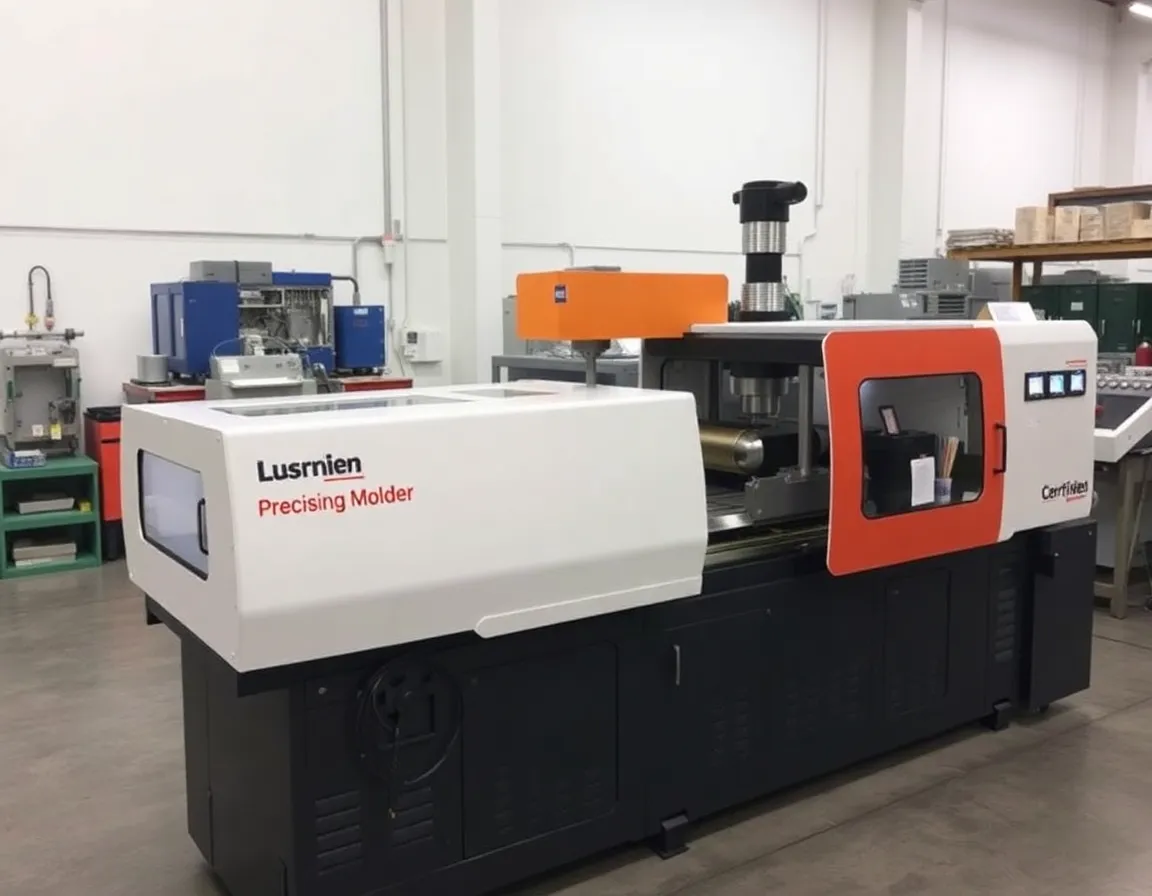
In the world of modern manufacturing, the margin for error is virtually nonexistent. From life-saving medical devices to complex aerospace components and consumer electronics, the demand for plastic parts with micron-level tolerances has never been higher. When a standard injection molder can no longer meet your specifications, or when a failed production run threatens your bottom line, it is time to look for a higher tier of expertise: a certified precision plastic molder.
But what exactly does "certified" mean in this context, and how do you know when your project requires this level of specialization? This article explores the critical indicators that your project has outgrown general manufacturing and requires the rigorous standards of a certified precision specialist.
Understanding the Certified Precision Plastic Molder
Before diving into the warning signs, it is essential to define the role. A standard plastic molder focuses on volume and general shape. A certified precision plastic molder, conversely, focuses on repeatability, exactness, and documented quality assurance.
These manufacturers typically hold certifications such as ISO 9001 (Quality Management), ISO 13485 (Medical Devices), or AS9100 (Aerospace). They do not merely claim to be precise; they possess the documentation to prove their processes meet international standards for consistency. They utilize advanced machinery, scientific molding principles, and rigorous metrology to ensure that the millionth part produced is identical to the first.
1. Your Tolerances Are Tighter Than Standard Capabilities
The most obvious sign you need a certified precision molder is when your part design calls for tolerances that standard molders cannot guarantee. Standard injection molding typically operates within a tolerance range of +/- 0.005 inches. While this is sufficient for lawn furniture or basic packaging, it is catastrophic for industries like medical or automotive.
The Micron-Level Requirement
If your component requires tolerances of +/- 0.001 inches or tighter, you are entering the realm of precision molding. Standard molders often rely on "art to part" methods, where they adjust the machine until the part looks right. A certified precision molder uses scientific molding, where the process is data-driven. They calculate the exact pressure, temperature, and cooling time required to achieve specific molecular orientations and shrink rates.
Why Standard Molders Fail Here
When a standard molder attempts high-tolerance work, they often resort to "sorting"—producing a batch of parts and manually inspecting them to find the few that fall within the acceptable range. This is inefficient and expensive. A certified precision molder adjusts the tooling and process parameters so that every part meets the specification, eliminating the need for manual sorting and reducing waste.
2. Your Industry Is Highly Regulated
If you operate in the medical, aerospace, defense, or automotive sectors, compliance is not optional. You cannot simply buy a part; you must prove that the part was made under controlled conditions.
Traceability and Documentation
A certified precision plastic molder provides a level of traceability that standard shops do not. This includes:
- Resin Traceability: Knowing exactly which batch of polymer was used for which specific run.
- Process Validation: Documented evidence that the molding machine was running within validated parameters.
- Inspection Reports: First Article Inspection (FAI) reports and Certificate of Analysis (CoA) provided with the shipment.
If an FDA auditor or an FAA inspector asks for the history of a specific component, a standard molder might provide a vague invoice. A certified precision molder will provide a comprehensive data packet that ensures your compliance with regulatory bodies.
3. You Are Experiencing Inconsistent Quality or High Rejection Rates
Have you ever received a shipment where 10% of the parts were unusable? Or worse, have you assembled a product only to find that the plastic components vary slightly, causing jams or leaks?
The Cost of Variation
Variation is the enemy of manufacturing. If your current molder is struggling with warping, short shots, or inconsistent dimensions, they likely lack the process control required for the job. Certified precision molders use advanced statistical process control (SPC) to monitor production in real-time.
They don't just react to defects; they predict them. By monitoring cavity pressure and melt temperature, they can detect a drift in quality before a bad part is ever produced. If your current supplier is constantly blaming the design or the material for defects, it is a clear sign that you need a partner with the technical rigor of a certified precision molder.
4. Your Material Selection Is Complex
Not all plastics are created equal. While commodity resins like Polypropylene (PP) and Polyethylene (PE) are forgiving, high-performance engineering resins are not.
High-Performance Polymers
If your application requires materials like PEEK, Ultem (PEI), PPS, or medical-grade PEEK, you need a specialist. These materials often require:
- High Melt Temperatures: Standard machines may not have the heating capacity or the wear-resistant barrels required.
- Drying Protocols: Hygroscopic materials absorb moisture from the air. If not dried perfectly, they hydrolyze during molding, leading to brittle parts. Certified molders have specialized desiccant dryers and monitors.
- Tooling Steel Selection: Abrasive or corrosive resins require specific tool steels (like S136 or H13) to prevent mold damage.
A certified precision molder understands the rheology of these advanced materials. They know how to manage the shear rates and cooling profiles to maintain the material's physical properties without degrading it.
5. The Application Is Mission-Critical
Finally, the stakes of your project dictate the level of expertise required. If a failure of the plastic part results in a safety hazard, a massive recall, or the failure of a multi-million dollar piece of equipment, you cannot afford to gamble on a low-cost provider.
Risk Mitigation
Certified precision molders mitigate risk through rigorous testing. This includes:
- Mold Flow Analysis: Simulating the injection process before cutting steel to predict defects.
- Design for Manufacturability (DFM): Providing feedback on the part design to ensure it can be molded reliably.
- Validation: Running rigorous tests to ensure the part functions under stress, heat, and chemical exposure.
When the cost of failure is high, the premium you pay for a certified precision molder is negligible compared to the cost of a liability lawsuit or a production shutdown.
The Benefits of Partnering with a Certified Precision Molder
Choosing a certified partner is an investment in the reliability of your supply chain. The benefits extend beyond just "good parts."
1. Reduced Total Cost of Ownership
While the upfront price per part might be slightly higher than a commodity molder, the total cost is often lower. You eliminate the costs associated with:
- Incoming inspection (you trust the supplier).
- Scrap and rework.
- Assembly line downtime caused by faulty parts.
- Warranty claims and recalls.
2. Speed to Market
Precision molders are often better at project management. Because they use scientific molding, they can often achieve a stable process and start production faster than a standard molder who has to "tweak and guess."
3. Scalability
If your project succeeds, you need to scale. A certified molder has the documentation and process control to transfer tooling to other facilities or scale up production volumes without losing quality. A standard molder often struggles to replicate results across different machines or shifts.
Best Practices: How to Vet a Certified Precision Molder
Now that you know the signs, how do you select the right partner? Do not just look for the lowest bid. Look for these indicators of a true certified precision plastic molder:
Audit Their Certifications
Ask for copies of their ISO or AS certifications. Check the scope of the certification—does it cover the specific process you need?
Review Their Equipment
Look for all-electric injection molding machines. These are generally cleaner and more precise than hydraulic machines, making them ideal for medical and precision work. They should also have climate-controlled facilities; temperature fluctuations can ruin tight tolerances.
Ask About Metrology
A precision molder is only as good as its measuring tools. Do they have Coordinate Measuring Machines (CMM), optical comparators, and vision systems? If they are measuring critical dimensions with calipers, they are not a precision molder.
Evaluate Their Communication
Precision manufacturing is a partnership. A certified molder will not just take your order; they will offer feedback on your design (DFM) and work with you to solve problems. They should be transparent about lead times, costs, and technical challenges.
Conclusion
The decision to hire a certified precision plastic molder is a strategic one. It signals a transition from "making parts" to "engineering solutions." Whether you are bound by regulatory compliance, struggling with complex materials, or simply cannot afford the risk of failure, a certified partner provides the peace of mind that comes with documented quality.
Do not wait for a production disaster to realize your current molder lacks the necessary capabilities. If any of the five signs above resonate with your situation, it is time to upgrade your supply chain. In the world of high-stakes manufacturing, precision is not a luxury—it is a requirement.