
Glass Fiber (GF)

Glass Fiber (GF) reinforced resins—incorporating 10% to 50% glass fibers into base polymers like PA, PBT, PP, and PC—are engineered to substitute die-cast metals in load-bearing structural applications. Adding glass fibers exponentially boosts tensile strength, flexural modulus, and heat deflection temperatures (HDT), but introduces severe abrasive tooling wear, anisotropic shrinkage (causing warpage), and the cosmetic "floating fiber" defect. At Jucheng Precision, an ISO 9001 and IATF 16949 certified manufacturer, we mitigate these challenges through high-hardness mold steels (H13/S136, 52 HRC), specialized gate sizing, and pressurized mold temperature controls. We provide a comprehensive, free DFM analysis within 24 hours to simulate fiber orientation, ensuring high-stiffness parts verified by Zeiss CMM inspection.

Precision-injection-molded-PA66-GF30-structural-brackets-with-high-quality-textured-matte-finish-1

Our available materials

PA-BASF Ultramid A3EG10

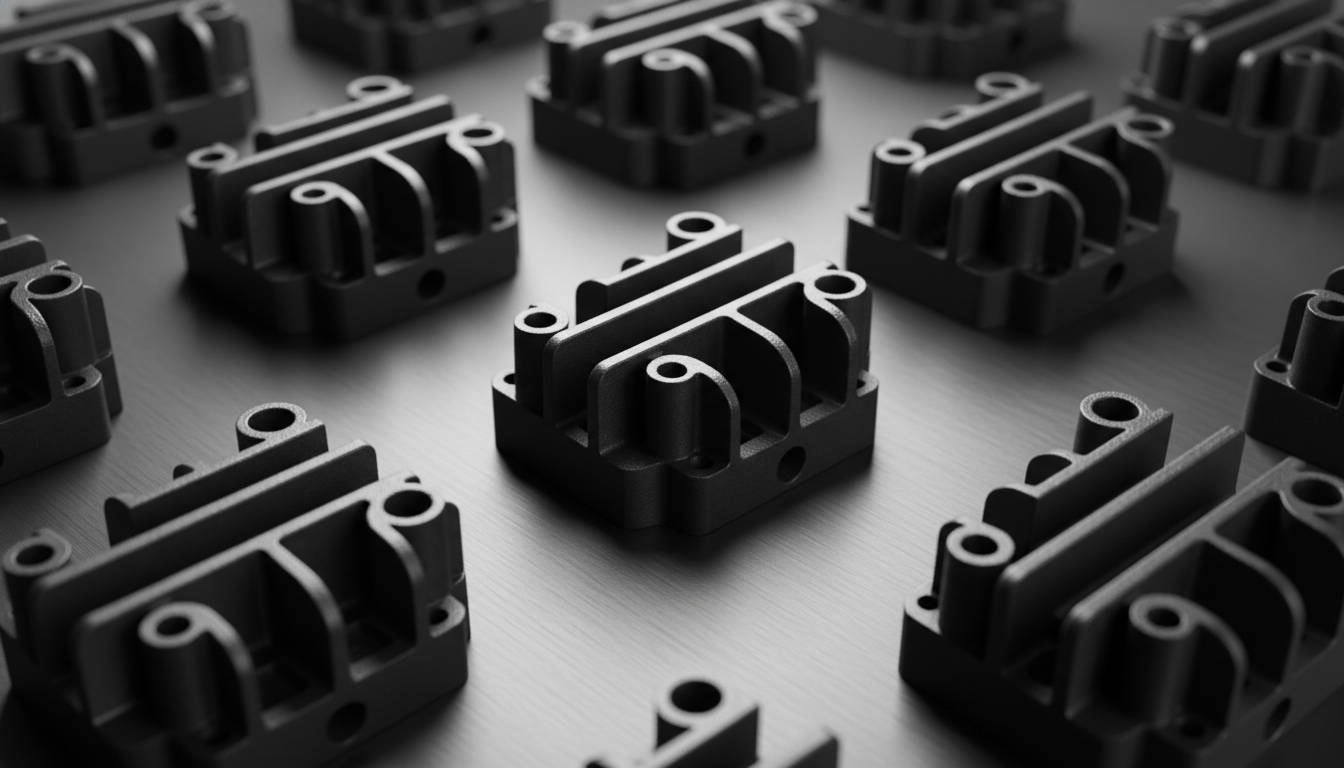
Substituted for die-cast zinc and structural aluminum alloys in structural components subject to extreme mechanical stress and high fatigue loads, BASF’s Ultramid A3EG10 provides an uncompromised solution. This 50% glass fiber reinforced polyamide 66 (PA66-GF50) grade delivers a massive dry-as-molded (DAM) tensile strength of 230 MPa and an elastic modulus of 16,500 MPa, pushing the boundaries of plastic structural performance. At Jucheng Precision, an ISO 9001 and IATF 16949 certified manufacturer, we specialize in high-precision molding of Ultramid A3EG10. Utilizing 5-axis CNC-machined H13 steel toolings, we control its anisotropic shrinkage (0.3% parallel, 0.7% perpendicular) and prevent surface float fibers, ensuring zero-defect structural parts verified by Zeiss CMM.
READ MORE

PC-SABIC Lexan 3412

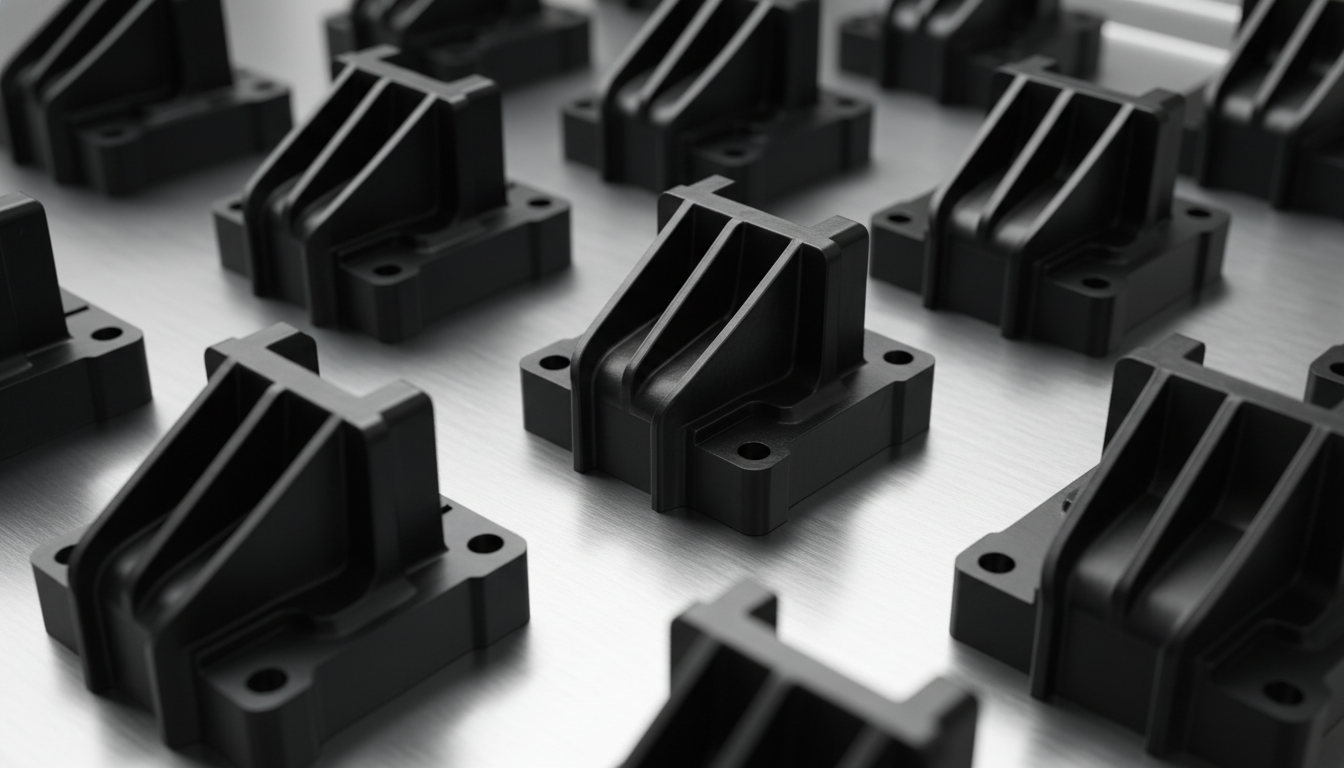
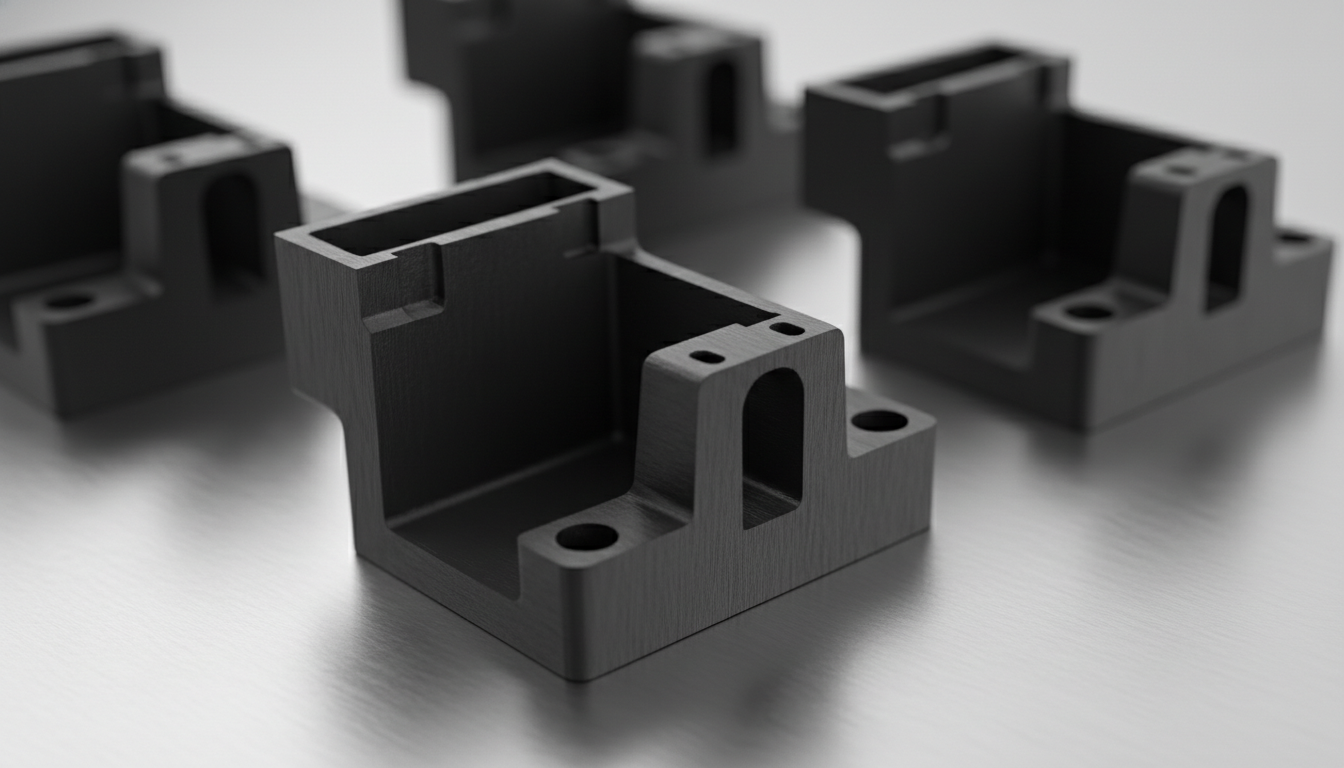
Achieving metal-like structural stiffness and exceptionally low thermal expansion in high-precision electrical and automotive housings without adding excessive weight requires a specialized composite, which SABIC’s Lexan 3412 delivers. This 20% glass fiber reinforced polycarbonate (PC-GF20) grade provides an impressive tensile modulus of 5,500 MPa and a heat deflection temperature (HDT) of 135°C, ensuring extreme dimensional stability under continuous mechanical load. Jucheng Precision, operating under IATF 16949 and ISO 9001 quality systems, specializes in high-precision injection molding of Lexan 3412. Utilizing 5-axis CNC-machined S136 stainless steel tooling and pressurized cooling, we control its anisotropic shrinkage (0.25%-0.45%) and prevent float fiber defects, delivering structurally flawless components verified by Zeiss CMM.

READ MORE

PPS-Toray Torelina A504FG

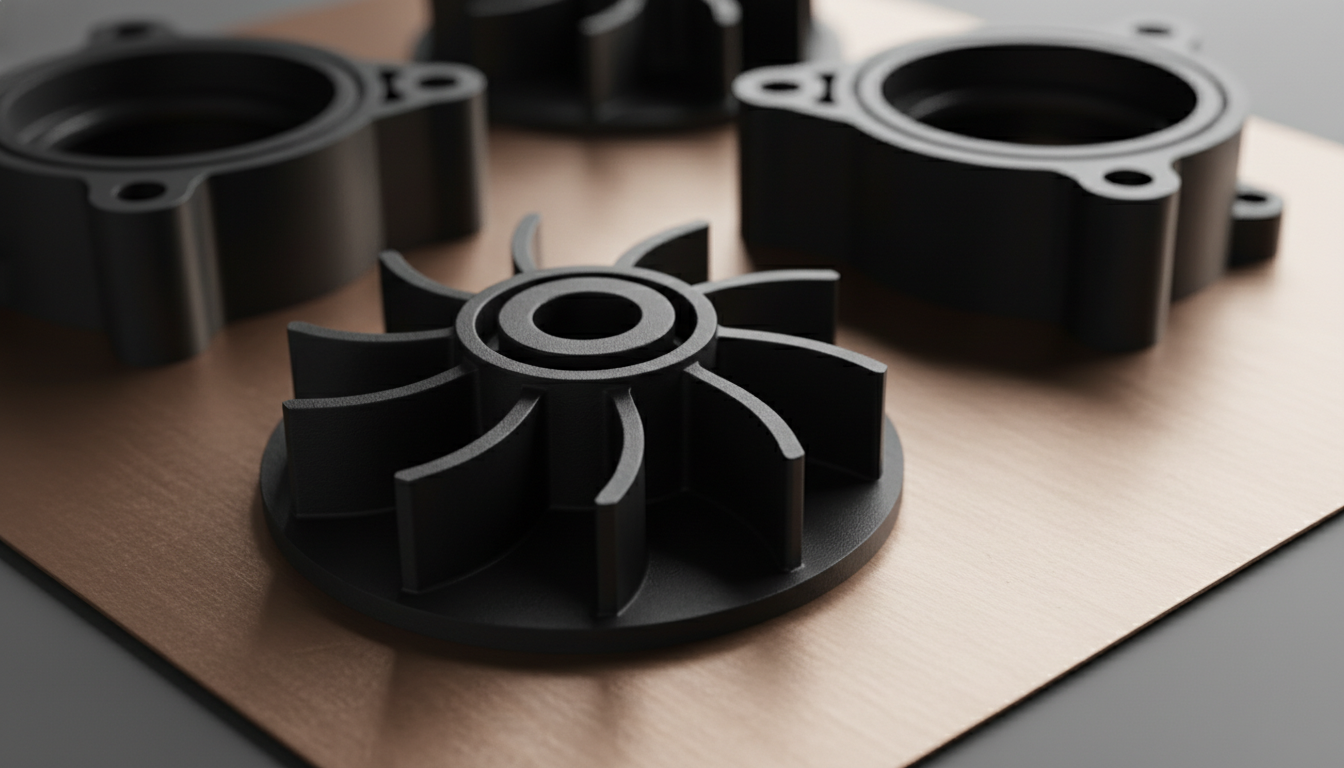
Substituting heavy brass and die-cast aluminum in modern high-temperature automotive cooling systems and dynamic pump assemblies without compromising dimensional stability requires an elite composite, which Toray’s TORELINA™ A504FG delivers. This 40% glass fiber reinforced polyphenylene sulfide (PPS-GF40) grade provides an exceptional tensile modulus of 14,500 MPa and an extreme heat deflection temperature (HDT) of 265°C, ensuring near-zero thermal expansion under load. Jucheng Precision, operating under IATF 16949 and ISO 9001 quality systems, specializes in high-precision injection molding of Torelina A504FG. Supported by five-axis CNC-machined H13 steel toolings, we manage its low-viscosity flash tendencies (parting line gaps under 0.005mm) and prevent floating fibers, ensuring structurally flawless components verified by Zeiss CMM.

READ MORE

Common Glass Fiber Reinforced Grades We Mold

We process high-stiffness glass-fiber filled compounds (ranging from 10% to 50% GF load) utilizing diverse base polymers to replace metal alloys:

GF-Reinforced Class Typical Brand & Grade Key Characteristics & Advantages
PA66-GF30 / GF50
(Polyamide GF)
• DuPont Zytel 70G33L (33% GF)
• BASF Ultramid A3EG6 (30% GF)
• BASF Ultramid A3EG10 (50% GF)
Extreme tensile strength, exceptional creep resistance, and a Heat Deflection Temperature (HDT) up to 250°C. Engineered to replace die-cast aluminum in engine brackets, intake manifolds, and power tool housings.
PBT-GF30
(Polyester GF)
• Sabic Valox 420 (30% GF)
• DuPont Crastin SK605 (30% GF)
• BASF Ultradur B4300G6 (30% GF)
Outstanding electrical insulation and dimensional stability combined with high rigidity. Minimizes moisture-related swelling. Perfect for automotive connectors, sensor housings, and bobbins.
PC-GF20 / GF30
(Polycarbonate GF)
• Sabic Lexan 3412 (20% GF)
• Covestro Makrolon 9415 (15% GF / FR)
Elevates PC’s tensile modulus and thermal resistance while retaining good impact toughness and low shrinkage. Flame retardant options available. Used in electronic structural frames and external meter enclosures.
PP-GF30 / GF40
(Polypropylene GF)
• Sabic PP Compound 30% GF
• LyondellBasell Hostacom 40% GF
Cost-effective structural reinforcement. Offers low density compared to other GF engineering plastics while maintaining good stiffness. Specified for large automotive inner doors and fan blades.

Applicable Molding Processes for GF Resins

Due to the high viscosity and abrasiveness of glass fibers, specific tooling process structures are recommended:

Molding Process Process Suitability & Application
Standard Injection Molding Excellent. Highly suitable for structural housings, load-bearing frames, brackets, and gearbox shells requiring metal-like stiffness.
Insert Molding Excellent. Highly recommended to encapsulate threaded metal inserts into glass-filled structural components, protecting screw joints from creeping.
Hot Runner Molding Good. Maintains melt temperatures of highly viscous glass-filled polymers, reducing the occurrence of weld line weaknesses.

Glass Fiber (GF) Injection Molding Processing Guide

Adding glass fibers drastically changes the melt viscosity and flow behaviors of base polymers. Strict execution of manufacturing controls is mandatory:

  • Tool Steel Hardness (Abrasive Wear Control): Glass fibers are highly abrasive to steel cavities. To prevent rapid wear on gates and cavity walls, Jucheng’s in-house tooling division uses hardened tool steel (S136 or H13) heat-treated to 48–52 HRC, combined with nitriding or PVD wear-resistant coatings.
  • Eliminating Floating Fibers (Float Fiber): If the mold temperature is cold, the polymer matrix freezes too fast, allowing fibers to rise to the skin layer (causing a rough, whitish surface). We utilize dynamic high mold temperatures (80°C–120°C / 176°F–248°F) to keep the surface matrix resinous and glossy.
  • Managing Anisotropic Shrinkage: Glass-filled resins exhibit low shrinkage along the flow direction (0.15% to 0.3%) but significantly higher shrinkage perpendicular to the flow (0.5% to 0.8%). Our engineering team conducts rigorous 24-hour DFM analysis to optimize gate placement and minimize structural warping.
  • Melt Temperature Compensation: Glass-filled polymers exhibit high melt viscosity. We set barrel temperatures 10°C to 20°C higher than the base polymer’s standard settings to improve melt flow and protect the reciprocating screw from shear fatigue.

Key Application Industries for Molded GF Components

  • Automotive Powertrains (IATF 16949 Certified): Intake manifolds, cylinder head engine covers, radiator water tanks, structural brackets, wiper arms, and accelerator pedals.
  • Electrical & Smart-Grid Hardware: Heavy-duty connector housings, smart-grid meter enclosures, circuit breakers, relay terminals, and electric coil bobbins.
  • Industrial & Fluid Machinery: Water pump impellers, heavy-duty gearboxes, industrial chemical valve bodies, power tool housings, and high-pressure pipe couplings.
  • Consumer & Outdoor Goods: High-stiffness fan blades, heavy-duty structural appliance frames, lawnmower decks, and dynamic sports equipment frames.

Material Properties

Density (PA66-GF30) 1.35 - 1.40 g/cm³
Tensile Strength at Yield (PA66-GF30) 150 - 210 MPa
Tensile Elongation at Break 2.0 - 4.0 %
Flexural Modulus (PA66-GF30) 7,500 - 10,000 MPa
Izod Impact Strength (Notched, 23°C) 80 - 130 J/m
Melting Temperature 260 - 265 °C
Heat Deflection Temperature (HDT @ 1.8 MPa) 230 - 250 °C
Linear Mold Shrinkage (Flow Direction) 0.15 - 0.35 %
Linear Mold Shrinkage (Transverse Direction) 0.50 - 0.80 %
Dielectric Strength 20 - 28 kV/mm
Volume Resistivity 1.0E+14 Ohm·cm
Maximum Part Size 1000 x 800 mm
Minimum Part Size 1 x 1 mm