
Designing a multi-material polymer part means coordinating wall transitions, mold shut-offs and mechanical attachment in the CAD model. An elastomer over a rigid substrate can improve grip or cushion impacts. If the overmold must also seal, define the service conditions and verify it with a leak test on representative molded parts.
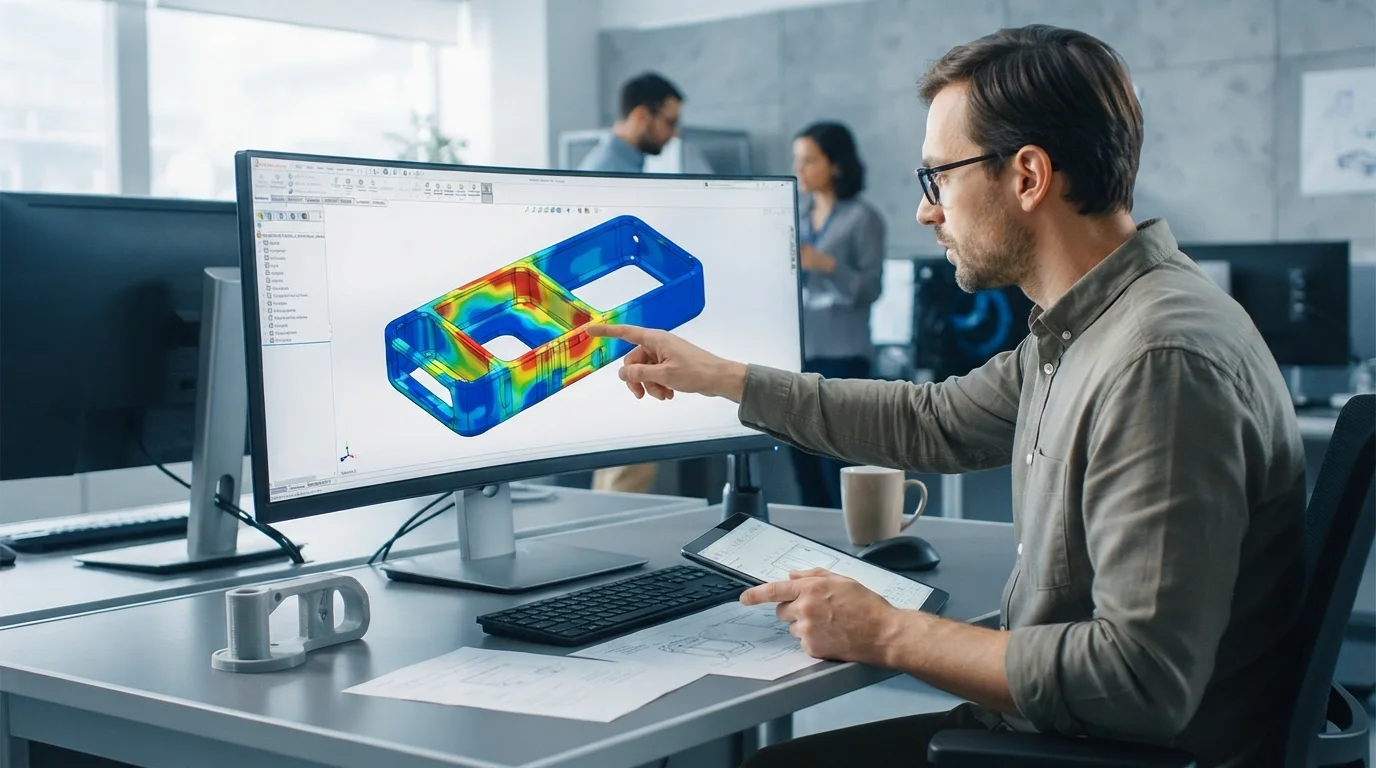
Abrupt transitions and poorly supported shut-offs can contribute to edge peeling, flash and sink marks. Reviewing the actual material pair, geometry and appearance requirements before cutting steel can reduce tooling rework. The sections below cover wall transitions, retention features and the overmold perimeter.
벽 두께 전환 및 연질 고무 싱크 마크 방지
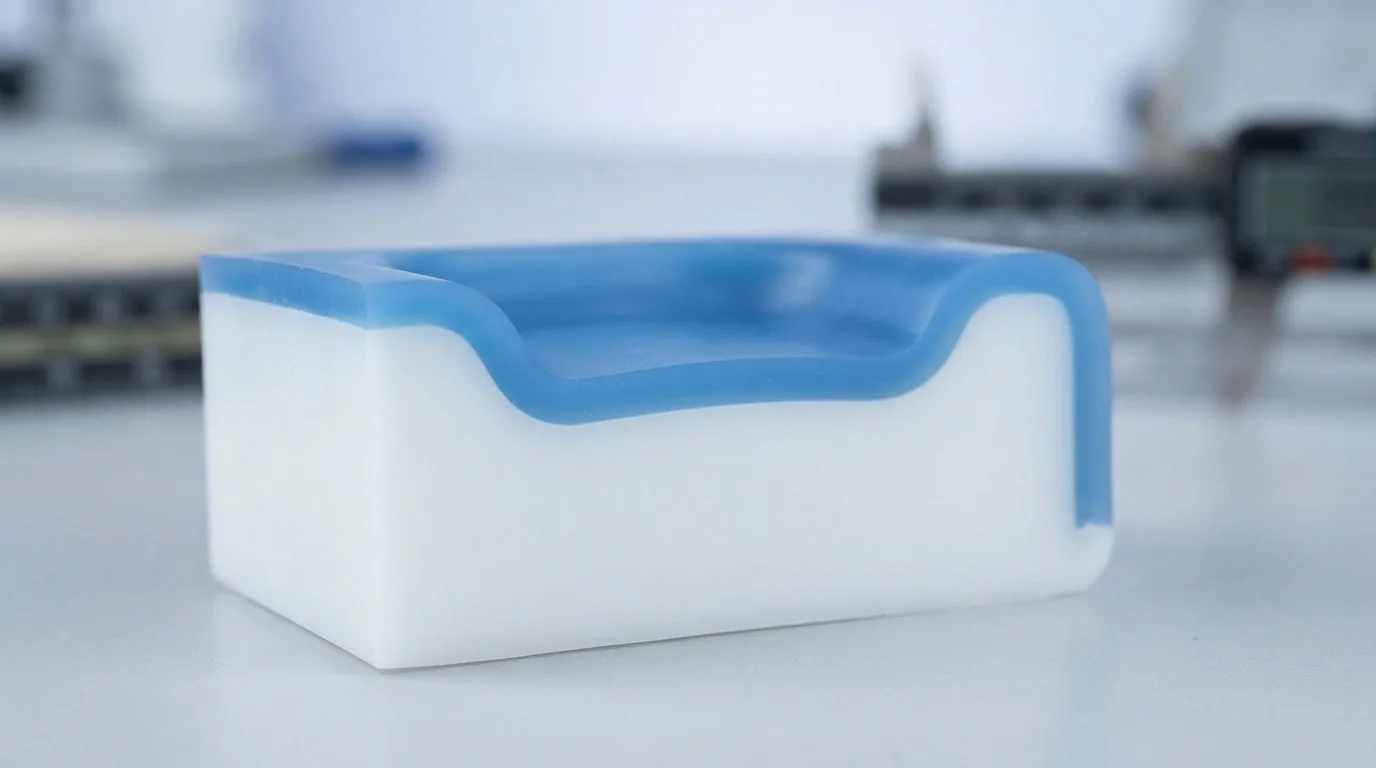
실용적인 오버몰딩 설계 가이드 considers the chosen grade, flow distance from the gate and the visible surfaces. Select the soft 엘라스토머 wall for the application and confirm that thin sections fill and thicker areas meet the cooling and appearance requirements for the chosen TPE 또는 TPU grades.
Use gradual transitions where possible. Check for sink, voids and warp where either layer changes thickness or stiffness. Confirm filling and appearance at the longest flow path and verify the proposed gate and wall profile with trial parts.
| 설계 파라미터 | 권장 CAD 가이드라인 | 위반 시 물리적 위험 | 툴링 최적화 전략 |
|---|---|---|---|
| 엘라스토머 벽 두께 | Select for material grade and flow length | Incomplete fill, sink or visible distortion | Review gate position and gradual wall transitions |
| 기판 벽 드래프트 각도 | Set draft for draw depth, texture and release | Drag marks or binding during ejection | Review deeper draws and textured faces with the toolmaker |
| 주변 가장자리 단차 높이 | Size the edge for substrate tolerance and support | Feathering, flash or edge lift | Check fit across the molded substrate tolerance |
기계적 인터록, 홀 및 언더컷 설계
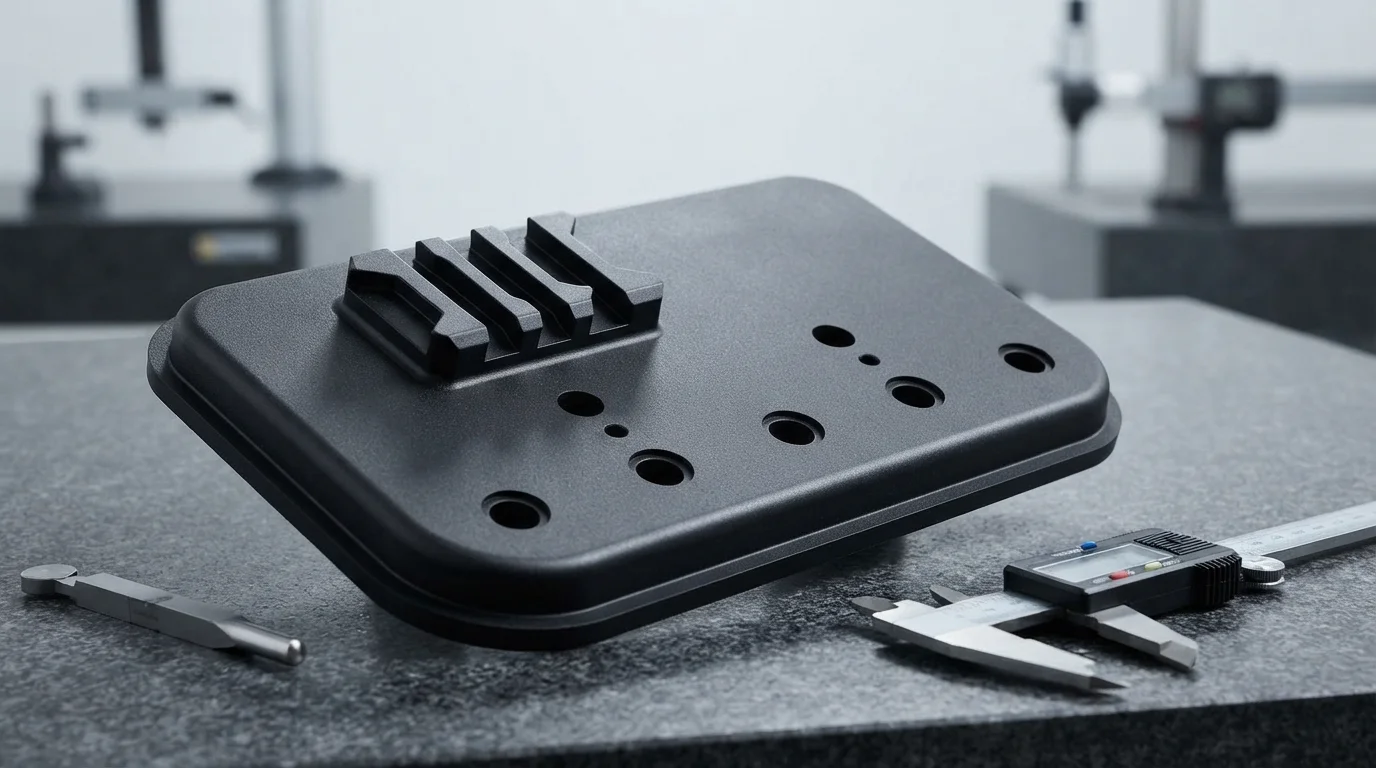
Moisture, cleaning chemicals and cyclic loads can affect the bond between an overmold and its substrate. Incorporating 기계적 인터록 into the substrate can add a separate load path. Grooves, undercuts and through-holes can resist pullout when the melt fills them and the design accommodates tool release.
유리 섬유 강화 PA66 또는 폴리카보네이트(PC) can use mechanical retention when the expected loads and part geometry warrant it. A mechanical lock does not prove adhesion or prevent every instance of edge lift. Check initial adhesion and retention after relevant aging on representative parts, and use a separate leak test if sealing is required.
기계적 앵커링 설계 규칙은 다음과 같습니다:
- 더브테일 홈 배치—Place undercut channels to oppose the expected peel direction and check that the tool can release the part.
- 관통 홀 유동 포트—Use through-holes where the second shot can fill and form a mechanical lock without weakening a critical substrate section.
- 코너 반경 최적화—Select radii for the wall, available space, flow and expected stress rather than applying one minimum to every corner.
- 기재 포켓 깊이—Allow for substrate variation and elastomer shrinkage when sizing a pocket for a flush surface.
엘라스토머 플래시 방지를 위한 셧오프 랜드 설계
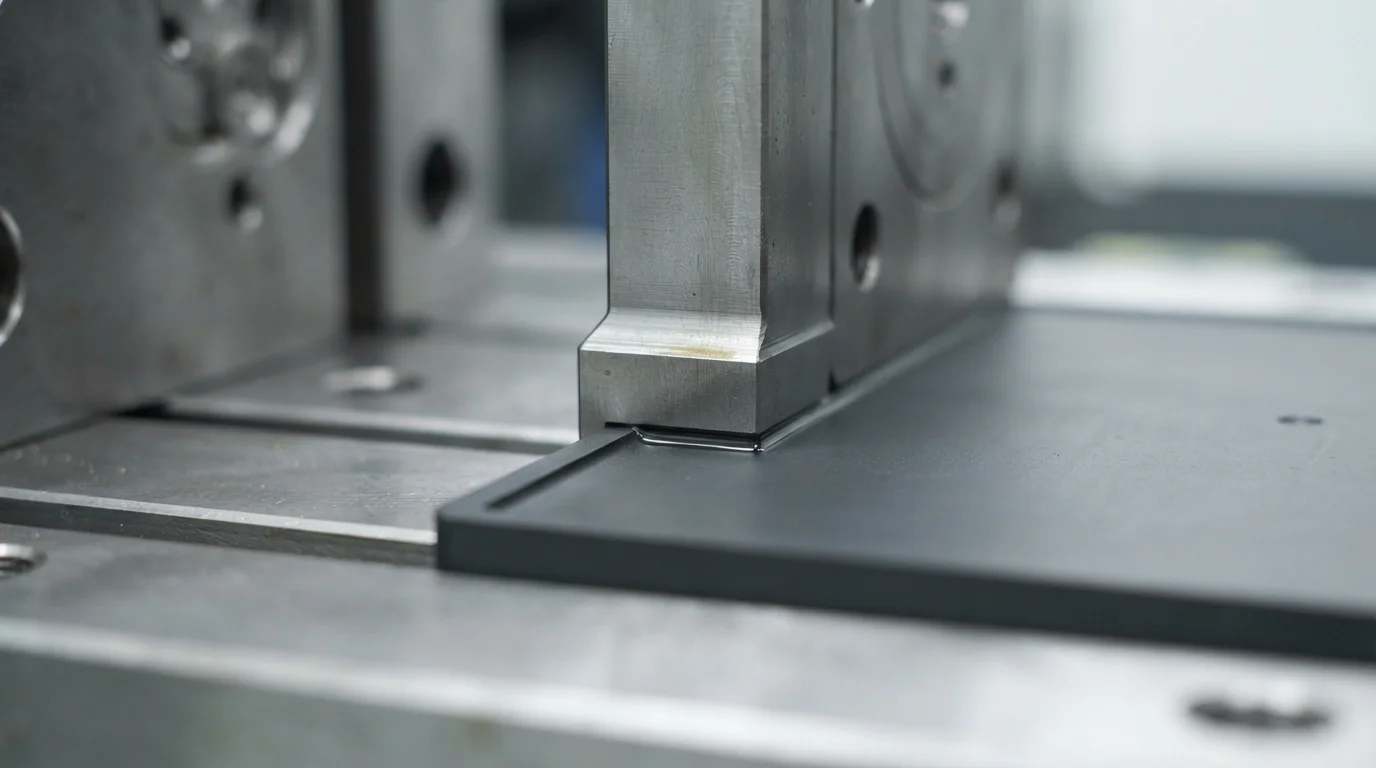
A mold shut-off limits the path for molten elastomer to escape the cavity. Where tool steel meets a pre-molded substrate, support the substrate and check fit across its molded tolerances. Size the 셧오프 랜드 to limit flash without marking or crushing the substrate.
A defined perimeter shoulder can give the overmold a visible edge and prevent a feather-thin termination. Select the step depth and profile for the material, substrate stiffness and tool geometry, and verify the parting line on trial parts.
오버몰딩 DfM 및 금형 제작에 JUCHENG을 선택해야 하는 이유
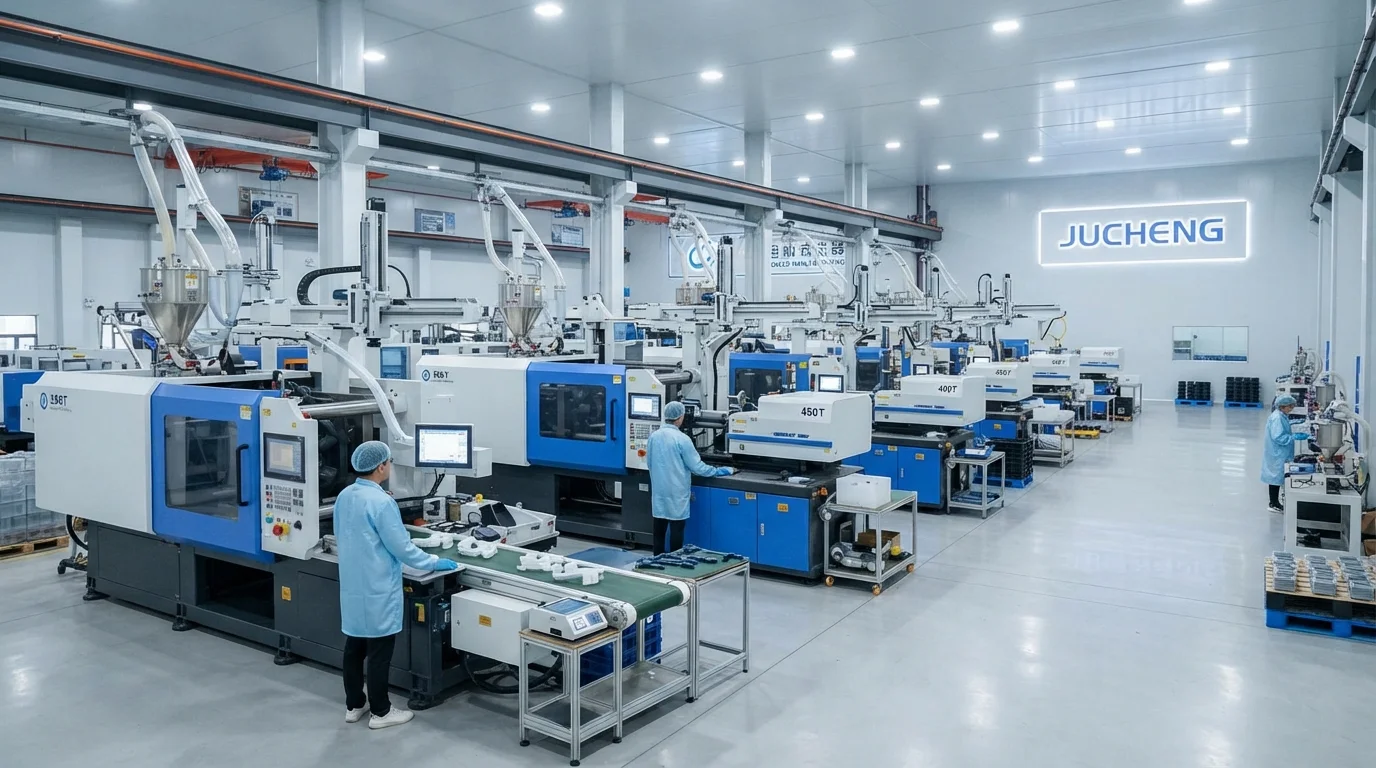
JUCHENG과 함께 다중 재료 캡슐화 프로젝트를 진행하면 15T에서 3000T 형체력에 이르는 35대 이상의 자동 사출기를 갖춘 대규모 생산 현장을 활용할 수 있습니다. 25세트의 5축 CNC 장비를 갖춘 자체 금형 공방을 운영하여 경화된 소재로부터 셧오프 강재 랜드를 정밀 가공할 수 있습니다 S136 스테인리스강 또는 H13 공구강. 당사 엔지니어링 팀은 모든 CAD 제출 건에 대해 무료 24시간 DfM 검토를 제공하며, 강재 절삭 전에 기재 벽 두께, 드래프트 각도, 셧오프 실현 가능성을 분석합니다.
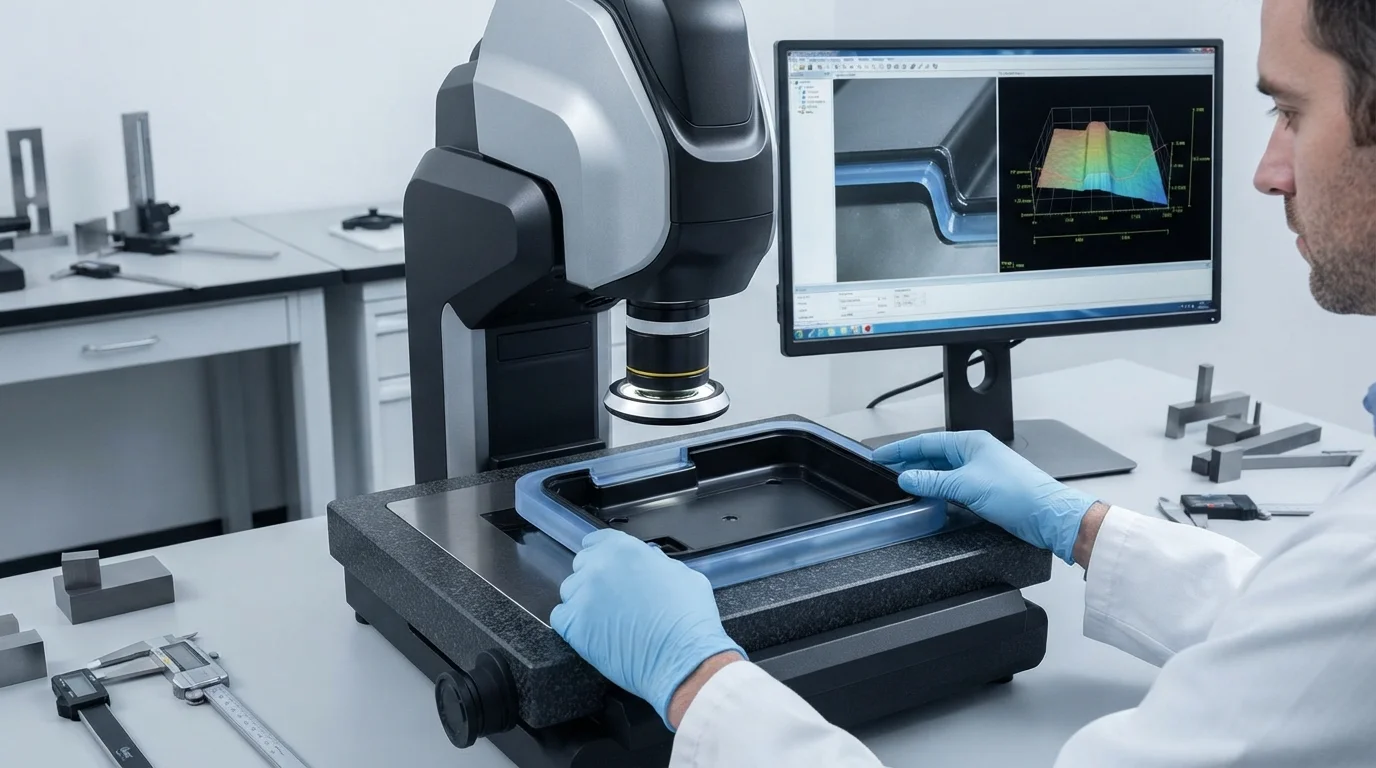
엄격한 오버몰딩 설계 가이드를 준수하면 금형 수정을 최소화할 수 있습니다 오버몰딩 사출 성형. IATF 16949 및 ISO 13485로 인증된 품질 관리 시스템은 모든 멀티 샷 생산 런을 뒷받침하며, 자동차 프로그램에 대한 전체 PPAP 레벨 3 문서를 제공합니다. ISO 클래스 8 클린룸 몰딩 부서를 운영하여 의료 부품을 몰딩 및 드롭 패키징 중 입자 오염으로부터 보호합니다.
자주 묻는 질문 (FAQ)
TPE 및 TPU 오버몰딩에 이상적인 벽 두께는 무엇입니까?
There is no single ideal thickness for all TPE and TPU grades. Start with the chosen supplier grade, the longest flow path from the gate and the intended surface or function. Verify filling, shrinkage and appearance on molded samples.
오버몰딩 CAD 설계에서 기계적 언더컷이 권장되는 이유는 무엇입니까?
Undercuts can add mechanical retention in the direction of a service load. Test peel or pullout after the relevant temperature, chemical or service exposure. Test for leakage separately if the finished component must seal.
셧오프 랜드는 미관 표면의 엘라스토머 플래시를 어떻게 방지합니까?
A well-supported shut-off closes the cavity boundary across the expected substrate tolerance. Specify the allowable flash and any contact marks. Check both at the thin and thick ends of the substrate tolerance in molding trials.
날카로운 내부 코너가 오버몰드 엘라스토머의 박리를 유발할 수 있습니까?
Sharp transitions can concentrate stress and promote edge lift. Choose a radius that fits the actual wall profile and loading, and check how the material fills and how the edge holds up in service.
기재 예열은 어떻게 오버몰딩 접착력을 향상시키나요?
A warmer substrate can improve adhesion for some material pairs, but the result also depends on grade compatibility, surface condition and molding sequence. Follow the material suppliers’ handling and processing guidance. Verify whether preheat helps, and determine a suitable range through trials.
오버몰딩 금형강을 가공하기 전에 초기 DfM 검토가 필수적인 이유는 무엇인가요?
An early DfM review can flag thin flow paths, unsupported shut-offs and gate locations that may affect filling or appearance. Agree on flash and cosmetic limits and verify the proposed design in molding trials before approving it for production.