
多材料ポリマー製造の予算編成では、初期のツール投資と個別部品の生産経済性のバランスを取る必要があります。オーバーモールドの 平均コスト ツールと生産部品の見積もりには、基材金型の複雑さ、エラストマーの選定、自動化レベルの評価が必要です。調達マネージャーは、単一材料の射出成形からマルチショット封止へ移行する際に、予期しないコスト変動にしばしば直面します。.

予期しない ツールNRE費用, 、二次的な手作業コスト、特殊エラストマー樹脂の価格設定は、プロジェクト全体の予算を膨らませる可能性があります。この技術的財務ガイドでは、主要なツール費用の要因、材料価格の変動、自動化の投資回収しきい値、および実践的なDfMコスト削減戦略を分解して説明します。.
中核コスト構成要素:デュアル金型 vs. 単一2Kロータリーツール
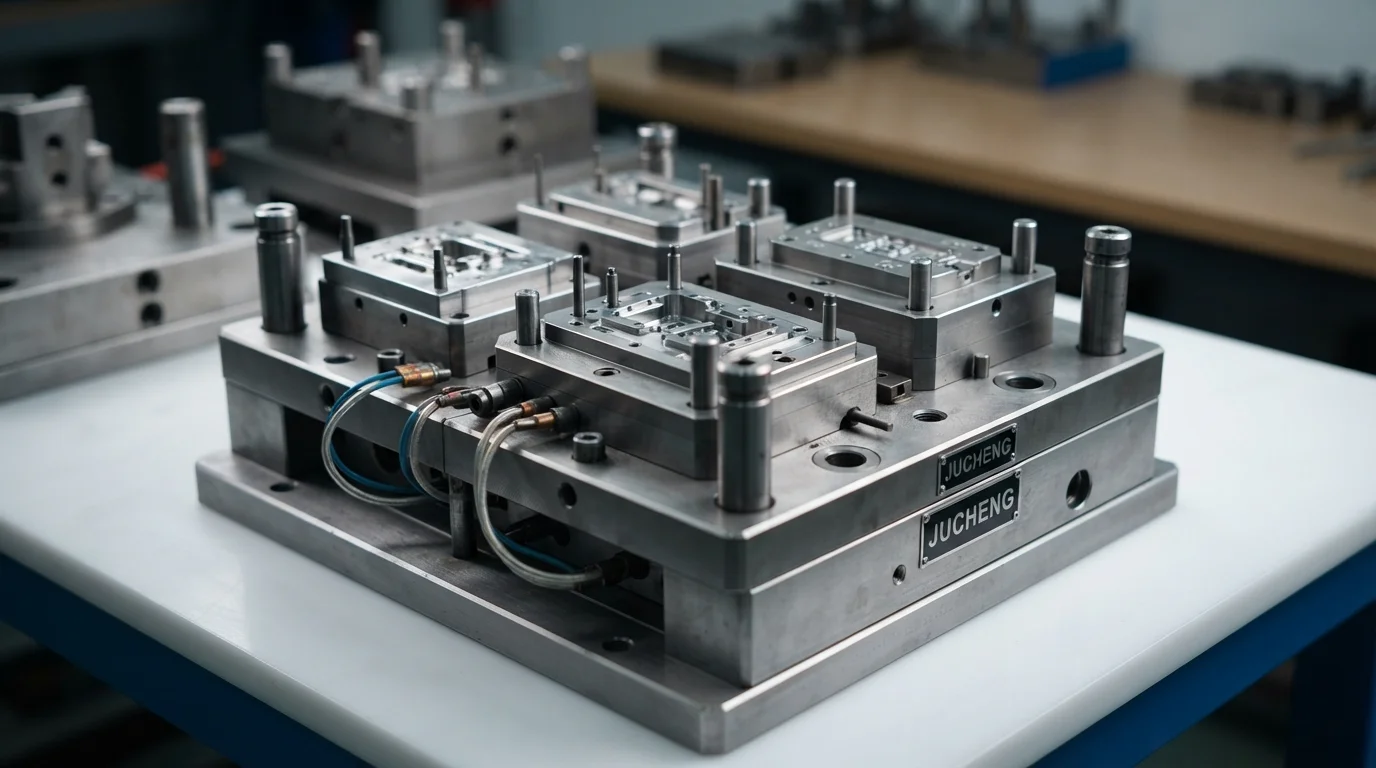
ツール支出は、多材料封止における最大の初期財務コミットメントを占めます。製造チームは、2つの主要な金型ツール経路から選択します:2段階の デュアルキャビティトランスファー金型 または単一プレス 回転式2Kツーリング. 二段階トランスファー金型は、2つの別個の金型ベースを利用し、剛性基板を一次プレスで成形した後、手動またはロボットで二次オーバーモールドキャビティに移載します。トランスファー金型は初期金型開発資本を40%から60%削減し、試作ビルドや小~中量生産に非常に経済的です。.
ロータリー2K金型は、2つの異なるキャビティと自動180度インデックスプラテンを単一の複雑な金型ベースに統合します。ロータリー金型は大幅に高い初期資本を必要としますが、二次部品ハンドリングを排除しサイクルタイムを短縮し、50,000個を超える大量生産プログラムにおいて最低の単価を実現します。以下の表1は、主要なオーバーモールドアーキテクチャ全体の金型および個別部品コスト内訳を示しています:
| 金型アーキテクチャ | 初期金型NRE(USD) | 個別部品単価(USD) | 最適生産量 | 主要な財務トレードオフ |
|---|---|---|---|---|
| ラピッドブリッジトランスファー金型 | $4,500~$9,500 | $2.50~$6.00 | 1,000~5,000個 | 最低の初期資本、より高いサイクル人件費 |
| 生産用二段階スチール金型 | $12,000~$25,000 | $1.20~$3.00 | 5,000~50,000個 | バランスの取れたツーリング費用。中程度の自動化スループット |
| 統合型2Kロータリープラテンツーリング | $35,000~$75,000+ | $0.55~$1.50 | 50,000~500,000+個 | 最高の初期資本。最低の単位部品コスト |
部品別変動費:樹脂価格、機械時間単価、サイクル人件費
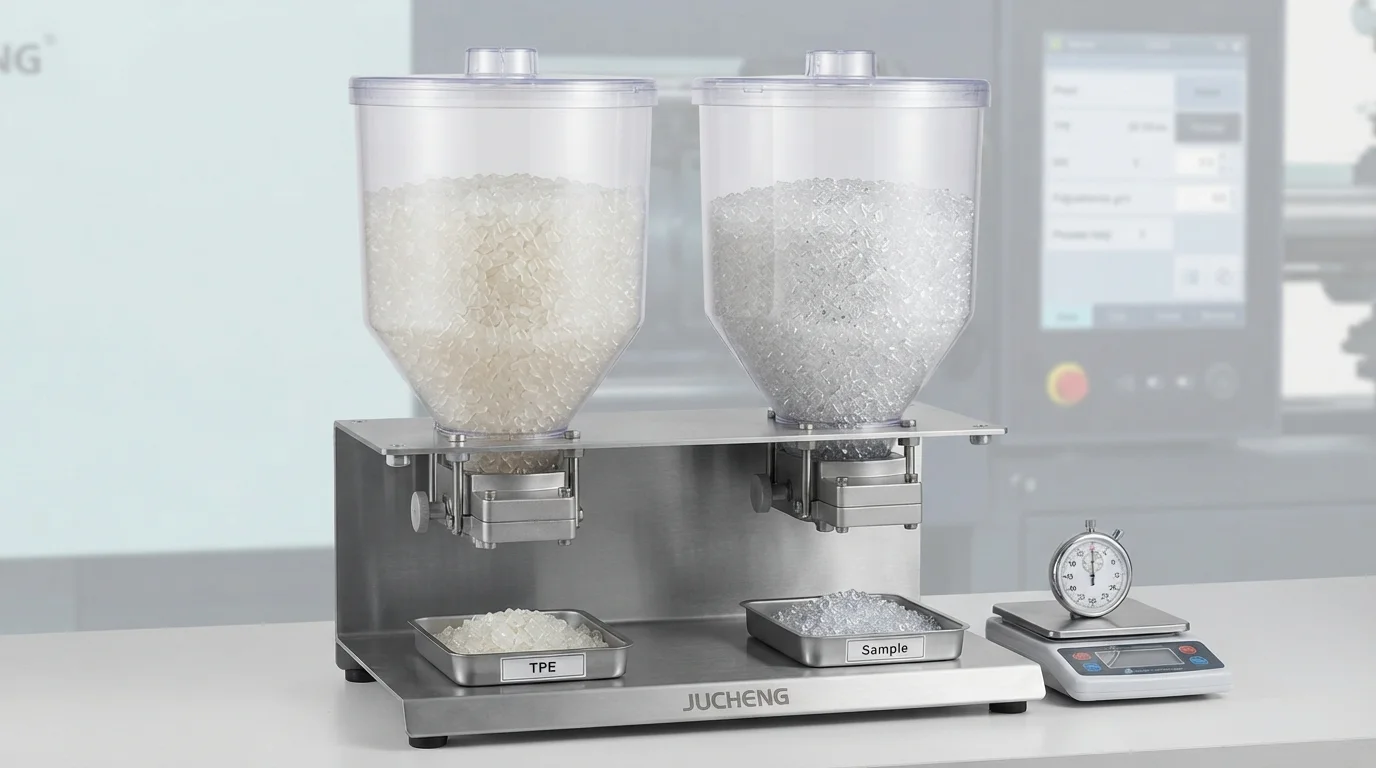
原料樹脂の選定は部品別材料費に直接影響します。特殊エラストマー樹脂、例えば TPE, TPU, 、または医療グレードコンパウンドは、汎用基材、例えば ABS または ポリカーボネート(PC). よりも1キログラムあたりのコストが大幅に高くなります。外観上の過剰肉厚を防ぐため、CADモデルでエラストマー体積を最適化し、不要な材料使用を避ける必要があります。.
機械の時間単価は、必要な型締力トン数とサイクル時間に依存します。オーバーモールディングでは2段階の射出と冷却工程が必要なため、1ショットあたりの総サイクル時間は35~65秒となり、単一材料部品の20秒と比較して長くなります。肉厚を最小化し、冷却チャネルの配置を最適化することで冷却遅延が減少し、機械の時間単価を低減できます。.
自動ロボット搬送 vs. 手動移載:償却のしきい値
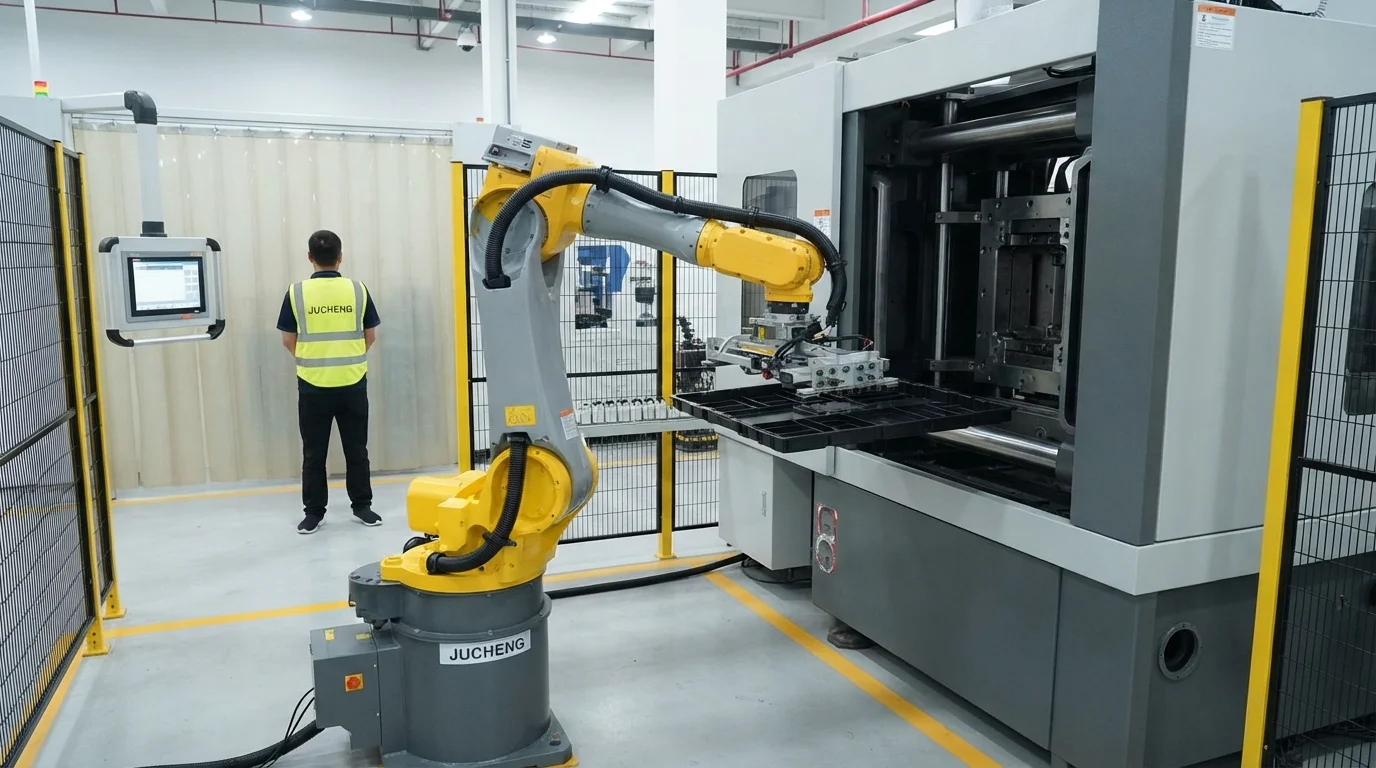
人件費は、2段階オーバーモールディング工程における主要な変動費要因です。手動オペレーター移載では、専任技術者が基材を二次キャビティに位置決めする必要があり、オペレーターの疲労とサイクルタイムのばらつきが生じます。部品移載の自動化には、6軸多関節ロボットとカスタムの ロボットエンドオブアームツーリング.
財務的損益分岐点を計算すると、生産量が20,000個を超える場合、自動化は急速に元が取れることが明らかになります。ロボット積載は部品配置エラーを排除し、シャットオフ鋼の破損を防ぎ、時間あたりの生産歩留まりを安定させます。.
Automation ROI evaluation parameters include:
- Volume threshold evaluation—Evaluating annual demand determines whether manual loading or robotic automation delivers the lowest total cost.
- Cycle time reduction—Automating substrate loading cuts transfer delays by up to 8 seconds per shot.
- Yield rate stabilization—Robotic positioning eliminates insert misalignment, lowering scrap rates below 0.5%.
- Labor expense elimination—Automating press cells reduces direct machine operator labor across multi-shift production runs.
Engineering Strategies to Lower Overmolding Tooling and Piece-Part Expenses
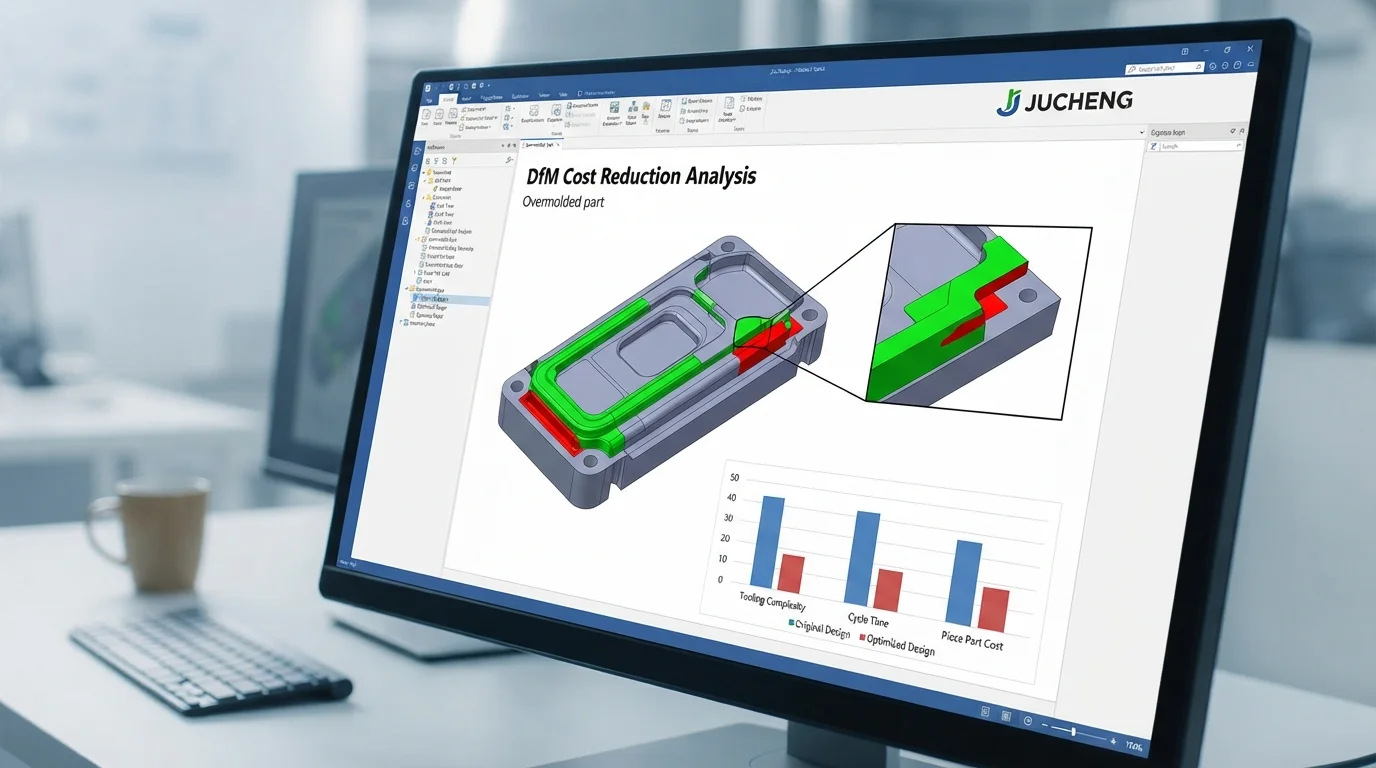
Deploying proactive DfM engineering guidelines before cutting mold steel delivers substantial cost savings. Simplifying シャットオフランド by designing flat, 90-degree sealing shoulders avoids expensive 3D contoured shut-off machining. Incorporating line-of-draw pass-through shut-offs eliminates complex side-action sliders and mechanical lifters, reducing mold complexity by 25%.
Maintaining uniform elastomer wall thicknesses between 1.5 mm and 2.5 mm avoids cosmetic sink marks and shortens cooling times. Partnering with an experienced contract manufacturer for オーバーモールディング射出成形 projects ensures that part geometries, mold architectures, and material choices are optimized for maximum commercial ROI.
よくある質問 (FAQ)
What is the typical average cost of overmold tooling for prototypes?
Average cost of overmold tooling for quick-turn prototypes typically ranges from $4,500 to $9,500 for a two-piece modular transfer mold set. Rapid aluminum or soft steel tooling allows product teams to validate multi-material parts in low volumes without committing to expensive production steel tooling.
Why is overmolding more expensive than single-material injection molding?
Overmolding requires either two separate mold tools or a complex 2K rotary tool, which roughly doubles initial tooling expenditure. Longer cycle times and higher raw material costs for elastomeric resins (TPE, TPU, TPV) also increase piece-part unit pricing.
How many parts are needed to justify the cost of 2K rotary platen tooling?
Annual production volumes exceeding 50,000 units typically justify the higher upfront investment of 2K rotary platen tooling. Lower unit cycle times and zero manual transfer labor quickly offset the higher initial mold cost over high-volume series production.
How does part geometry impact overmolding mold costs?
Complex 3D parting lines, deep undercuts, and intricate side-action shut-offs increase mold machining time and NRE costs. Designing flat 90-degree shut-off lands and line-of-draw features keeps mold construction simple and economical.
Can using regrind resin lower overmolding production expenses?
Regrind resin can be blended into rigid substrate materials like ABS or PP to reduce raw material costs by 10% to 20%. However, elastomeric overmold resins (TPE/TPU) should utilize virgin material to ensure maximum chemical bonding and prevent surface splay.
Why is an early 24-hour DfM review crucial for controlling overmolding budgets?
Conducting an early DfM review detects uneven wall thicknesses, sharp corners, and shut-off interference while the CAD model is still digital. Identifying these issues early eliminates expensive mold rework, tooling modifications, and project launch delays.