
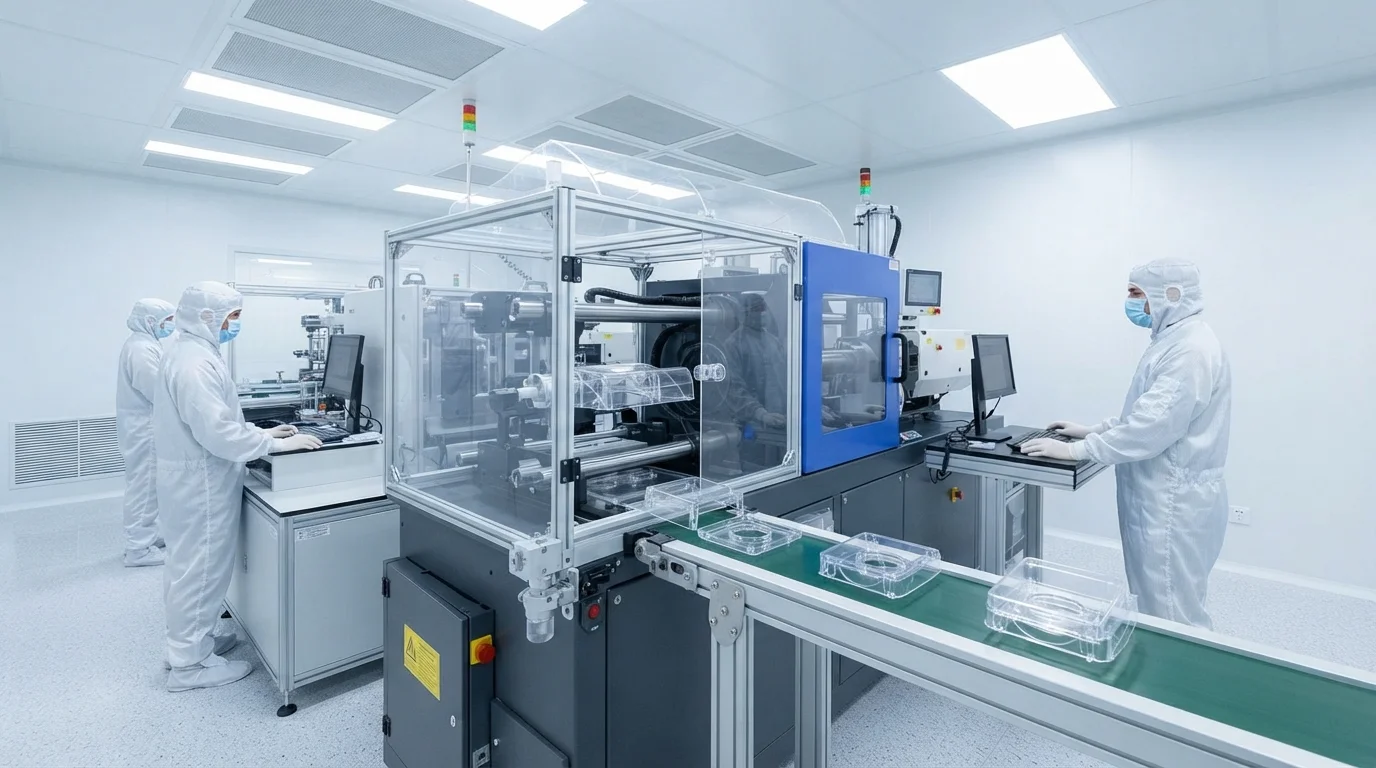
光学レンズ、ライトパイプ、センサーカバーにおける完璧な光透過には、ポリマーの純度と成形時の熱力学の厳格な管理が必要です。空気中の微細な塵粒子、表面のシルバーストリーク、内部応力による複屈折は、光散乱と光学歪みを引き起こします。高透過率のポリマー部品の製造は、クリーンルーム処理、高研磨金型キャビティ鋼、精密な溶融温度プロファイリングに依存しています。JUCHENGは特殊な粒子管理製造セルを運用し、顧客の技術図面に厳密に従って高透明プラスチック光学部品を生産しています。.
目次
PMMA/PCにおける複屈折制御と残留応力低減
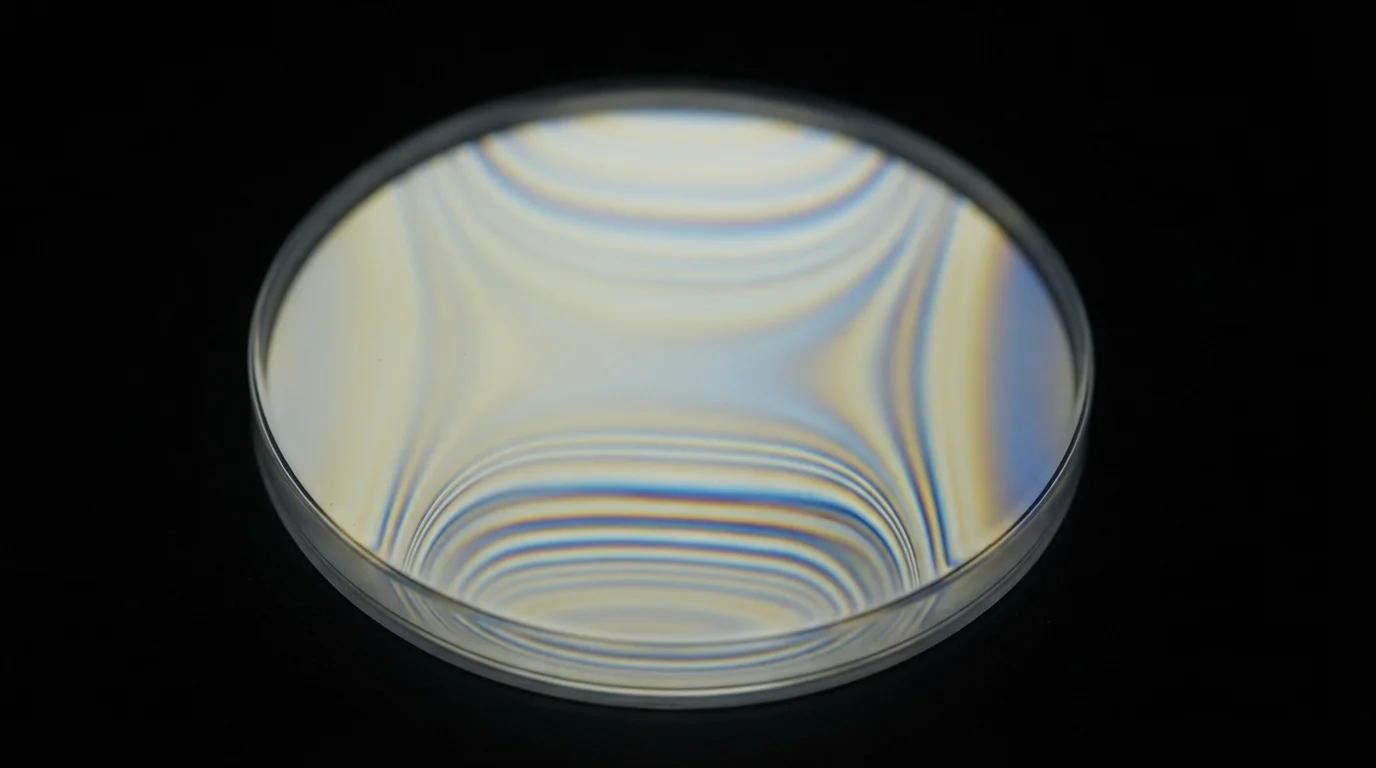
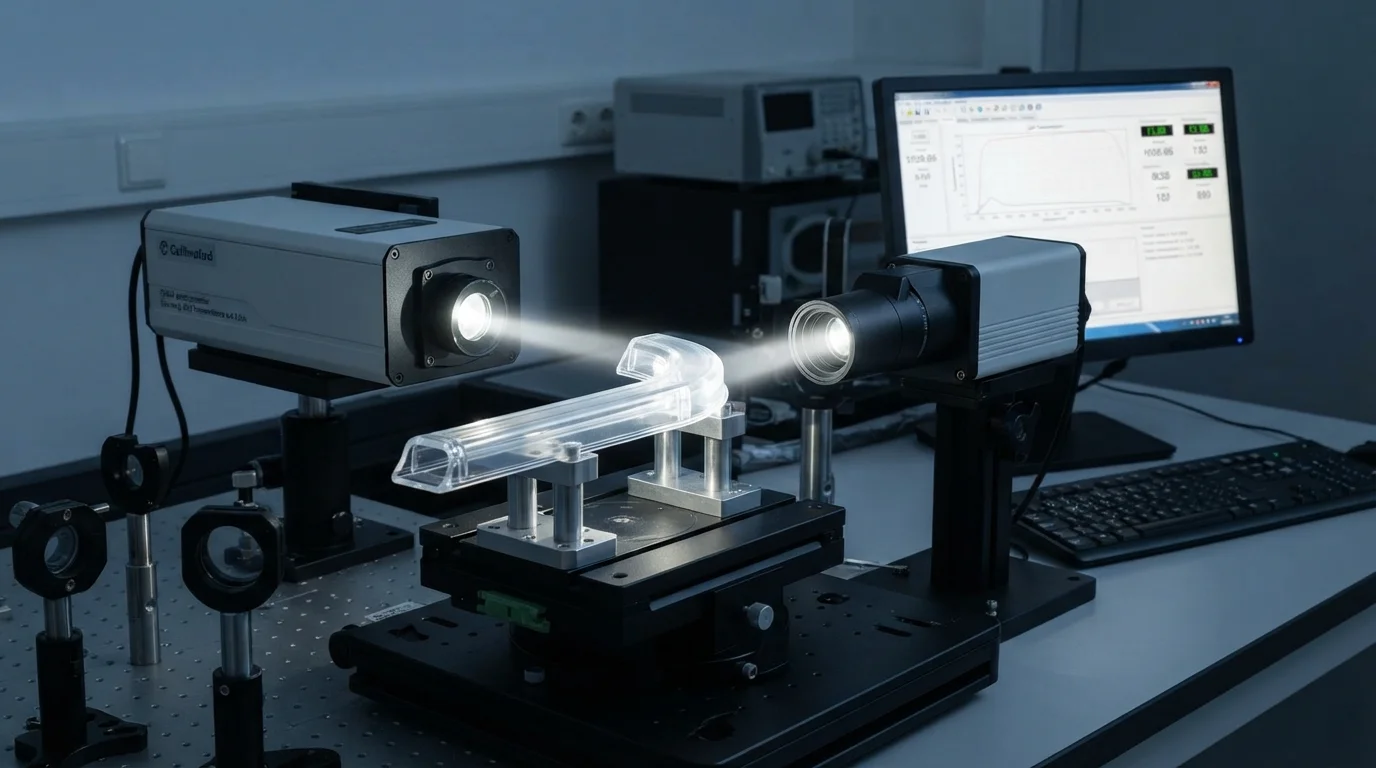
Managing molecular orientation and reducing residual stress during 光学用透明プラスチック成形 requires a process suited to the selected resin and part geometry. Residual stress and frozen-in molecular orientation can make the refractive index depend on the polarization direction. Process changes may reduce this birefringence; verify the finished lens against its specified optical test and acceptance limits. Slowing down injection velocity near the gates further reduces localized shear stresses, eliminating gate blush and optical haze.
高透過率ポリマー樹脂(PMMA、光学用PC、COC、COP)
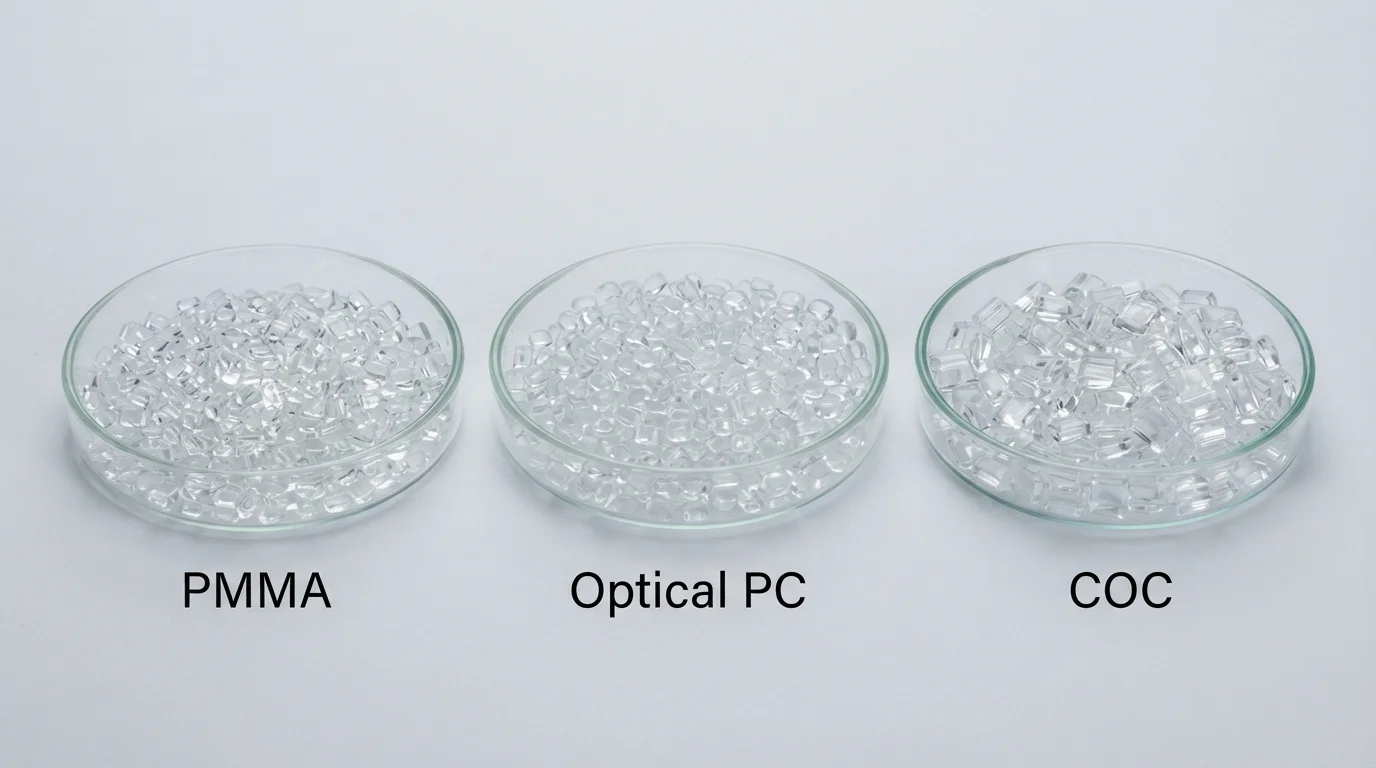
The table gives typical supplier values for specific PMMA (acrylic), ポリカーボネート(PC) and COC grades, not guarantees for finished lenses. Röhm reports PLEXIGLAS 8N transmittance with D65 under ISO 13468-2; Covestro uses ISO 13468-2; TOPAS reports the listed 2 mm result under ISO 13468-1. Compare grades at the same thickness and test conditions. For COC or COP in fluorescence-sensitive optics, verify background fluorescence for the actual grade and molded part at the intended excitation and detection wavelengths.
| 光学ポリマー樹脂 | 光線透過率 (%) | 屈折率 | HDT (°C, ISO 75 at 0.45 MPa) | Example Application |
|---|---|---|---|---|
| PMMA (Plexiglas 8N) | 92% (D65) | 1.49 | 103°C | 自動車用ライトガイド&HUDディスプレイ |
| PC (Makrolon 2407) | 89% (2 mm); 88% (3 mm) | 1.584 | 136°C | Protective covers |
| COC (TOPAS 5013S-04) | 91.4% (2 mm) | 1.533 | 127°C | Optical parts & microfluidic windows |
SPI A-1 ミラーポリッシュ&S136 焼入れステンレス鋼金型
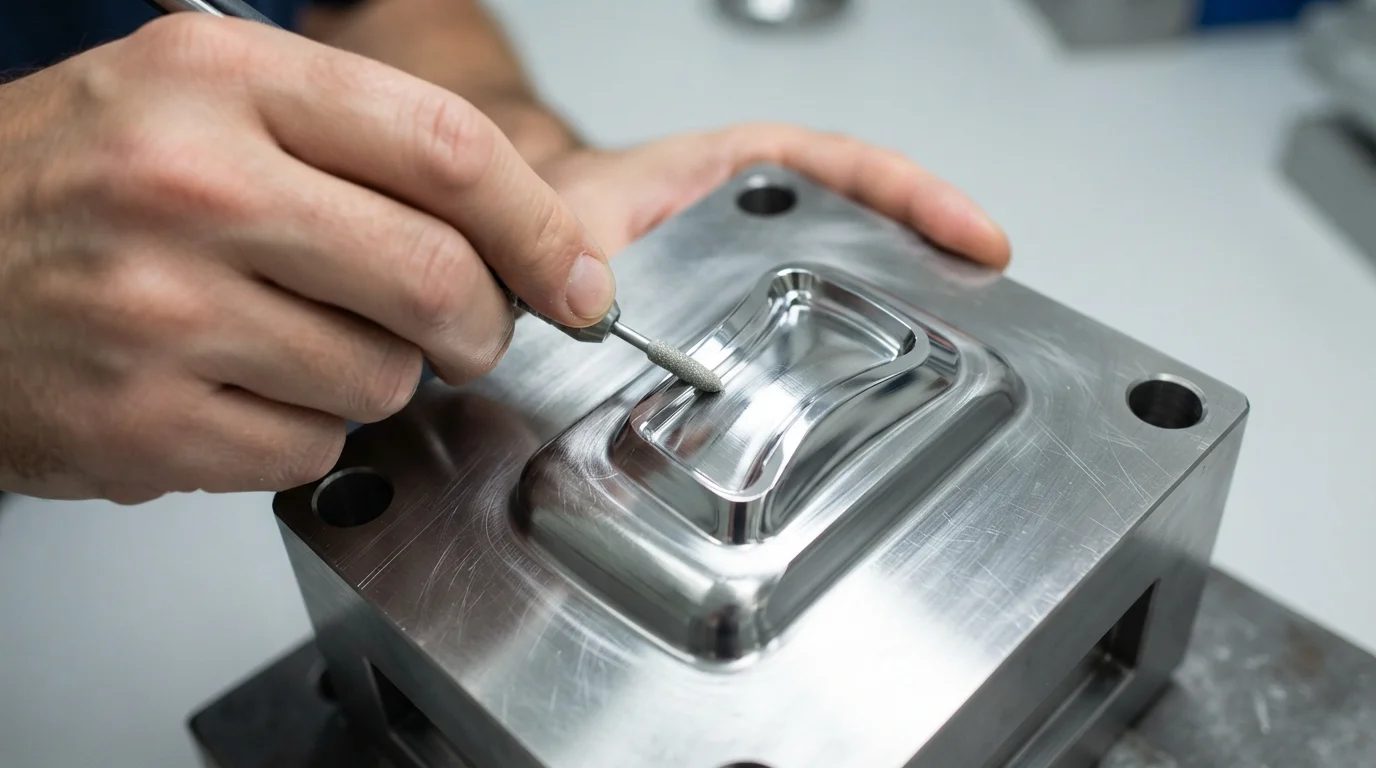
光学用透明プラスチック成形に求められる高光沢キャビティ鋼の加工には、専門的な金型製作プロトコルが必要です。キャビティ表面はプレミアムな S136ステンレス鋼, 、耐食性と微細な傷付きを防ぐためにHRC 48-52に熱処理されています。達成するには SPI A-1ミラーポリッシュ には、3ミクロンの粒子サイズまでダイヤモンドペーストコンパウンドを用いた段階的な手研磨が必要です。ミラーポリッシュされたツールキャビティは表面の微細な粗さを排除し、液体内部離型剤を必要とせずにクリーンな離型を保証します。.
光学ツールメイキング基準には以下が含まれます:
- S136ステンレス鋼の選定—高クロムステンレス鋼を使用することで、周囲の湿気やアウトガスによる微小ピッティングを防ぎます。.
- 段階的ダイヤモンド研磨—ダイヤモンドペーストでキャビティ表面をラッピングすることで、SPI A-1光学ミラー仕上げを実現します。.
- 放電加工の最適化—微細粒黒鉛でEDM電極を製作することで、手研磨前に滑らかなキャビティ表面性状を確保します。.
- コンフォーマル冷却チャネル配置—光学キャビティ表面に近接して水路を配置することで、均一な金型コア温度を維持します。.
ダストとブラックスペックを排除するクリーンルーム環境
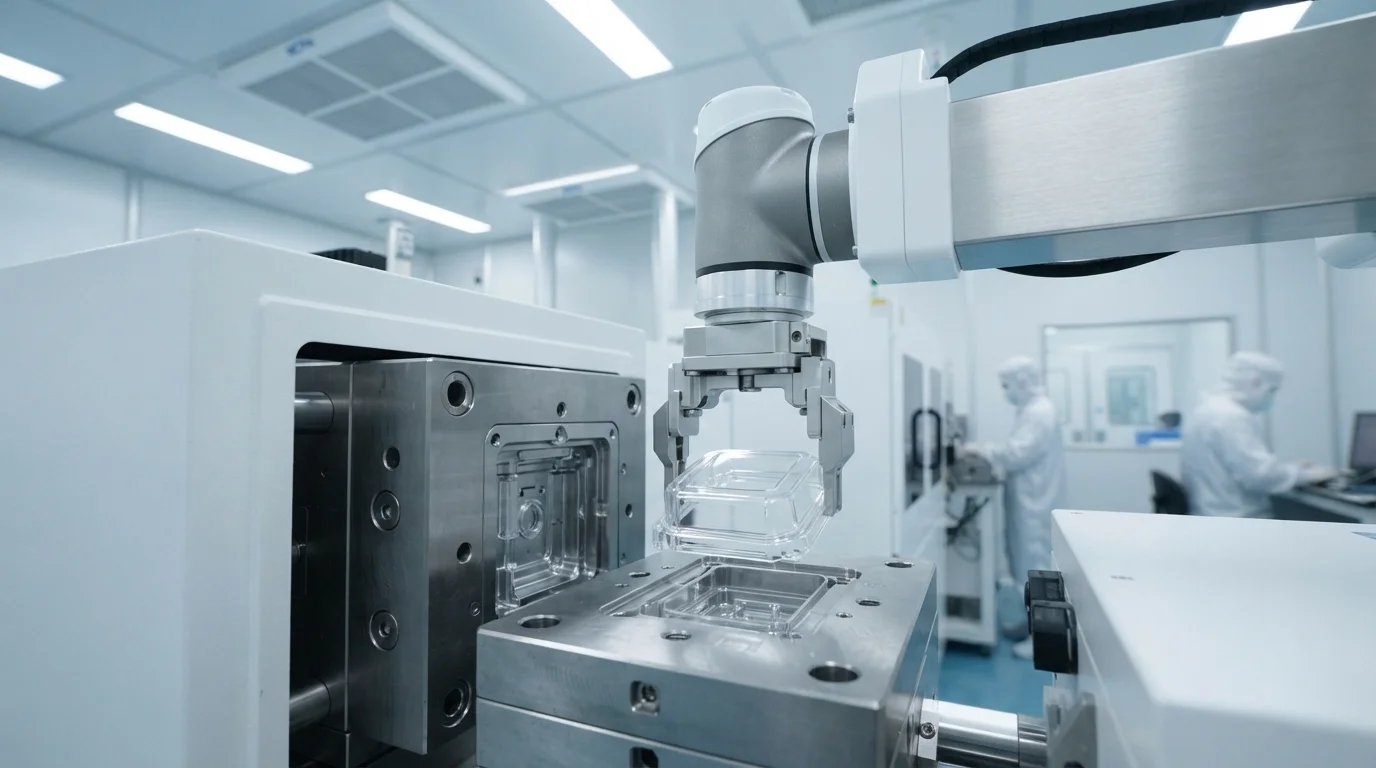
粒子管理環境内で光学用透明プラスチック成形を実行することで、浮遊ダストが高温のポリマーメルトに埋め込まれるのを防ぎます。温かいレンズ表面に付着した単一の微視的ダスト粒子はブラックスペックを生じ、光学部品の完全な不良を引き起こします。多段HEPAフィルトレーションを備えた陽圧クリーンルーム成形セルを運用することで、可塑化およびドロップパッケージング中の清浄な空気品質を維持します。自動3軸ロボットが成形レンズを直接ハンドリングし、手作業のリスクと皮脂の付着を排除します。.
よくある質問 (FAQ)
光学プラスチック成形における複屈折の原因は何ですか?
Frozen-in molecular orientation and residual stress can contribute to birefringence in molded optics. Appropriate changes to molding conditions may reduce it, but cannot be assumed to eliminate double refraction. Measure the finished part against the specified optical acceptance limits.
SPI A-1とSPI A-2の金型仕上げの違いは何ですか?
SPI A-1研磨は最高の光学鏡面仕上げを表し、焼入れ鋼に3ミクロンのダイヤモンドペーストで研磨します。SPI A-2研磨は6ミクロンのダイヤモンドペーストを使用し、高透過率の光学レンズには許容できない微小傷を残します。.
なぜライトガイド用途ではPCよりもPMMAが好まれるのですか?
PMMA can be a good light-guide candidate when clarity matters; PC can be considered when impact resistance or heat performance is important. Compare candidate grades at the same thickness and optical test conditions, compare HDT at the same load, and verify light-guide performance on representative molded parts.